#rare-earths-and-critical-minerals
#rare-earths-and-critical-minerals
[ follow ]
#critical-minerals


World politics
fromFortune
4 weeks agoCritical minerals demand snowballed to $2.5 trillion last year and could triple by 2030, UN projects | Fortune
Critical mineral demand could triple by 2030 and quadruple by 2040, driven by digital economy and energy transition needs, with 2023 mineral trade reaching $2.5 trillion.


fromwww.aljazeera.com
4 days agoMinerals for aid: Are new US health deals exploiting' African countries?
In late 2025, the United States shocked the world by suspending global health aid, leading experts to predict 700,000 additional deaths annually, primarily among children. This prompted the US to propose unusual bilateral health agreements with developing countries, which have drawn criticism for being exploitative.
Public health
fromTNW | Asia
4 days agoSouth Korea turns to Russian naphtha as chip supply chain faces Middle East crisis
South Korea imports about 45 percent of its naphtha, a critical petrochemical feedstock, with roughly 77 percent of those imports historically arriving from the Middle East. That supply line is now, for all practical purposes, severed.
World news
fromwww.theguardian.com
4 days agoLunar prospectors: the businesses looking to mine the moon
In the silent vacuum of space, five autonomous robots churn through the lunar surface, digging up a loose layer of rock and dust and leaving rows of uniform tracks in their wake. Stopping only to recharge at a central solar power station, the car-sized machines process the lunar dirt internally to extract a type of helium so rare on Earth that a palm-sized container is estimated to be worth millions.
Science
Environment
fromwww.theguardian.com
4 days agoAsia ramps up use of dirty fuels to cover energy shortfall triggered by Iran war
Asian governments are increasing coal use to address energy shortages caused by geopolitical conflicts, raising environmental concerns and calls for renewable energy investment.
fromTNW | China
4 days agoChina's Nexchip files for Hong Kong listing as $5 billion chip expansion accelerates
Nexchip Semiconductor is seeking a dual listing alongside its existing Shanghai shares, a move designed to tap international capital for what amounts to an industrial expansion of extraordinary scale.
European startups
fromLos Angeles Times
6 days agoNext to Joshua Tree National Park, a mining company is staking its claim for rare earth minerals
"This is truly one of the most iconic landscapes in America," said Chance Wilcox, California desert program manager for the National Parks Conservation Assn., as he stood atop a rocky slope within the project footprint.
Environment
fromThe Cipher Brief
3 days agoTaking a Stand on Adversaries' Influence in the Western Hemisphere
The January 3rd Operation Absolute Resolve ousted Venezuelan Dictator Nicholas Maduro, marking a significant shift in US policy towards countering adversarial influence in the western hemisphere.
World politics
fromSilicon Canals
1 week agoChina now controls 92% of rare earth processing. Every Western EV and defense firm depends on a supply chain they can't replicate - Silicon Canals
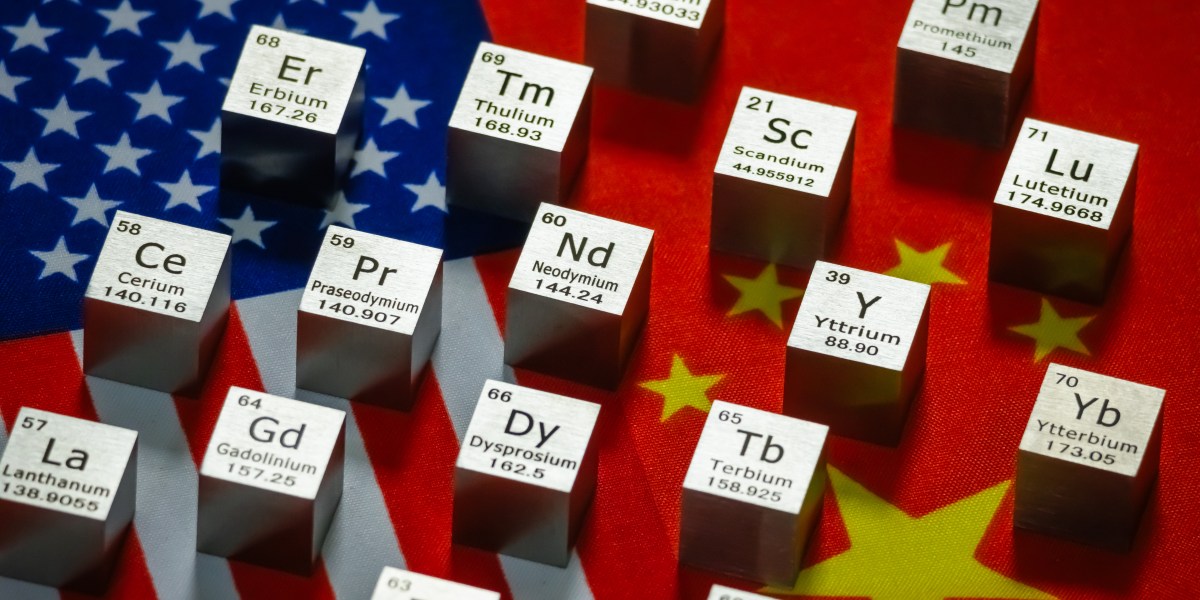
China controls the overwhelming majority of global rare earth processing capacity, a figure that has remained structurally stable for nearly two decades despite sustained Western policy attention. The problem has never been geology. It's always been industrial chemistry at scale.
Environment
from24/7 Wall St.
6 days agoHelium "Tsunami" to Hit Chipmakers -- The Surprising Winner to Profit From the Coming Shortage
Global helium consumption runs about 6 billion cubic feet per year. Qatar supplied a big slice until this month. With one-third of output sidelined, prices have already soared.
Business
Cars
fromSilicon Canals
6 days agoToyota faces aluminum supply risks as Strait of Hormuz tensions threaten the material EVs depend on - Silicon Canals
Electric vehicles are increasingly dependent on specialized aluminum from the Persian Gulf, highlighting vulnerabilities in supply chains amid regional instability.
European startups
fromTechCrunch
2 weeks agoInside a $1.1B deal to reshore critical minerals refining | TechCrunch
China controls over half the world's nickel refining capacity, prompting U.S. and European companies to develop domestic electrochemical refining technologies to reduce supply chain dependence.
#rare-earth-elements-supply-chain
European startups
fromComputerworld
3 weeks agoData mining? Old servers could become new source of rare earths
Korean smelter Korea Zinc negotiates with US tech firms to extract rare earth elements from retired data center equipment, addressing supply chain vulnerabilities created by Chinese export controls.

European startups
fromComputerworld
3 weeks agoData mining? Old servers could become new source of rare earths
Korean smelter Korea Zinc negotiates with US tech firms to extract rare earth elements from retired data center equipment, addressing supply chain vulnerabilities created by Chinese export controls.
#rare-earth-elements
World politics
fromFortune
3 weeks agoBeijing's dominance in rare earth processing leaves others scrambling to close the gap: 'China is the leader, and the U.S. is far behind' | Fortune
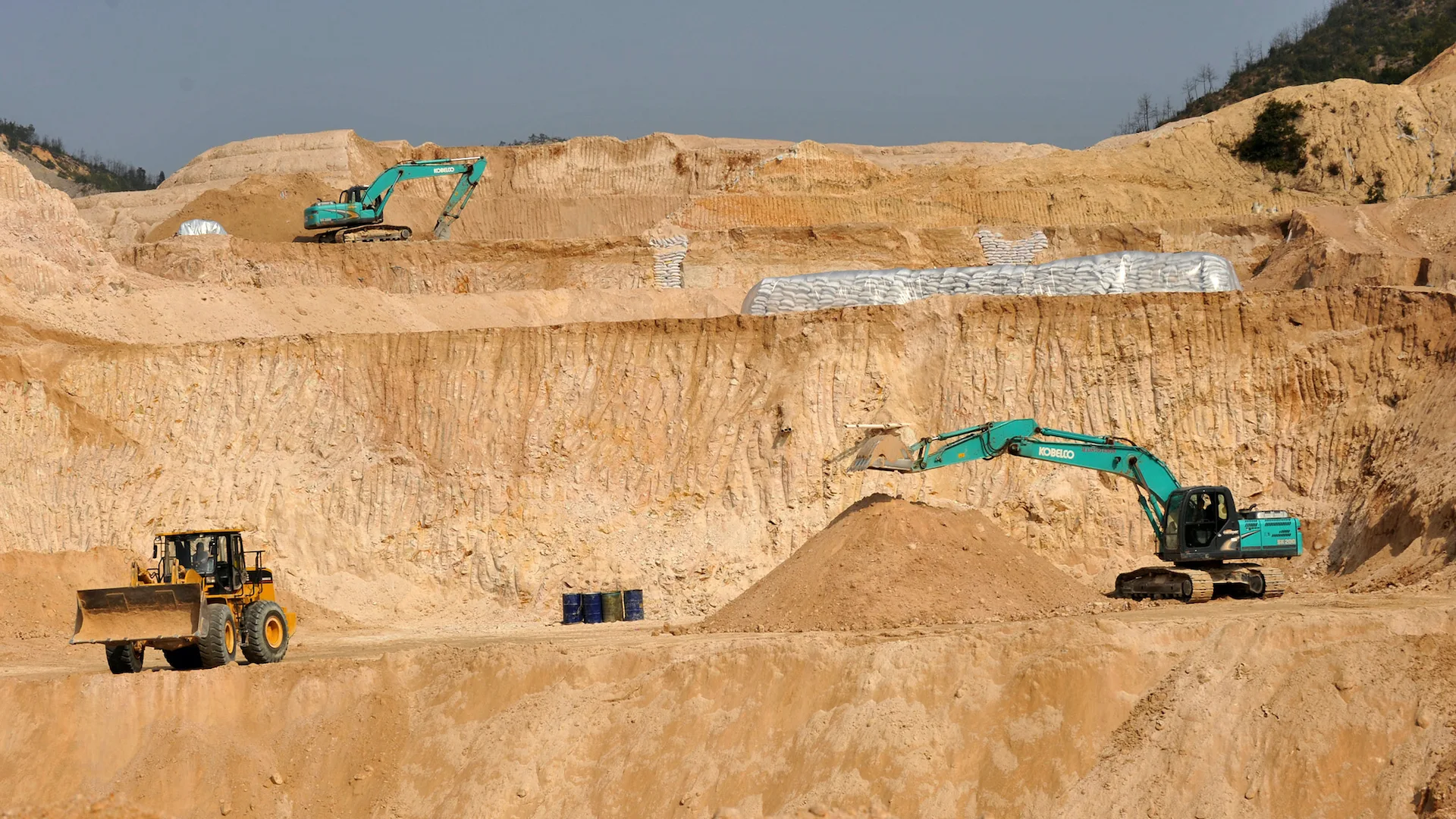
China controls approximately 90% of global rare earth processing capacity, giving Beijing significant geopolitical leverage over critical industries including defense, semiconductors, and electric vehicles.

fromFast Company
2 months agoThe next hot career: Mining engineering
It's a little-known fact that Columbia University, in Manhattan, was home to the first mining school in America-the School of Mines-founded in 1864. For the past three decades, the university's program has been mothballed. Parts of its curriculum were subsumed into the more fashionable subjects of earth and environmental engineering. But next fall, Columbia University will offer a bachelor of science degree in mining engineering once again.
Higher education
World news
fromwww.theguardian.com
1 month agoThe Guardian view on the scramble for critical minerals: while powers vie for access, labourers die | Editorial
US strategic moves aim to secure DRC critical minerals through Project Vault and trade deals, risking exploitation while failing to build local processing capacity or protect communities.




fromTheregister
2 months agoCopper supplies set to peak just as tech needs more
However, a study by financial analyst S&P Global estimates that worldwide production of the metal will peak in 2030 at 33 million metric tons, while demand is forecast to continue growing to reach 42 million metric tons by 2040 - a 50 percent increase from current levels, creating a supply shortfall of about 10 million metric tons without meaningful expansion.
Business
[ Load more ]