OMG science
fromInverse
1 day ago'Project Hail Mary's' Relativity Problem Is More Complicated Than You Think
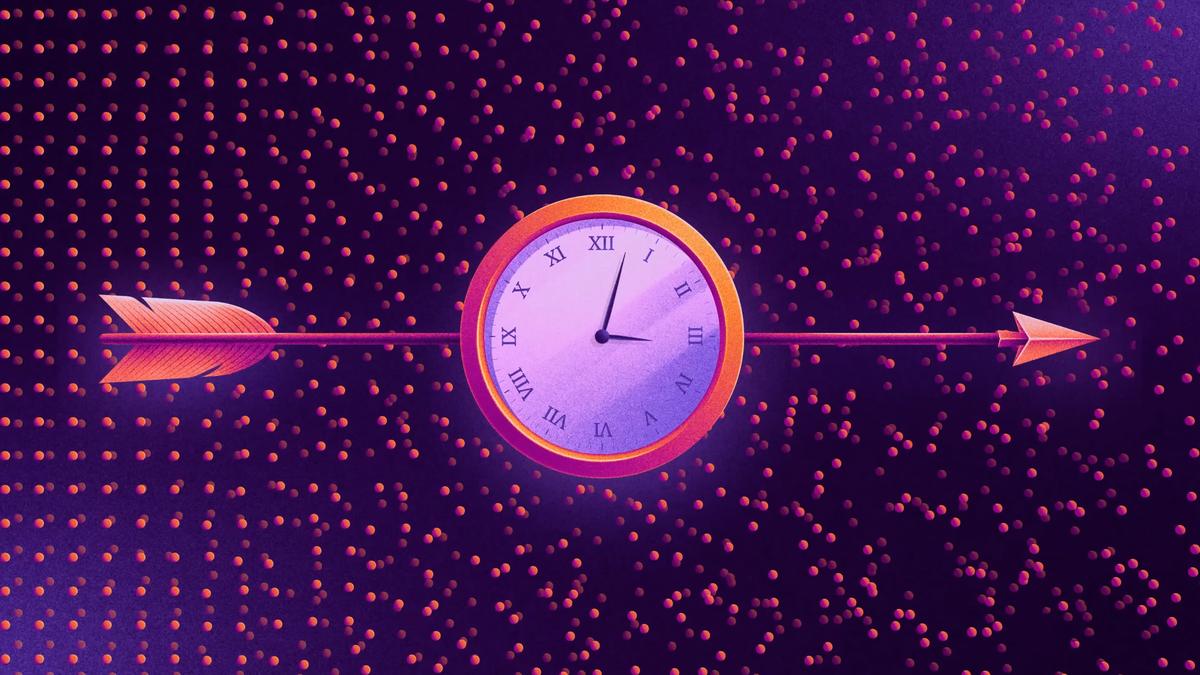
Time dilation causes significant age differences between travelers and those on Earth, as seen in Project Hail Mary.
Perhaps the most commonly told myth in all of science is that of the lone genius. The blueprint for it goes something like this. Once upon a time in history, someone with a towering intellect but no formal training wades into a field that's new to them for the first time. Upon considering the field's issues, they immediately see things that no one else has ever seen before.
Over the span of a single lifetime, the world has changed in ways that would have been virtually unimaginable in the first half of the 20th century. Two major breakthroughs that occurred in physics - relativity and quantum physics - suddenly made a number of previously unthinkable endeavors possible. From modern electronics to computers, smart phones, the internet, brain imaging and more, everyday life in 2021 is vastly different from what it was back when many of us were first born.
Although there are always some philosophical assumptions behind this conclusion, it's an assumption that isn't contradicted by anything we've ever measured under any conditions: not with human senses, not with laboratory equipment, not with telescopes or observatories, not under the influence of nature alone nor with specific human intervention. Reality exists, and our scientific description of that reality came about precisely because those measurements, conducted anywhere or at any time, is consistent with that very description of reality itself.
It also spins on its axiscompleting one Mars dayin 24 hours, 39 minutes and 35 seconds (to distinguish this period from an Earth day, we call it a sol, referencing the Latin word for the sun). Keeping track of your schedule on Mars would be different than doing so on Earth. But still, at its core, it would just be a matter of conversion.
When you view anything at all in the Universe, you're not seeing it precisely as it is right now: at the moment you experience seeing it. The speed of light, even though it's the fastest speed that any signal can travel throughout the Universe, is still finite. No matter how close or distant an object is, you're only seeing it as it was a particular amount of time ago: at the moment the now-arriving light was emitted from the object you're observing.
Black holes could be the key to a quantum theory of gravity, providing a deeper understanding of how reality, space, and time works. They are regions of space from which even light can't escape, and have fascinated physicists since their theoretical predictions, which date back to the early 20th century. The existence of black holes forces physicists to think about both quantum theory and general relativity together, highlighting the need for a unifying theory or quantum gravity.