Software development
fromDevOps.com
1 day agoWhy Code Validation is the Next Frontier - DevOps.com
Shared staging environments are inadequate for modern development; isolated, on-demand setups are needed for effective validation.
Dependabot sounded the alarm on a large scale. Thousands of repositories automatically received pull requests and warnings, including a high vulnerability score and signals about possible compatibility issues. According to Valsorda, this shows that the tool mainly checks whether a dependency is present, without analyzing whether the vulnerable code is actually accessible within a project.
The real cost of poor observability isn't just downtime; it's lost trust, wasted engineering hours, and the strain of constant firefighting. But most teams are still working across fragmented monitoring tools, juggling endless alerts, dashboards, and escalation systems that barely talk to one another, which acts like chaos disguised as control. The result is alert storms without context, slow incident response times, and engineers burned out from reacting instead of improving.
LinkedIn has redesigned its static application security testing pipeline (SAST) to provide consistent, enforceable code scanning across a GitHub-based, multi-repository development environment. The initiative was a result of the company's shift-left strategy by delivering fast, reliable, and actionable security feedback directly in pull requests, strengthening the security of LinkedIn's code and infrastructure and helping protect members and customers.
For years, reliability discussions have focused on uptime and whether a service met its internal SLO. However, as systems become more distributed, reliant on complex internet stacks, and integrated with AI, this binary perspective is no longer sufficient. Reliability now encompasses digital experience, speed, and business impact. For the second year in a row, The SRE Report highlights this shift.
Industry professionals are realizing what's coming next, and it's well captured in a recent LinkedIn thread that says AI is moving on from being just a helper to a full-fledged co-developer - generating code, automating testing, managing whole workflows and even taking charge of every part of the CI/CD pipeline. Put simply, AI is transforming DevOps into a living ecosystem, one driven by close collaboration between human judgment and machine intelligence.
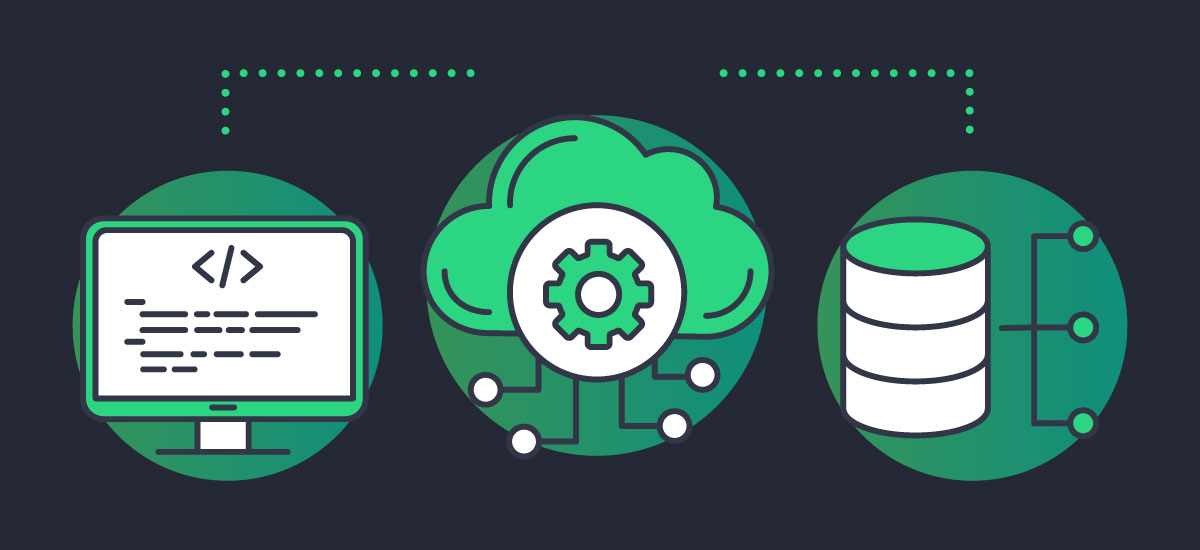
DBmaestro is a database release automation solution that can blend the database delivery process seamlessly into your current DevOps ecosystem with minimal fuss, and without complex installation or maintenance. Its handy database pipeline builder allows you to package, verify, and deploy, and gives you the ability to pre-run the next release in a provisional environment to detect errors early. You get a zero-friction pipeline, which is often not the case with database delivery process.
Software development used to be simpler, with fewer choices about which platforms and languages to learn. You were either a Java, .NET, or LAMP developer. You focused on AWS, Azure, or Google Cloud. Full-stack developers learned the intricacies of selected JavaScript frameworks, relational databases, and CI/CD tools. In the best of times, developers advanced their technology skills with their employer's funding and time to experiment. They attended conferences, took courses, and learned the low-code development platforms their employers invested in.
Hold on. There's yet another method, one that comes from MacOS. That method is Homebrew. What is Homebrew? Homebrew is a free, open-source package manager for Linux and MacOS that simplifies the installation and management of software. Think of Homebrew as a command-line version of the App Store that allows you to install command-line tools such as Python, Node.js, and more with ease.
Giving coding agents full access to all of Ramp's engineering tools is what makes Inspect truly innovative. Instead of only letting agents write basic code, Ramp's system runs in sandboxed virtual machines on Modal. It works seamlessly with databases, CI/CD pipelines, monitoring tools like Sentry and Datadog, feature flags, and communication platforms such as Slack and GitHub. Agents can write code and ensure it works by using the same testing and validation processes that engineers use every day.
For the longest time, Linux was considered to be geared specifically for developers and computer scientists. Modern distributions are far more general purpose now -- but that doesn't mean there aren't certain distros that are also ideal platforms for developers. What makes a distribution right for developers? Although I consider app compatibility, stability, and flexibility to be essential attributes for most any Linux distribution, developers also need the right tools
Over the past decade, software development has been shaped by two closely related transformations. One is the rise of devops and continuous integration and continuous delivery (CI/CD), which brought development and operations teams together around automated, incremental software delivery. The other is the shift from monolithic applications to distributed, cloud-native systems built from microservices and containers, typically managed by orchestration platforms such as Kubernetes.
Custom agents in GitHub Copilot are tailored versions of the Copilot coding agent that you can define once to follow your own workflows, coding conventions, and tool preferences. They act like specialized teammates that consistently apply your team's standards instead of you repeating the same instructions each time. You configure custom agents using Markdown-based agent profiles that specify prompts, tools, and behaviors.
Bash scripts are a great way to automate all sorts of repetitive tasks -- you can run backups, clear temporary files/logs, rename or batch-rename files, install or update software, and much more. Although writing such scripts isn't nearly as hard as you might think, it does take some time to learn the ins and outs of bash scripting. Also: 6 hidden Android features that are seriously useful (and how they made my life easier) Good news: If you have an Android device, you can enable the Linux terminal, which means you can create or practice your bash scripting on the go.