#rio-tinto
#rio-tinto
[ follow ]

Environment
fromwww.theguardian.com
2 days agoIf they pollute our rivers, what will become of us?': the town divided between hope and fear in Brazil's Amazon oil rush
Oiapoque, Brazil, is poised for development through oil production, raising concerns about environmental impacts and Indigenous rights amid a global energy transition.
#critical-minerals

World news
fromenglish.elpais.com
2 months agoThe US and Europe are courting Brazil for its critical minerals and rare earth elements
Brazil aims to become a strategic processor and participant, not just a raw-material supplier, for critical minerals like graphite, niobium, nickel, lithium, and rare earths.
World politics
fromFortune
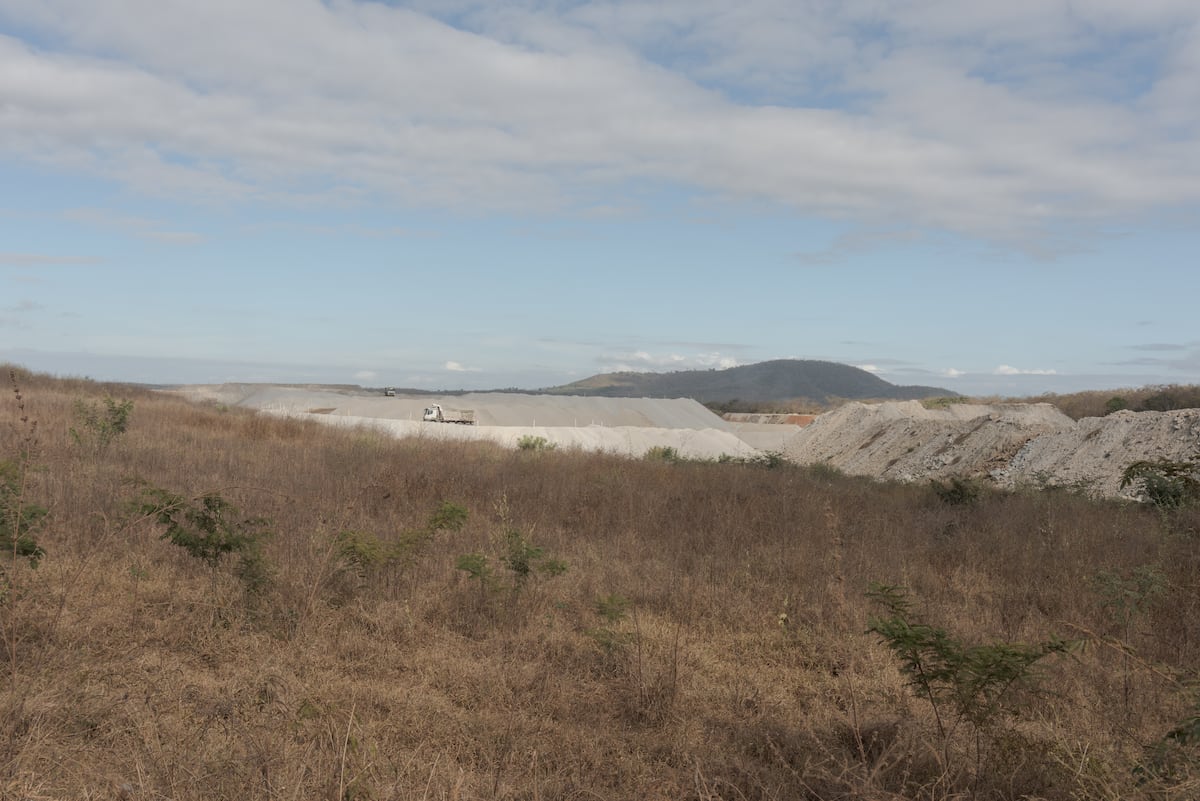
4 weeks agoCritical minerals demand snowballed to $2.5 trillion last year and could triple by 2030, UN projects | Fortune
Critical mineral demand could triple by 2030 and quadruple by 2040, driven by digital economy and energy transition needs, with 2023 mineral trade reaching $2.5 trillion.

fromwww.aljazeera.com
4 days agoMinerals for aid: Are new US health deals exploiting' African countries?
In late 2025, the United States shocked the world by suspending global health aid, leading experts to predict 700,000 additional deaths annually, primarily among children. This prompted the US to propose unusual bilateral health agreements with developing countries, which have drawn criticism for being exploitative.
Public health
European startups
fromTechCrunch
2 weeks agoInside a $1.1B deal to reshore critical minerals refining | TechCrunch
China controls over half the world's nickel refining capacity, prompting U.S. and European companies to develop domestic electrochemical refining technologies to reduce supply chain dependence.
fromLos Angeles Times
6 days agoNext to Joshua Tree National Park, a mining company is staking its claim for rare earth minerals
"This is truly one of the most iconic landscapes in America," said Chance Wilcox, California desert program manager for the National Parks Conservation Assn., as he stood atop a rocky slope within the project footprint.
Environment

fromComputerworld
3 weeks agoData mining? Old servers could become new source of rare earths
Korea Zinc, which it described as one of the world's largest smelters, is in talks with major US technology firms to recycle data center waste and extract rare earth. The move comes almost one year to the day after China announced immediate export controls on seven more rare earth elements critical to enterprise IT hardware manufacturing.
European startups
Retirement
from24/7 Wall St.
3 weeks agoRetirees Are Using EPP to Capture Asia-Pacific's Surging Bank and Mining Dividends
EPP provides developed Asia-Pacific equity exposure through dividend-paying banks, miners, and insurers, delivering strong recent returns while remaining overlooked by most retirees.
World politics
fromFuturism
2 weeks agoTrump Threatens to Do Something Horrible in Africa Unless He Gets a Deal on Precious Minerals
The Trump administration drafted a plan to withhold $115 million in HIV treatment aid from Zambia to coerce access to its copper mineral wealth and counter Chinese economic interests.
#rare-earth-elements
World politics
fromFortune
3 weeks agoBeijing's dominance in rare earth processing leaves others scrambling to close the gap: 'China is the leader, and the U.S. is far behind' | Fortune
China controls approximately 90% of global rare earth processing capacity, giving Beijing significant geopolitical leverage over critical industries including defense, semiconductors, and electric vehicles.

fromTipRanks Financial
1 month agoTribeca Global Natural Resources Swings to Profit and Lifts Asset Backing - TipRanks.com
Tribeca Global Natural Resources reported a sharp turnaround in performance for the half-year to 31 December 2025, moving from a loss a year earlier to revenue of $118.6 million and profit after tax attributable to members of $69.5 million. Earnings per share rose to $0.90, net tangible assets per share increased markedly, and the board declared a fully franked interim dividend of $0.05 per share.
Business intelligence
fromHarvard Business Review
2 weeks agoHow To Deliver on ESG Initiatives in Emerging Market
Multinational firms are under rising pressure-from investors, regulators, and employees-to demonstrate positive societal impact in the places where they do business. With ESG-focused institutional investments projected to reach nearly $34 trillion this year and roughly 90% of large U.S. companies now disclosing ESG reports, these pressures are now a central part of corporate strategy.
Business
fromwww.cbc.ca
4 weeks agoProvince spent over $7.5M on Ring of Fire ads seen during Blue Jays playoff run | CBC News
They're spending millions and millions of your taxpayer dollars basically to gaslight you about what's going on. It just is basically a way for the government to brag about stuff that they're not actually doing yet. The money spent on the advertisements would have been better used towards improving infrastructure in the north or other projects that are in dire need of funding.
Canada news
Environment
fromwww.theguardian.com
3 weeks agoThis is the story of Weda Bay and how nature is being sacrificed for mining
Mining operations in key biodiversity areas are expanding globally, with over 3,267 operations accounting for nearly 5% of the sector's footprint, driven by demand for green energy transition materials.
fromwww.theguardian.com
3 weeks agoThe last frontier': how red globules of nickel ore are suffocating an island's precious wilderness
Laterite deposits are created by intense humidity and tropical weathering of rock and so they form in the tropics, often in hotspots for biodiversity and rich, intact rainforests. These deposits account for about 70% of the world's reserves of nickel, a mineral now in high demand for manufacturing batteries, especially for electric cars and clean energy infrastructure.
Environment
Canada news
fromwww.cbc.ca
1 month agoFord says roads accessing mineral-rich Ring of Fire will be completed years ahead of schedule | CBC News
Ontario will begin constructing access roads to the Ring of Fire in 2024, with completion targeted for November 2031, expected to create 70,000 jobs and generate $22 billion in economic value over 30 years.
Environment
fromHigh Country News
3 weeks agoTrump's BLM is going all-in on resource extraction - High Country News
The Trump administration's BLM is prioritizing resource extraction over conservation on 245 million acres of public lands, particularly threatening Oregon's ecologically critical conifer forests and endangered species protections established by the 1995 Northwest Forest Plan.
from24/7 Wall St.
3 weeks agoMetals on the Move: Hycroft Mining Soars 12%, Silvercorp Metals Up 7%
When geopolitical stress spikes, gold and silver are where nervous capital runs. And right now, there's plenty to be nervous about. Geopolitical tensions, including the ongoing Iran war reshaping energy markets, U.S. actions related to Venezuela, and global trade and tariff uncertainty, are pushing investors into gold and silver as stores of value.
Business
from24/7 Wall St.
1 month agoWhy Linde, Southern Copper and BHP Group Are Down Big Today
US and Israeli airstrikes on Iran have prompted Iran's Revolutionary Guard to declare the Strait of Hormuz closed, a critical chokepoint for global energy flows, and the conflict has now spread across multiple countries. The paradox for investors: an energy shock lifting oil prices is simultaneously crushing the metals complex.
World politics
fromBusiness Matters
1 month agoSebastien de Montessus: From Endeavour Mining to Mansa Resources, a Builder Returns to the Frontier
After nearly a decade spent transforming Endeavour Mining into one of the world's ten largest gold producers, de Montessus is returning to what has long defined his career: building scale, discipline and credibility in frontier markets where volatility is the rule rather than the exception.
Business
fromFast Company
2 months agoThe next hot career: Mining engineering
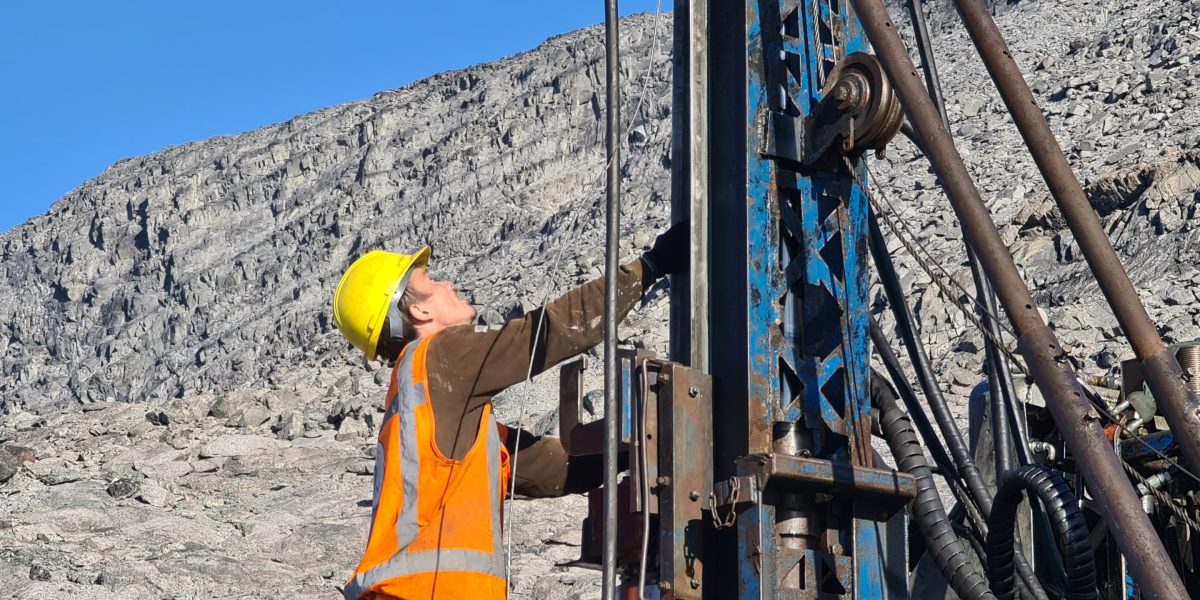
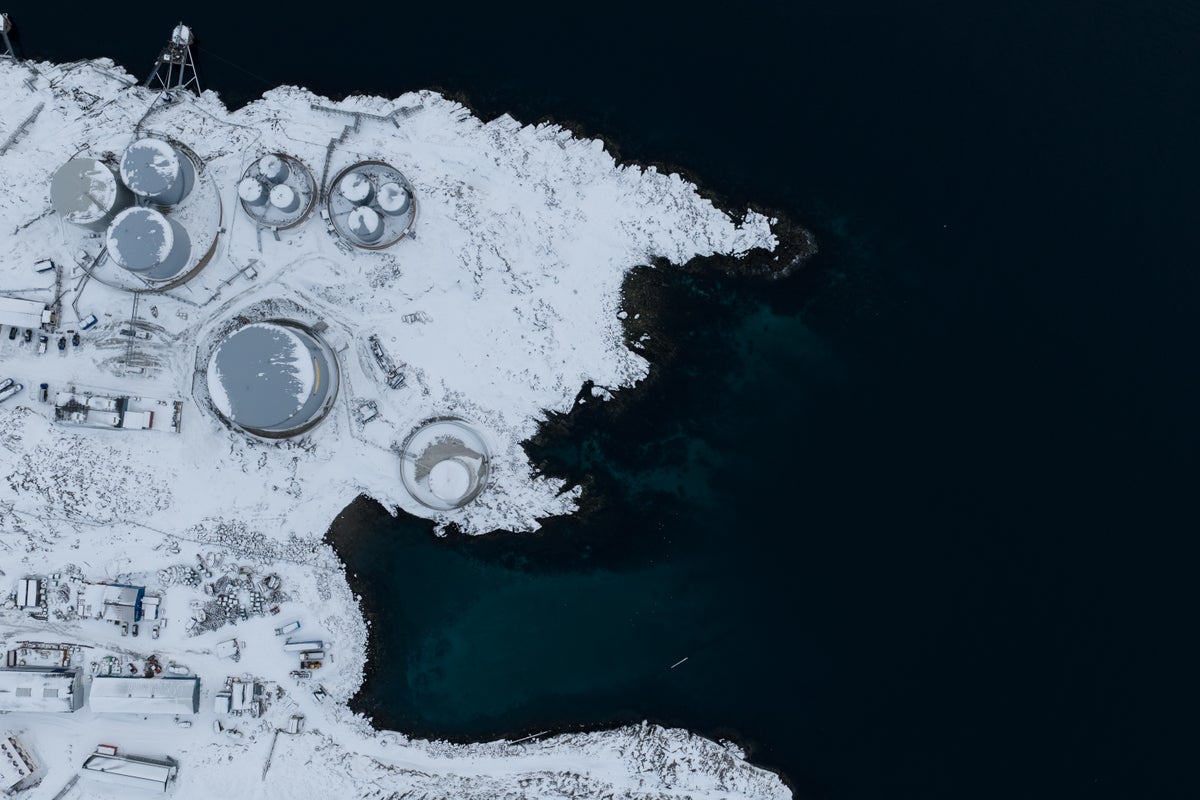
It's a little-known fact that Columbia University, in Manhattan, was home to the first mining school in America-the School of Mines-founded in 1864. For the past three decades, the university's program has been mothballed. Parts of its curriculum were subsumed into the more fashionable subjects of earth and environmental engineering. But next fall, Columbia University will offer a bachelor of science degree in mining engineering once again.
Higher education
fromLondon Business News | Londonlovesbusiness.com
2 months agoHow the proposed merger between Rio Tinto and Glencore could affect London - London Business News | Londonlovesbusiness.com
This possible deal was confirmed by Rio Tinto recently, with a statement confirming that it was engaged in discussions with Glencore with a view to combining "some or all of their businesses". The wide nature of this statement has led to intense speculation about what it could mean for the global markets, particularly copper. These same companies were locked in talks a year ago, but it ended with no agreement being reached.
Miscellaneous
fromBusiness Matters
1 month agoUS offers $225m backing for Cornwall tin mine in bid to secure supply
Britain's only tin mine could end up exporting much of its future production to the United States after the American government signalled it is prepared to provide up to $225 million (£166 million) in financing to revive the historic South Crofty site in Cornwall. Cornish Metals, which is working to bring the South Crofty mine near Camborne back into production, has received a letter of interest from the Export-Import Bank of the United States (Exim),
UK news
Business intelligence
from24/7 Wall St.
1 month agoForget Gold and Silver: This is the Metal to Buy in 2026 (And 3 Stocks to Play This Trend)
Uranium stocks like Cameco offer potentially safer, high-return opportunities in 2026 driven by rising uranium prices, strong fundamentals, and expansion-capable balance sheets.

fromwww.npr.org
2 months agoMine collapses in eastern Congo, leaving at least 200 dead
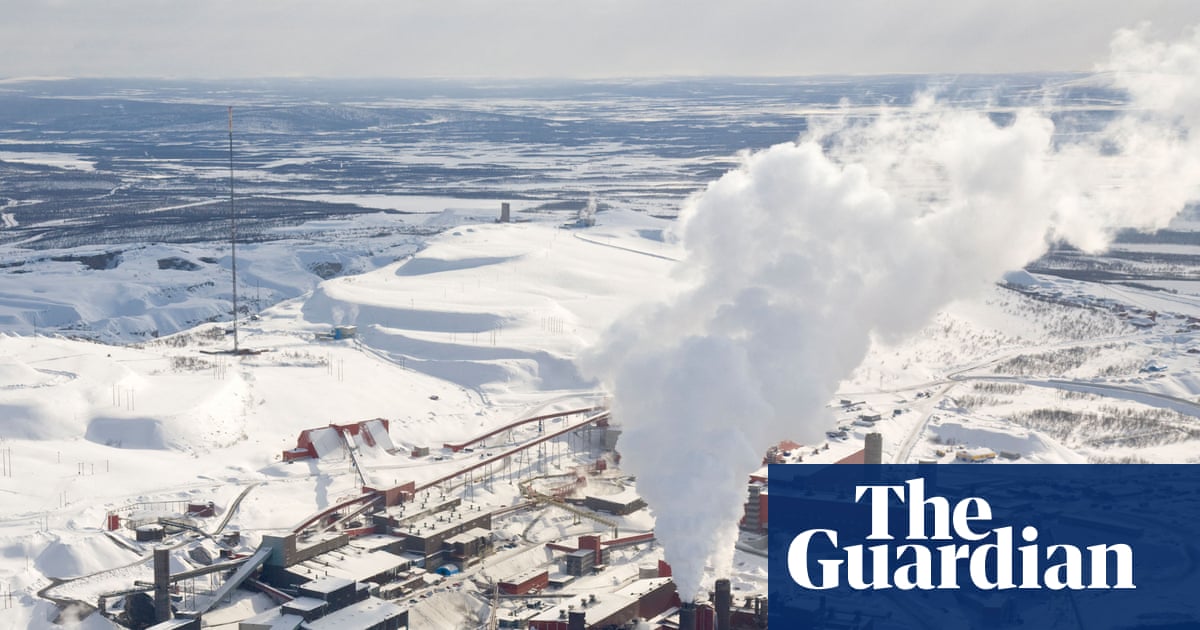
A former miner at the site told The Associated Press there have been repeated landslides because the tunnels are dug by hand, poorly constructed, and left without maintenance. "People dig everywhere, without control or safety measures. In a single pit, there can be as many as 500 miners, and because the tunnels run parallel, one collapse can affect many pits at once," Clovis Mafare said.
US news
fromLondon Business News | Londonlovesbusiness.com
2 months agoRio Tinto and Glencore eye mega merger again and oil rises as Iran flares - London Business News | Londonlovesbusiness.com
Rio Tinto and Glencore are resuming talks to combine the companies in a move that would create the world's largest mining group. The firms are looking at a possible all-share merger, with Rio Tinto as the larger of the two acquiring Glencore by a scheme of arrangement. There have been talks before that broke down, but I think the pair has more chance of success this time.
Miscellaneous
fromThe Verge
2 months agoAmazon is buying copper harvested by bacteria for its data centers
Amazon's data centers will reportedly utilize copper from a mine in Arizona that's leaching metal from ores using microorganisms, the Wall Street Journal reports. Amazon Web Services will be the first customer for Nuton Technologies, which developed the "bioleaching" technology. AWS will also be providing "cloud-based data and analytics support," helping to optimize Nuton's mining process. Nuton's bioleaching method uses naturally-occurring microorganisms to extract copper from low-grade ore that would otherwise be too expensive to mine,
Science
World news
fromwww.theguardian.com
1 month agoThe Guardian view on the scramble for critical minerals: while powers vie for access, labourers die | Editorial
US strategic moves aim to secure DRC critical minerals through Project Vault and trade deals, risking exploitation while failing to build local processing capacity or protect communities.
Miscellaneous
fromLondon Business News | Londonlovesbusiness.com
2 months agoCommodities on the rise, as investors, companies and countries compete for strategic materials - London Business News | Londonlovesbusiness.com
European stocks hit record highs as softer US inflation and rising commodity-driven gains shift sentiment toward European and Asian equities.
World news
fromBusiness Insider
1 month agoTake a look inside Greenland's only fully operational mine, where miners live half the year and brave Arctic conditions
Greenland contains large critical mineral reserves, but severe Arctic conditions, limited infrastructure, and regulations make mining difficult, costly, and largely undeveloped.
fromAxios
2 months agoTrump government stakes give Midas touch to companies
Why it matters: Positive stock performance helps explain why so many free-market capitalists have signed onto something that seems more socialist than not. And why others will do so when given the opportunity. By the numbers: The White House appears to have agreed to equity deals with nine companies, most which are publicly traded. The public cohort saw their share prices climb an average of 85% between the time of announcement (or press leak, if earlier) and yesterday, per an Axios analysis.
US politics
fromwww.theguardian.com
2 months agoNearly 200 arrested in cross-border crackdown on gold mining in Amazon
Police and prosecutors from Brazil, French Guiana, Guyana and Suriname have arrested nearly 200 people in their first joint cross-border operation targeting illegal gold mining in the Amazon region, authorities said. The operation was backed by Interpol, the EU and Dutch police specialising in environmental crime. It involved more than 24,500 checks on vehicles and people across remote border areas and led to the seizure of cash, unprocessed gold, mercury, firearms, drugs and mining equipment, Interpol said.
Environment
from24/7 Wall St.
2 months agoThese 3 Gold Miners Could Still Have Massive Upside in 2026
With the price of a single ounce of gold now currently hovering around $4,700 (right around its all-time high), the question of course is whether it's too late for investors to dive in. I'm of the view that this momentum rally is probably warranted. That's in part due to the underlying fundamentals of gold and its overall market capitalization relative to stocks (which is still low, despite its recent rally).
Business
[ Load more ]