#robodogs
#robodogs
[ follow ]
#humanoid-robots #robotics #ai #automation #technology #boston-dynamics #artificial-intelligence #robot-dogs
Science
fromYanko Design - Modern Industrial Design News
19 hours agoThis $349 NASA Mars Perseverance Rover Kit Lets You Build an AI-Powered Mars Robot at Home - Yanko Design
CircuitMess offers a buildable AI-capable replica of NASA's Perseverance rover for $309, emphasizing hands-on learning and modular expansion.

fromTNW | Startups-Technology
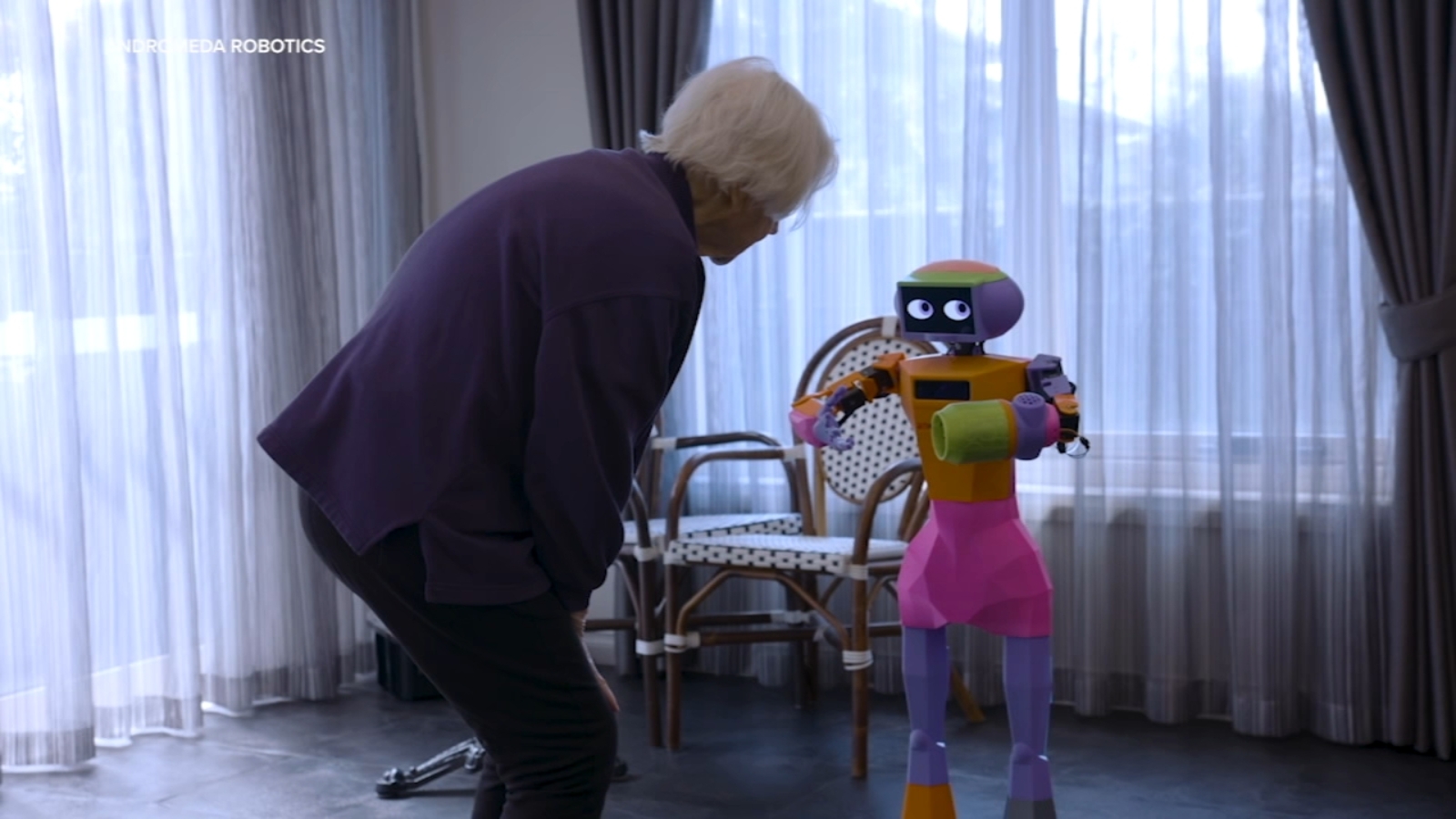
1 day agoWearable Robotics raises 5M to expand its arm exoskeleton
The ALEX RS is a bilateral upper-limb exoskeleton designed for post-stroke rehabilitation, covering 92% of the human arm's natural range of motion and is CE certified as a Class IIa medical device.
European startups
fromFast Company
1 day agoAI has come for Domino's pizza tracker, and we're not mad about it
The new tracker features a simplified progress bar that shows just four stages of pizza creation. The new design was rolled out to all platforms, and there's also new Lock Screen widgets for iOS that bring the pizza chain's most famous tech feature to the Liquid Glass age.
Marketing tech
Psychology
fromSilicon Canals
1 day agoResearch suggests people who feel more empathy for dogs than humans aren't broken - their empathy is fully intact, it's just been directed toward the only available recipient that has never weaponized it, and a person whose empathy has been weaponized enough times eventually stops handing it to anyone who could do it again - Silicon Canals
Empathy can be selective, often directed more towards animals than humans due to psychological and biological factors.
#ai
Marketing tech
fromHR Brew
1 day agoAI is changing how people look for jobs, forcing recruiters to keep up
AI is transforming SEO and recruitment strategies, requiring adaptation to new search behaviors and tools.


fromwww.businessinsider.com
6 days agoDriverless cars, meet your eye doctor
Kinetic's CEO Nikhil Naikal states, 'We have eyes, and when we need to correct vision, we go to an optometrist... In the same way, this is a digital prescription to correct the errors of the car's understanding of the world around it.'
Cars

fromEntrepreneur
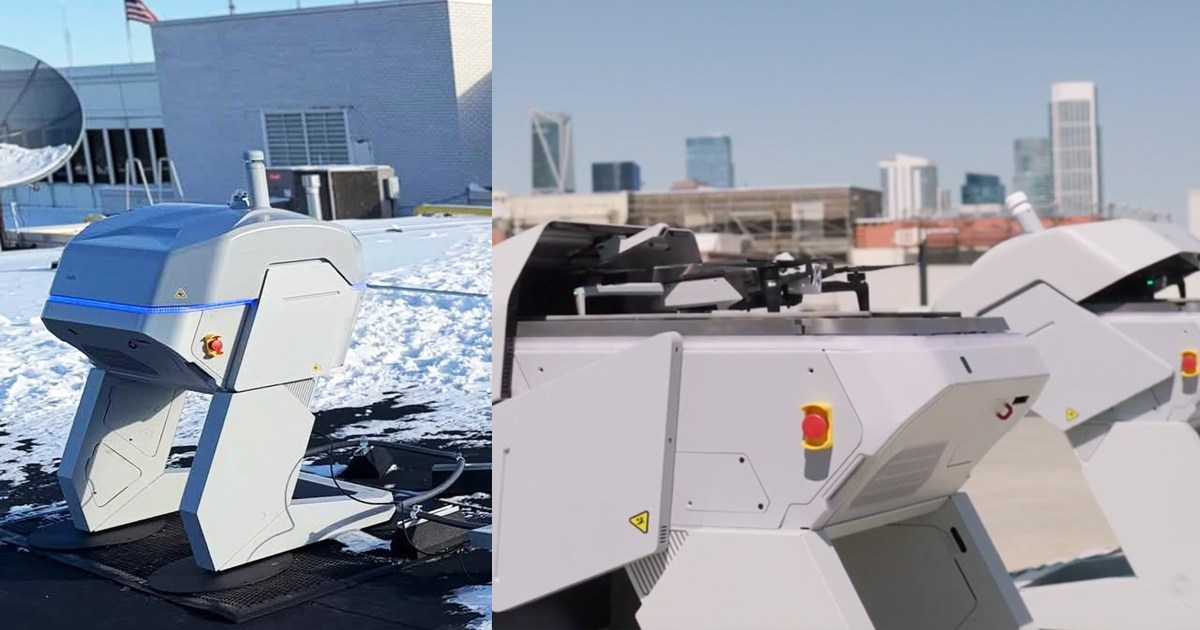
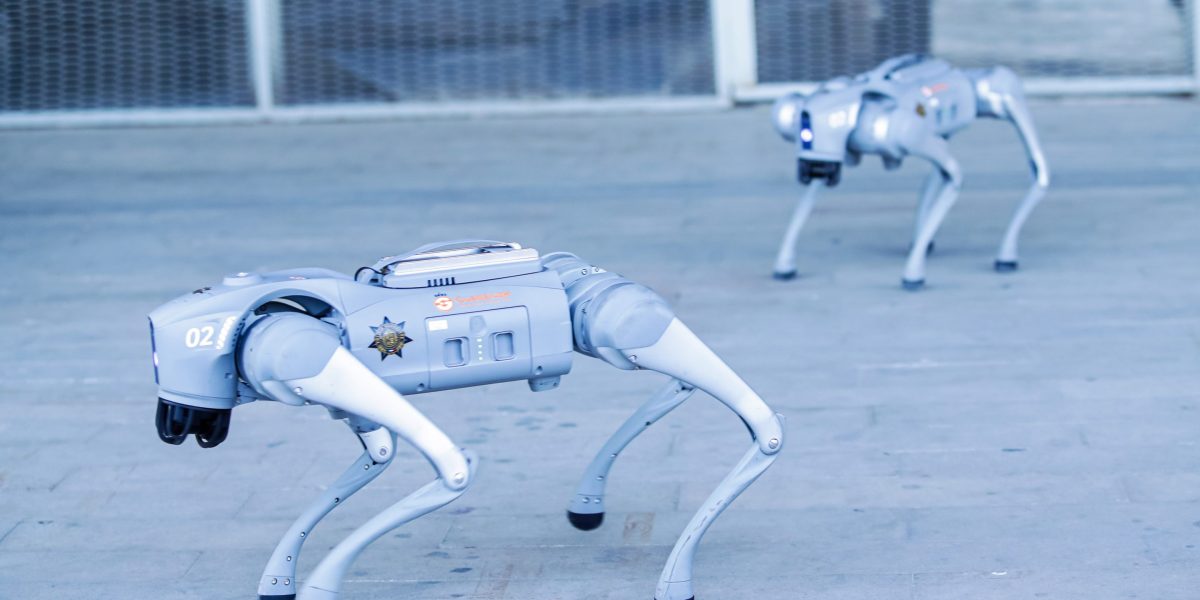
2 weeks agoData Centers Are Deploying $175,000 Robot Dogs for Security. Companies Say They're Worth It.
Boston Dynamics' Spot ranges from $175,000 to $300,000, depending on configuration. Ghost Robotics' Vision 60 starts at $165,000. Both companies pitch them as cheaper alternatives to human guards, who cost around $150,000 annually. "Typically, our customers have a payoff within two years," Merry Frayne, senior director of product management at Boston Dynamics, told Business Insider.
Boston
fromTNW | Deep-Tech
2 weeks agoUniversal Robots and Scale AI launch the UR AI Trainer
Our customers, ranging from large enterprises to AI research labs, are no longer just asking for AI features. They need a way to collect high-fidelity, synchronized robot and vision data to train AI models on the same robots they intend to deploy. Our AI Trainer is the industry's first direct lab-to-factory solution for AI model training.
Data science
#humanoid-robotics
Women in technology
fromFuturism
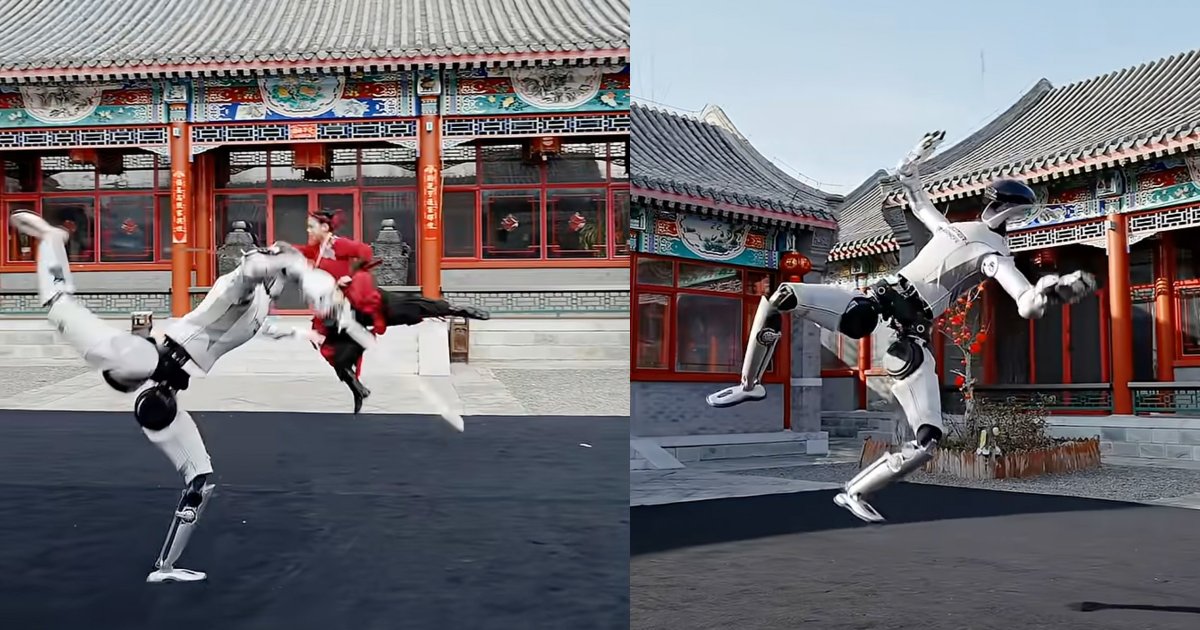
2 weeks agoThis Video of a Humanoid Robot Playing Perfect Tennis Is Extremely Impressive
Chinese company Galbot developed software enabling a Unitree G1 humanoid robot to play tennis with sustained rallies, millisecond reactions, and precise ball striking against human opponents.
Women in technology
fromFuturism
2 weeks agoThis Video of a Humanoid Robot Playing Perfect Tennis Is Extremely Impressive
Chinese company Galbot developed software enabling a Unitree G1 humanoid robot to play tennis with sustained rallies, millisecond reactions, and precise ball striking against human opponents.
#artificial-intelligence
Artificial intelligence
fromBusiness Insider
1 day agoHow AI could destroy - or save - humanity, according to former AI insiders
Artificial intelligence has the potential to transform various sectors but also poses risks like inequality, job loss, and increased power for governments and tech companies.
Healthcare
fromNextgov.com
3 weeks agoVA's early uses of robots have shown mixed success, but excitement remains
The Veterans Affairs system is deploying robots across 65 medical facilities for delivery, pharmaceutical tasks, and cleaning to address staffing shortages and allow clinical staff to focus on higher-level work.

Russo-Ukrainian War
fromBusiness Insider
3 weeks agoThe US Army wants to see if it can get robots to rescue wounded troops like they're doing in Ukraine
The US Army is testing ground robots to evacuate wounded soldiers in high-intensity combat, reducing risk to medical personnel and troops during dangerous battlefield movements.
Business intelligence
fromTechzine Global
3 weeks agoThoughtSpot launches Spotter Semantics for AI agents
ThoughtSpot introduces Spotter Semantics, a semantic layer using deterministic search tokens to deliver consistent, trustworthy insights to AI agents and business users without relying on LLM-powered text-to-SQL.
fromYanko Design - Modern Industrial Design News
1 month agoThis 40-Pound Robot Dog Can Carry 143 Pounds of Cargo - Yanko Design
At about 18 kilograms, roughly 40 pounds with its battery included, the As2 is compact enough to move through tight spaces, yet built to handle a standing payload of up to 65 kilograms. That's more than 143 pounds sitting on top of a 40-pound robot, which is genuinely impressive and a little hard to picture until you actually see it in action.
Gadgets
fromComputerworld
3 days agoBeware of headlines touting impossible AI benefits, analysts warn
The savings disappear the moment you hit real-world complexity. Disparate data sources and messy inputs, ambiguous situations without clear rule sets, or actually any domain where the rules aren't already obvious. And someone still has to write all those rules.
Artificial intelligence
fromwww.businessinsider.com
1 week agoAndrej Karpathy says he uses an AI agent named Dobby the Elf Claw to control his pool and track his packages
"I have a claw basically that takes care of my home, and I call him Dobby the Elf Claw. It controls all of my lights, my HVAC, my shades, the pool, the spa, and also the security system."
Artificial intelligence
#robot-dogs

Artificial intelligence
fromFortune
2 weeks agoRobot dogs priced at $300,000 a piece are now guarding some of the country's biggest data centers | Fortune
Robot dogs are being deployed by AI companies to patrol massive data centers, providing security surveillance and threat detection for billion-dollar AI infrastructure investments.
fromNature
2 months agoThis robot hand detaches and walks by itself
Human hands are incredibly dexterous tools - but they have their limits. They are asymmetric, they have only a single thumb and, fundamentally, they're connected to our arms. But none of that poses a problem for this robot claw. Its symmetrical design means it can seamlessly approach different tasks without having to twist to find the right angle, six-fingers mean the design can juggle multiple objects at the same time and, if needed, it can simply leave its arm behind, perfect for dangerous or hard to reach places.
Gadgets
fromFuturism
2 months agoBoston Dynamics' Unnatural New Robot Demo Will Give You Goose Bumps
Not everybody agrees that replicating the four-limbed, bipedal shape of a human should be replicated in robot form. For one, walking with two feet is inherently less stable than four, nevermind a set of wheels. Replicating the dexterity and fine motor skills of human hands also remains a major challenge. In a modified approach, Boston Dynamics has clearly decided to loosen up some of the restrictions of the human form.
Gadgets
fromBusiness Insider
2 months agoBoston Dynamics CEO told us how the humanoid robot revolution begins
Its name is Atlas, an all-electric humanoid robot from Boston Dynamics, the Massachusetts-based company and maker of the four-legged inspection robot, Spot, and the mobile warehouse robot, Stretch. Hyundai, which owns Boston Dynamics, unveiled the latest version of Atlas at the Consumer Electronics Show in Las Vegas on January 5. During live demonstrations, Atlas was seen waving hello to its audience before moving car parts from one rack to another.
Gadgets
fromThe Verge
1 month agoGoogle takes control of 'Android of robotics' project in quest for physical AI
Intrinsic "graduated" into an independent company inside Alphabet's Other Bets division in 2021, a portfolio of high-risk, speculative ventures that also includes robotaxi firm Waymo and healthcare company Verily. It pitches itself as an Android-like layer for robotics, building software and tools that make it easier to create robot applications.
Artificial intelligence
[ Load more ]