#romcom-tropes
#romcom-tropes
[ follow ]
#romantic-comedy #comedy #romance #zendaya #film-criticism #film #robert-pattinson #film-adaptation #film-analysis
#romantic-comedy

Film
fromwww.theguardian.com
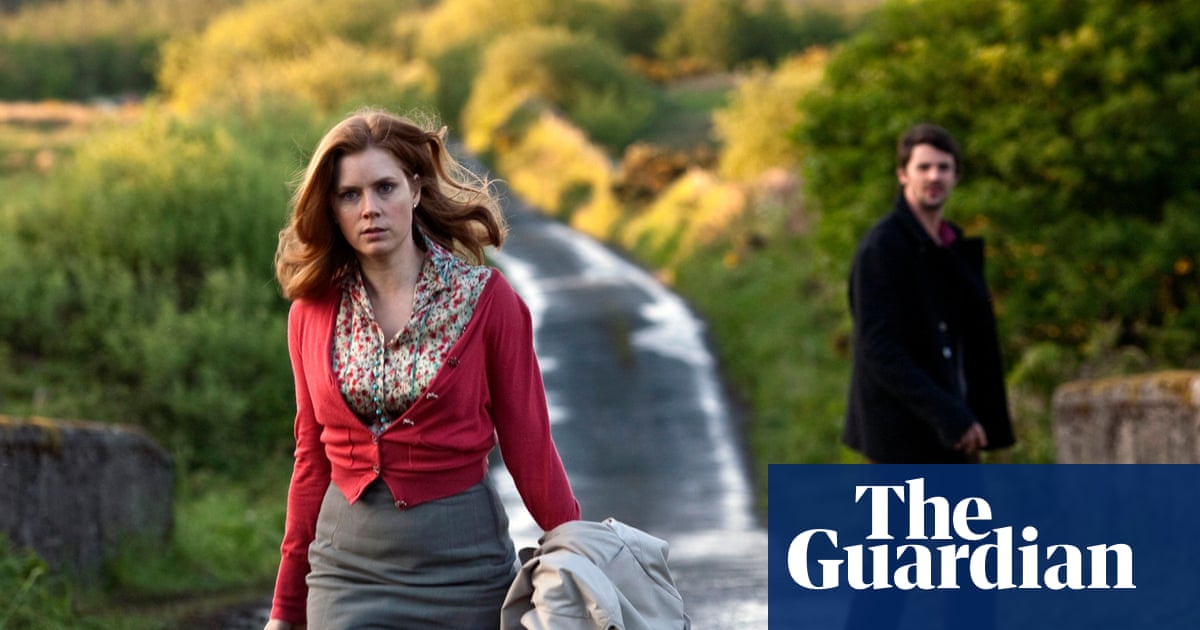
1 month agoA realistic take on marriage': readers on their favourite lesser-known movie romances
A mix of romantic and dramedy films praised for inventive premises, emotional realism, and underrated performances across romcoms, period love stories, and time-loop narratives.
Berlin
fromPinkNews | Latest lesbian, gay, bi and trans news | LGBTQ+ news
1 day agoEverything you need to know about gay erotic thriller Night Stage, now in cinemas
Night Stage is a queer erotic thriller exploring exhibitionism and fetish, centered on a secret affair between an actor and a politician.
NYC LGBT
fromWashingtonian - The website that Washington lives by.
1 day agoThis Couple Met Waiting in the Rain To Get Into a NYC Bar. That Marked the Beginning of a 48-Hour Marathon First Date. - Washingtonian
Michelle and Adam's wedding combined elegance, cultural traditions, and a vibrant celebration in New York City, reflecting their unique love story and backgrounds.

#lgbtq-cinema
Film
fromQueerty
3 weeks agoWATCH: Gay lovers risk everything in tense Canadian queer drama We'll Find Happiness - Queerty
We'll Find Happiness, a Canadian-Luxembourg queer drama directed by Léa Pool, follows a Moroccan exile attempting to seduce an immigration official to prevent his Iranian refugee lover's deportation, with US and European distribution deals already secured.


#romance-tropes
Books
fromScary Mommy
2 weeks agoWhy Do Women Love Romance Tropes That Would Be Red Flags IRL? Experts Explain
Women enjoy romance tropes featuring controlling behavior, stalking, and morally gray characters because books reveal characters' benign intentions and safe outcomes, allowing safe exploration of intense emotions impossible in real life.
Books
fromScary Mommy
2 weeks agoWhy Do Women Love Romance Tropes That Would Be Red Flags IRL? Experts Explain
Women enjoy romance tropes featuring controlling behavior, stalking, and morally gray characters because books reveal characters' benign intentions and safe outcomes, allowing safe exploration of intense emotions impossible in real life.
Podcast
fromQueerty
3 weeks agoTig Notaro on Cheryl Hines no longer talking to her: "Things shifted very severely" - Queerty
Tig Notaro ended her podcast with Cheryl Hines and their friendship after Hines' husband Robert Kennedy Jr. announced his presidential run and his views gained mainstream attention.


fromCN Traveller
3 weeks ago'Love Story' brings '90s New York back to life - these are the spots you can still visit
Love Story was based on Elizabeth Beller's book Once Upon a Time, which was helpful, but in a lot of ways Black Rabbit was more 'real' than Love Story because it was entirely fictional. I come from a research background so there's always a lot of research involved, whether it's photographs or books.
NYC LGBT
Relationships
fromSlate Magazine
3 weeks agoWe've Always Been Mesmerized by Stories of How Couples Met. There's a Far More Interesting Question to Ask.
Modern couples increasingly meet online through apps and websites rather than through romantic meet-cute scenarios, contradicting traditional storytelling expectations about how relationships begin.
fromVulture
1 month agoKate Hudson Has Some Notes for Contemporary Rom-Coms
Every time I go a couple years without a home base here, I feel a little off-center. Though she's based in Los Angeles, she's almost always had a place somewhere in Manhattan - Gramercy, King Street, a grimy Chelsea loft with ex-husband Chris Robinson (a real-estate memory that delights her when I bring it up midway through our lunch).
NYC food
Music
fromwww.npr.org
1 month agoWhy music has become such a big part of the romance novel reading experience
Romance novel readers increasingly use pop music playlists to enhance their reading experiences, creating a community that bridges book fandom and music fandom, exemplified by Charli XCX's Wuthering Heights album.
fromThe Atlantic
2 months agoA Romantic Comedy of Errors
A good recommendation I recently received: My friend put the 1988 film Crossing Delancey on an end-of-year recommendation list, and it turned out to be the perfect nightcap for a dreary winter's day: a wry romantic comedy of errors that doubles as an ode to Manhattan's Lower East Side. Its love interest is a pickle salesman-utterly charming!
Arts
fromCN Traveller
1 month ago42 places to steal a kiss around the world
A kiss, whether stolen away or done in public with gusto, can be naughty or nice. Maybe it's the movies - Sleepless in Seattle, Slumdog Millionaire, When Harry Met Sally, and yes, I know two of these star Meg Ryan - that have convinced us that a big, dramatic kiss is the only thing to do when love takes over.
Travel
fromPsychology Today
1 month agoBurn Your Romance Novels!
The short answer is yes, unless you take fiction for what it is-fiction. When you long for something you don't have, it can lead to dissatisfaction with what you DO have. Romantic fiction has witty, heartfelt dialogue, buckets of romantic gestures, and protagonists who have a preternatural ability to read each other's minds. It's easy to forget it is not real. This can set up unrealistic expectations both conscious and unconscious.
Relationships
fromwww.theguardian.com
2 months agoLove, desire and community: the new generation of readers bonding over romance novels
In a packed room in Sydney, an excited crowd riffles through stacks of stickers and bookmarks searching for their favourite characters. Another group flicks through racks of clothing, pulling out T-shirts that say romance readers club and probably reading about fairies. A poster on the wall, with tear-off tabs, invites visitors to take what they need: a love triangle, a love confession mid-dragon battle, a morally grey man or a cowboy. Half of the tabs have already been taken.
Books
Film
fromwww.theguardian.com
1 month agoPeople feel like they're in on the joke': the new wave of pseudo-biopics
Filmmakers increasingly create pseudo-biopics that borrow recognizable elements from real people and events while changing names and details to avoid legal liability and maintain creative freedom.
fromVulture
1 month agoLove Story Series-Premiere Recap: Shiny People, Shiny Problems
Being Jackie, though, she never raises her mellifluous, Atlantic-accented voice, even while reprimanding her son. "Only one of us knows what it's like to marry into this family," she reminds him. "There isn't enough exposure in the world to prepare a woman to be your wife." A marriage to a Kennedy is not a partnership but a trade-off: Any woman who agrees to marry John will have to orbit him, give her life for his.
Television
Relationships
fromwww.theguardian.com
1 month agoBlind date: My friends would adore her. She is a cupcake in a world of muffins'
Blind Date pairs two strangers for dinner, publishes their Q&A and photographs every Saturday, and invites UK applicants to apply with honest, respectful answers and personal details.
Television
fromwww.theguardian.com
2 months agoErotic gay smash Heated Rivalry is a well-timed defense of intimacy coordinators | Adrian Horton
A pivotal mid-episode four intimate scene transforms Hollander and Rozanov's hazy hookup into an emotionally fraught relationship, with sex functioning as their primary dialogue.
fromwww.theguardian.com
2 months agoUncomfortably relatable': writers on their favourite unlikeable movie characters
In one scene, an adoring fan asks Melvin his secret to writing women. I think of a man, and I take away reason and accountability, he says, an epic burn forever seared in my brain. Of course Melvin's anti-charm offensive only goes so far in a James L Brooks project. Before long, the rudeness erodes as Melvin is forced on to a journey of self-discovery with the nextdoor neighbor he can't abide (Greg Kinnear) and the diner waitress he can't live without (Helen Hunt).
Film
fromwww.theguardian.com
2 months agoCarousel review Chris Pine and Jenny Slate are lost in static romance drama
It's the sort of small, character-driven American indie that has served as the festival's lifeblood for almost 50 years and, as the system has expanded in some ways and shrunk in others, the sort that has often struggled to make it far out of Park City. Back in 2023, a quiet, disarming and perfectly Sundance film called A Little Prayer premiered yet didn't get released until late last summer and was seen by a precious few.
Film
fromCN Traveller
2 months agoWhere was 'People We Meet on Vacation' filmed? Behind the scenes of the Netflix rom-com winning hearts
In People We Meet on Vacation, we follow travel writer Poppy Wright and Alex Nilsen as they navigate their friends-to-lovers trajectory over the years. The plot homes in on their annual week's summer holiday throughout their friendship, revealing their history to the viewer through a series of flashbacks that take place across the world, with scenes set everywhere from Ohio to Tuscany. But where, exactly, did Netflix film the adaptation?
Film
fromThe Atlantic
2 months agoThe Type of Comedy That Makes for Great Drama
For someone best known as an actor, Bradley Cooper's core interest as a filmmaker is perhaps unsurprising. Thus far, he has been entirely consumed by examinations of performance-first digging into a pop musician's stratospheric career climb in A Star Is Born, then wrestling with Leonard Bernstein's desire to reimagine classical music in . Both movies were hefty pieces of entertainment, filled with love, death, and grand human experiences. His newest, the fetching
Film
[ Load more ]