#russia-intelligence-sharing
#russia-intelligence-sharing
[ follow ]




#ukraine
Russo-Ukrainian War
fromLondon Business News | Londonlovesbusiness.com
5 days agoInvestigations of Russian spy rings and assassination groups grow from UK to Europe - London Business News | Londonlovesbusiness.com
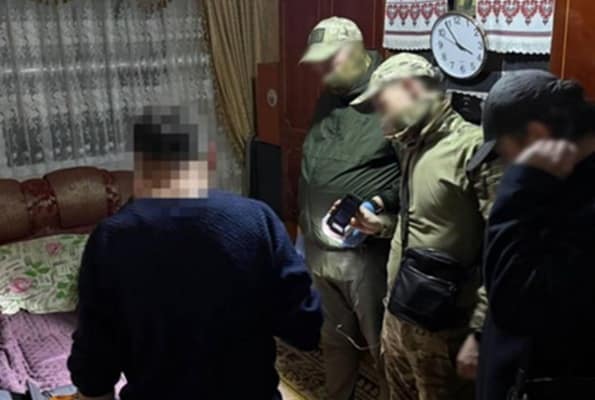
Ukraine uncovered a Russian intelligence network planning contract killings of military commanders and public figures in Kyiv.




fromThe New Yorker
5 days agoThe Spy Who Helped Stop Iran from Getting the Bomb
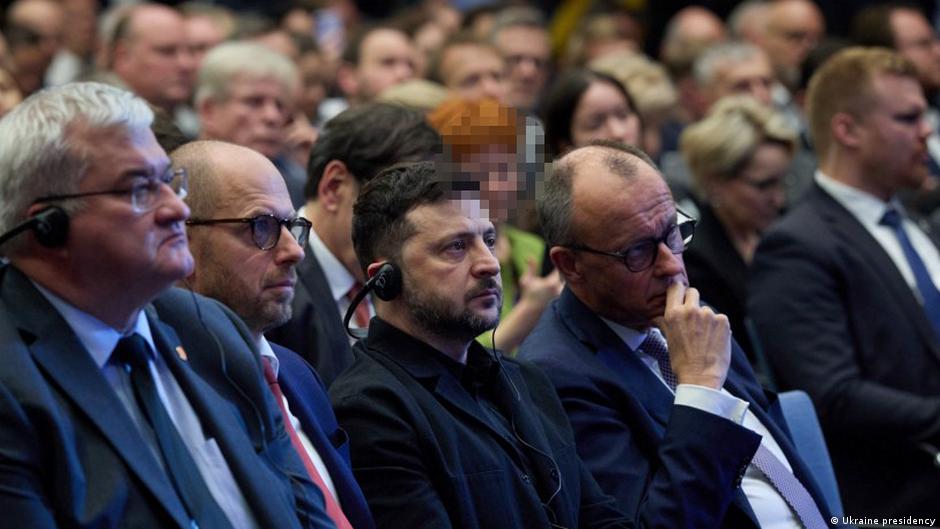
Chalker claims that during his time at the C.I.A., he was instrumental in persuading Iranian scientists to defect, which provided crucial information that 'prevented Iran from getting a nuke.' His operations involved complex strategies and a deep understanding of the scientists' motivations.
Washington DC


#internet-censorship
Russo-Ukrainian War
fromLondon Business News | Londonlovesbusiness.com
2 weeks agoIs Russia's internet blackout also intended to help enforce conscription more strictly? - London Business News | Londonlovesbusiness.com
Russia has intensified internet censorship and communications control from 2025-2026, blocking major platforms and implementing mobile blackouts while enforcing stricter conscription laws.
Russo-Ukrainian War
fromwww.businessinsider.com
4 days agoUkrainian troops showed 'greater tactical imagination' than Western trainers, British officer says, pointing to their ambush tactics
Ukrainian soldiers demonstrate greater tactical creativity and flexibility compared to their Western trainers, particularly in ambush tactics.
Information security
fromSecuritymagazine
4 days agoThe Rising Tide of Executive Protection: Corporations Ramp Up Security in an Era of Heightened Threats
Companies are increasingly investing in executive protection due to rising threats, making it a strategic necessity for business continuity and resilience.
World politics
fromNextgov.com
3 weeks agoRussia-linked hackers appear on Iran war's cyber front, but their impact is murky
Russia-linked hacktivist groups supporting Iran have increased cyber activity against U.S. and Israeli targets during the Middle East conflict, though their impact remains unclear and largely unverified.
Privacy technologies
fromTechCrunch
3 weeks agoRussian government hackers targeting Signal and WhatsApp users, Dutch spies warn | TechCrunch
Russian state actors are conducting large-scale phishing campaigns targeting Signal and WhatsApp users, particularly government, military officials, and journalists worldwide, using social engineering rather than malware.
US news
fromwww.theguardian.com
1 month agoThe Russian honeytrap: alleged spy for Moscow faces five years in US prison
Nomma Zarubina, an FSB-recruited Russian intelligence operative, pleaded guilty to lying to the FBI about her contacts with Russian intelligence while posing as a legitimate activist to infiltrate American political and academic circles.
fromwww.aljazeera.com
4 weeks agoUS downplays reports Russia gave Iran intel to help Tehran strike US assets
Since the war began on February 28, Russia has passed Iran the locations of US military assets, including warships and aircraft, three officials, who spoke on the condition of anonymity, told The Washington Post. It does seem like it's a pretty comprehensive effort, one of the sources told the newspaper.
World news
Russo-Ukrainian War
fromwww.businessinsider.com
1 week agoRussia loaded its cheap 'Molniya' strike drones with extra batteries and high-def cameras, turning them into recon tools
Russia has upgraded Molniya drones for enhanced reconnaissance and strike capabilities in Ukraine, making them more versatile and cost-effective.


Russo-Ukrainian War
fromwww.mediaite.com
2 weeks agoWSJ Doubles Down on Report Russia Is Sharing Intel With Iran, as Kremlin Cries Fake News'
Russia provides Iran with satellite intelligence, advanced drone technology, and battlefield tactics to enhance targeting capabilities against U.S. and allied military assets in the Middle East.
Information security
fromTechCrunch
2 weeks agoRussians caught stealing personal data from Ukrainians with new advanced iPhone hacking tools | TechCrunch
Russian-linked hackers deployed Darksword spyware targeting Ukrainian iPhone users to steal personal data and cryptocurrency, revealing advanced iPhone exploits may be more prevalent than previously believed.
Privacy technologies
fromDataBreaches.Net
1 month agoUkrainian hackers uncover how Russian drone operators are using Belarus - DataBreaches.Net
Ukrainian sanctions target Belarusian leader Lukashenka for facilitating Russian attack-UAV control from Belarus and enabling strikes on northern Ukrainian infrastructure.
fromThe New Yorker
2 months agoNational Security Begins Behind the Toaster
Dear Secretary Pete Hegseth, I realize that this is a big ask, but would you please invade and take possession of my son and daughter-in-law's apartment? Or maybe you'd like to make them an offer first? Either way, as a concerned mother and patriot who believes that national security begins at home, I feel it's my duty to let you know that Otis and Luna, the co-dictators of Unit 4-C, at 439 Bergen Street, in Park Slope, Brooklyn, must be overthrown.
Humor
Miscellaneous
fromEngadget
1 month agoRussia's recent blocking of Telegram is reportedly disrupting its military operations in Ukraine
Blocking Telegram and restricting Starlink degraded Russian frontline communications, reducing drone coordination and offensive capacity, and advantaging Ukrainian forces.
Russo-Ukrainian War
fromBusiness Insider
2 weeks agoInside the race to cut Russia off from the global internet
Russian military communications face severe disruption as SpaceX cuts Starlink access and authorities restrict Telegram, forcing troops to seek unreliable alternatives while the Kremlin systematically blocks major communication platforms.
Information security
fromSecurityWeek
3 weeks agoIran-Linked Hackers Take Aim at US and Other Targets, Raising Risk of Cyberattacks During War
Pro-Iranian hackers are expanding cyberattacks from the Middle East into the United States, targeting defense contractors, medical device companies, and critical infrastructure like power stations and water plants.
Russo-Ukrainian War
fromLondon Business News | Londonlovesbusiness.com
2 weeks agoMoscow internet shutdown after Ukrainian drone attacks signals Russia's return to Soviet-style control - London Business News | Londonlovesbusiness.com
Russia is responding to Ukrainian drone attacks by restricting internet access, controlling information flow, and tightening digital controls, resembling Soviet-era information management practices.
fromwww.theguardian.com
1 month agoA war foretold: how the CIA and MI6 got hold of Putin's Ukraine plans and why nobody believed them
William Burns had travelled halfway around the world to speak with Vladimir Putin, but in the end he had to make do with a phone call. It was November 2021, and US intelligence agencies had been picking up signals in the preceding weeks that Putin could be planning to invade Ukraine. President Joe Biden dispatched Burns, his CIA director, to warn Putin that the economic and political consequences if he did so would be disastrous.
World news
Information security
fromTechzine Global
3 weeks agoMass attack by Russian hackers on Dutch military personnel and civil servants
Russian hackers target Signal and WhatsApp accounts of Dutch government employees and military personnel by impersonating support chatbots to steal verification codes and exploit linked device features for remote account access.
Miscellaneous
fromLondon Business News | Londonlovesbusiness.com
1 month agoRussia intercepts EU satellites which could 'paralyse entire nations' - London Business News | Londonlovesbusiness.com
Russian space vehicles likely intercepted about a dozen European satellites, risking sensitive data exposure and enabling potential disruption of spacecraft.
fromThe Cipher Brief
1 month agoThe Kremlin Files: Russian Double Agents and Operational Games
A double agent, by contrast, is an intelligence asset who is knowingly and deliberately directed by one service to engage another in espionage. The controlling service uses that agent to feed information (called feed material) -true, false, or mixed-to the adversary. They do so to simultaneously study the adversary's tradecraft, collection priorities, and decision-making. In the Russian system, double agents also serve a bureaucratic function: they generate statistics, "success stories," and operational narratives that demonstrate effectiveness to political overseers and ultimately to Putin himself.
World news
Information security
fromDataBreaches.Net
1 month agoExtorting the Extorters? Moscow man accused of posing as FSB officer to extort Conti ransomware gang - DataBreaches.Net
A Moscow resident was accused of extorting money from the Conti ransomware group by impersonating an FSB officer and threatening criminal prosecution.
fromTechRepublic
1 month agoRussian Satellites Accused of Shadowing Key European Orbital Assets
Russian "inspector" satellites are once again in the spotlight after evidence emerged that two spacecraft have been maneuvering unusually close to critical communications satellites in orbit, raising concerns across the wider tech and satellite industries about surveillance, signal interception, and the growing militarization of orbital infrastructure. According to defense and intelligence sources, the satellites, known as Luch-1 and Luch-2, have been conducting sustained proximity operations near European government and commercial satellites and are believed to be part of Russia's "inspector" satellite program.
World news
fromwww.aljazeera.com
1 month agoHow Putin stays strong in Russia, four years into war in Ukraine
What was meant to be a swift military operation to topple the Ukrainian government and take control of the country has now dragged on for four devastating years. Russian President Vladimir Putin's promise to protect the people of Donbas, who, according to him, had been subjected to bullying and genocide by the Kyiv regime for the previous eight years, has meant that hundreds of settlements have been wiped off the face of the Earth and millions of lives have been broken, in both countries.
Russo-Ukrainian War
fromwww.theguardian.com
1 month agoRussia attempted to fully block' WhatsApp, Meta-owned company says
Trying to isolate over 100 million users from private and secure communication is a backwards step and can only lead to less safety for people in Russia. We continue to do everything we can to keep users connected. The move fits into the Kremlin's aim to achieve a sovereign internet an online space cut off from western technology and foreign influence, and more vulnerable to state control.
World news
fromLondon Business News | Londonlovesbusiness.com
1 month agoFormer UK spy chief warns Putin 'is more comfortable than he should be' - London Business News | Londonlovesbusiness.com
Sir Richard Moore the former UK's MI6 spy chief has told Sky News that he finds the tens of thousands of Russian troops killed in Ukraine just in December 2025, "astonishing." Vladimir Putin has lost more troops in Ukraine during fighting in December 2025 than Moscow lost during the ten-year Soviet-Afghan war. The Soviet-Afghan war started in 1979 until 1989 and around 20,000 Soviet soldiers were killed. The Russia President Mikhail Gorbachev called the war a "bleeding wound" and was viewed as a "humiliating mistake." Putin has made the same mistake as Gorbachev made in 1979, as he believed the Afghan war would be a "quick operation," as Moscow wanted to takeover Afghanistan.
Miscellaneous
[ Load more ]