#sar-satellites
#sar-satellites
[ follow ]
#nasa #space-exploration #space-technology #artemis-ii #satellites #orbital-data-centers #space-debris
fromYanko Design - Modern Industrial Design News
1 day ago60Hz Thermal and 4K Night Vision in One Device. SpectraEyes Basically Gives You Superman's Vision - Yanko Design
The core innovation lives in what SpectraEyes calls the Real-Time Dual-Screen Synchronization System. Rather than attempting to merge thermal and night vision into a single confused image, the optics route each feed to its own dedicated 1280×720 LCD screen inside the binocular housing.
Wearables
fromFast Company
5 days agoSee it: Air temperatures and pollution around the world are captured in real time in these animated weather maps
We created Earth in Action to provide a lens into what's happening on our planet, as it happens. Whether it's something typical, like the current air temperature, or an extreme event like a major dust storm, we wanted to provide an opportunity for people to see them.
OMG science




fromNature
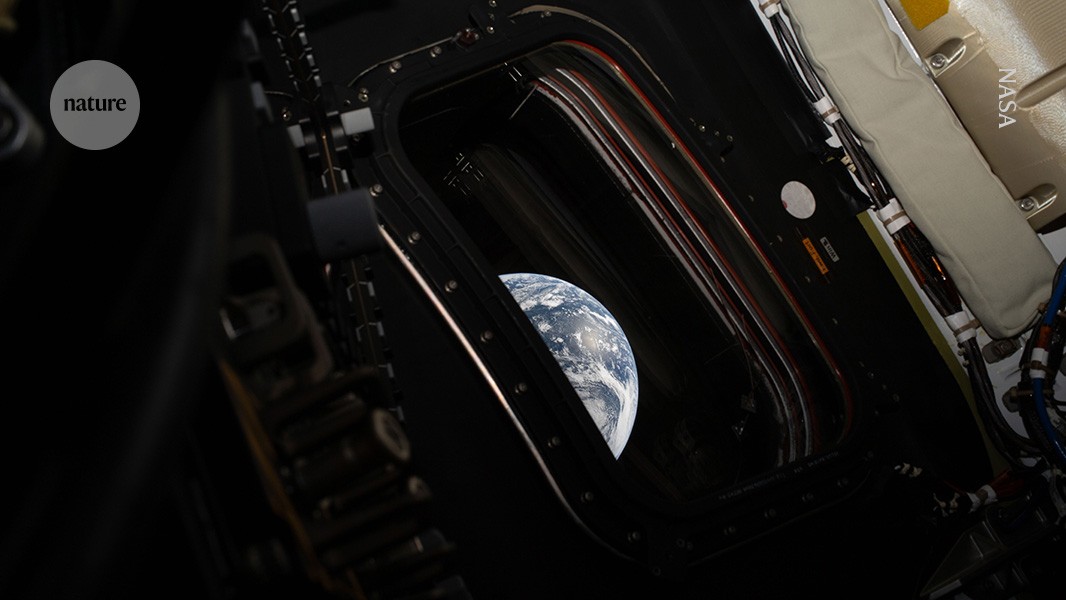
2 weeks agoObserving the tidal pulse of rivers from wide-swath satellite altimetry - Nature
Along coastlines, where tides are typically magnified, they profoundly affect navigation, commerce, coastal flooding, water properties and sediment transport. Tides impact the flooding of rivers and, thus, influence the extent of their floodplain, which has cascading effects on biogeochemical and ecological processes.
Environment
LA food
fromArs Technica
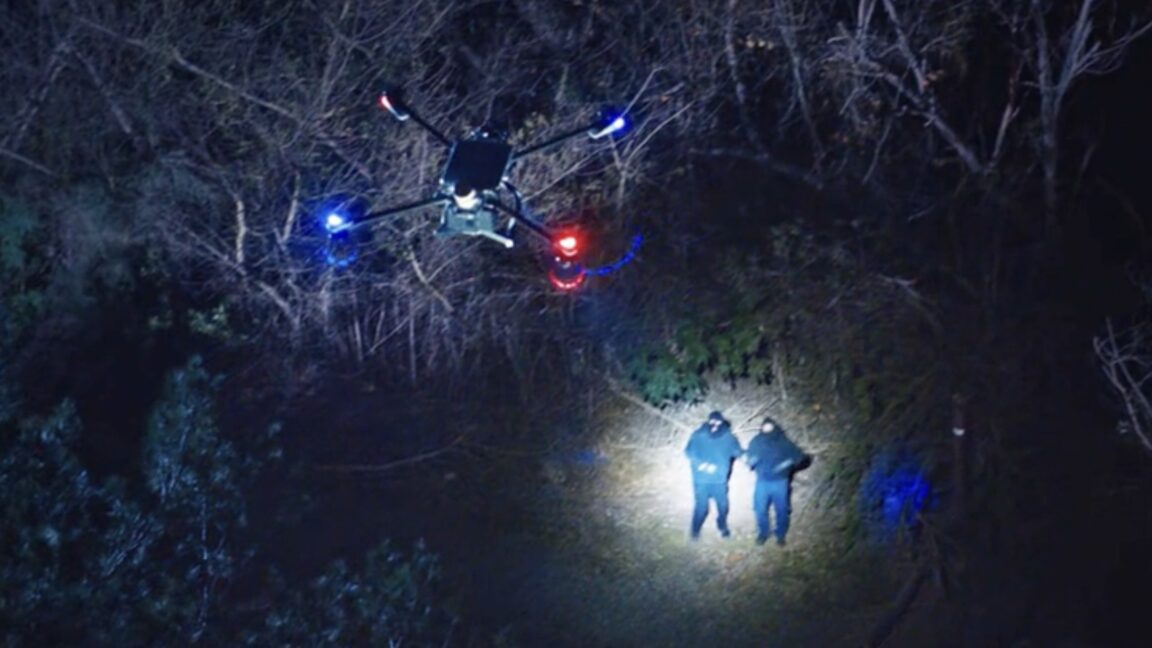
2 weeks agoFirefighting drones head to Aspen-can they suppress a blaze before humans arrive?
California's most destructive wildfires occur increasingly frequently, with traditional firefighting methods remaining fundamentally unchanged despite technological advances in monitoring and detection.
European startups
fromTNW | Ecosystems
3 weeks agoAIRMO raises 5M to put methane-sniffing satellites in orbit by 2027
AIRMO secured €5 million seed funding to launch its first satellite in 2027, deploying micro-LiDAR and SWIR imaging technology capable of detecting methane leaks the size of a leaking car from orbit.
fromThe Cipher Brief
4 weeks agoCheap Drones, Expensive Consequences: The New Economics of War
For most of the twentieth century, airpower was one of the most costly components of military strength. Fighter jets, strategic bombers, and advanced missile systems necessitated massive financial investments, highly skilled personnel, and sophisticated logistical support networks. Only great military forces had the ability to sustain these capabilities.
World politics
Venture
fromTechCrunch
3 weeks agoThis SpaceX veteran says the next big thing in space is satellites that return to Earth | TechCrunch
Lux Aeterna develops reusable satellites with integrated heat shields enabling payload return to Earth, securing $10 million seed funding for 2027 demonstration mission.
fromTheregister
4 weeks agoNASA's asteroid defence mission slowed targets just a bit
The momentum enhancement factor for DART's impact was about two, meaning that the debris loss doubled the punch created by the spacecraft alone. The new study shows the impact ejected so much material from the binary system that it also changed the binary's orbital period around the Sun by 0.15 seconds.
OMG science
fromwww.dw.com
2 weeks ago'Vulnerable' satellites guide the world and its wars
Signals from Global Navigation Satellite Systems are quite vulnerable. They are exceptionally weak, meaning that any radio noise near their frequency, accidental or malicious, can interfere with reception. I am confident that there are people in every government who understand the problem. The challenge is getting leadership to both understand and act to reduce the risk.
fromTheregister
2 weeks agoMoD spends 17.5M on Cyprus eye in the sky for Skynet
The facility, known as Noctis-2, will include an optical array and potentially an infrared telescope. It will provide a "persistent stare capability" of the orbit used by geostationary satellites, broader monitoring of the skies and the ability to examine chosen objects, according to a preliminary market engagement notice published on 16 March.
Roam Research
#orbital-data-centers
Science
fromFuturism
1 month agoData Centers in Space Are Even More Cursed Than Previously Believed
SpaceX filed a patent for orbital data centers with up to one million satellites, but experts remain highly skeptical about financial feasibility and technological viability of space-based AI infrastructure.
fromEngadget
1 month agoHow to send a message via satellite on iPhone
Apple's satellite features were originally designed for emergencies, allowing iPhone users to contact emergency services when cellular and Wi-Fi coverage is unavailable. With recent versions of iOS, Apple has expanded those capabilities to include sending and receiving messages via satellite. This makes it possible to stay in touch with friends and family from remote locations where traditional networks do not reach, such as hiking trails, rural areas or offshore locations.
Apple
Artificial intelligence
fromFortune
1 month agoAI is running out of power. Space won't be an escape hatch for decades | Fortune
Orbital solar-powered data centers could alleviate soaring AI electricity demand but face substantial technical, economic, and infrastructure hurdles before becoming practical.

fromThe Cipher Brief
2 weeks agoGPS Denied: Time to Upgrade
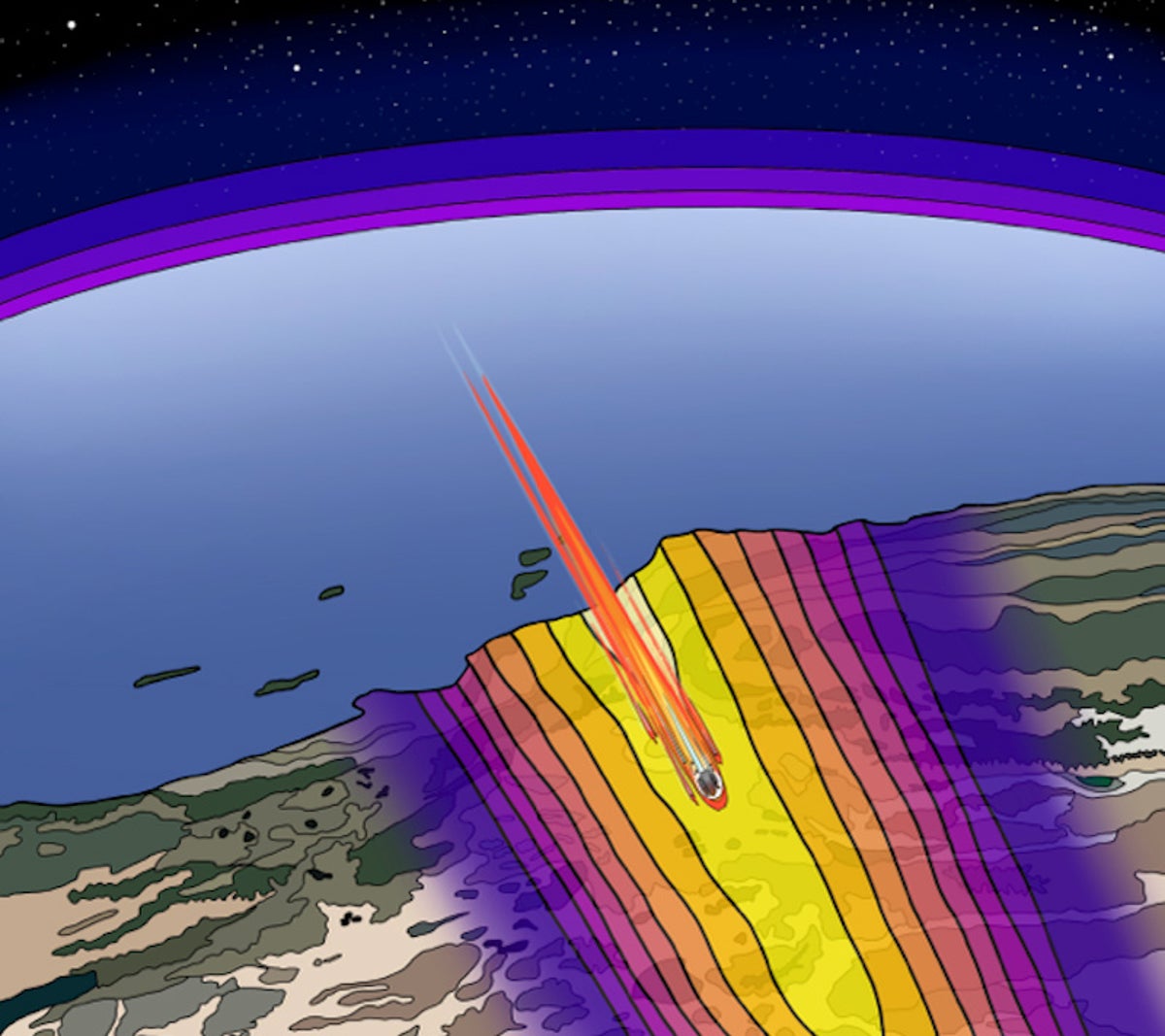
On February 28, ships navigating the Strait of Hormuz started appearing on tracking screens in places they couldn't possibly be. They appeared to be sitting on airport runways, parked on Iranian land, and clustered at nuclear power plants. More than 1,100 commercial vessels had their navigation systems scrambled in a single day following US-Israeli airstrikes on Iran, bringing a waterway that handles a fifth of the world's oil exports to a halt.
Science
fromwww.scientificamerican.com
1 month agoHow new AI technology is helping detect and prevent wildfires
Wildfire prevention has traditionally relied on blunt tools, such as rigid inspection cycles and emergency power shutoffs. Now a new generation of technology start-ups is pitching a more targeted approach: using artificial intelligence to help utility companies decide what to inspectand where to intervenebefore a spark becomes a blaze. The stakes are rising. In 2025 more than 77,000 wildfires were reported in the U.S.significantly more than the past decade's averageand burned more than five million acres.
Environment
fromNature
2 months agoWhat my cave stay taught me about sensors
To capture the biological impact of this extreme environment, I used a comprehensive suite of sensors and biomarker analyses. I wore a wireless electroencephalograph (EEG) system to monitor brain activity, sleep stages and neural signatures of stress and adaptation; the Oura Ring to continuously track sleep patterns, heart-rate variability and circadian-rhythm shifts; and the glucose monitor to follow metabolic responses in real time.
Wearables
Gadgets
fromComputerWeekly.com
1 month agoMyriota introduces satellite-based scalable global asset tracking | Computer Weekly
AssetHawk combines native 5G NTN satellite connectivity with HyperPulse to deliver affordable, rapid-deploy satellite asset tracking for global visibility beyond cellular networks.
fromTechCrunch
3 weeks agoGoogle is using old news reports and AI to predict flash floods | TechCrunch
While humans have assembled a lot of weather data, flash floods are too short-lived and localized to be measured comprehensively, the way the temperature or even river flows are monitored over time. That data gap means that deep learning models, which are increasingly capable of forecasting the weather, aren't able to predict flash floods.
Science
US news
fromArs Technica
2 months agoUS spy satellite agency declassifies high-flying Cold War listening post
Jumpseat was the United States' first-generation HEO signals-collection satellite program that monitored Soviet military electronic and communications emissions from 1971 through 2006 using Arctic-loitering apogee orbits.
Science
fromBig Think
3 weeks agoNASA's next X-ray mission, AXIS, has been killed
NASA cancelled the AXIS X-ray mission in March 2026 due to programmatic constraints, delaying the next major X-ray observatory by a decade to the 2050s-2060s, despite Chandra's 1999 launch making it outdated for current scientific needs.
fromWIRED
1 month agoCould AI Data Centers Be Moved to Outer Space?
Now say you want to run some modest AI stuff. That's a bigger job, so let's scale up our cubical computer with edges twice as long as before. That would make the volume eight times larger (2 3), so we could have eight times as many processors, and we need eight times as much power input-2,400 watts. However, the surface area is only four times (2 2) larger, so the radiative power would be about 4,000 watts.
Science
fromArs Technica
2 months agoAs data from space spikes, an innovative ground station company seeks to cash in
By the end of the year, Northwood, based in El Segundo, California, had shown the ability to build eight of these Portal arrays a month. And in January the company had deployed operational Portal antennas across two continents. These deployments, which comprise an area of 8 to 15 meters, have the equivalent capability of a 7-meter parabolic dish, said Griffin Cleverly, co-founder and chief technical officer of Northwood.
Science
fromNextgov.com
2 months agoQuantum cameras could remake space-based intelligence
Can quantum physics enable better, cheaper, faster satellite photos? In a month or two, a startup will test a "quantum camera" for space-based imaging. If it works, it could slash the cost of missile defenses and give smaller NATO allies and partners spy-satellite capabilities that were once exclusive to major powers.
Science
Science
fromwww.scientificamerican.com
1 month agoThe largest-ever satellite of its kind just unfurled its wings in low-Earth orbit
AST SpaceMobile's BlueBird 6 deployed a roughly 2,400-square-foot communications antenna—the largest commercial communications array in low-Earth orbit—aiming to enable smartphone cellular broadband.
fromThe Walrus
2 months agoCanada Is Building a Surveillance Network in Space | The Walrus
Our iron giant is a deep space radio telescope, with an antenna dish measuring forty-six metres across, the largest instrument of its kind in Canada. Starting in the 1960s, the Algonquin Radio Observatory performed a number of cutting-edge scientific projects, including joining SETI's early efforts, in the 1970s and 1980s, to find signatures of alien life-spectrum emissions from water molecules, artificial transmitter signals. No luck.
Science
Science
fromFast Company
2 months agoElon Musk wants to put 1 million satellites in orbit. Can Earth handle it?
SpaceX has requested FCC permission to launch up to one million satellites, potentially creating orbital data-center constellations and massively increasing orbital congestion and environmental impacts.
fromFuturism
2 months agoStunning Footage Shows Space Station Drifting Through Aurora's Dazzling Lights
Earlier this week, the Sun unleashed a powerful X-class solar flare, a major burst of electromagnetically charged particles that lit up the Earth's night sky as they entered our planet's atmosphere. The effect was stunning: a dazzling display of auroras reaching as far as southern California. Forecasters that it was one of the largest solar storms in decades, making for a particularly unique opportunity to watch the show unfold.
Science
[ Load more ]