#saudi-surveillance
#saudi-surveillance
[ follow ]
#saudi-arabia #iran #surveillance #middle-east-conflict #data-privacy #neom #middle-east #data-centers #human-rights





fromThe New Yorker
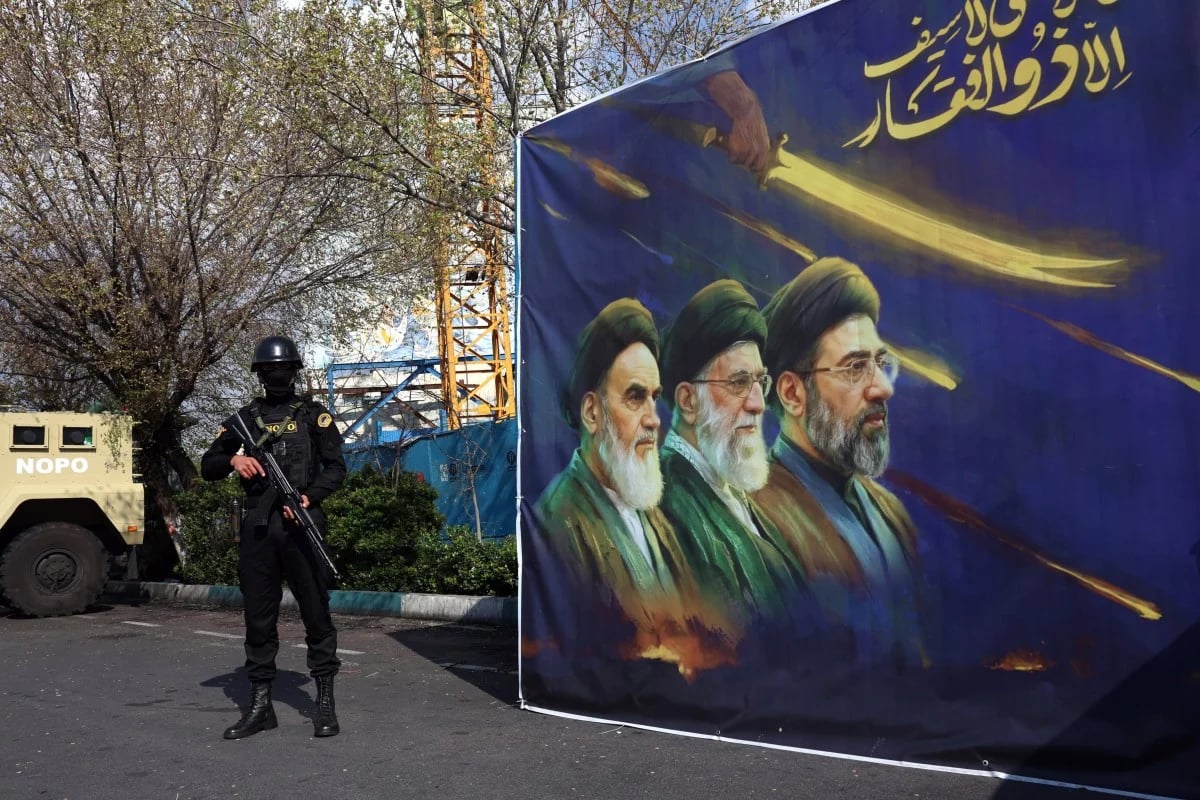
5 days agoThe Spy Who Helped Stop Iran from Getting the Bomb
Chalker claims that during his time at the C.I.A., he was instrumental in persuading Iranian scientists to defect, which provided crucial information that 'prevented Iran from getting a nuke.' His operations involved complex strategies and a deep understanding of the scientists' motivations.
Washington DC
New York City
fromwww.amny.com
3 weeks agoOp-Ed | Mamdani must rein in mass surveillance before it's too late | amNewYork
NYC's surveillance infrastructure enables systematic data sharing between agencies, facilitating ICE deportations despite judicial orders for release and creating predictable abuse patterns.
fromTheregister
1 week agoIndian government probes CCTV espionage linked to Pakistan
Indian authorities have reportedly ordered an audit of the nation's CCTV cameras, after police uncovered what they claim was a Pakistan-backed surveillance operation involving cameras aimed at railway stations and other infrastructure.
Privacy professionals
#saudi-arabia
World news
fromLondon Business News | Londonlovesbusiness.com
1 week agoIt is 'only a matter of time' before Saudi Arabia 'enters the war' - London Business News | Londonlovesbusiness.com
Saudi Arabia is preparing for military action against Iran due to ongoing hostilities and has allowed U.S. forces to use its air base for strikes.
World news
fromLondon Business News | Londonlovesbusiness.com
2 weeks agoSaudi Arabia warns of military action as Iran conflict escalates - London Business News | Londonlovesbusiness.com
Saudi Arabia warns of potential military action against Iran amid escalating regional tensions and attacks on energy infrastructure.

World news
fromLondon Business News | Londonlovesbusiness.com
1 week agoIt is 'only a matter of time' before Saudi Arabia 'enters the war' - London Business News | Londonlovesbusiness.com
Saudi Arabia is preparing for military action against Iran due to ongoing hostilities and has allowed U.S. forces to use its air base for strikes.
World news
fromLondon Business News | Londonlovesbusiness.com
2 weeks agoSaudi Arabia warns of military action as Iran conflict escalates - London Business News | Londonlovesbusiness.com
Saudi Arabia warns of potential military action against Iran amid escalating regional tensions and attacks on energy infrastructure.
Russo-Ukrainian War
fromwww.theguardian.com
4 weeks agoUkraine war briefing: Zelenskyy offers help to Saudi Crown prince on combatting Iranian drones
Ukraine offers expertise in countering Iranian drones to Saudi Arabia and Middle East partners, while Ukrainian drone manufacturers seek to export interceptor technology globally amid ongoing Russian attacks.



Media industry
fromBusiness Insider
1 month agoSaudi Arabia, other Gulf states pledged to invest $24 billion in Paramount's WBD deal. Is that still on?
Paramount secured WBD acquisition rights with $47 billion equity commitment from the Ellisons and RedBird Capital, but hasn't disclosed whether three Gulf states' promised $24 billion will finance the deal.
Artificial intelligence
fromSilicon Canals
1 month agoSaudi Arabia commits $40B to AI infrastructure in bid to diversify beyond oil - Silicon Canals
Saudi Arabia commits $40 billion to AI infrastructure with US partners, establishing data centers and semiconductor supply chains to diversify from oil dependency.


#iran-us-tensions

World news
fromwww.theguardian.com
2 weeks agoGulf states may be covertly encouraging attacks by US, Iran's foreign minister says
Iran's foreign minister accused Gulf states hosting US forces of covertly supporting attacks on Iran, citing reports of Saudi Arabia's private encouragement to the US president despite public opposition.
fromwww.theguardian.com
3 weeks agoInvasive' AI-led mass surveillance in Africa violating freedoms, warn experts
This large-scale and invasive AI-enabled surveillance of public spaces is not legal, necessary or proportionate to the legitimate aim of providing security. History shows us that this is the latest tool used by governments to invade the privacy of citizens and stifle freedom of movement and expression.
Privacy professionals
fromwww.aljazeera.com
2 weeks agoSaudi FM warns Iran that patience in Gulf not unlimited' amid attacks
The level of accuracy in some of this targeting you can see it in our neighbours as well as the kingdom indicates that this is something that was premeditated, preplanned, preorganised and well thought out.
World news
fromFast Company
2 months agoSaudi Arabia is already living the future of healthcare
Saudi Arabia is already operating the kind of connected, AI-enabled healthcare infrastructure many countries are still debating how to build. At FII9, the conversation was unmistakable. Global innovation momentum is shifting toward the Middle East, and nowhere more than Saudi Arabia, where national digital platforms like Sehhaty already give millions of residents unified access to their health data. At the Global Health Exhibition, I saw population-level analytics, AI-powered diagnostics, multiomic initiatives, and interoperable infrastructure deployed at a speed and scale that would take years in other countries.
Public health




fromSilicon Canals
1 month agoSaudi Arabia launches $40B tech fund as Gulf states race to diversify beyond oil - Silicon Canals
Saudi Arabia just made its most aggressive move yet in that generational project. The kingdom announced a new $40 billion technology investment fund, developed in partnership with American venture capital heavyweight Andreessen Horowitz (a16z), aimed at positioning Saudi Arabia as a global hub for artificial intelligence, cloud infrastructure, and advanced computing.
Venture
fromenglish.elpais.com
3 weeks agoWhy Iran is targeting the artificial intelligence infrastructure of Gulf countries
In the early hours of March 1, an Amazon data center in the UAE was struck by a drone, the company reported. Shortly afterward, another center belonging to the American tech giant suffered a direct hit. And a short time later, a third, this time in Bahrain, was damaged by another drone strike. Since Amazon is the preferred partner of many companies and governments in the region, the attacks caused immediate disruptions.
World news
fromTheregister
3 weeks agoPentagon praises Palantir tech for battlefield strike speed
So we've gone from identifying the target to now coming up with a course of action, to now actioning that target, all from one system. This is revolutionary. We were having this done in about eight or nine systems where humans were literally moving detections left and right in order to get to our desired end state, in this case closing a kill chain.
World news
fromTheregister
1 month agoSingapore spent 11 months evicting suspected telco spies
The Cyber Security Agency of Singapore said advanced persistent threat UNC3886 dug itself into the networks of all four major telecom providers, sparking an 11-month digital eviction effort involving more than 100 personnel from across government, military, intelligence, and industry. Branded "Operation Cyber Guardian," the cleanup saw the state and telco engineers teaming up to flush the intruders out while keeping the nation's phone and data pipes flowing.
Information security
World news
fromwww.theguardian.com
4 weeks agoIt means missile defence on data centres': drone strikes raises doubts over Gulf as AI superpower
Iranian drones struck Amazon Web Services datacentres in the UAE and Bahrain, causing widespread civilian disruption and marking the first deliberate targeting of commercial datacentres by armed forces during active conflict.
fromwww.aljazeera.com
4 weeks agoIranian missiles intercepted over Saudi, UAE, drones launched at Qatar
The Qatari Ministry of Defence said the country came under a wave of drone attacks on Friday, with 10 drones fired from Iran. Nine of them were intercepted and destroyed, but one managed to reach the ground and land in a remote area.
World news
fromwww.theguardian.com
1 month agoWill the Gulf's push for its own AI succeed?
Three years ago [when Web Summit Qatar began], people were talking about entering a multi-polar world. We are now living in a multi-polar world, said Paddy Cosgrave. As evidence, he referenced the fiery rebuke of Donald Trump given by the Canadian prime minister, Mark Carney, at Davos a few weeks prior. He pointed to the act that had preceded him on stage: dancing robots built by a Chinese company, which he called the most advanced in the world.
Artificial intelligence
World news
fromwww.theguardian.com
1 month agoThe Guardian view on Saudi Arabia and the UAE: as former allies clash, others are likely to pay | Editorial
Strategic, economic and political rivalry transformed the once-close Saudi–UAE alliance into a severed relationship marked by competing regional visions and open conflicts.


World news
fromwww.theguardian.com
2 months agoJordanian authorities used Israeli spyware to surveil pro-Gaza activists, report finds
Jordanian authorities used Israeli Cellebrite forensic tools to extract extensive data from activists' mobile phones, likely breaching international human rights obligations.
fromwww.aljazeera.com
2 months agoSaudi to Sudan: Can Pakistan expand military footprint across Arab world?
By the standards of mega arms deals, the $1.5bn deal for Pakistan to reportedly sell jets and weapons to Sudan's military isn't huge. But the deal, which the Reuters news agency reported in early January was close to being finalised, could prove pivotal in the grinding war that has devoured Sudan for nearly three years between the country's armed forces and the paramilitary Rapid Support Forces (RSF).
World news
[ Load more ]