#school-nutrition
#school-nutrition
[ follow ]
#dietary-guidelines #ultra-processed-foods #public-health #food-insecurity #nutrition #nutrition-policy #snap


fromThe Oaklandside
4 days agoThousands in Alameda County will lose CalFresh this week. Here's what to know
"There are people who have come here after escaping violence and persecution and torture. These are communities that we have historically said, 'You are welcome here. We have the support for you. We're going to help you get established in our country.' And now, the federal government is abandoning them."
East Bay (California)
fromABC7 San Francisco
6 days agoNew CA mandate requires Corn tortillas to contain Folic Acid, more states considering same rule
"It's such a small effort for such a tremendous impact," said Lopez, 44, who lives in Bakersfield and is now a lawyer with two young daughters. "There is very little that I wouldn't do to spare anybody this heartache."
Public health
#food-insecurity



Online Community Development
fromStreetsblog
1 month agoHow the 'Little Free Pantry' Can Help Feed the Hungry Without Requiring Them to Drive - Streetsblog USA
Micro-pantries are small, community-maintained food compartments addressing food insecurity for people without reliable transportation to traditional food banks.




Exercise
fromSlate Magazine
3 weeks agoAll Kinds of Drinks Have a Strange New Number on Their Label. Here's What It Means-and Why You Should Take It Seriously.
Protein-enhanced beverages are rapidly expanding across all drink categories, from coffee and smoothies to alcoholic beverages, targeting health-conscious consumers seeking convenient nutrition.
#snap-work-requirements

Non-profit organizations
fromCity Limits
1 month agoWhat You Need to Know: New SNAP Work Requirements in NYC
New SNAP work requirements effective March 1 affect approximately 123,000 New Yorkers, expanding to include previously exempt groups like homeless individuals, veterans, and youth aging out of foster care.


Non-profit organizations
fromCity Limits
1 month agoWhat You Need to Know: New SNAP Work Requirements in NYC
New SNAP work requirements effective March 1 affect approximately 123,000 New Yorkers, expanding to include previously exempt groups like homeless individuals, veterans, and youth aging out of foster care.
#dietary-guidelines



Public health
fromCornell Chronicle
3 weeks agoNutrition policy scholar Marion Nestle to speak March 19 | Cornell Chronicle
The 2025-2030 Dietary Guidelines for Americans prioritize political messaging over scientific evidence, departing from established norms of transparency and ignoring independent advisory committee recommendations.
fromNatural Health News
3 months agoCalifornia Moves to Eliminate Ultraprocessed Foods from School Lunches - by 2035
California's "Real Food, Healthy Kids Act" represents the first law in the U.S. to define and ban ultraprocessed foods (UPFs) from public school lunches. As reported by CNN, the bill requires scientists and public health experts to determine which ingredients and additives are most damaging to children's health. These "foods of concern" will then be systematically phased out of school meal programs that serve over 1 billion lunches annually.
Alternative medicine
Toronto startup
fromwww.cbc.ca
1 month agoHow Toronto hopes to revolutionize its school food program | CBC News
Toronto won a Bloomberg Philanthropies innovation challenge, securing $1.4 million to expand its school food program toward universal free meals by 2030 while supporting local farmers and creating community jobs.
Parenting
fromSlate Magazine
1 month agoThe Trait We Hate Most in Our Kids Didn't Exist 100 Years Ago. I Know Where We Went Wrong-and How to Fix It.
Dr. Spock regretted his permissive feeding advice, which was misinterpreted as endorsing unrestricted junk food consumption, contributing to deteriorating American children's diets.
Food & drink
fromwww.theguardian.com
1 month agoWhy food justice isn't being served in America
Food justice advocates often misrepresent South Central Los Angeles as a resource-depleted food desert lacking grocery stores and knowledgeable residents, contradicting anthropological research documenting abundant food retail and community food practices.
Public health
fromInside Higher Ed | Higher Education News, Events and Jobs
1 month ago53 Medical Schools Pledge to Beef Up Nutrition Education
Fifty-three medical schools are expanding nutrition education to at least 40 hours annually, with federal funding supporting curriculum development and clinical training initiatives.


fromwww.bbc.com
1 month agoChildren 'bombarded' with weight loss drug ads online, says commissioner
Laura CressTechnology reporter Fiordaliso via Getty Images Children are routinely exposed to adverts for weight loss injections and pills online, according to a report by the children's commissioner for England. It found young people were "routinely bombarded" with ads for products which claimed to change their bodies and appearance, despite this kind of advertising being banned. Dame Rachel de Souza said the posts were "immensely damaging" to young people's self-esteem and called for a ban on social media advertising to children.
UK news
fromFast Company
2 months agoWhy an all-foods-fit approach to nutrition is better than dieting, according to a dietitian
Diet culture norms have led to a multibillion-dollar industry promoting diets that each come with their own set of rules, with each claiming it's the only way to be healthy or lose weight. When access to nutrition information is at an all-time high online, people are often left digging through conflicting information when trying to figure out what to eat or what a healthy diet look likes.
Health
Psychology
fromSilicon Canals
2 months agoYou know someone grew up without money when they do these 8 things at grocery stores-and they have no idea how obvious it is - Silicon Canals
Childhood financial scarcity creates lasting grocery-shopping behaviors—habitual price-checking, full-cart preference, and mental arithmetic—even after financial circumstances change.


fromwww.theguardian.com
2 months agoThe Guardian view on food security: Britain can no longer trust markets alone | Editorial
Food policy across much of the world is changing. But not in Britain. That may be a costly mistake as the prices of essentials rise because of the climate emergency, geopolitical tensions and the fragility of just-in-time supply chains. Many capitals are now reviving their strategic food reserves. European nations such as Sweden, Finland, Norway and Germany are rebuilding stocks dismantled after the cold war.
Food & drink
US politics
fromFast Company
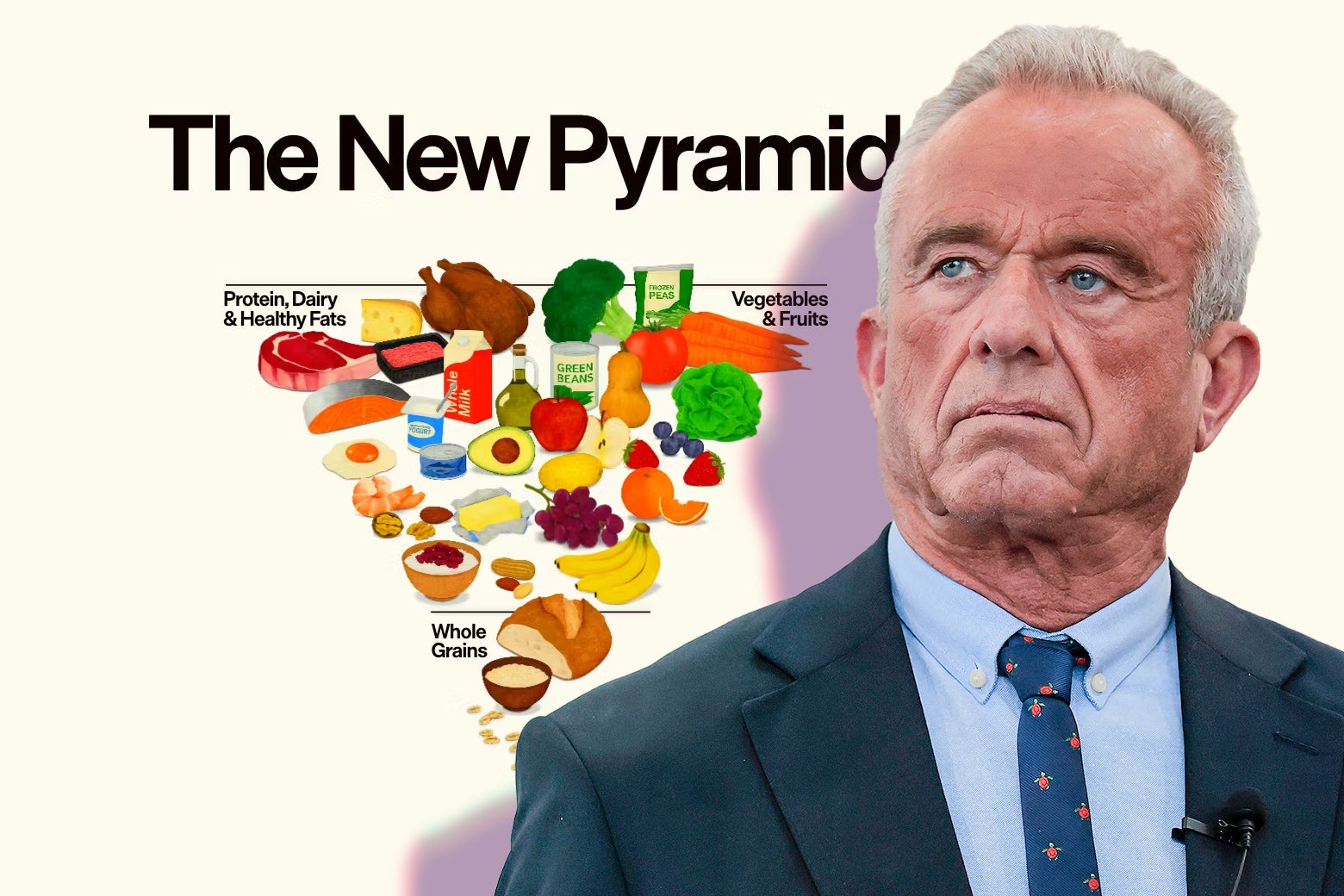
2 months agoThe Trump administration just gave the food pyramid a Sweetgreen makeover
The administration replaced the USDA's six-section food pyramid with a three-section inverted pyramid emphasizing whole or minimally processed foods: proteins/dairy/fats, fruits/vegetables, whole grains.
fromThe Atlantic
2 months agoThe Government's Confusing $3 Dinner Recommendation
At first, we didn't think much of it, the One Other Thing. When Agriculture Secretary Brooke Rollins suggested a meal of one corn tortilla, one piece of broccoli, one piece of chicken, and "one other thing"-all for a mere $3-we dwelled more on the other parts. The one corn tortilla, the unit of broccoli, the piece of chicken! How strange and bland a combination! How stingy in contrast to the birthday steaks our leaders enjoyed! If we'd only known then.
fromScary Mommy
2 months agoEasy (& Healthier) Food Swaps Your Family Won't Even Notice
Most of us are just trying to get through Tuesday without losing a hockey skate or being late to guitar practice - again. Eating healthier as a family is totally somewhere on the to-do list, but there's simply no time to overhaul the pantry or batch-cook for six hours on a Sunday just to make it happen. Sundays are already scary enough.
Food & drink
fromwww.independent.co.uk
2 months agoLower income and single parents more wary of stigma' around free breakfast clubs
From reproductive rights to climate change to Big Tech, The Independent is on the ground when the story is developing. Whether it's investigating the financials of Elon Musk's pro-Trump PAC or producing our latest documentary, 'The A Word', which shines a light on the American women fighting for reproductive rights, we know how important it is to parse out the facts from the messaging.
US politics
fromLady Freethinker
2 months agoA Win for Plant-Based Kids: New Law Allows Dairy-Free Milk in School Lunches
A newly signed federal law will expand milk options in U.S. school cafeterias, allowing students who can't or don't consume dairy to receive a non-dairy alternative as part of standard school meals for the first time. In a win for animal advocates and public health experts, the Whole Milk for Healthy Kids Act formally opens the door for dairy‑free milk options to be served alongside cow's milk in school cafeterias, without requiring families to provide medical documentation. These provisions come from a congressional bill introduced last year known as The FISCAL Act, which allows schools to include plant-based milks in their cafeteria offerings.
Public health
Public health
fromWashingtonian - The website that Washington lives by.
1 month agoHow 'Food Is Medicine' Movement Is Reducing Cost of Living
Medically tailored food programs increase access to fresh produce for food-insecure people with chronic diet-related diseases, and pilots aim to scale and evaluate veteran-targeted interventions.
[ Load more ]