#scientific-process
#scientific-process
[ follow ]
fromNature
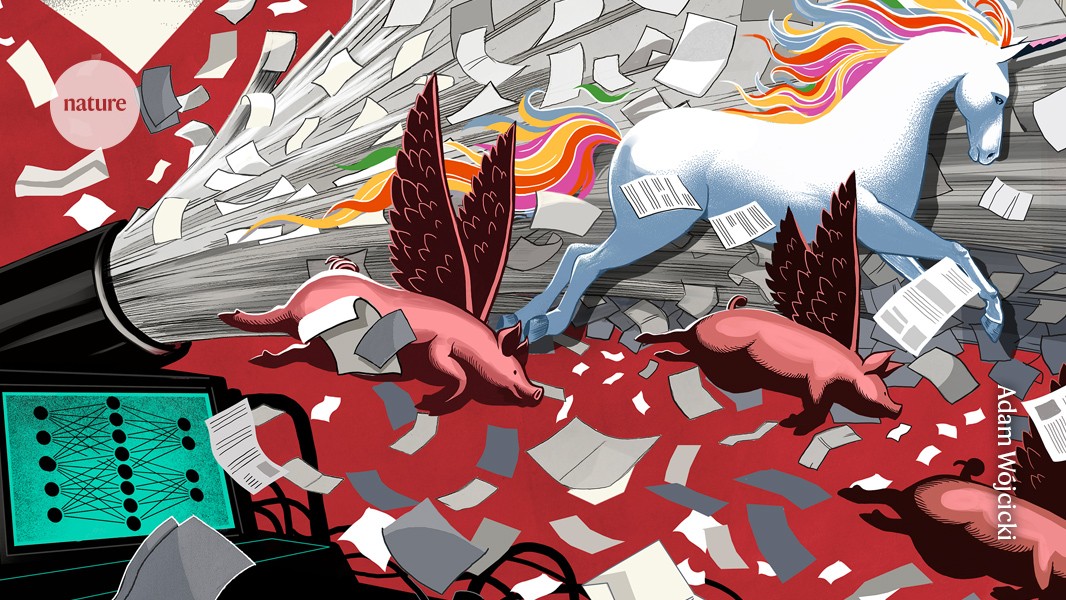
1 week agoNow is the time for scientific societies to guide global research
Modern scientific societies are increasingly vulnerable due to their dependence on membership fees and journal subscriptions, which are being challenged by the rise of virtual networking and open-access publishing.
Science
fromwww.scientificamerican.com
1 week agoWhat happens when AI starts checking mathematicians' work
Computer programs that check mathematical arguments have existed for decades, but translating a human-written proof into the strict programming language of a computer is extremely time-consuming, often taking months or even years.
OMG science
Higher education
fromInside Higher Ed | Higher Education News, Events and Jobs
1 month agoJournal Submissions Riddled With AI-Created Fake Citations
Artificial intelligence is generating convincing fake academic citations with legitimate formatting, real journal names, and fabricated DOI links, deceiving researchers and educators.
fromwww.theguardian.com
3 weeks agoPlease drive carefully: scientists plan to transport volatile antimatter for first time
A core question we want to understand is where did matter come from. And then, if you know about antimatter, it's natural to ask, why is that not here? The process is not understood and we are hunting for clues as to why it happened, says Dr Christian Smorra, a physicist on the Baryon Antibaryon Symmetry Experiment (Base) at Cern.
OMG science
Science
fromNature
3 weeks agoHow bioRxiv changed the way biologists share ideas - in numbers
bioRxiv has grown to over 310,000 preprints since 2013, with neuroscientists as top users and monthly submissions reaching 4,000 by 2025, demonstrating widespread acceptance of preprint publishing in scientific research.
OMG science
fromArs Technica
1 month agoResearch roundup: Six cool science stories we almost missed
Scientists revived Edison's nickel-iron battery design using protein scaffolding and graphene oxide, creating an aerogel structure for improved renewable energy storage with extended range and longevity.
Science
fromNature
3 weeks agoKeep calm and be transparent: advice from scientists who retracted their papers
Scientists who self-retract papers due to honest mistakes maintain citation rates and receive community support, suggesting shifting attitudes toward retractions as responsible scientific practice rather than career-damaging misconduct.
Artificial intelligence
fromwww.scientificamerican.com
1 month agoHow one chemist is using AI and robots to automate lab experiments
AI-driven laboratory automation like Coscientist accelerates chemistry by reducing repetitive work, improving accuracy, and enabling experiments previously limited by human error or fatigue.

fromNature
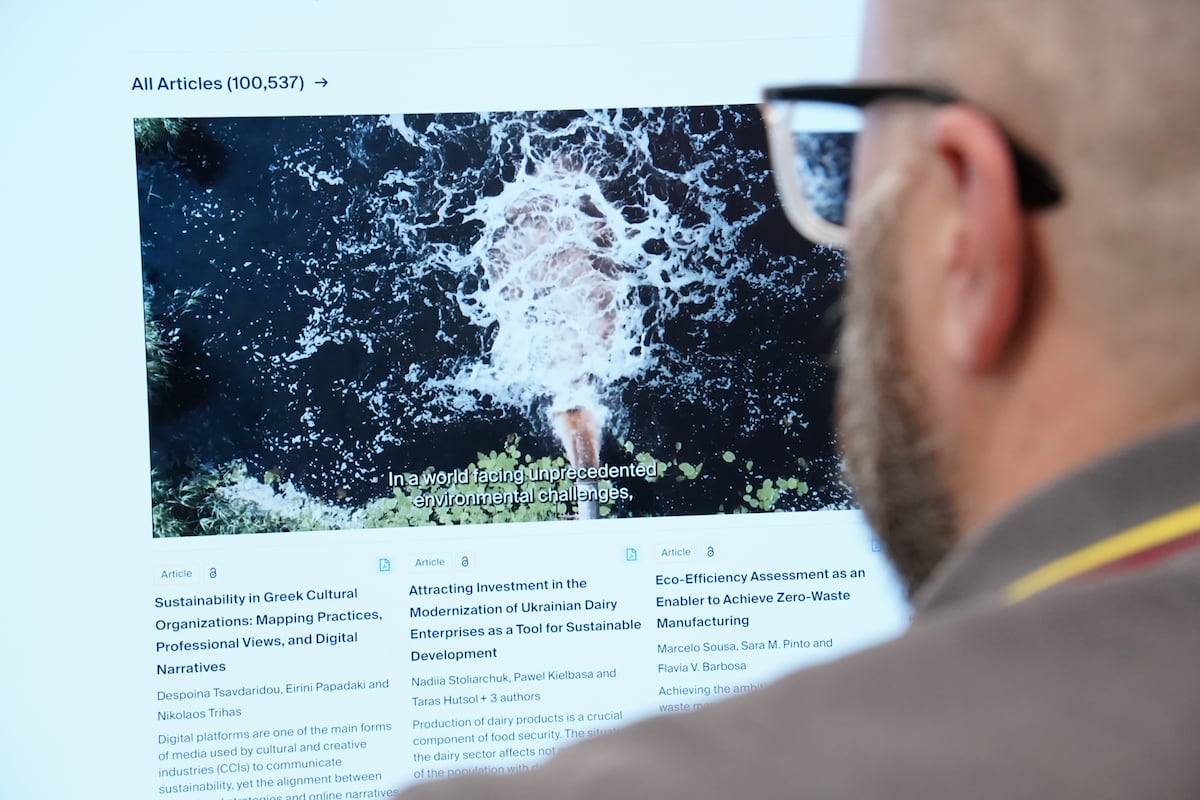
1 month agoThe age of animal experiments is waning. Where will science go next?
Last November, the UK government announced a bold plan to phase out animal testing in some areas of research. Animal tests for skin irritation are scheduled for elimination this year, and some studies on dogs should be slashed by 2030. The long-term vision is 'a world where the use of animals in science is eliminated in all but exceptional circumstances'.
Science
fromwww.nature.com
2 months agoCollective intelligence for AI-assisted chemical synthesis
The exponential growth of scientific literature presents an increasingly acute challenge across disciplines. Hundreds of thousands of new chemical reactions are reported annually, yet translating them into actionable experiments becomes an obstacle1,2. Recent applications of large language models (LLMs) have shown promise3,4,5,6, but systems that reliably work for diverse transformations across de novo compounds have remained elusive. Here we introduce MOSAIC (Multiple Optimized Specialists for AI-assisted Chemical Prediction), a computational framework that enables chemists to harness the collective knowledge of millions of reaction protocols.
fromNature
1 month agoFive ways to spot when a paper is a fraud
A growing number of AI tools can detect fraudulent elements in papers, but they can be expensive to use. Such tools are probably better deployed by journal publishers rather than individual reviewers, says Elisabeth Bik, a science-integrity consultant in San Francisco, California, especially because feeding unpublished content into AI tools can compromise confidentiality and is generally frowned on during peer review.
Science
fromPsychology Today
1 month agoHow Science Is Learning to Explore Ground Truth
Some clinicians have an uncanny quality. A colleague describes herself and others with this instinct as "witchy"-a capacity to know things about patients they haven't said yet, to follow a stray association to a song lyric or a half-remembered cultural reference and arrive, reliably, at something the patient urgently needed to say but couldn't reach on their own. We see with artificial intelligence these intriguing possibilities for discovery, especially as connections that human beings never would see pop out of apparently unrelated data.
Science
fromNature
1 month agoNanoscience is latest discipline to embrace large-scale replication efforts
Calling nanoscientists: your field needs you to try to replicate a landmark finding that quantum dots can act as biosensors inside living cells. As part of the first large-scale effort in the physical sciences to tackle the reproducibility crisis, researchers in France and the Netherlands are offering funds and resources in exchange for a few months of work. "We are trying to use
Science
Science
fromwww.nature.com
2 months agoAuthor Correction: An autonomous laboratory for the accelerated synthesis of inorganic materials
Prediction platform correctly identified 36 of 40 synthesized compounds; four were inconclusive, and novelty claims were clarified as 'new to the prediction platform', not new to science.
fromNature
2 months ago'It means I can sleep at night': how sensors are helping to solve scientists' problems
In fact, Stawicki was on a mission to save the lives of around 1,000 zebrafish ( Danio rerio) in her laboratory. Similarities between lines of hair cells on the fish's flanks and those in the mammalian inner ear enable her to use them as a model to study hearing problems in humans caused by some antibiotics and chemotherapy drugs. A sensor had picked up that the lab's heating system had been knocked out by a power fault.
Science
fromPsychology Today
2 months agoWhat Physics Might Be If It Were Left to Psychologists
Recent integrative approaches suggest that physics cannot be adequately characterized by magnitude-based distinctions alone, such as those implied by Big-P, little-p, and mini-p physics. While these categories capture differences in scope and historical impact, they fail to address the heterogeneity of physical activity itself. To remedy this, I propose the Five Fs of physics: force, friction, flux, formulation, and foundational structure.
Science
Science
fromNature
2 months agoSynthesizing scientific literature with retrieval-augmented language models - Nature
OpenScholar is an open, retrieval-augmented system integrating a 45 million-paper datastore, trained retrievers, and iterative self-feedback to generate cited, up-to-date scientific literature syntheses.
fromNature
2 months agoLarge-scale analogue quantum simulation using atom dot arrays - Nature
Analogue quantum simulations are a useful tool for investigating these systems, particularly in regimes in which the applicability of numerical techniques is limited. For different simulator platforms, figures of merit include the electron bandwidth and interaction strength, temperature and the number of simulated lattice sites. Their use is further underscored by the ability to realize distinct lattice geometries, on-site degrees of freedom and by the physical observables that are accessible to experimental measurement.
Science
Science
fromNature
1 month agoTransferable enantioselectivity models from sparse data - Nature
A descriptor-generation strategy predicts and optimizes enantioselectivity across diverse catalysts and substrates using transition-state and intermediate features for asymmetric nickel-catalyzed C(sp3) couplings.
[ Load more ]