#settler-movement
#settler-movement
[ follow ]


fromSmithsonian Magazine
1 day agoNative Nations Fought in the American Revolution to Protect Their Ancestral Lands. After the War, Settlers Seized Their Territory Anyway
"Once the Declaration of Independence is issued by Congress, then it kind of changes the calculus. Then, both sides are putting pressure on Native people to join one side or the other."
History


fromTruthout
6 days agoWith Gaza Still Under Blockade, Recycling Has Become a Matter of Life and Death
In the Al-Taghreba shelter in Khan Younis, the displaced refused to let the rituals of Ramadan die. They made their own decorations, recycling cola cans into radiant lanterns that hung between the tents.
Berlin food
#israeli-palestinian-conflict

World news
fromwww.theguardian.com
3 weeks agoIsraeli settlers and soldiers kill three Palestinians in West Bank village
Israeli settlers and soldiers killed six Palestinians in the West Bank during escalating violence, with attacks intensifying under cover of regional conflict while military-settler cooperation deepens ethnic cleansing operations.


World news
fromwww.theguardian.com
3 weeks agoIsraeli settlers and soldiers kill three Palestinians in West Bank village
Israeli settlers and soldiers killed six Palestinians in the West Bank during escalating violence, with attacks intensifying under cover of regional conflict while military-settler cooperation deepens ethnic cleansing operations.

World news
fromwww.aljazeera.com
2 weeks agoWhat the Iran war looks like from the occupied West Bank
While global attention focuses on Iran-Israel missile exchanges, West Bank Palestinians face ongoing settler violence, military raids, and daily restrictions amid falling shrapnel from regional conflict.
#palestinian-displacement


World news
fromwww.aljazeera.com
2 weeks agoIsrael carrying out mass expulsion of Palestinians' in West Bank, UN warns
The UN reports over 36,000 Palestinians forcibly displaced in the West Bank within one year due to Israeli settler violence and military operations, constituting unlawful mass transfer under international law.
World politics
fromThe New Yorker
3 weeks agoHow Israel Used the War in Gaza to Accelerate Settlements in the West Bank
Netanyahu's government accelerates West Bank settlement expansion and annexation while the Trump administration tacitly enables these policies through diplomatic recognition of Israeli settlements.


fromIntelligencer
2 months agoMamdani's Israel Balancing Act Has Just Begun
For a mayor who has become so closely associated with a foreign policy conflict thousands of miles away, Zohran Mamdani does relatively little to directly address it. Follow his public pronouncements, press conferences, and social media posts, and you'll find a relentless focus on the local: an executive order cutting fees for small businesses, a mayoral appointment to combat racial discrimination, a ride in a taxi to announce a new TLC commissioner.
US politics
World politics
fromTruthout
1 month agoIsraeli Settlers Killed Palestinian American Teen in Rising Assault on West Bank
Nasrallah Abu Siyam, a 19-year-old Palestinian American, was killed by Israeli settlers in the West Bank on February 19, 2026, marking the sixth Palestinian American death by Israeli forces or settlers since October 7, 2023.


fromwww.dw.com
2 months agoHow Israeli settler violence empties Palestinian villages
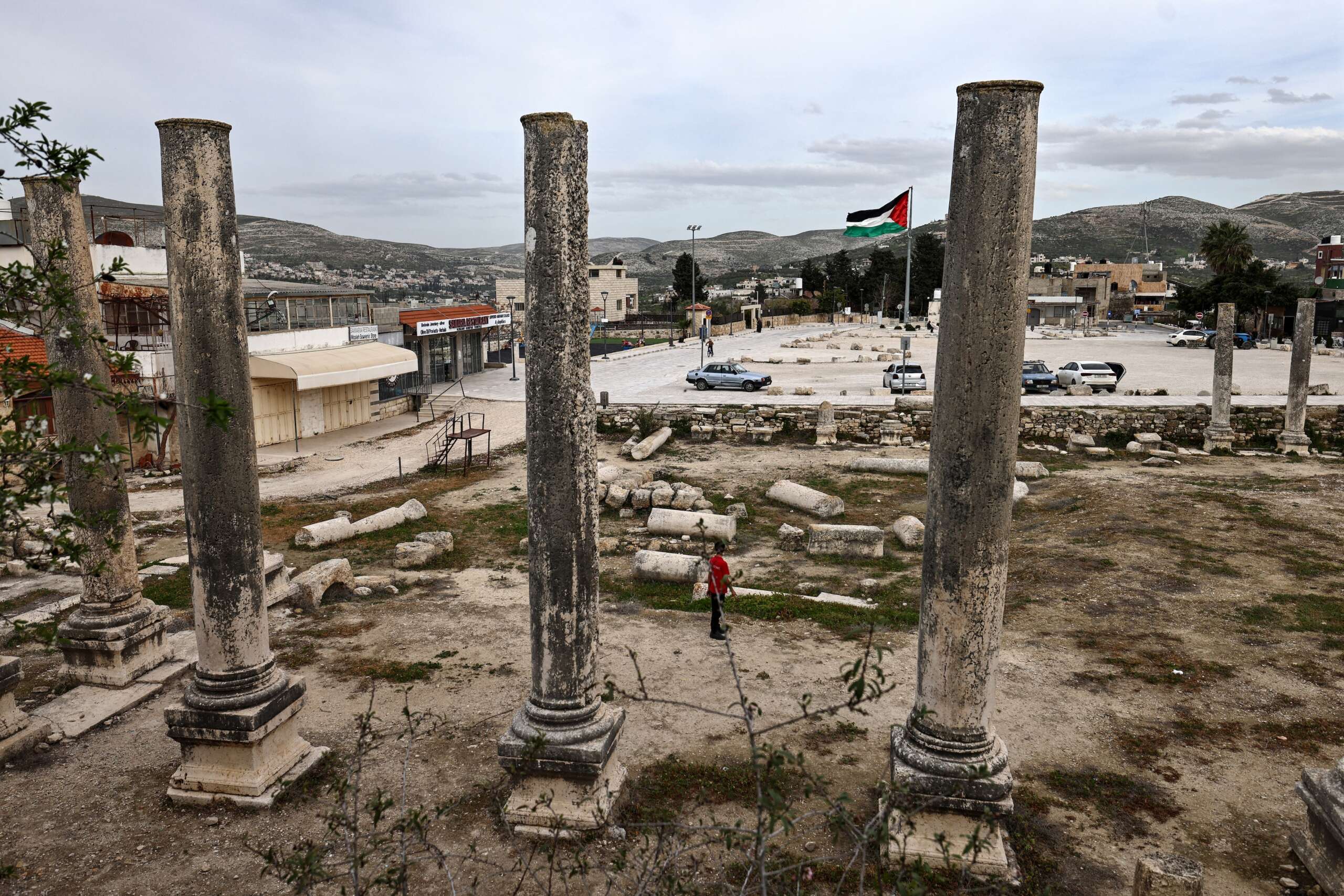
"The harassment by Israeli settlers had become unbearable," said Rashid, a young mother, as she stood leaning on the metal doorframe of her home in Ras Ein el-Auja in the occupied West Bank. Nearby, a few suitcases and other belongings sat in the corner, neatly packed. "There is no safety left. We've been suffering for three years, but now the provocations increased," Rashid told DW, speaking of how settlers entered their home.
World politics
fromwww.aljazeera.com
1 month agoWhat's the fallout from Israel's land grab?
Last week, its security cabinet approved a move that makes it easier for settlers to buy land there, repealing decades-old laws and regulations. This week, the Israeli government went a step further. It has approved a proposal to reactivate land registration in the area for the first time since 1967. The move paves the way for Israel to gain ownership of vast swaths of land Palestinians hoped would have been part of their future state.
World news
fromwww.aljazeera.com
1 month agoIsrael to restart land registration in West Bank. What that means
The Israeli government has approved a plan to begin land registration in the occupied West Bank, meaning it will be able to seize land from Palestinians who cannot prove ownership. For the first time since Israel's occupation of the West Bank in 1967, it will register such land as property of the state also known as settlement of land title in Area C of the occupied West Bank.
World news
fromwww.aljazeera.com
2 months agoGaza is not a real estate fantasy
But urgency should never become an excuse for illusion, spectacle, or political shortcuts. The contrast between rhetoric and reality could not be sharper. While United States President Donald Trump and a group of world leaders gathered in Davos, Switzerland, to sign the charter of the so-called Board of Peace and unveil glossy reconstruction plans, the killing in Gaza continued. Since the ceasefire came into effect on October 10, no fewer than 480 Palestinians have been killed.
World news
fromwww.theguardian.com
2 months agoIsrael poised to start construction of bypass through heart of West Bank
Israel plans to start work next month on a bypass road that will close off the heart of the occupied West Bank to Palestinians and cement the de facto annexation of an area critical for the viability of a future Palestinian state. The road is a key part of the blueprint for a vast illegal new settlement in the E1 area east of Jerusalem, which would fragment the occupied West Bank.
World news
fromwww.aljazeera.com
1 month agoIsraeli plans deepen de facto annexation of occupied West Bank
The new measures, which aim to expand Israel's power across the occupied West Bank, will make it easier to seize Palestinian land illegally. We are anchoring settlement as an inseparable part of Israel's government policy, said Katz. Experts say it will fundamentally alter the civil and legal reality of the territory, removing what the Israeli ministers termed legal obstacles that have existed for decades against the expansion of illegal settlements in the occupied territories.
World news
fromwww.aljazeera.com
2 months agoRegavim': Israel's new Rafah border site carries coded annexation message
The Rafah border crossing between Gaza and Egypt has reopened partially for a few Palestinians after an 18-month closure in tandem with an added restriction to control the movement of returnees. The Israeli army has set up a checkpoint called Regavim in an area under its control outside the crossing for those entering Gaza from Egypt. As the first trickle of humanity passed through the gates on Monday, official Israeli military documents gave it a name that indicates the facility is no longer being treated as a border crossing but as an operation for population control.
World news
fromwww.theguardian.com
2 months agoThe settlers brought the violence': the ethnic cleansing of a West Bank village
Five decades in the south Jordan valley were ending in a day, and Mahmoud Eshaq struggled to hold back his tears. The 55-year-old had not cried since he was a boy, but as he dismantled the family home and prepared to flee the village where his whole life had played out, he was overwhelmed by grief. While Eshaq's children loaded mattresses, a fridge, sacks of flour and suitcases of clothes into a truck,
World news
[ Load more ]