#side-event-applications
#side-event-applications
[ follow ]
#climate-change #sustainability #fossil-fuels #energy-crisis #geopolitical-tensions #climate-policy #iran-war #ai
#climate-change



Higher education
fromCornell Chronicle
2 months agoFaculty event to highlight how teaching about climate change can move beyond discourse and despair | Cornell Chronicle
A Jan. 28 Cornell event brings art, sustainability, reflection, and teaching practice together to help faculty engage climate change across humanities and community.
Online Community Development
fromInside Higher Ed | Higher Education News, Events and Jobs
55 minutes agoA Town-Gown Partnership Focused on Climate Resilience
Agnes Scott College collaborates with Decatur to address climate change through a joint Climate Resilience Plan, focusing on sustainability and community engagement.


fromwww.aljazeera.com
6 days agoG7 ready to take necessary measures' to ensure energy market stability
We stand ready to take all necessary measures in close coordination with our partners, including to preserve the stability and security of the energy market, said the G7 in a statement after a teleconference.
World news
SF politics
fromFortune
6 days agoHyperscalers often lack the "aptitude" on power as the political push picks up to expedite grid connections and pipelines | Fortune
Federal efforts to expedite power grid interconnections face challenges due to hyperscalers' communication issues and lack of understanding of processes.

fromNature
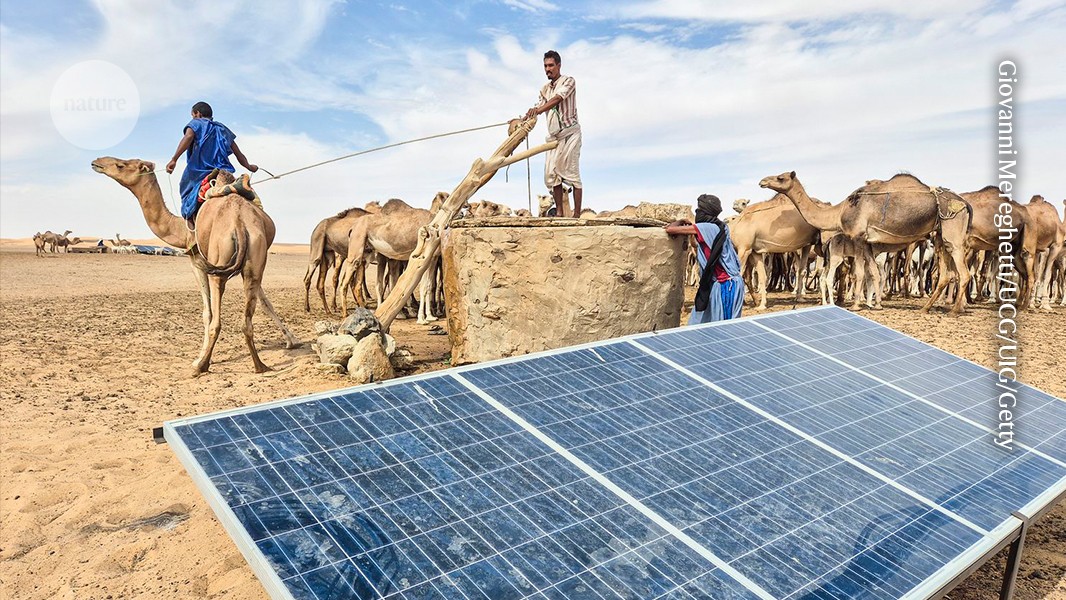
1 week agoNow is the time for scientific societies to guide global research
Modern scientific societies are increasingly vulnerable due to their dependence on membership fees and journal subscriptions, which are being challenged by the rise of virtual networking and open-access publishing.
Science
World news
fromFortune
1 week agoAn uneasy mix of celebration and anxiety dominates the 'Davos of energy' as the month-long Iran war further disrupts the global economy | Fortune
Ending the war risks ceding the Strait of Hormuz to Iran, impacting global energy supply and causing widespread economic consequences.
fromwww.bbc.com
1 week agoCampaigners celebrate after new town plans dropped
Campaigner Aysha Hawcutt stated that residents were 'not anti-homes', but believed the Adlington plan was 'the wrong proposal in the wrong place'. She expressed pride in the community's resilience against the development threats.
London politics
fromHarvard Business Review
2 weeks agoHow To Deliver on ESG Initiatives in Emerging Market
Multinational firms are under rising pressure-from investors, regulators, and employees-to demonstrate positive societal impact in the places where they do business. With ESG-focused institutional investments projected to reach nearly $34 trillion this year and roughly 90% of large U.S. companies now disclosing ESG reports, these pressures are now a central part of corporate strategy.
Business
fromwww.kaltblut-magazine.com
3 weeks agoThe Climate Crisis
At a young age, I learned quickly how oil wealth and power could burn the land while people struggled. I saw heat rise off the streets, the Nile strained, and the air thickened with injustice. In my teenage years, through Aotearoa, being on the edge of the Pacific, I felt the ocean breathing heavy, swallowing the shores of islands that have done the least to cause this harm.
Photography


fromState of the Planet
6 days agoFrom Classrooms to Climate Impact: Two Careers Flourish in Singapore
"Singapore is in a very unique position because they face a lot of land constraints, so there are few ways for them to generate their own renewable energy. Singapore is pushing for integrated energy systems throughout ASEAN, so that renewable energy produced in other countries can be brought back to Singapore. There's a very distinct, coordinated effort for countries to come together to work on climate change and energy security in a way that I haven't really seen."
Environment
Philosophy
fromWarpweftandway
2 weeks agoTwo Collaborative Learning () Events This Week
The 四海为学 Collaborative Learning Project hosts two free public events: Louise Edwards discussing childhood and gender in China on March 19, and Peter Hershock exploring AI and agency from a Buddhist perspective on March 20.
Alternative medicine
fromNatural Health News
3 months agoApocalyptic warnings mask a prosperous reality at COP30
Historical data contradicts climate chief warnings of climate-induced famines; modern hunger stems from conflict and politics, not environmental factors, while CO2 increases have enhanced agricultural productivity.
fromBusiness Matters
1 month agoThe Psychology Behind Why Business Conference Attendees Gravitate Towards Charging Stations
When power runs low, anxiety sets in. Psychologists often refer to this as battery anxiety, a stress response linked to the fear of losing access to information, contacts, or work tools. Attendees become less focused in sessions, check their devices more frequently, and start scanning the venue for somewhere to recharge.
Miscellaneous
Environment
fromState of the Planet
2 weeks agoClimate Finance Has Failed Africa Twice Over. Here's How To Fix It.
Africa faces immediate climate crisis requiring both massive adaptation investment and urgent global emissions cuts, yet receives inadequate financing while adaptation focus overshadows critical decarbonization efforts.
fromSustainable Bus
1 month agoUITP monitoring Gulf geopolitical developments ahead of Dubai Summit - Sustainable Bus
UITP is closely monitoring geopolitical developments in the Gulf region in advance of the 2026 Summit, next month in Dubai. Over the past few days, we have remained in ongoing contact with the relevant authorities and our 2026 local hosts, the Roads and Transport Authority (RTA), as we carefully assess the situation in real time.
World news
fromThe Nation
3 weeks agoA World on Fire Needs More Climate Reporting-Not Less
Covering Climate Now was formed in 2019 in response to the climate silence that then prevailed in much of the press, especially in the United States. Over the years that followed, hundreds of newsrooms joined our effort, and press coverage of the story began to reflect the scale of the crisis. Newsrooms beefed up their climate reporting teams; they confronted misinformation that sought to play down the problem; they thought creatively about how to find the climate connection on every beat.
Environment
fromEngadget
2 months agoThe US withdraws from dozens of international bodies, including climate-focused organizations
In a new executive order, President Donald Trump has declared that the United States will withdraw from 66 international organizations and bodies, including several focused on tackling climate change. Trump made his disregard for climate change clear when he withdrew the US from the Paris climate agreement for a second time in early 2025, but these new withdrawals further confirm the second Trump administration is against global collaboration in general.
US politics
Environment
fromNature
1 month agoClimate change and geopolitics threaten water supplies - but disaster is not inevitable
Global water systems face crisis from overuse, pollution, and climate change, requiring urgent strengthening of international water-sharing treaties with dynamic monitoring systems.
fromwww.eastbaytimes.com
2 months agoUS will exit dozens of international organizations as it further retreats from global cooperation
Most of the targets are U.N.-related agencies, commissions and advisory panels that focus on climate, labor and other issues that the Trump administration has categorized as catering to diversity and woke initiatives. The Trump Administration has found these institutions to be redundant in their scope, mismanaged, unnecessary, wasteful, poorly run, captured by the interests of actors advancing their own agendas contrary to our own, or a threat to our nation's sovereignty, freedoms, and general prosperity, the State Department said in a statement.
US politics
fromwww.aljazeera.com
1 month agoUN approves first carbon credits under Paris Agreement market mechanism
The UN-run market allows companies and countries to offset their excess emissions by financing projects that cut greenhouse gases in other nations. The new initiative involves a clean cooking project in Myanmar, which distributes efficient cookstoves that reduce pressure on local forests. Implemented in partnership with a South Korean company, the project will generate credits that will count towards the climate targets of South Korea and Myanmar.
Environment
Environment
fromEarth911
2 months agoGuest Idea: Climate Risk Has Become A Defining Economic Issue
Climate-driven financial risks threaten housing and public budgets while large-scale clean-energy and durable carbon-removal investments (geothermal, biochar, novel hydrogen) accelerate to build resilience.
fromArchDaily
2 months agoOn the International Day for Clean Energy: How Local Initiatives Respond to the Spatial Impacts of Energy Production
January 26 marks the International Day for Clean Energy, an initiative aimed at raising awareness and mobilizing action for an inclusive transition from fossil fuels, such as coal, oil, and natural gas, to power generation systems with lower greenhouse gas emissions and fewer pollutants. The term "clean" signals a fundamental shift away from extractive, finite, and exhaustible energy sources toward systems based on renewable resources or on capturing energy embedded in natural processes.
Environment
fromNature
2 months agoI know science can't fix the world - here's why I do it anyway
His message is clear: our world is built on abundant energy, around 80% of which has come from fossil fuels over the past 50 years. Because supplies are limited, energy consumption will peak in decades - sooner if humans attempt to limit climate change. To keep global warming below 1.5 °C by 2100, the use of fossil fuels must fall by 5-8% each year - a pace that is too fast for low-carbon energy to keep up with.
Environment
[ Load more ]