#smart-scale
#smart-scale
[ follow ]




Science
fromSilicon Canals
12 hours agoSpaceX, Amazon, and Google want orbital data centers - four engineering barriers reveal who really benefits - Silicon Canals
Orbital data centers will concentrate AI infrastructure power among a few dominant companies, limiting access for smaller competitors and national regulators.

Business intelligence
fromComputerWeekly.com
2 days agoWilson Connectivity, Autonomous Systems team for in-building wireless service | Computer Weekly
Wilson Connectivity and Autonomous Systems partner to automate in-building wireless infrastructure management, enhancing deployment and ongoing optimization.
fromFast Company
1 day agoAI has come for Domino's pizza tracker, and we're not mad about it
The new tracker features a simplified progress bar that shows just four stages of pizza creation. The new design was rolled out to all platforms, and there's also new Lock Screen widgets for iOS that bring the pizza chain's most famous tech feature to the Liquid Glass age.
Marketing tech
#artificial-intelligence
Artificial intelligence
fromFortune
1 day agoFor most workplace tasks, AI is good enough to pass but not good enough to impress, MIT finds | Fortune
AI technology is improving but still struggles to meet quality standards in many workplace tasks.
Business intelligence
fromEntrepreneur
3 days agoForget the Hype. Here's How AI Is Actually Changing Business Operations
AI is transforming business operations from task automation to strategic decision intelligence.

fromdesignboom | architecture & design magazine
4 days agobody agency and the ways wearable devices let people regain control of their physical forms
Body agency is a power returned after an incident took it away from the user's physical form, and some wearable devices and technologies have this exact goal in mind.
Wearables

fromwww.businessinsider.com
6 days agoDriverless cars, meet your eye doctor
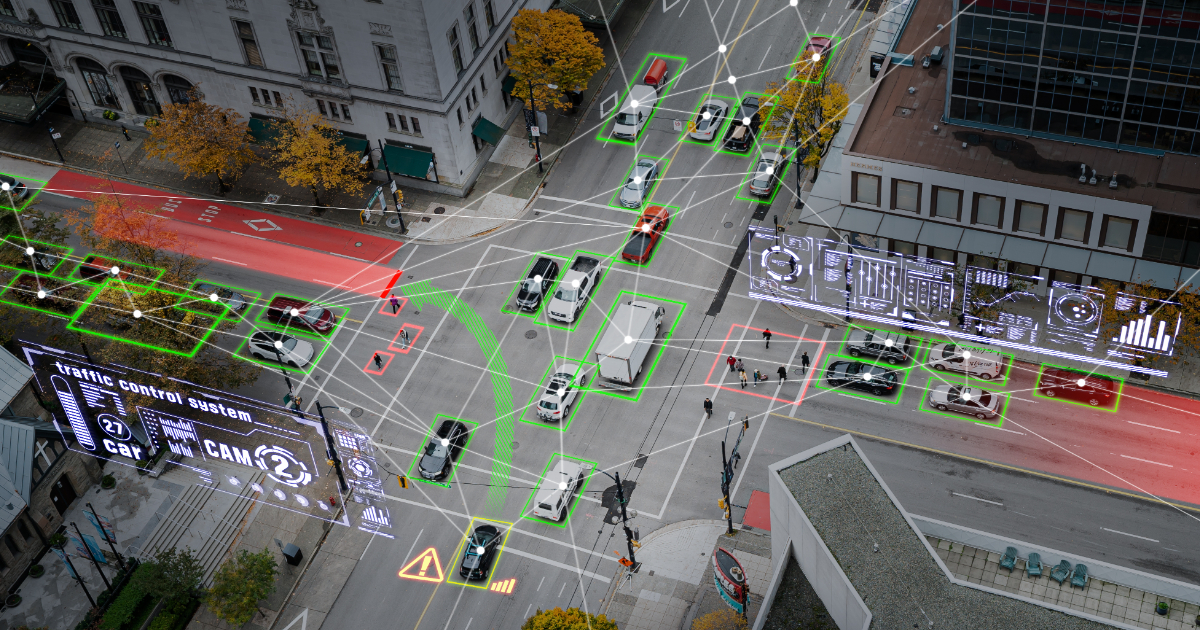
Kinetic's CEO Nikhil Naikal states, 'We have eyes, and when we need to correct vision, we go to an optometrist... In the same way, this is a digital prescription to correct the errors of the car's understanding of the world around it.'
Cars
fromRealagriculture
2 weeks agoTerraScout brings robot agronomic scouting to the farm
It can drive through the field and look at every square inch. We really honed our craft on model performance and detection with rocks, and now we've transitioned that into weeds. The robot uses a boom-mounted camera system to capture detailed imagery across the field. With eight cameras operating at 1 millimetre resolution, TerraScout can generate billions of data points per acre, allowing it to identify specific objects, including individual weeds.
Agriculture
London
fromLondon Business News | Londonlovesbusiness.com
2 weeks agoBuilding a smarter London: How embedded systems are driving urban innovation - London Business News | Londonlovesbusiness.com
Embedded systems integrated into London's infrastructure enable real-time monitoring and intelligent decision-making, transforming transport, energy, and logistics to reduce costs and emissions.
Environment
fromFortune
3 days agoData centers are so hot, their 'heat island' effect is raising temperatures up to 6 miles away and impacting 343 million people worldwide, study finds | Fortune
AI infrastructure is creating a 'data heat island effect' that raises local temperatures and impacts millions of people.
fromReadWrite
2 weeks agoFrom Reactive Repairs to Smarter Home Protection: How Technology Is Changing Roof Care
In the past, roof inspections mostly focused on what could be seen from the outside. Contractors looked for broken shingles, worn flashing, or areas where water might enter the roof. The problem is that roof damage does not always show clear signs right away. Water can move through roofing layers before it becomes visible inside the home.
Renovation
Business intelligence
fromLondon Business News | Londonlovesbusiness.com
5 days agoWhy GIS matters in modern infrastructure and urban planning: Building smarter, future-ready cities - London Business News | Londonlovesbusiness.com
GIS is essential for effective urban planning, enabling data-driven decisions that enhance infrastructure and quality of life in rapidly growing cities.
Miscellaneous
fromComputerWeekly.com
3 weeks agoRender Networks unveils synchronised agentic critical infrastructure architecture | Computer Weekly
Render Networks expands ClearWay platform to automate critical infrastructure deployment, reducing capital risk through real-time field verification and audit-grade accountability across complex multi-asset projects.
Public health
fromEurasia Review
3 weeks agoDigital Transformation Of Food Retail Is Reshaping Food Access For Consumers
Digital retail transformation reshapes food access through online platforms and AI, creating both health promotion opportunities and risks of targeted unhealthy food marketing to vulnerable populations.
Roam Research
fromTheregister
2 weeks agoWater company spins out homegrown AI after LLMs failed it
Large language models provided confidently incorrect information about materials science, causing a water desalination startup to waste four months and $200,000 validating a material choice that ultimately proved inferior.
Gadgets
fromComputerWeekly.com
1 month agoConnectivity, AI drive fleet safety, productivity and decision-making | Computer Weekly
AI, connected data, and safety-focused services are transforming fleet operations, with GPS tracking adoption at record highs and AI delivering measurable safety improvements and cost reductions.
fromLondon Business News | Londonlovesbusiness.com
3 weeks agoWhy long range communication is useful for industrial monitoring - London Business News | Londonlovesbusiness.com
Long-range radio waves can pass through obstacles more easily, which makes them perfect for monitoring expansive factories or outdoor infrastructure. A recent report by Fabrity highlighted that these systems use very little power. This allows sensors to operate for 5 to 10 years on a single battery. Using such tech means you do not have to install expensive wiring across your entire site.
Roam Research
fromComputerWeekly.com
1 week agoWhy IT leaders need to consider AI's energy footprint | Computer Weekly
We are making sure that we have renewable energy powering all of our datacentre footprint. We have 100% renewable power today that is powering all of Azure, and we're very proud to build that base and essentially stimulate renewable energy around the world and in the UK.
Environment
fromRealagriculture
1 month agoVaderstad expands digital tools for seeding management
You can go onto your cloud account either through the iPad or your desktop computer and pre-plan all your jobs... when your hired man goes into the field he can just pick the job... and then hit start and you can go.
Agriculture
fromFuturism
1 month agoAI Is Destroying Grocery Supply Chains
Whole Foods shelves sit empty after a data breach shut down its wholesale distributor. Meat packers working for JBS Foods are paralyzed as an $11 million ransomware attack takes out their processing facilities. Some 2.2 million workers at Stop & Shop and Hannaford have their personal data exposed as the result of a cyberattack on parent company Ahold Delhaize USA. These scenarios, straight from a William Gibson novel, are becoming increasingly common in supply chains across the world.
Food & drink
Agriculture
fromwww.theguardian.com
1 month agoTech firms and AI farming tools playing with the food system', warns thinktank
Tech companies use AI and algorithms with industrial agriculture to control global food systems, pushing farmers toward five profitable crops while undermining locally adapted varieties and food security.
#agentic-ai


Artificial intelligence
fromMedium
2 weeks agoFrom Dumb Devices to Digital Teammates: How Agentic AI is Revolutionizing the Internet of Things
Agentic AI transforms IoT from obedient automation into intelligent systems that anticipate needs, reason through problems, and take initiative rather than simply following programmed commands.
Artificial intelligence
fromFast Company
4 weeks agoLocal governments could deploy AI for good. Here's how
Agentic AI can transform city governance by automating routine tasks, improving service efficiency, and enabling proactive infrastructure maintenance while maintaining accountability through ambitious local leadership.
Artificial intelligence
fromFast Company
2 weeks agoThe next phase of AI must start solving everyday problems
Technology's value depends on consumer education driving adoption, which then creates society-wide impact; the most successful AI systems will solve real-world problems efficiently rather than showcase advanced features.
fromThe Atlantic
1 month agoSmart Homes Are Terrible
All of the appliances and systems are brand-new: the HVAC, the lighting, the entertainment. Touch screens of various shapes and sizes control this, that, and the other. Rows of programmable buttons sit where traditional light switches would normally be. The kitchen even has outlets designed to rise up from the countertop when you need them, and slide away when you don't.
Gadgets


Artificial intelligence
fromArchDaily
1 month agoCompute Isn't Weightless: AI Infrastructure and the Architecture of the City
AI development is reshaping urban infrastructure and spatial planning in the Greater Bay Area through government-led initiatives that translate computational needs into physical zones, data centers, and specialized districts.
fromRealagriculture
1 month agoThe Final Mile, Ep 2: Finding agriculture's real AI advantage, with Mohamed Yaghi
Yaghi describes AI not as a silver bullet, but as an advanced form of statistical pattern recognition-tools that can identify trends in data that may be difficult or time-consuming for people to uncover on their own. The real opportunity, he says, depends heavily on what farms are already doing. Operations that are consistently collecting and digitizing high-quality data are better positioned to benefit, whether the goal is lowering per-cow costs in a dairy, improving financial analysis, or identifying operational efficiencies.
Agriculture
Artificial intelligence
fromeLearning Industry
2 months agoArtificial Intelligence In Transportation Training And Education
AI enables individualized transportation training by evaluating trainee performance, tailoring instruction, simulating real scenarios, and measuring performance for targeted improvement.
fromAxios
2 months agoExclusive: Inside Google's push to sell AI to cities
Between the lines: This isn't benevolence. It's customer acquisition. Mayors don't just buy "AI." They buy cloud, data modernization, cybersecurity, services, and long-term support - the tech stack underneath any serious deployment. In return, cities get tools that could fix long-standing challenges, Cris Turner, vice president of government affairs at Google told Axios last June when it first released its playbook.
Artificial intelligence
[ Load more ]