#smoggy-samples
#smoggy-samples
[ follow ]
#air-pollution #public-health #air-quality #pm25 #climate-change #epa #pollution #los-angeles #environmental-impact





fromFast Company
3 days agoSee it: Air temperatures and pollution around the world are captured in real time in these animated weather maps
We created Earth in Action to provide a lens into what's happening on our planet, as it happens. Whether it's something typical, like the current air temperature, or an extreme event like a major dust storm, we wanted to provide an opportunity for people to see them.
OMG science


NYC politics
fromwww.amny.com
4 days agoA moral injury': City sued over not releasing information on Lower Manhattan air quality danger after 9/11 attack | amNewYork
Advocates are suing New York City for transparency regarding air quality information post-9/11 to seek accountability and answers, not compensation.
#transportation-funding
Alternative transportation
fromStreetsblog
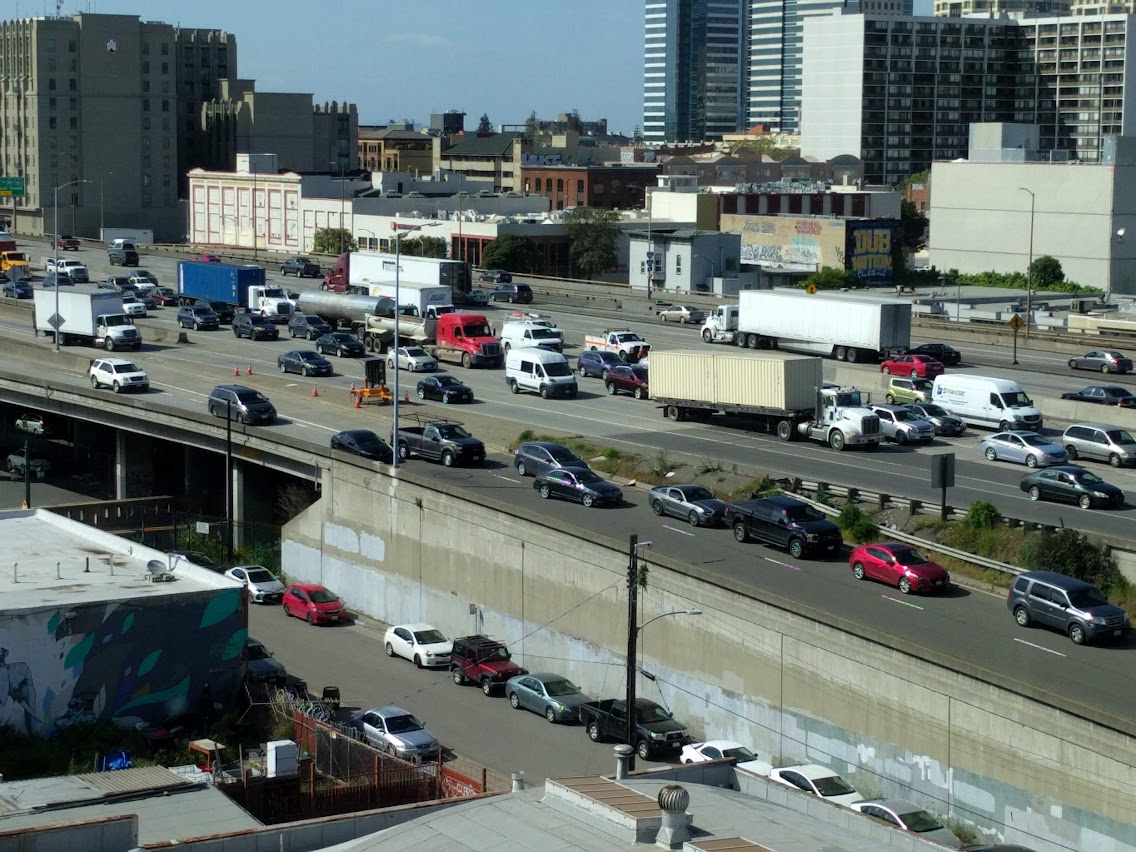
2 weeks agoCalifornia Must Stop Expanding Highways - Streetsblog San Francisco
California allocates transportation funding to highway expansion projects despite tailpipe pollution causing half of state greenhouse gas emissions, contradicting the need to prioritize sustainable travel alternatives.
fromwww.theguardian.com
2 days agoThe dark side of the balloon boom is it time they were banned?
In 2019, scientists found that balloons eaten by seabirds are more likely to kill them than other kinds of plastic yet they do not seem to have been earmarked in the same way as, for example, plastic straws.
Public health
Health
fromwww.theguardian.com
2 weeks agoReduced physical activity due to global heating will lead to rise in health issues, study says
Rising temperatures reduce physical activity globally, with each month above 27.8°C increasing inactivity by 1.5 percentage points, projecting half a million additional premature deaths annually by 2050.
fromThe Local Germany
4 weeks agoPollution exposure in Europe linked to mental health problems
Studies consistently indicate that air pollution, for example in the form of fine particulate matter (PM2.5) and nitrogen dioxide (NO2), is associated with depression and depressive symptoms. Exposure to lead, endocrine disruptors and other chemical substances, especially in developmental life phases, may increase the risk of mental health issues later in life.
Europe news
Environment
fromFortune
3 days agoData centers are so hot, their 'heat island' effect is raising temperatures up to 6 miles away and impacting 343 million people worldwide, study finds | Fortune
AI infrastructure is creating a 'data heat island effect' that raises local temperatures and impacts millions of people.
fromStreetsblog
2 weeks agoWhat If The Rising Costs of Car Dependency Were As Visible As Gas Prices? - Streetsblog USA
Because so many American cities are so heavily car-dependent, most U.S. residents have no choice but to pony up the cash and drive anyway. Indeed, even when gas prices climbed above $5 a gallon in 2022, driving did not plummet; a Time magazine analysis at the time found that 'the only time that fuel consumption really took a hit in the last 23 years was during the pandemic.'
Alternative transportation
fromState of the Planet
5 days agoFrom Classrooms to Climate Impact: Two Careers Flourish in Singapore
"Singapore is in a very unique position because they face a lot of land constraints, so there are few ways for them to generate their own renewable energy. Singapore is pushing for integrated energy systems throughout ASEAN, so that renewable energy produced in other countries can be brought back to Singapore. There's a very distinct, coordinated effort for countries to come together to work on climate change and energy security in a way that I haven't really seen."
Environment
Environment
fromNature
3 weeks ago'Black rain' in Tehran - what are the health effects?
Missile strikes on Iranian oil facilities released toxic chemicals into the atmosphere, creating black acid rain containing harmful hydrocarbons, sulfur oxides, and nitrogen compounds that pose serious health risks.
California
fromThe Mercury News
2 months agoLetters: If polluters paid for damage, state's deficit would be less
Fossil fuel companies should be held financially responsible for climate-driven damages to reduce taxpayer burdens and accelerate the transition to renewable electricity and all-electric buildings and vehicles.
Environment
fromwww.theguardian.com
1 month agoThousands of pollution incidents in England downgraded without site visit, data suggests
Environment Agency staff downgraded 98% of 2,778 serious water pollution incidents reported in 2024 without site visits, representing a 1,500% increase in downgrades since 2021.

Public health
fromwww.theguardian.com
1 month agoWood burning pollution leads to 8,600 premature US deaths a year, study finds
Residential wood burning causes an estimated 8,600 premature US deaths annually and contributes about 21% of wintertime particulate pollution despite only 10% of homes burning wood.



fromFast Company
1 month agoEVs are already making your air cleaner, research shows
The logic behind electric vehicles benefiting public health has long been solid: More EVs means fewer internal combustion engines on the road, and a reduction in harmful tailpipe emissions. But now researchers have confirmed, to the greatest extent yet, that this is indeed what's actually happening on the ground. What's more, they found that even relatively small upticks in EV adoption can have a measurably positive impact on a community.
Public health
frominsideevs.com
2 months agoEVs Are Quietly Cleaning Up The Air. This New Study Proves It
Researchers used satellite data to see how much nitrogen dioxide was in California's air between 2019 and 2023. As the number of electric cars and plug-in hybrids rose, neighbourhoods had lower NO concentrations. Everybody knows that electric cars don't emit carbon emissions because they don't burn any fuel. And while there are some studies out there that show how zero-emission cars can improve the quality of air in urban areas, they weren't always definitive.
Environment
fromwww.theguardian.com
2 months agoHousehold burning of plastic waste in developing world is hidden health threat, study shows
The household burning of plastic for heating and cooking is widespread in developing countries, suggests a global study that raises concerns about its health and environmental impacts. The research, published in the journal Nature Communications, surveyed more than 1,000 respondents across 26 countries. One in three people reported being aware of households burning plastic, while 16% said they had burned plastic themselves.
Environment
fromArs Technica
1 month agoCOVID-19 cleared the skies but also supercharged methane emissions
The remaining question, though, was where all this methane was coming from in the first place. Throughout the pandemic, there was speculation that the surge might be caused by super-emitter events in the oil and gas sector, or perhaps a lack of maintenance on leaky infrastructure during lockdowns. But the new research suggests that the source of these emissions was not what many expected. The microbial surge
Environment
[ Load more ]