#solar-energy-headquarters
#solar-energy-headquarters
[ follow ]
#renewable-energy #solar-power #data-centers #climate-change #solar-energy #environmental-impact #natural-gas


fromIndependent
1 day agoCarpool, slow down and do your laundry at night - families to be warned to cut energy use in government campaign amid Iran crisis
Officials from the Department of Energy are meeting daily as the Iran war drives up the price of fuel. A public awareness campaign is urging citizens to 'save energy, save your pocket.'
UK politics

European startups
fromFortune
5 days agoEmerald AI and Nvidia aim to offer the fast pass for data center grid connects, partnering with power producers and raising new funds | Fortune
Emerald AI aims to enhance grid flexibility for data centers, reducing peak power consumption while maintaining high reliability.
#renewable-energy
Environment
fromEarth911
6 days agoSustainability In Your Ear: Schneider Electric's Steve Wilhite Maps the Renewable Energy Transition
The global energy system is shifting to distributed renewables and digital optimization, with a significant gap between corporate sustainability ambitions and delivery capabilities.
Environment
fromEarth911
6 days agoSustainability In Your Ear: Schneider Electric's Steve Wilhite Maps the Renewable Energy Transition
The global energy system is shifting to distributed renewables and digital optimization, with a significant gap between corporate sustainability ambitions and delivery capabilities.

fromFortune
2 days agoCountries are turning to 'structurally more resilient' energy sources as oil and gas crisis deepens, UN renewables chief says | Fortune
"A more decentralized energy system, with a growing share of renewables and more market players, is structurally more resilient. Countries that invested in the energy transition are weathering this crisis with less economic damage, as they boost energy security, resilience and competitiveness."
Environment
fromEarth911
2 weeks agoShould You Go Solar In 2026?
The most consequential shift for anyone considering rooftop solar in 2026 is the expiration of Section 25D, the Residential Clean Energy Credit. That 30% credit, which was worth up to $9,000 on a $30,000 system, is no longer available for home solar installations. The One Big Beautiful Bill, signed July 4, 2025, accelerated the phase-out that the Inflation Reduction Act had originally extended through 2034.
SF real estate

fromwww.theguardian.com
2 weeks agoHow Pakistan's people-led solar boom is easing impact of Middle East energy crisis
People who could afford to do it at that time realised that it was much cheaper and cost-effective and better for them in the long run to do a one-time investment in rooftop solar as opposed to keep paying high electricity bills from a grid that is also unreliable, said Nabiya Imran, an associate at Renewables First, a Pakistani thinktank.
World news
fromEngadget
4 days agoToyota's still trying to make hydrogen fuel cells happen
"We are deeply grateful for the opportunity to soon be joining Daimler Truck and Volvo Group as partners in building a hydrogen society," Toyota President and CEO Koji Sato said. "cellcentric which possess deep expertise in commercial fields together with Toyota's over 30 years of fuel-cell development in the passenger car sector, can combine their strengths to deliver one of the world-leading fuel cell systems for heavy commercial vehicles."
Cars
US news
fromwww.npr.org
3 weeks agoEasy-to-use solar panels are coming, but utilities are trying to delay them
Plug-in solar panels that connect to standard outlets are gaining traction in the U.S. as a cost-effective alternative to traditional rooftop solar, though utility opposition based on safety concerns is slowing legislative adoption.
NYC startup
from24/7 Wall St.
3 weeks agoSolar Shares Shine: SolarEdge Stock Heads 10% Higher, Enphase Energy and SunRun Rally 6%
SolarEdge, Enphase Energy, and Sunrun stocks surge on sector-wide relief rally, with SolarEdge leading due to demonstrated turnaround with revenue growth, positive operating cash flow, and expanding margins.
Science
fromSFGATE
3 weeks agoExperts skeptical this California startup can turn night into day
A Los Angeles startup plans to deploy thousands of satellites with large mirrors to reflect sunlight onto Earth at night for commercial illumination, but scientists warn of severe ecological and environmental consequences.
Silicon Valley
fromFortune
3 weeks agoGoogle and Tesla know electricity is expensive. They're teaming up to bring you an alternative. | Fortune
Google and Tesla partner with energy companies to form Utilize coalition, addressing grid underutilization by deploying battery storage and distributed energy resources to lower electricity costs.
Renovation
fromYanko Design - Modern Industrial Design News
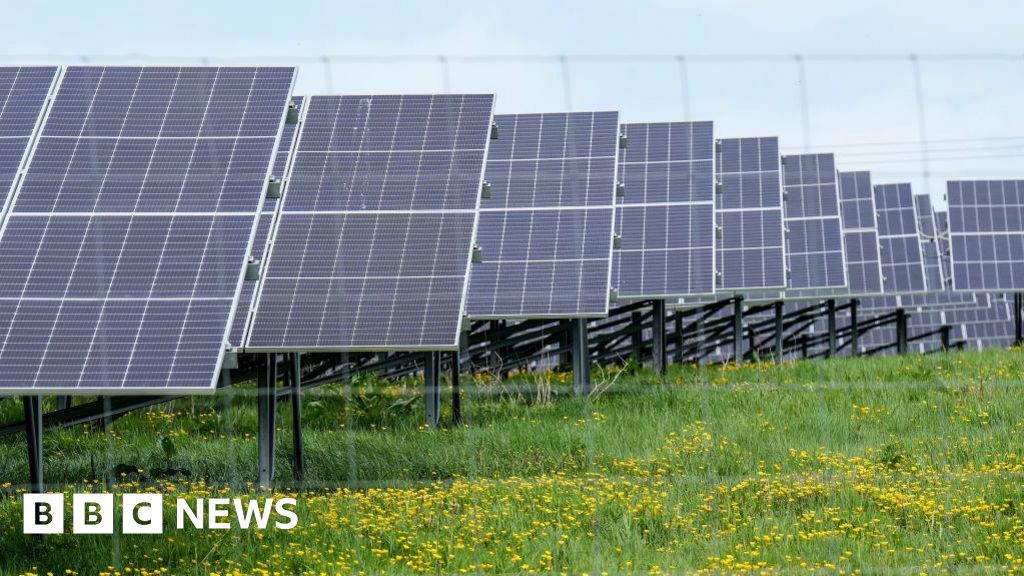
4 weeks ago5 Solar Panel Designs So Beautiful You'd Never Know They're Generating Power - Yanko Design
Buildings are evolving from energy-efficient structures into active power generators through integrated photovoltaic technology and aesthetic solar solutions.

Alternative transportation
fromwww.mercurynews.com
4 weeks agoGroups hope Green @ Home tour sparks interest in clean energy
The 2026 Green @ Home Neighborhood Tour on March 14 showcases electrified homes in Silicon Valley, allowing residents to see electric appliances, solar systems, and sustainable upgrades while speaking directly with homeowners about costs, installation, and incentives.
fromTechCrunch
3 weeks agoGoogle and Tesla think we're managing the electrical grid all wrong | TechCrunch
The group points out, correctly, that the grid is designed for brief bursts of high demand; most of the time there's lots of capacity that goes unused. Utilize thinks that should change. The group argues that smarter ways to use that capacity already exist. Utilize name checks a number of those solutions, including battery storage, demand response, and virtual power plants, all of which have emerged en masse over the last decade, but remain under utilized.
Toronto startup
US news
fromwww.npr.org
1 month agoWhy farmers in California are backing a giant solar farm
A 200-square-mile solar farm in California's San Joaquin Valley would generate 21,000 megawatts of power, with farmers supporting the project as an alternative use for land lacking sufficient water for crop production.
Alternative transportation
fromHigh Country News
1 month agoWhy Western states are pushing for plug-in solar - High Country News
Plug-in solar panels, common in Germany, are gaining legislative support across 27 U.S. states to enable affordable household solar energy generation without regulatory barriers.
Toronto startup
fromThe Atlantic
1 month agoTesla's Secret Weapon Is a Giant Metal Box
Tesla is pivoting from selling cars to manufacturing robots and robotaxis, with the Cybercab driverless vehicle and Optimus humanoid robot as centerpieces, though both face significant legal, technical, and safety challenges.
California
fromLos Angeles Times
2 months agoWhy California is keeping this unusual solar plant running when both Trump and Biden wanted it closed
California ordered the Ivanpah solar-thermal plant to remain open 13 years despite costs, obsolescence, and bird deaths, citing grid reliability amid rising data-center demand.


fromTechCrunch
1 month agoLunar Energy raises $232M to deploy home batteries that prop up the grid | TechCrunch
Startup Lunar Energy is the latest example. The six-year-old company, which builds battery packs for homeowners in California, Georgia, and Washington, said Wednesday it has completed two large funding rounds. The startup shared it raised a previously unannounced $130 million Series C and a $102 million Series D. The Series C was led by Activate Capital, while the Series D was led by B Capital and Prelude Ventures.
Venture
fromCity Limits
2 months agoOpinion: For Affordable Clean Energy at Home, New York Needs Solar ASAP
We can keep tethering ourselves to volatile geopolitics, to fossil fuel prices we'll never control, and to an energy system built on instability and extraction-or we can choose the alternative that's right in front of us: harnessing the sun here at home on our own rooftops. By rapidly accelerating local solar in New York, we can build power right here in our communities, beyond the reach of coups, cartels, and commodity shocks.
Environment
fromwww.dw.com
2 months agoHow clean energy could save us trillions DW 01/07/2026
In the rolling hills of southeast Queensland, Australia, farmer and businessman Brent Finlay stands beneath turbines so tall they rival skyscrapers. "There's a lift inside that takes about 12 minutes to go from the bottom to the top," he said, pointing skyward. Forty-five of the giant turbines that now dot his property are part of the massive MacIntyre Wind Farm which will soon generate enough electricity to power 700,000 homes.
Environment
[ Load more ]