#soluna-holdings
#soluna-holdings
[ follow ]
#data-centers #renewable-energy #nuclear-energy #blockchain #ai #digital-assets #bitcoin #ai-data-centers









European startups
fromFortune
5 days agoEmerald AI and Nvidia aim to offer the fast pass for data center grid connects, partnering with power producers and raising new funds | Fortune
Emerald AI aims to enhance grid flexibility for data centers, reducing peak power consumption while maintaining high reliability.
Online Community Development
fromThe Globe and Mail
6 days agoCuentas, Inc. Launches World Mobile Media Group, a Next-Generation Decentralized Media Platform Integrating Content, Connectivity, and Creator Ownership
WMMG launches a decentralized media platform that empowers creators and enhances audience engagement through direct monetization and community involvement.
fromFortune
3 days agoCountries are turning to 'structurally more resilient' energy sources as oil and gas crisis deepens, UN renewables chief says | Fortune
"A more decentralized energy system, with a growing share of renewables and more market players, is structurally more resilient. Countries that invested in the energy transition are weathering this crisis with less economic damage, as they boost energy security, resilience and competitiveness."
Environment
NYC startup
from24/7 Wall St.
3 weeks agoSolar Shares Shine: SolarEdge Stock Heads 10% Higher, Enphase Energy and SunRun Rally 6%
SolarEdge, Enphase Energy, and Sunrun stocks surge on sector-wide relief rally, with SolarEdge leading due to demonstrated turnaround with revenue growth, positive operating cash flow, and expanding margins.



fromTNW | Startups-Technology
2 weeks agoHomaio raises 3.6M to bring carbon allowance investing to retail
The market was the backbone of Europe's climate policy, running at close to a trillion euros in annual trading volume, and it was almost entirely closed to anyone who wasn't an industrial company or an institutional fund. Lautier founded Homaio in 2023 to change that.
European startups
Startup companies
fromBitcoin Magazine
1 month agoSatlantis Emerges As Bitcoin-Native Alternative To Luma For Real-World Events
Satlantis is a Bitcoin-based event platform promoting real-world experiences as people abandon AI-saturated social media for offline gatherings and authentic social interaction.
from24/7 Wall St.
2 weeks agoThe Nuclear ETFs Powering AI Data Centers and Posting Triple-Digit Returns
The U.S. Energy Information Administration projected in March 2026 that American power demand will climb to a new record in 2026 and keep rising through 2027, driven largely by AI data centers. Nuclear is one of the few energy sources positioned to absorb that load reliably, and its share of the generation mix is forecast to tick up.
Venture
fromnews.bitcoin.com
5 days agoTokenized Uranium Lending Launches via Metals.io and Morpho Protocol
The launch of xU3O8-based lending on the DeFi aggregator Oku allows investors to access liquidity in USDC without selling their underlying physical uranium positions, enhancing capital efficiency.
Cryptocurrency
from24/7 Wall St.
1 month agoLive: Is Nu Holdings (NU) Ready to Jump After Earnings Tonight?
Nu's Q3 2025 results were difficult to criticize. Revenue reached $4.17 billion, exceeding consensus expectations of roughly $4.04 billion by about $134 million. Revenue grew 46% year-over-year, underscoring continued momentum across its core markets. Net income totaled $783 million, up 39% year-over-year on an FX-neutral basis.
Business intelligence
fromTheregister
1 month agoSingapore eyes barge-based hydrogen power for datacenters
A barge-based configuration offers advantages over land-based facilities, according to BDC, including optimization of scarce land resources through offshore or nearshore deployment, vital in a country that is smaller than many cities, including London. This arrangement also offers segregation between hydrogen handling infrastructure and the core datacenter operations, the firm says, plus greater flexibility in hydrogen transport and storage, making use of Singapore's maritime ecosystem.
Environment


Cryptocurrency
fromBitcoin Magazine
2 weeks agoBitcoin's Quantum Risk May Be Real, But The Network Is Preparing: Report
Quantum computing poses a long-term threat to Bitcoin's security through elliptic curve cryptography, but developers are actively building protective solutions before the technology becomes viable.
Cryptocurrency
fromBitcoin Magazine
2 weeks agoThe Core Issue: Your Node Vs. The Digital Wilderness
Bitcoin's peer-to-peer networking layer is its most vulnerable attack surface, requiring Core to prevent denial-of-service vectors while enabling safe node communication in adversarial Internet environments.
from24/7 Wall St.
1 month agoForget Bitcoin and Ethereum: This is the Crypto to Buy in 2026
Three alternative cryptocurrencies have experienced different price movements than Bitcoin and Ethereum: XRP's institutional payment infrastructure, Solana's unmatched transaction speed, and Avalanche's growing DeFi ecosystem. 5. Avalanche: The DeFi Specialist Trading at Deep Discounts Avalanche has carved out a niche as a high-performance blockchain optimized for decentralized finance applications. The network's subnet architecture allows developers to create customized blockchains while maintaining interoperability with the main chain.
Business
fromTheregister
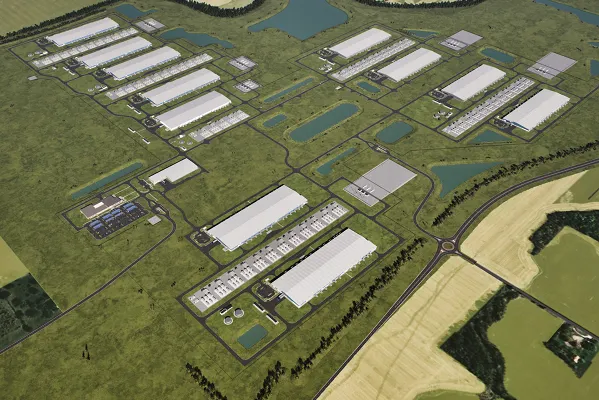
2 months agoEx crypto miners building 430 MW datacenter in secret place
"We've changed our approach with these locations themselves. When we did Ellendale, you'd get a little bit, not a lot of reaction, like 'Oh that's cool.' or 'These guys are crazy.' Now these guys need to prepare a little more. Not from a local perspective, but it kind of gets shined on nationally these days. When you're dealing in towns of hundreds of people, sometimes that's a bit overwhelming."
Business
Cryptocurrency
fromFortune
1 month agoAnnouncing the FORTUNE CRYPTO 40. Which companies will make the cut? | Fortune
Fortune launches FORTUNE CRYPTO 40, a data-driven ranking of leading crypto companies across eight categories, recognizing legitimate builders while promoting industry transparency and accountability.
Cryptocurrency
fromFortune
1 month agoIntroducing the FORTUNE CRYPTO 40: Blockchain businesses built to last | Fortune
Despite 2022's crypto market collapse and regulatory crackdowns, the industry has matured significantly with stronger companies, institutional adoption, and broader applications beyond trading.
fromTechCrunch
1 month agoLunar Energy raises $232M to deploy home batteries that prop up the grid | TechCrunch
Startup Lunar Energy is the latest example. The six-year-old company, which builds battery packs for homeowners in California, Georgia, and Washington, said Wednesday it has completed two large funding rounds. The startup shared it raised a previously unannounced $130 million Series C and a $102 million Series D. The Series C was led by Activate Capital, while the Series D was led by B Capital and Prelude Ventures.
Venture
Cryptocurrency
fromFortune
1 month agoThe FORTUNE CRYPTO 40 are building the future with blockchain | Fortune
Fortune launches the CRYPTO 40 list identifying leading blockchain companies across eight categories, demonstrating legitimate innovation beyond cryptocurrency trading despite regulatory challenges and market volatility.
Environment
fromLondon Business News | Londonlovesbusiness.com
2 months agoThe era of green computing power arrives: WPA hash becomes the Benchmark for cloud mining in 2026 - London Business News | Londonlovesbusiness.com
Cloud mining competition has shifted from computing power scale to renewable, low-cost, stable energy, making green computing power the core determinant of long-term value.
fromTheregister
2 months agoAI datacenter boom reshapes US clean energy bets
Despite the Trump administration's opposition to renewables, solar power will likely remain part of datacenter energy supply mix due to its low cost. This is according to financial analyst Jefferies, which says in a research note - shared with The Register - that clean energy companies are going "on the offense" and adapting to the changing times in which they find themselves.
Environment
[ Load more ]