#sophie-guitron
#sophie-guitron
[ follow ]
#interior-design


Paris food
fromWWD
3 weeks agoParisian Designer Pauline Leprince to Make NYC Debut
French designer Pauline Leprince combines futuristic aesthetics with historical codes, creating radical minimalist pieces that explore tension between individual and society through sharp geometry and materials like burnt metal and glass.
Arts
fromThe Art Newspaper - International art news and events
2 days agoGagosian chooses Paris location to present three important late paintings by Francis Bacon
Three late paintings by Francis Bacon will be exhibited in Paris, showcasing his significant connection to the city and his artistic evolution.
fromItsnicethat
3 days agoBravas Graphix are the rave connoisseurs behind some of Brussels' most explosive posters
"We're constantly striving to strike a balance between work that respects academic rules of composition, established visual codes and good readability, with something more spontaneous, adventurous, playful, even naive."
Typography
fromHyperallergic
3 days agoThe Art World Is a Joke
Kamrooz Aram is everywhere this year, from Mumbai Art Week to the Whitney Biennial, and critic Aruna D'Souza is grateful. She pens a beautiful meditation on his work, reading his abstract paintings as not simply a denunciation of Western modernism nor a reassertion of Islamic visual motifs, but something else entirely - something gestural, exuberant, riotous, and incomparably his own.
Arts
Berlin music
fromwww.theguardian.com
2 weeks agoEmpreintes review Jess and Morgs go off-piste at Paris Opera and Marcos Morau sets the chandelier swinging
Arena explores competition and conformity in digital culture through innovative choreography and live camerawork at the Palais Garnier, examining how social media surveillance affects individual identity.
fromBOOOOOOOM!
4 days ago"Idling" by Artist Greta Kresse
"These paintings merge the landscape and the intimacy of windows through the framing of the car, bridging the two realms I've typically explored separately. The car becomes a meditation on transition, on existing simultaneously here and elsewhere."
Arts

Design
fromdesignboom | architecture & design magazine
4 weeks agomarie adam-leenaerdt invites guests to build the runway with modular stools in paris
Marie Adam-Leenaerdt's FW26 show transforms the fashion presentation into a collaborative act where guests physically construct the runway using branded folding stools, embedding care and imperfection into the spatial experience.
fromThe Art Newspaper - International art news and events
1 month agoThe year of Andre Malraux: France salutes its pioneering intellectual with exhibitions and more
At the official launch last November, the current culture minister Rachida Dati described the imperative behind the programme as not just celebrating an uncommon visionary but the "burning relevance" of his legacy: "a commitment to continuing to nurture this demanding idea of what culture is".
France news

fromThe New Yorker
1 month agoEugene Atget's Epic Record of Time and Place
Eugène Atget's images of the city reminded me of when I first came across the turn-of-the-century French photographer's work in a book called 'A Vision of Paris' (1963), which paired more than a hundred of Atget's photographs with passages from Marcel Proust's 'In Search of Lost Time,' and I couldn't quite see them for what they were. There was something about the preciousness of juxtaposing Atget's gorgeous golden prints with Proust's gorgeous language that made me feel as if I were suffocating under all those foulards, drapes, and aesthetics.
Miscellaneous
Arts
fromThe Art Newspaper - International art news and events
1 week agoSouth African artist Gabrielle Goliath on showing her cancelled Venice Biennale project outside the main event
Gabrielle Goliath criticizes South Africa's decision to leave its Venice Biennale pavilion empty, while she prepares to exhibit her project independently.
France news
fromwww.independent.co.uk
1 month agoWhat to know as the Louvre gets a new chief after a surprise resignation and a bruising year
The Louvre appointed Christophe Leribault as new director following the previous director's resignation amid multiple institutional crises including a crown jewels heist, security failures, and financial fraud.
Paris food
fromCN Traveller
2 weeks agoThe Paris apartments people are booking for month-long stays
Airbnbs offer intimate, authentic Parisian living experiences for extended stays, with monthly discounts available across elegant Haussmann apartments and modern studios throughout the city's arrondissements.
fromThe Art Newspaper - International art news and events
1 week agoBritish artist Simon Fujiwara tackles Guernica, syphilis and the death of a Japanese pornstar in Luxembourg survey exhibition
This depicts Guernica after the battle. The figures are no longer fighting. They're in a giant pile. They're exhausted and there's a sunrise on a new day behind them. The title of the work is A Whole New World (for Who?). It's asking what's going to happen after the conflicts that we have. Who's going to be taken into that new world?
Arts
fromFrenchly
1 month agoThe Best Art Apps for Exploring France - Frenchly
CultureClic is one of the most comprehensive French art apps available. Designed as a mobile-first discovery tool, it maps out more than 1,350 museums across France and highlights hundreds of geolocated artworks, photographs, and historical engravings. The app is particularly strong in Paris but also features content in cities like Bordeaux, Lyon, Marseille, and Avignon. What sets CultureClic apart is its use of augmented reality, allowing users to visualize artworks and historical documents in context.
France news
Arts
fromwww.theguardian.com
2 weeks agoOld masters too': Ghent exhibition celebrates female artists of the baroque
Judith Leyster, a celebrated Dutch Golden Age painter, was forgotten after her death and her works were misattributed to male artists until a 1970s revival restored her recognition alongside other overlooked female baroque artists.
Arts
fromdesignboom | architecture & design magazine
2 weeks agopaola pivi imagines a living cosmos grown from lemon trees at perrotin paris exhibition
Paola Pivi's Live Again exhibition uses living lemon tree branches and playful language to create regenerative art that embeds ecological cycles and political critique into sculptural forms.
Photography
fromThe Art Newspaper - International art news and events
1 month agoDora Maurer, 'towering figure' of the Hungarian art scene, has died aged 88
Dóra Maurer, Hungarian painter, printmaker and filmmaker, died aged 88; her work explored form, time and movement using systematic processes and influenced Central European conceptual art.
Arts
fromArtnet News
3 weeks agoVan Gogh Museum Adds Rare Work by a Woman Artist to Its Collection | Artnet News
The Van Gogh Museum acquired Virginie Demont-Breton's L'homme est en mer for €500,000-€1 million, becoming only the third painting by a woman in the collection, inspired Van Gogh to create his own copy.
fromwww.kaltblut-magazine.com
2 months agoUne Matinee Parisienne
Styling by Axelle using fashion by Nazarene Amictus, Victoria Amerson Design GmbH, Mossi, and Vintage pieces. The assistant stylist is Evan. The series explores the idea of haste and unintentional disorder in Paris, the moment when you rush downstairs, almost forgetting your trousers, because every minute counts. This sense of urgency, this I don't have time, becomes an aesthetic language. In Paris, style isn't calculated, and yet, nothing is ever left to chance.
Fashion & style
fromArchDaily
2 months agoRethinking Museums: A Conversation with Beatrice Grenier on Architecture as Cultural Policy
As cultural institutions continue to proliferate worldwide in this digital era, the museum itself appears increasingly in need of redefinition. Rather than offering a single model or solution, Architecture for Culture: Rethinking Museums, written by architectural historian and curator Béatrice Grenier, argues for a more contextual and plural understanding of what a museum can be: an institution shaped by its environment, its public, and the specific cultural questions it seeks to address.
Remodel
fromHyperallergic
3 weeks agoEmbracing Friction in the Art World
On Franklin Street in Brooklyn's Greenpoint neighborhood, one non-commercial gallery fosters 'a small, stubbornly human space for friction.' Friction—the ubiquitous buzzword that captures the simultaneous delight and discomfort of doing things the slow way—is at the heart of artists Pap Souleye Fall and Char Jeré's current show at Subtitled NYC. It also reflects the overall spirit of this little exhibition space and of a burgeoning movement to reject our culture of optimization in favor of a bumpier, more intimate, less alienating experience.
Arts
fromJuxtapoz
1 month agoJuxtapoz Magazine - Laurent Proux "Out Of The Blue" @ GNYP Gallery, Antwerp
In his expressive, large-format works, Proux stages humans in the field of tension between industry and nature in the context of 21st century's late capitalism. Depictions of workers in offices, factories and warehouses are juxtaposed with light-flooded scenes of people and nature.
Paris food
fromRemodelista
2 months agoStudio of the Week: uvres Sensibles Shop and Atelier in Marseille
Arles-born artist Sarah Espeute learned embroidery as a child but did not return to the practice until decades later. After studying graphic design in Paris, working in Riso printing, founding a publishing house, and painting, she took up embroidery again for a one-off exhibition. The response was immediate. She went on to found Œuvres Sensibles and relocated her studio to Marseille, where she now works from a made-to-measure atelier alongside a team of trained embroiderers and artists.
Design
fromThe Art Newspaper - International art news and events
1 month agoFormer Louvre president Pierre Rosenberg on his new Poussin catalogue-and forthcoming museum
Born in Paris in 1936 to German-Jewish parents who fled the Nazis, his family survived the war in hiding in south-western France. Rosenberg first arrived at the Louvre in 1962, at the invitation of Charles de Gaulle's minister of culture, later heading up the department of paintings during the museum's dramatic relaunch in the 1980s and early 90s, symbolised by the 1989 completion of I.M. Pei's sculptural entrance, the Louvre Pyramid.
Paris food
Arts
fromThe Art Newspaper - International art news and events
3 weeks agoPretty in pink: how Toulouse is establishing itself as a top arts destination
Toulouse is transforming into a major European cultural destination through renovated museums, prestigious exhibitions, and strategic partnerships, positioning itself as France's third-largest city.
fromBerlin Art Link
2 months agoStudio Visit with Myriam Jacob-Allard | Berlin Art Link
Myriam Jacob-Allard appears through a heavy door and greets us with an easy warmth, scooping us up and welcoming us into her world. We are immediately absorbed by an unexpected color-drenched stairwell. Every surface is saturated in a dense, glowing yellow that reads unmistakably as egg yolk, insulating us from the outside in as we make our ascent. We turn into a long hallway whose fragrant freshly waxed floor catches the light, reflecting it back upward so that the corridor seems to glow beneath our feet.
Photography
Design
fromThe Art Newspaper - International art news and events
2 months agoHow an artist's sketch was turned into a museum
A museum design translates a blue-house and white-tower sketch into a tiled architectural language reflecting regional materials, cultural markers, and historic South–West Asian trade links.
France news
fromenglish.elpais.com
2 months agoParis returns to the epicenter of artistic luxury: It is once again the art capital it was in the early 20th century'
Paris’s cultural scene is resurging through private investment, shifting toward luxury-focused, market-driven institutions and away from traditional public cultural models.
Paris food
fromwww.theguardian.com
1 month agoAn ugly year for the Louvre: where does the world's biggest museum go from here?
Laurence des Cars resigned as Louvre president after a year marked by staff strikes, infrastructure crises, a major heist, and ongoing operational challenges despite a €1 billion renovation plan.
fromwww.thelocal.fr
2 months ago15 art exhibitions to look forward to in France in 2026
Photographer Henri Cartier-Bresson (19082004) travelled all over the world and extensively throughout Europe. After producing numerous series of photographs for magazines in Germany, Spain, Italy, Greece, Switzerland and France, Cartier-Bresson wanted to bring them together in a book and in 1955, he published Les Europeens (The Europeans). This book of photographs aims to show what makes each of the peoples of this geographical area unique while highlighting their similarities. This exhibition brings together some of the most important photographs from the book.
Photography
fromArtnet News
4 weeks agoSofia Coppola Is Bringing 'Marie Antoinette' Back to Versailles
They let us shoot in places people weren't allowed to normally, like Marie Antoinette's private theater. They were like, 'This is your home.' The Versailles exhibition will screen several scenes from Coppola's film in the very rooms where they were staged, highlighting the deep connection between these storied grounds and her acclaimed creation.
Arts
fromFrenchly
1 month agoA Guide to Belleville, Paris's Bohemian Enclave - Frenchly
Belleville has always been a little bit rowdy, whether it meant to be or not. Long before it was folded into Paris in 1860, it existed as its own working-class wine village perched on a hill, slightly removed from the city both geographically and ideologically. In recent years, as Paris's 10th and 11th arrondissements have slid fully into hipster territory, and even the gritty Barbès neighborhood feels increasingly polished, Belleville has held onto its identity with surprising resolve.
France news
Arts
fromArtnet News
4 weeks agoAn Octopus in the Front Row: Artist Cosima von Bonin Invades Loewe's Runway | Artnet News
Loewe's Paris Fashion Week show collaborated with artist Cosima von Bonin to create a whimsical collection featuring plush animals, inflatable parkas, and zoomorphic accessories that blended fashion with artistic creative play.
fromThe Art Newspaper - International art news and events
1 month agoParis to host first museum devoted to Alberto Giacometti with more than 10,000 artworks and objects
The foundation's collection is exceptionally large, encompassing more than 10,000 items-including thousands of drawings, over 400 sculptures, 100 paintings, a whole collection of decorative objets d'art, prints, everything that was in the studio, all the archives. Most of the collection has never been exhibited.
Paris food
Arts
fromdesignboom | architecture & design magazine
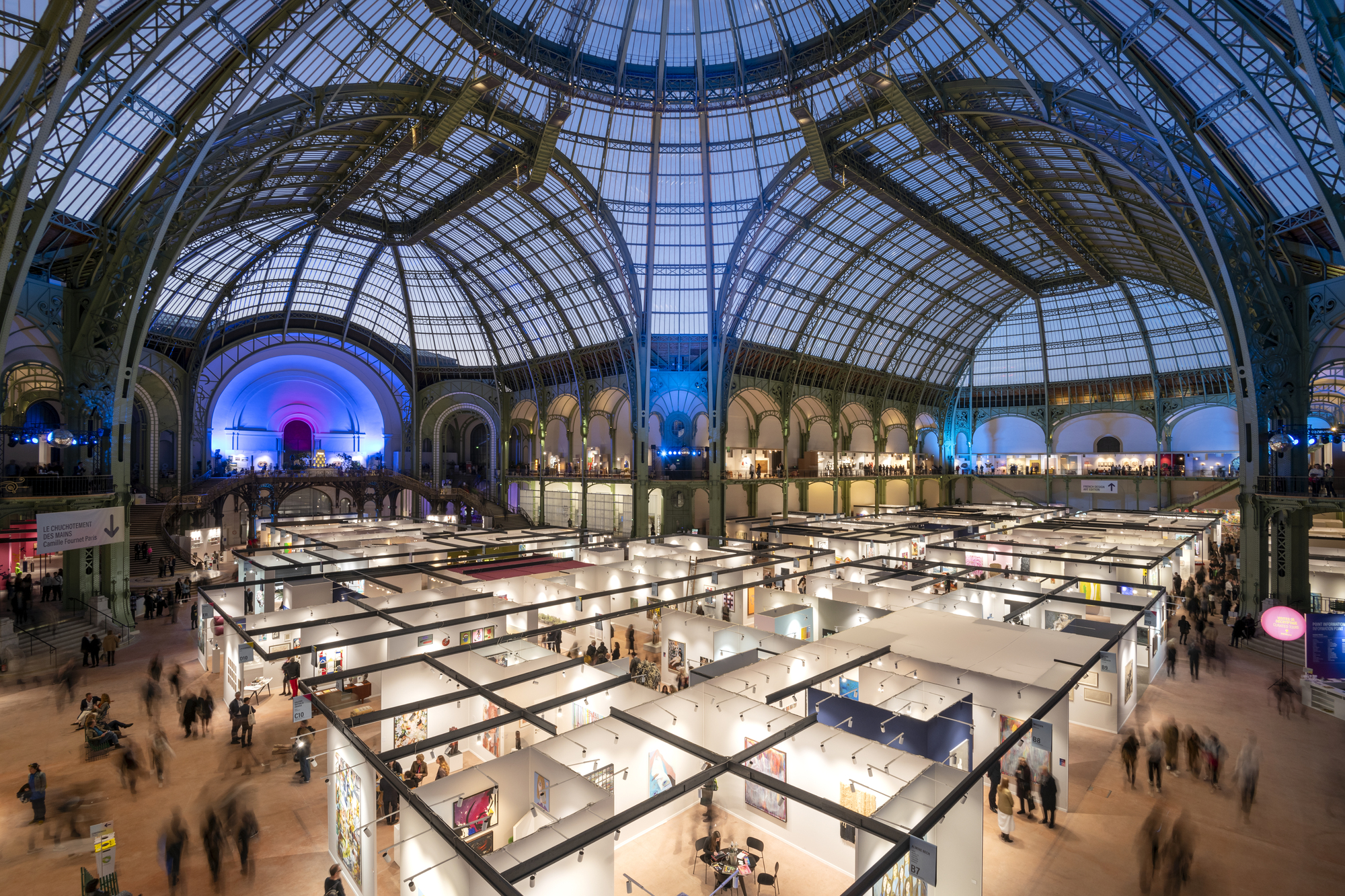
1 month agoart paris 2026 returns to grand palais exploring language and reparation in modern art
Art Paris 2026 returns to the Grand Palais from April 9-12, featuring 165 galleries exploring language, reparation, and contemporary art across two curated thematic programs.
Paris food
fromwww.theguardian.com
1 month agoZoning in on Menilmontant, Paris: bohemian, arty and off the tourist trail'
Menilmontant is an authentic, working-class Parisian neighbourhood with integrated North African culture, affordable multi-ethnic dining, and genuine local community despite recent international recognition.
fromThe Art Newspaper - International art news and events
1 month agoNew leaders of France's Louvre and Orsay museums announced
Léribault's first mission, according to Macron, will be the "appeasement" of a museum which has been badly hurt by the theft of France's crown jewels on 19 October and a string of scandals since then. He will need all his diplomatic talents to face the unions, who have led an unprecedented series of strikes, asking a rise in wages.
Paris food
Arts
fromwww.theguardian.com
1 month agoThe Guardian view on an explosion of solo exhibitions by women: move over old masters | Editorial
Major UK art institutions are finally increasing exhibitions of female artists after decades of severe underrepresentation, marking a significant shift from historical gender disparities in museum programming.
fromThe Art Newspaper - International art news and events
1 month agoThe stories we tell ourselves: Sophie Calle at the Orange County Museum of Art
We tell ourselves stories in order to live. For more than 50 years, the French artist Sophie Calle has worked in the space between facts and their retelling, demonstrating how the narratives we share about ourselves are always partial, constructed. Working across photography, text, film and installation, she reveals how fantasy and projection intervene in our best attempts to see and be seen.
Arts
fromThe Good Life France
1 month agoStreet Art rules in France - The Good Life France
If you've walked around any of France's cosmopolitan cities in recent years, you're sure to have come across some stunning murals. Painted onto the side of buildings, in hidden corners, and just about anywhere an artist can paint, street art is booming. We're not talking old-school graffiti here, hastily sprayed names on walls, and anti-social stuff like that. Today's street art is commissioned by city or town councils and created by prominent street artists from around the globe says Suzanne Pearson.
Arts
fromHyperallergic
1 month agoMitchell Johnson's Personal Color at Galerie Mercier in Paris
Influenced by the works of Hopper and Hans Hofmann, Mitchell Johnson: Personal Color (Selected Small Paintings 1988-2026) is shaped by decades of visits to Paris and Cape Cod, two places that have anchored and evolved Johnson's painting over the course of his career. Hofmann, through his teaching, transported the aesthetics and concerns of the School of Paris across the Atlantic, eventually creating a group atelier curriculum that would expand the breadth of American Modernism through his theory of push and pull.
Arts
fromBerlin Art Link
1 month agoAn Interview with Monia Ben Hamouda | Berlin Art Link
Monia Ben Hamouda's work weaves calligraphy, material transformation and ancestral memory into sculptures and installations that oscillate between language and form. In conversation, we traced the conceptual and sensory threads of her practice, unfolding through key works that reflect on heritage, embodiment and translation. Using materials such as iron, stone and pigment, her installations become sites where history is not only referenced but physically felt.
Arts
Arts
fromwww.amny.com
1 month agoKing Paris shows the sovereignty of light through his contemporary masks on display in Manhattan | amNewYork
Embellished masks and reflective surfaces in West African traditions use radiance and material brilliance to convey authority, spiritual meaning, and social order through performance.
fromDocumentjournal
1 month agoAn evening with Mickalene Thomas: Document marks her historic Grand Palais solo show
The exhibition centers the visibility, agency, and radical joy of Black women, celebrating love as a generative force-of liberation, self-definition, and community. Through richly textured compositions and her iconic rhinestone-studded surfaces, Thomas depicts her subjects-friends, family, lovers, and cultural figures-with a confidence and sensuality that reclaims spaces where Black women have been historically overlooked or misrepresented. With this exhibition, she becomes the first African-American artist to receive a major solo presentation at the Grand Palais.
Arts
Arts
fromThe Art Newspaper - International art news and events
2 months agoShow unpacks legacy of polymath architect who restored Paris's Notre-Dame (the first time)
Eugène Viollet-le-Duc transformed architectural restoration, theory, and practice through prolific drawings and influential restorations, now highlighted in a major U.S. exhibition.
fromParis Perfect
1 month agoFall in Love with Renoir in Paris This Year
Running from March 17 to July 19, 2026, Renoir and Love will be one of the top special exhibitions of the year in Paris. Celebrating how affection, connection and human relationships shaped Renoir's work during a defining period of his career. Bringing many key works together for the first time in decades, the exhibition offers a fresh perspective on how Renoir approached love not as an abstract ideal, but as something lived and experienced within the changing social life of late-19th-century Paris.
Arts
fromHyperallergic
2 months agoEdouard Manet and Berthe Morisot Meet as Equals
Manet & Morisot at the Legion of Honor is a somewhat scholarly exhibition on the lives, work, and friendship of two eminent French 19th-century artists. While it sets out to rescue Berthe Morisot from a long-held assumption that she owed her art to the influence - even guidance - of Édouard Manet, the show is far from an academic or revisionist experience. Instead, after seeing their work compared and contrasted across a handful of galleries, the word that comes most immediately to mind is "pleasure."
Arts
Arts
fromHi-Fructose Magazine - The New Contemporary Art Magazine
2 months agoAccepting Their Strangeness: the Sculptures of Clementine Bal - Hi-Fructose Magazine
Bal's sculptures blend personal life influences, playful open-eyed characters, and layered materials to portray intimate, universal experiences of rest, parenthood, and whimsical strangeness.
fromJuxtapoz
2 months agoJuxtapoz Magazine - Marcelle Reinecke: Cherries in the Snow @ Monya Rowe Gallery, NYC
For this exhibition, Reinecke presents variations of leisure activities in an imaginary wooded landscape and cozy warm interiors infused with sentimentality. Reinecke highlights common outdoor activities such as hiking, swimming and fishing to simple domestic pleasures such as applying nail polish to a loved ones toes upon a green shag carpet in front of a blazing fire ( Cherries in the Snow, 2025).
Arts
fromThe Art Newspaper - International art news and events
2 months agoDenmark exhibition invites visitors to come face to face with Basquiat's 'head' works
When a 22-year-old Jean-Michel Basquiat (1960-88) was asked how he typically began a piece, his answer was simple: "I suppose I would start with a head." That instinct-almost a reflex-sits at the core of a remarkable group of early works on paper that remained largely unseen during his lifetime. The Basquiat: Headstrong exhibition, which opens this month at the Louisiana Museum of Modern Art in Denmark, is set to become the first comprehensive showing devoted to the artist's depictions of the human head.
Arts
Arts
fromdesignyoutrust.com
2 months agoFabien Merelle Masters Ink And Watercolor To Craft Pyjama-Clad Figures Teetering On Absurd Family Edges
A diverse collection of contemporary and vintage visual art, illustrations, posters, and provocative campaigns spanning pop culture, horror, urban, and political themes.
fromColossal
2 months agoBruno Pontiroli Tests the Boundaries of Familiarity in His Uncanny Wildlife Paintings
The artist is known for his absurdist paintings of animals with overly long legs, contorted bodies, or myriad mutant-like heads or limbs. They're often set amid woodlands or meadows evocative of 18th- and 19th-century academic landscape paintings or depictions of formal hunts. Instead, both domesticated and wild animals graze as normally as they would without dozens of heads or udders attached in unnatural places around their bodies.
Arts
fromHyperallergic
2 months agoNo One Was "Picasso's Woman"
As an editor, you learn to pay attention to the nuances of language. How we phrase something can speak volumes about our perspectives. Some words are fine in one context, but in another they might be detrimental. "Victim" is an example - who wants "victimhood" to encompass their whole person? And possessives are a minefield of power relationships; for instance, a person experiencing mistreatment at the hands of a partner should be defined by neither the treatment nor the tormenter
Arts
[ Load more ]