#south-heaven-gate-project
#south-heaven-gate-project
[ follow ]
#architecture #adaptive-reuse #landscape-integration #urban-design #sustainable-design #landscape-design

London
fromThe Art Newspaper - International art news and events
1 week agoMuseums in Shenzhen and Guangzhou are building bridges between Hong Kong and mainland China
Integration of Hong Kong with mainland China has expanded into finance, culture, and infrastructure, fostering new art ecosystems and museums.
Design
fromdesignboom | architecture & design magazine
3 days agoreversible cultural pavilion activates public space in frankfurt 2026
Spain's pavilion for World Design Capital 2026 emphasizes reversible cultural infrastructure and sustainable design through innovative materials and construction methods.
Travel
fromwww.theguardian.com
3 weeks agoIt takes a village the pioneering tourism project breathing new life into India's mountain communities
Village Ways pioneering community-based tourism in Himalayan villages generates income for rural communities while preserving traditional lifestyles and reducing urban migration.
fromYanko Design - Modern Industrial Design News
3 weeks agoA Cluster of Volcanic Cabins Rises From Inner Mongolia's Fragile Steppe - Yanko Design
Rather than imposing itself on this remote terrain, the resort scatters a constellation of compact, sphere-fronted cabins across the landscape, each one placed with surgical intention over patches of degraded sand where vegetation has long struggled to take root. By positioning guest suites directly atop eroding sand depressions, the architects aim to arrest soil loss and give the steppe a chance to regenerate beneath and around the structures.
Berlin
fromdesignboom | architecture & design magazine
1 month agored and white geometric sports complex emerges along daixi's riverfront
The project is structured around the concept of 'Abstract Landscape,' drawing from principles in Chinese landscape painting that prioritize spiritual interpretation over literal representation. Rather than replicating historical forms, the design translates landscape qualities into geometric compositions and spatial sequences. Abstract volumes reference the condition of distant mountains and nearby waters, while controlled color contrasts establish a clear visual framework.
Miscellaneous
fromdesignboom | architecture & design magazine
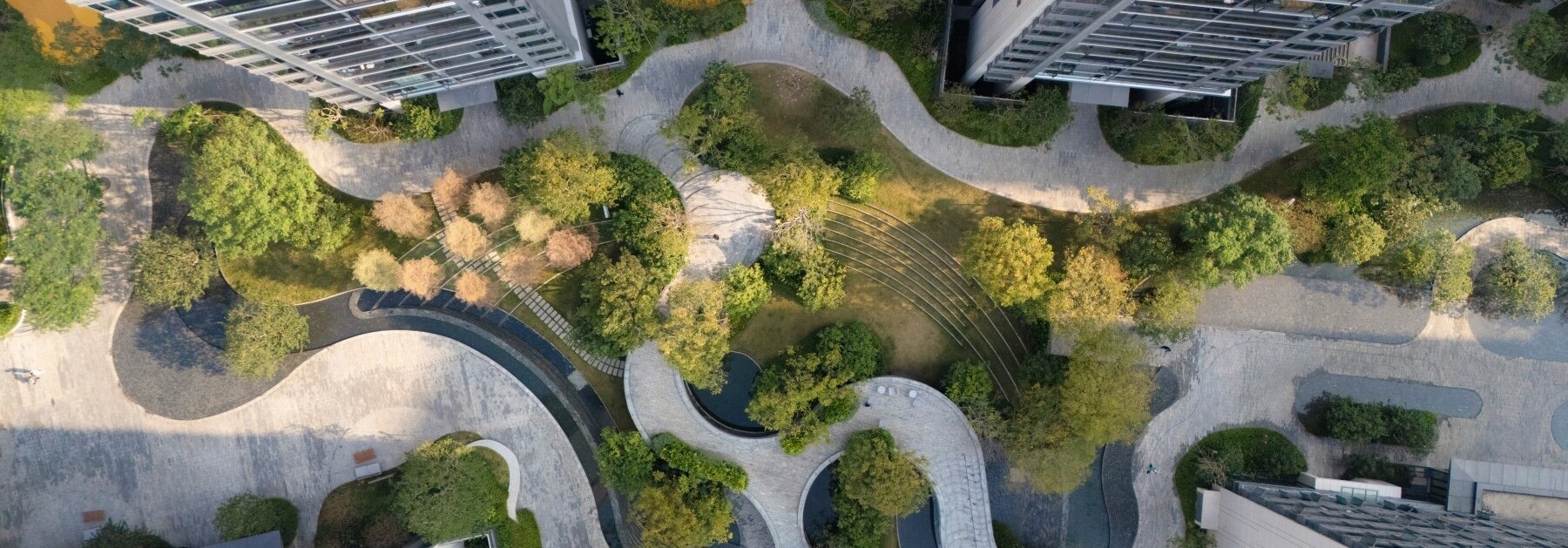
1 week agoan arched pink bridge of happiness revives public park in shanghai
The design team combined the requirements for an accessible bridge and a small pavilion into a single structure, creating a unified architectural gesture that supports both movement and gathering.
Renovation
#adaptive-reuse
Renovation
fromYanko Design - Modern Industrial Design News
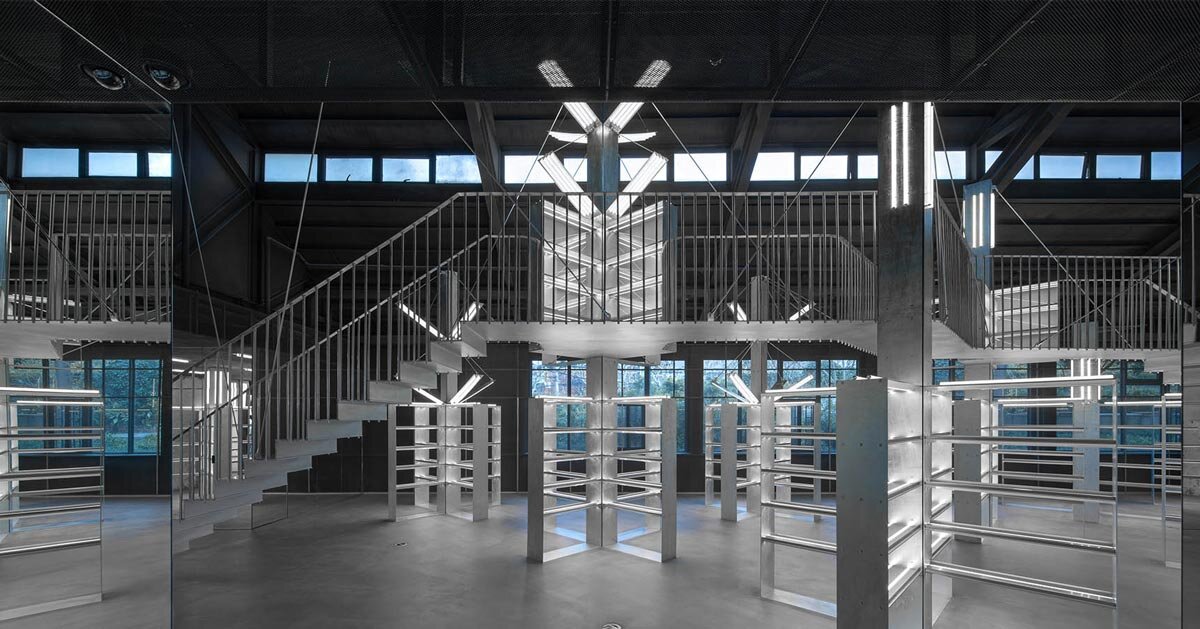
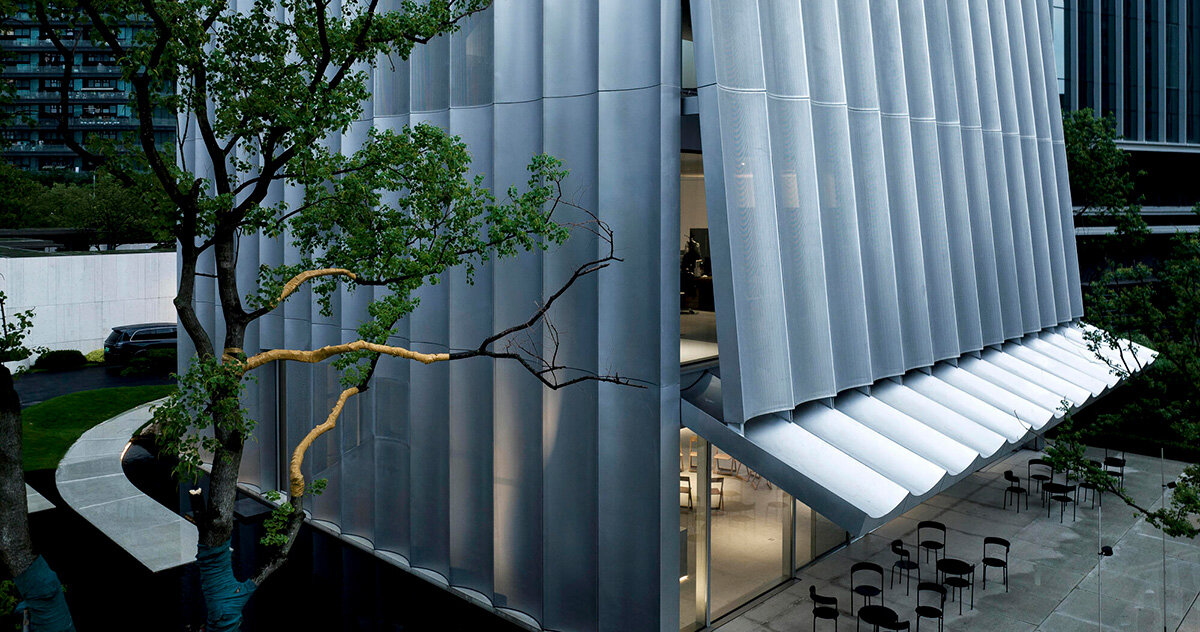
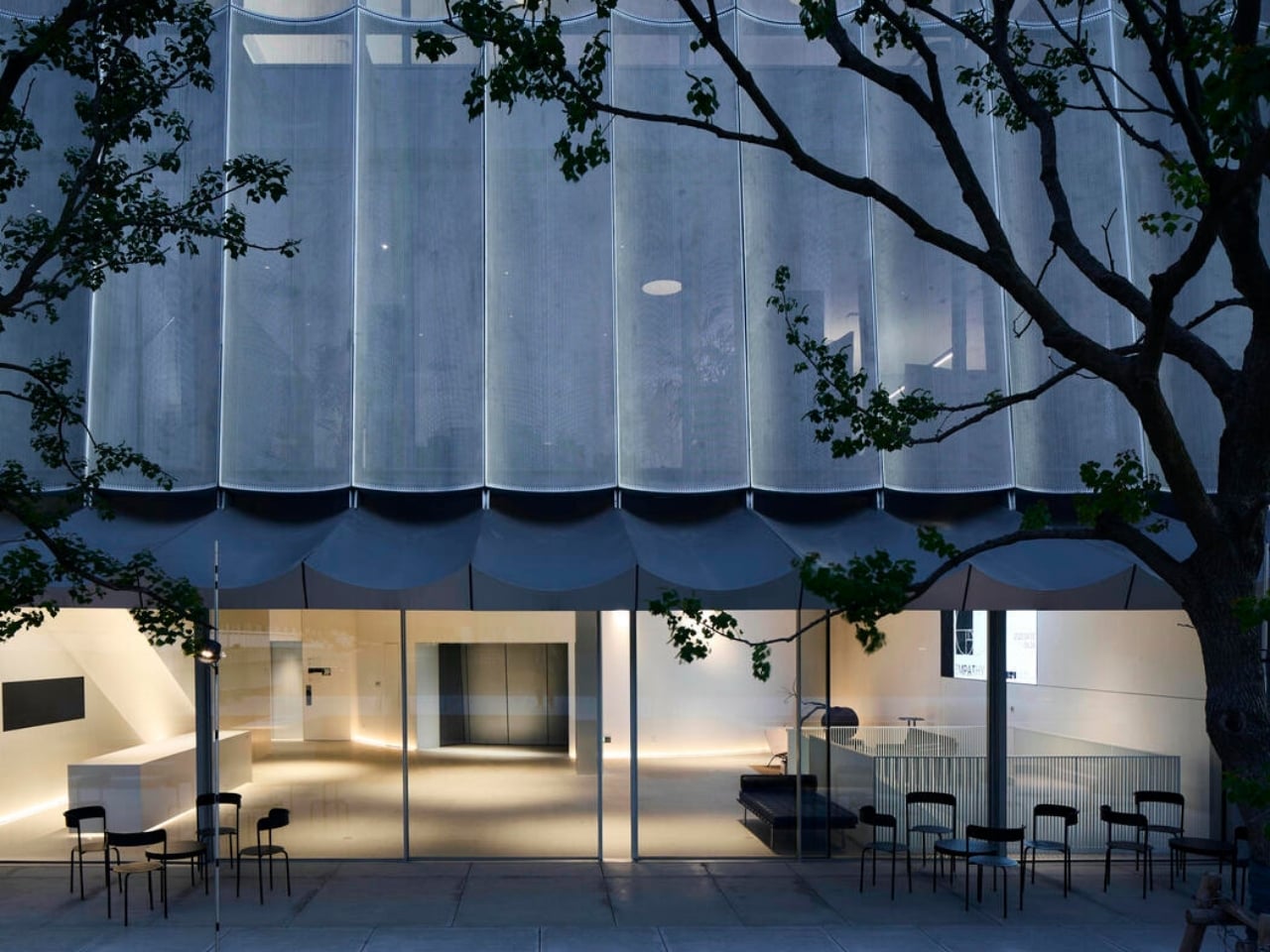
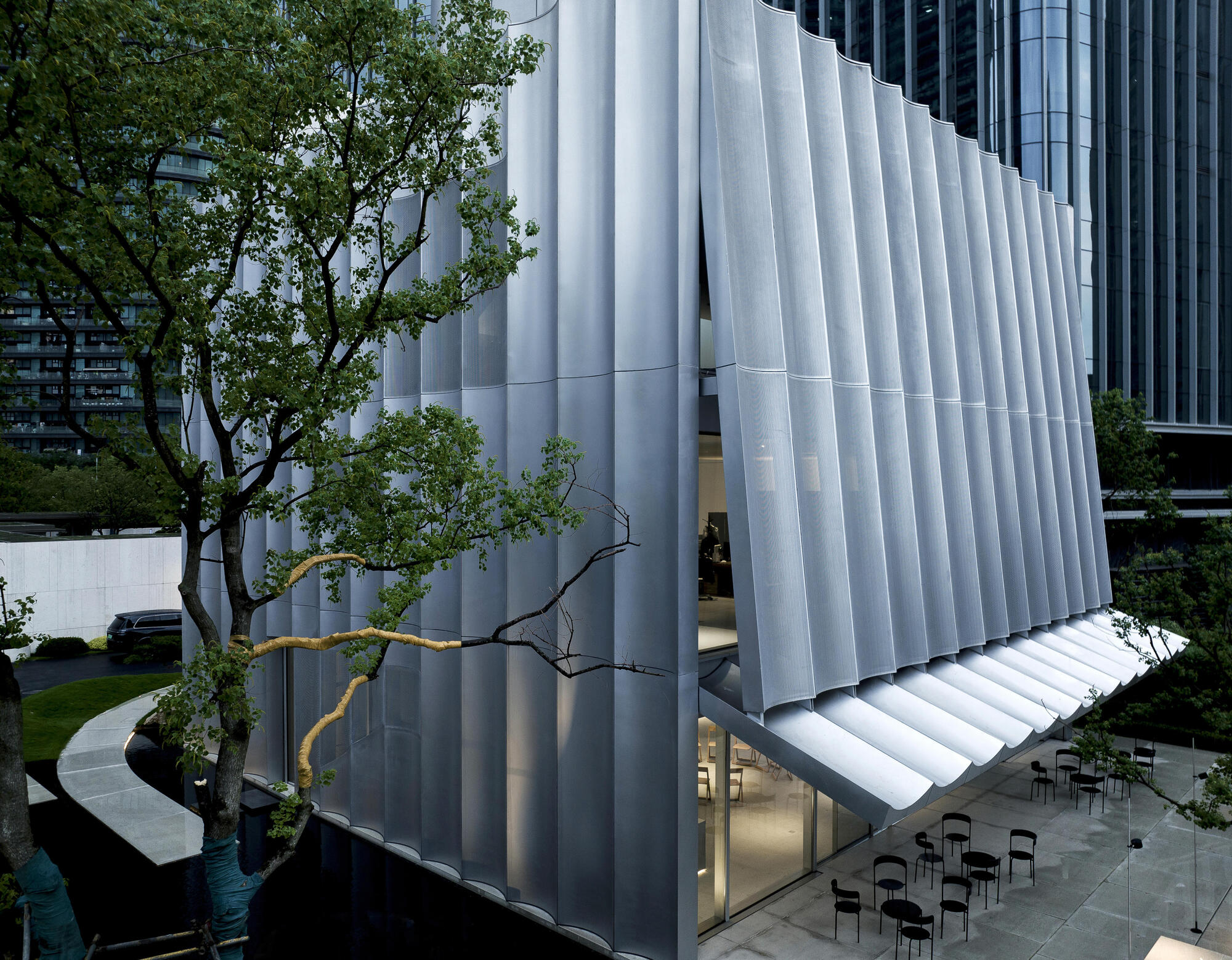
1 month agoAn Abandoned Building Just Became China's Most Reflective Museum - Yanko Design
A compact 1,628 m² Hangzhou museum transforms an abandoned project into a light-filled contemporary art space with a wave-like metal facade and basement galleries.
Renovation
fromdesignboom | architecture & design magazine
2 weeks agoexisting residential spaces reconfigure as a flexible community art network in china
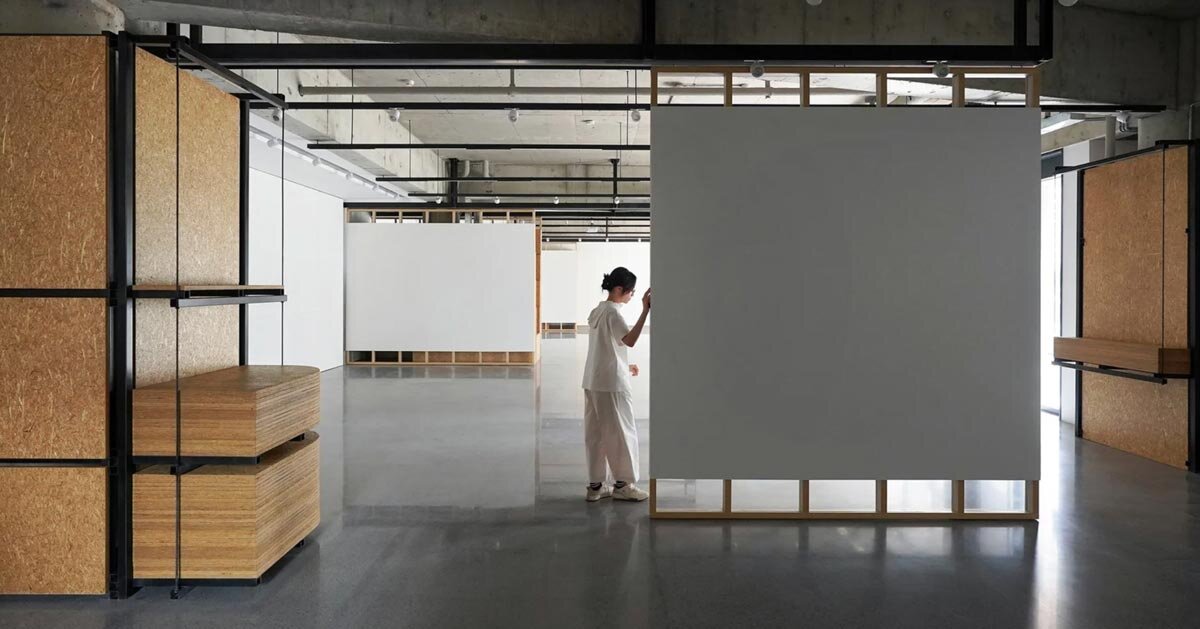
Jiadu Art Center transforms residential spaces into a flexible community art hub using adaptable systems and light-touch design strategies within existing structures.
fromdesignboom | architecture & design magazine
2 weeks agovernacular bridge craftsmanship informs micro-museum set within bamboo grove in china
Baqiao bridges, including the nearby Shisanba Bridge, typically appear in areas where the difference between river level and embankment is relatively small. Their upstream piers are shaped like tapered spindles with slightly raised tips, creating a distinctive structural profile. Stone slabs span between the piers, forming a bridge deck assembled through interlocking construction methods.
Design
fromdesignboom | architecture & design magazine
2 weeks agoopen-air museum revives an industrial past through reclaimed materials and sound
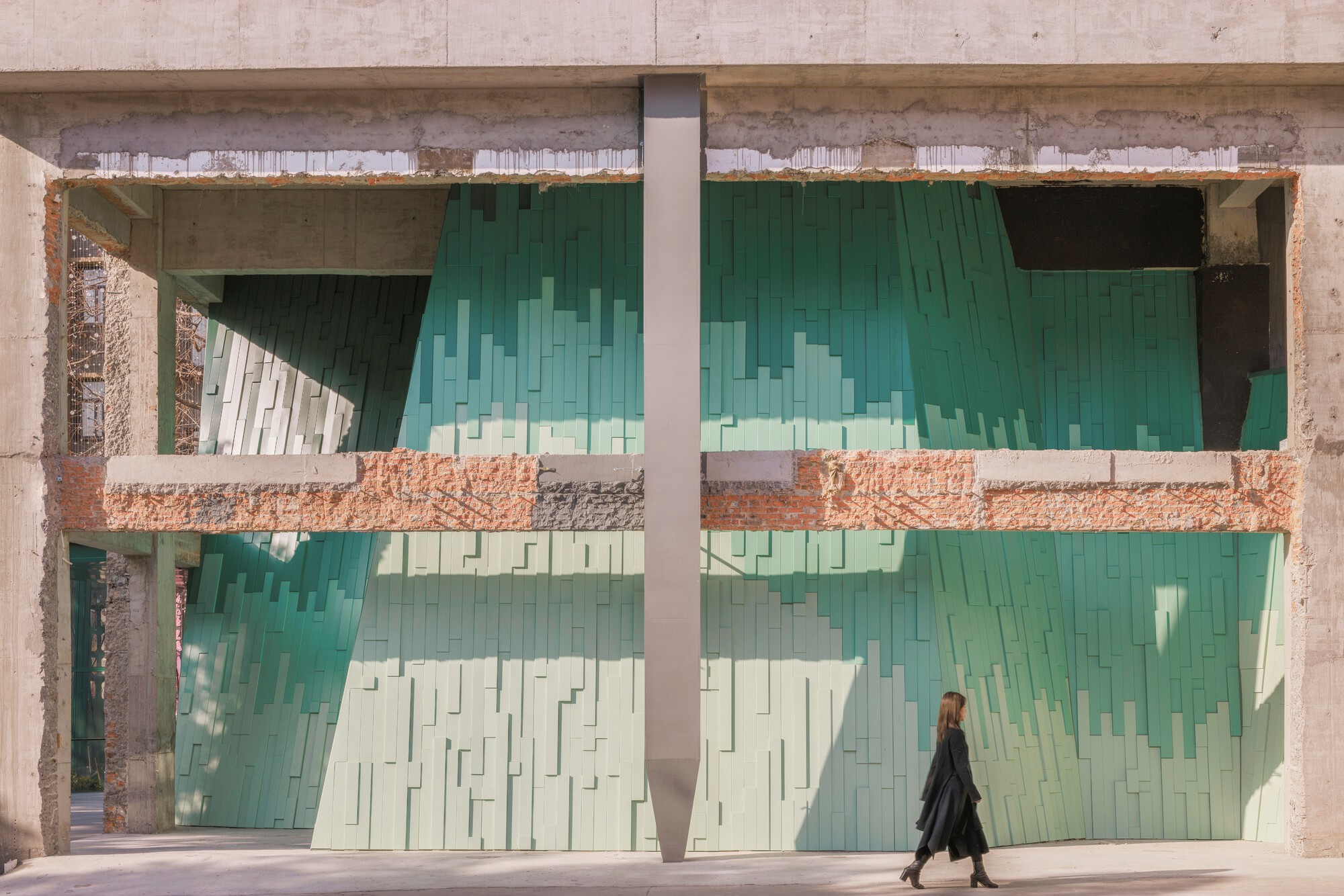
The design by 1Y Architects approaches this silence as material rather than absence. Instead of clearing the debris scattered across the site, the team gathered bricks, concrete fragments, and broken tiles from former factory buildings. These remnants form the structural fabric of the sound museum itself.
Design
Environment
fromdesignboom | architecture & design magazine
2 months agolike a steel ribbon, volcano-in visitor center by PLAT ASIA undulates around steppe in china
The Volcano-In Visitor Center integrates architecture with an extinct volcanic cone to stabilize terrain, reinforce landscape connection, and prioritize movement and environmental responsiveness.
fromdesignboom | architecture & design magazine
2 months agoterraced landscapes anchor hands-on learning at shenzhen elementary school
Wuzhou Elementary School is a public primary located in central , designed by People's Architecture Office (PAO) to support contemporary educational models that emphasize creativity, exploration, and experiential learning. The project responds to Shenzhen's broader transition from an industrial economy to one oriented toward innovation by reconsidering how architectural space can support evolving modes of education. The school is conceived as a three-dimensional 'Learning Landscape,' replacing conventional classroom-and-corridor arrangements with a continuous field of varied spatial conditions.
Education
Renovation
fromdesignboom | architecture & design magazine
3 weeks agothis 'underground house of the future' revisits ancient chinese cave dwellings
A University of Hong Kong team redesigned traditional underground 'dikengyuan' courtyard houses on China's Loess Plateau using modern construction methods and 3D printing to address climate challenges while preserving agricultural land and cultural living practices.
Renovation
fromFast Company
1 month agoThe quarry that built modern Beijing gets a surprising second life
A former Beijing quarry that supplied materials for the city's rapid growth has been transformed into a 265-acre ecological park that repurposes its massive excavation pits as functional and scenic landscape features.
Design
fromdesignboom | architecture & design magazine
1 month agoTAO shapes this rural art center with a fanning floor plan to frame wetland views
The Chenhu Wetland Art Center uses dynamic walls as the primary design element to create a museum that responds to and reflects its wetland environment through curved forms, textured materials, and porous spatial organization.
Renovation
fromdesignboom | architecture & design magazine
1 month agostudio RE+N turns abandoned planter into floating yellow stage in shanghai neighborhood
Studio RE+N transformed a neglected circular planter in Shanghai into a bright yellow floating steel platform that activates the courtyard for diverse community activities and age groups.
Design
fromdesignboom | architecture & design magazine
1 month agoradiating paving and green roofs recast xuzhou rail station as urban gateway and public realm
Xuzhou East Station Plaza transforms a high-speed rail forecourt into a civic public realm by integrating multi-level infrastructure, landscape corridors, and commercial activation into a unified three-dimensional urban gateway.
fromwww.archdaily.com
1 month agoKingdee Cloud Tower / HENN Architekten
The Cloud Tower completes the existing Kingdee software park in Shenzhen's Nanshan neighborhood, which is an emerging tech district. Located on the edge of a green strip, the 211-meter-high tower provides space for offices, conferences, and a restaurant for Kingdee, a leading provider of enterprise management cloud services globally.
Renovation
Design
fromdesignboom | architecture & design magazine
1 month agorepetitive vertical fins enfold concrete structure embedded within thailand's mountainscape
SIM STUDIO embeds a linear concrete structure in Thailand's mountainous terrain using repetitive vertical fins as climatic filters, spatial organizers, and structural elements that frame views and regulate light.
fromArchDaily
2 months agoJiaxing HRNT Cultural Center / THAD SUP Atelier
Jiaxing High-Speed Rail New Town Cultural Center sits at a key node in the city's water and landscape network, with open waterfronts to the north and west and major roads to the south and east. Conceived as the City Living Room and Eye of the Town, it anchors the community core, surrounded by residences, schools, and the hospital. It aims to provide the public with a high-quality, all-day accessible experience.
Design
Design
fromdesignboom | architecture & design magazine
2 months agoa 1930s chair is the architectural inspiration for gad's nature experience center in china
A free-form roof floats like a cloud, allowing relaxed, locally adapted architecture that grows from alpine terrain and frames mountain, village, and water landscapes.
Design
fromYanko Design - Modern Industrial Design News
2 months agoChina Just Built a Rest Stop That Belongs in a Sci-Fi Movie - Yanko Design
A modest concrete pavilion on Mount Luofu offers a contemplative looped path that frames views through crafted openings, blending functional rest with landscape choreography.
Renovation
fromwww.archdaily.com
2 months agoXinhepu Historical and Cultural Precinct Core Area Enhancement Project / Atelier cnS
Micro-regeneration and tailored restoration reconnect Xinhepu’s spatial network to preserve historical character while improving everyday livability and fostering a vibrant precinct.
Design
fromdesignboom | architecture & design magazine
2 months agotraditional bamboo scaffolding constructs temporary theater along chinese coast
Re-Enchantment Design built an 18-day bamboo-based temporary coastal theater integrating local construction techniques and adaptable public spaces for varied community use.
Design
fromArchDaily
1 month agoZaha Hadid Architects Designs Cultural District Along the Qiantang Bay Central Water Axis in Hangzhou, China
Qiantang Bay Central Water Axis transforms former industrial waterfront into a landscaped green corridor with cultural buildings, public spaces, bridges, and sponge-city flood mitigation.
Design
fromdesignboom | architecture & design magazine
2 months agoovoid landscape tower by gad hovers above chongqing mingyue lake in china
A slender, moon-inspired viewing tower on a Chongqing lakeshore provides a staged ascent delivering panoramic views and landmark presence within the forested park.
Design
fromdesignboom | architecture & design magazine
1 month agozaha hadid architects to design series of cultural buildings along canal in hangzhou, china
Zaha Hadid Architects will design cultural buildings in Hangzhou's Qiantang Bay, anchoring a canal-side green corridor with a jade-referenced library.
Design
fromdesignboom | architecture & design magazine
2 months agoprotoscapes reworks decommissioned pier into public-facing resort on chinese island
Dongshan West Bay Resort transforms a decommissioned fishing pier into a diving-themed coastal resort whose forms respond to tidal rhythms, light, and coastal topography.
fromwww.archdaily.com
1 month agoSadec Garden Hotel / PAU Architects
Sadec Garden is a small-scale accommodation project newly designed and located in the flower village of Sa ec, ong Thap, Vietnam. The project is approached as a quiet place of temporary stay, where architecture does not seek visual prominence but operates as a background for landscape, light, and local daily life. Rather than pursuing expressive forms, the design adopts an attitude of restraint, focusing on spatial organization, experiential sequence, and a soft relationship between architecture and the riverine context of Sa ec.
Design
fromArchDaily
2 months agoLu Wenyu: Quiet Radicalism and the Practice of Repair
Lu Wenyu-co-founder of Amateur Architecture Studio with Pritzker laureate Wang Shu-has shaped many of the practice's most emblematic works across China, including the Ningbo History Museum and the Xiangshan Campus of the China Academy of Art in Hangzhou. Often working outside the spotlight, her leadership is unmistakable in the discipline of execution and the roles she has assumed: in 2003, together with Wang Shu, she established the Architecture Department at the China Academy of Art,
Design
[ Load more ]