#spanish-illuminated-manuscripts
#spanish-illuminated-manuscripts
[ follow ]
#spain #medieval-manuscripts #holy-week #archimedes-palimpsest #semana-santa #catholic-church #cultural-heritage
fromThe Conversation
1 week agoOn Passover, some Sephardic Jews revisit not only the story of their ancestors, but also their Ladino language
During Passover, Jewish families gather at their tables to retell a story passed down for thousands of years, recounting the Exodus, the biblical story of the Israelites' liberation from slavery in Egypt.
Philosophy




fromMedievalists.net
3 weeks agoNew Medieval Books: Approaching Records of the Household and Wardrobe - Medievalists.net
The Household and Wardrobe Accounts are English records that document the daily needs of the king and his family. This book serves as a guide to these sources, showing how they can be used and what valuable insights they offer into medieval government.
History

OMG science
fromNature
1 month agoDaily briefing: Galileo's notes discovered in the margins of an ancient book
Tectonic plates moved 3.3 billion years ago with higher oxygen levels; Galileo's annotations discovered in 400-year-old Ptolemy text; rotator cuff degeneration common in older adults regardless of symptoms.
fromwww.thelocal.es
1 month agoWhere to travel in Spain to see the solar eclipse this summer
A total solar eclipse happens when the Moon passes directly between the Sun and Earth, perfectly aligning to completely obscure the Sun, casting a dark shadow across the Earth. The event may be around five months away, but many are already planning their trips and accommodation is booking up fast.
Travel
Madrid food
fromenglish.elpais.com
3 weeks agoThe impious and sodomite' Portuguese nobleman who kept banned books inside the walls of his house in a Spanish village
A 1992 discovery of 11 sixteenth-century books hidden in a Spanish home belonged to Portuguese nobleman Fernao Brandao, who fled the Inquisition due to his sexual orientation.
History
fromwww.theguardian.com
3 weeks agoFurious row erupts over Madrid site of one of Robert Capa's most important pictures
Madrid's conservative city council abandoned plans for a Robert Capa museum at a historically significant bombing site, instead converting it into a youth center with minimal historical commemoration.
Madrid food
fromenglish.elpais.com
3 weeks agoNo fairytale ending for the rebel nuns of Belorado: Spanish sisters quit the fight and leave their convent
Rebel Poor Clare nuns in Spain will voluntarily surrender their monastery keys on March 12 rather than face a public eviction, ending their two-year occupation following their 2014 split from the Roman Catholic Church.
fromArchDaily
1 month agoBetween Materials and Memory: Three Madrid Architecture Practices on Heritage Rehabilitation
Ba-rro: "Our starting point is always the context and what already exists." We are interested in recognizing the value of things simply because they are there, without assuming that everything must be preserved as a matter of principle. The question isn't what can be kept, but what deserves to be kept in each specific project. The decision to preserve, reveal, or remove doesn't stem from universal values or a nostalgic impulse, but from a situated interpretation:
Renovation
fromArtnet News
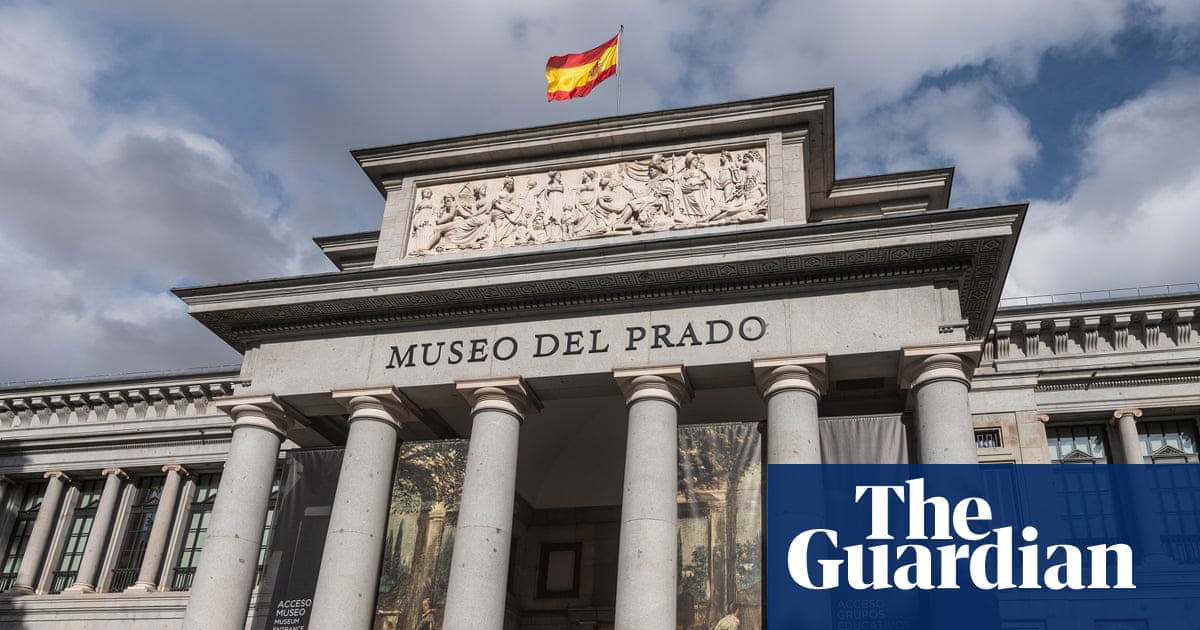
1 month agoPrado Conservators Get a Loewe Makeover
Designed in close dialogue with the Prado's conservators, the coats meet strict functional requirements essential to restoration work. They are constructed from high-quality, non-reflective materials that prevent any glare from interfering with the surface of a painting-an essential consideration when working millimeters away from a Velázquez or a Bosch.
Arts
fromwww.theguardian.com
1 month agoMadrid museum shuffles its pack charting decades of rapid change in Spain
The Reina Sofia's new rehang opens, quite pointedly, with a painting of a detained man sitting, head bowed and wrists shackled, as he waits for the arbitrary hand of institutional bureaucracy to decide his fate. The picture, Document No , was painted by Juan Genoves in 1975, the year Francisco Franco died and Spain began its transition to democracy after four decades of dictatorship.
Miscellaneous
Food & drink
fromwww.theguardian.com
1 month agoSpanish jamon is the best ham in the world but culture warriors are reviving its dark history | Abbas Asaria
Spain produces world-class ham and a rich variety of regional pork dishes, notably jamon iberico and diverse morcillas with deep cultural significance.
fromenglish.elpais.com
1 month agoFrom pajamas and the chamber pot' to the coffee nap': In search of the perfect siesta
Humans have a predisposition to experience a drop in alertness and vigilance around midday, between six and eight hours after waking up. In fact, the word siesta comes from the Latin sexta, which in Ancient Rome referred to the sixth hour of the day from dawn; a time reserved for rest and relaxation. There are many markers we measure in the laboratory which indicate that this period is present, even without having eaten lunch, he states.
Public health
History
fromMedievalists.net
1 month agoDreaming of Owning a Medieval Artefact? Here's Your Chance - Medievalists.net
TimeLine Auctions' March 3 online sale features hundreds of medieval historical objects including a 13th-century Limoges cross, 1224 Chinese armor, Viking silver mount, and Anglo-Saxon brooch.
fromdesignboom | architecture & design magazine
2 months ago3D printed canopy uses passive environmental control to protect roman tombs in spain
A lightweight, 3D printed and textile roof protects the Tombs of Postumio and Tres Puertas at the Archaeological Complex of Carmona in Seville, rethinking how contemporary architecture can engage with heritage conservation. The project by Juan Carlos Gómez de Cózar and Manuel Ordóñez Martín introduces a single canopy that covers both Roman tombs while operating as an environmental machine designed to stabilize their long-term preservation.
Design

History
fromMedievalists.net
1 month agoDiscovery links Medieval Mosque to Roman Temple - Medievalists.net
A newly discovered Greek inscription at the Great Mosque of Homs suggests the medieval mosque may stand on the remains of a Roman-era Temple of the Sun, resolving a long-standing scholarly debate about the site's sacred history.
fromwww.thehistoryblog.com
1 month agoMedieval painted panels found beneath Toledo house
A group of polychrome wood panels discovered under the floorboards of a house in Toledo in 2018 are going on display at the National Archaeological Museum in Madrid. They were found during construction of a hotel planned to go up over several buildings in the Bajada del Pozo Amargo street next to Toldeo's Cathedral. They had been stripped from their original location on the upper part of the walls of a quadrangular hall and reused as raw carpentry material in the house's subfloor.
History
fromenglish.elpais.com
1 month agoSpain's excommunicated nuns of Belorado: We have enough to deal with just getting through life'
Inside are the nuns who, on May 13, 2024, broke with the Roman Catholic Church, which entails excommunication. They have no intention of leaving, but on March 12, they will be evicted by court order, with backup from law enforcement if necessary. If you wish for assistance, please call this number, reads a second sign hanging below the first. On a side door, there is graffiti that urges them to Occupy and Resist.
Miscellaneous
fromMedievalists.net
1 month agoNew Medieval Books: The Medieval Moon - Medievalists.net
In this book of moons, I am writing for people for whom the medieval world and its literatures and arts may be unfamiliar. I hope that in telling the stories of medieval moons, I also introduce these readers to the wonderful, mesmerising realm of medieval texts and images. But I also hope that this book may be useful to those with greater familiarity with medieval languages, literatures, and arts.
History
fromOpen Culture
1 month agoCats in Medieval Manuscripts & Paintings
Renais­sance artist Albrecht Dür­er (1471-1528) nev­er saw a rhi­no him­self, but by rely­ing on eye­wit­ness descrip­tions of the one King Manuel I of Por­tu­gal intend­ed as a gift to the Pope, he man­aged to ren­der a fair­ly real­is­tic one, all things con­sid­ered.
Arts
fromHyperallergic
1 month agoSpain's Cosmic Mother of Modernism
MADRID - The most famous portrait of Maruja Mallo depicts the artist covered from head to toe in seaweed. She is crowned and draped with long, rope-like strands of kelp, her arms raised triumphantly like an all-powerful marine goddess. This unconventional photograph, snapped in 1945 by the poet Pablo Neruda on a Chilean beach, was no doubt carefully orchestrated by the Spanish artist, who viewed herself as an extension of her unique work, where female energy is a conduit for natural and even cosmic forces.
Arts
Arts
fromThe Art Newspaper - International art news and events
2 months agoCan a new cipher help to explain the mysterious Voynich Manuscript?
The Naibbe cipher encodes text by random 1–2 letter chunking and card-driven substitution tables, reproducing several statistical and structural features of Voynichese.
fromMedievalists.net
2 months agoNew Medieval Books: Chasing the Pearl-Manuscript - Medievalists.net
This is a book about a book: the small, cropped, somewhat ragged but brightly illustrated volume now known formally, and rather forbiddingly, as British Library MS Cotton Nero A.x/2. The fame and beauty of its four Middle English poems have given it sobriquets beyond the shelfmark, however, which are more familiar and intimate: it is also the Gawain-Manuscript or, as I will call it, the Pearl-Manuscript.
History
fromMedievalists.net
2 months agoRules of a Medieval Library - Medievalists.net
When universities began to emerge in Europe during the eleventh and twelfth centuries, they soon became important centres of knowledge. Their libraries could hold hundreds of books, and many of the most valuable volumes were kept under close control - sometimes even chained to desks. We have few details about how medieval university libraries operated, but a revealing set of rubric headings survives from the University of Angers in western France.
History
History
fromMedievalists.net
1 month agoNew Medieval Books: A Medieval Case for Islam's Superiority - Medievalists.net
An eighth-century Abbasid letter to the Byzantine emperor defends Islam, critiques Christian misunderstandings, and reflects Abbasid-Byzantine diplomacy and Baghdad's intellectual life.
fromMedievalists.net
2 months agoNew Medieval Books: Interconnected Traditions - Medievalists.net
This open-access book brings together more than thirty essays on languages and the ways they develop, interact, and influence one another. Its main focus is the Middle East, where Hebrew, Arabic, and Aramaic long existed side by side and often overlapped in everyday use, scholarship, and culture. In line with Geoffrey (Khan)'s commitment to the maximally accessible dissemination of research, this Festschrift has been published in both open-access digital editions and affordable printed formats.
History
History
fromMedievalists.net
2 months agoReading in Byzantium: Literacy, Books, and a World of Texts - Medievalists.net
Byzantine reading was communal and performative, woven into religious, educational, and administrative life while preserving classical learning within a Christian intellectual framework.
fromMedievalists.net
1 month agoNew Medieval Books: A Crusade Against the Turks as a Means of Reforming the Church - Medievalists.net
This project will focus on the Camaldolese hermits' proposal for achieving what they considered to be the most crucial task in the repair of the church, eliminating Islam and all Muslims. Our study will begin with an examination of the recipient of the Libellus, Giovanni de' Medici, who would become Pope Leo X. Next will be an exploration into the backgrounds of Paolo Giustiniani and Pietro Querini,
History
fromMedievalists.net
2 months agoNew Medieval Books: The Forsaken 14th Century - Medievalists.net
In this volume, the authors aim to provide a truly global overview of the 14 century, with each region given approximately the same space. It is obviously impossible to cover every event in every country of the world in a single volume, just as you would not be able to visit every city in every country if you traveled around the world for a year.
History
fromMedievalists.net
1 month ago10 Medieval Studies' Articles Published Last Month - Medievalists.net
In this paper we investigate whether infant and childhood feeding practices influenced the imbalanced adult sex ratio reported in medieval Europe from historical and osteological evidence. First, we examine hypotheses for the observed imbalanced sex ratios in Europe and the evidence presented to support these hypotheses. We then use stable isotope analysis (δ13C and δ15N) of incremental dentine in 64 first molars from adults at three medieval sites (Aulla, Badia Pozzeveri, and Montescudaio) in north-western Tuscany (11th-15th c. CE).
History
History
fromMedievalists.net
1 month agoNew Online Course: The Americas during the Middle Ages - Medievalists.net
An online six-week course examines indigenous peoples of North America and Mesoamerica (500–1500 CE), emphasizing diverse peoples, environments, lifestyles, and pre-contact historical trends.
[ Load more ]