#stanford-hospital
#stanford-hospital
[ follow ]
#ai-in-healthcare #telehealth #healthcare #mental-health #healthcare-access #patient-safety #public-health





fromPsychology Today
4 days agoPeople With Bipolar and BPD Struggle in Mental Healthcare
There is a unique kind of pain in losing your mind, not just once, but over and over. Losing your perception of reality, of your emotions, of your closest relationships-both across months and multiple times a day. Knowing deep down that something is wrong but being unable to stop it.
Mental health
Silicon Valley
fromSilicon Canals
6 days agoSilicon Valley startup backed by Tim Draper pitches growing brainless human clones for organ harvesting and brain transplants - Silicon Canals
A Silicon Valley startup is developing brainless cloned human bodies for organ sourcing and potential brain transplants.
#mental-health

Healthcare
fromwww.theguardian.com
2 weeks agoThank God they're still alive': Kaiser therapists claim its new screening system puts patients at higher risk by delaying their care
Changes in patient screening at Kaiser Permanente have led to concerns about delayed care for high-risk mental health patients.
fromBoston.com
5 days agoHow one family's bipolar disorder experience led to more than $1 billion for the Broad Institute in Cambridge
The Stanley Family Foundation announced another $280 million for the Stanley Center for Psychiatric Research at Broad Institute earlier this month, bringing its total contributions to the Massachusetts-based nonprofit over $1 billion.
Medicine
Brooklyn
fromBrooklyn Paper
3 weeks agoOp-Ed | The Brooklyn Hospital Center is abandoning nurses and patients * Brooklyn Paper
Nurses at The Brooklyn Hospital Center have lost health coverage for 40 days after management refused to contribute to health funds despite a signed contract, while executive leadership remains unaffected.
Public health
fromSan Jose Spotlight
3 weeks agoSanta Clara County studies impact of possible rural hospital closure - San Jose Spotlight
Hazel Hawkins Memorial Hospital closure would significantly strain Santa Clara County's healthcare system, potentially increasing emergency department visits at St. Louise Regional Hospital to 2.4 times the county average.
fromHarvard Gazette
1 month agoHope for hard-to-treat heart disease
Some 1 million patients in the U.S. live with a type of heart disease called heart failure with preserved ejection fraction, or HFpEF, caused by a stiffening of a chamber of the heart that makes it much more challenging to distribute blood throughout the body. The condition has few approved therapies and high mortality rates.
Miscellaneous
Medicine
fromABC7 San Francisco
2 weeks agoCook surviving on artificial heart saved with donor heart in first-ever UCSF transplant
UCSF surgeons successfully implanted an artificial heart in a patient as a bridge to transplant, later replacing it with a donor heart, marking a first for the institution.
Public health
fromThe Atlantic
1 month agoMAHA, Subdued
Casey Means, nominated for surgeon general, moderated her unconventional health views during Senate testimony, emphasizing her Stanford medical degree while previously promoting psychedelics, raw milk, and skepticism toward vaccines and birth control.
fromwww.bbc.com
1 month agoSurgeon's op on patient 2,400km away a UK first
Leading robotic urological surgeon Professor Prokar Dasgupta said it felt 'almost as if I was there' as he carried out a prostrate removal on Paul Buxton. The cancer patient, 62, said it had been a 'no-brainer' to take part and become 'part of medical history'. It is hoped that remote robotic surgery could spare future patients the 'vast expense and inconvenience' of travelling for treatment, and help deliver better healthcare to people in more remote locations.
Medicine
#healthcare-ai


Healthcare
fromwww.mercurynews.com
1 month agoAmazon bets on health care AI with tools for patients, doctors
Amazon Web Services launches Amazon Connect Health, an AI tool that automates medical documentation, billing codes, patient verification, and appointment scheduling to reduce healthcare administrative burden.
Fundraising
fromwww.mercurynews.com
2 months agoValley Health Foundation's chief believes health care is public good
Valley Health Foundation raises community funds to support, innovate, and advocate for Santa Clara County’s expanding public health system, funding patient care, technology, and wellness.
fromwww.mercurynews.com
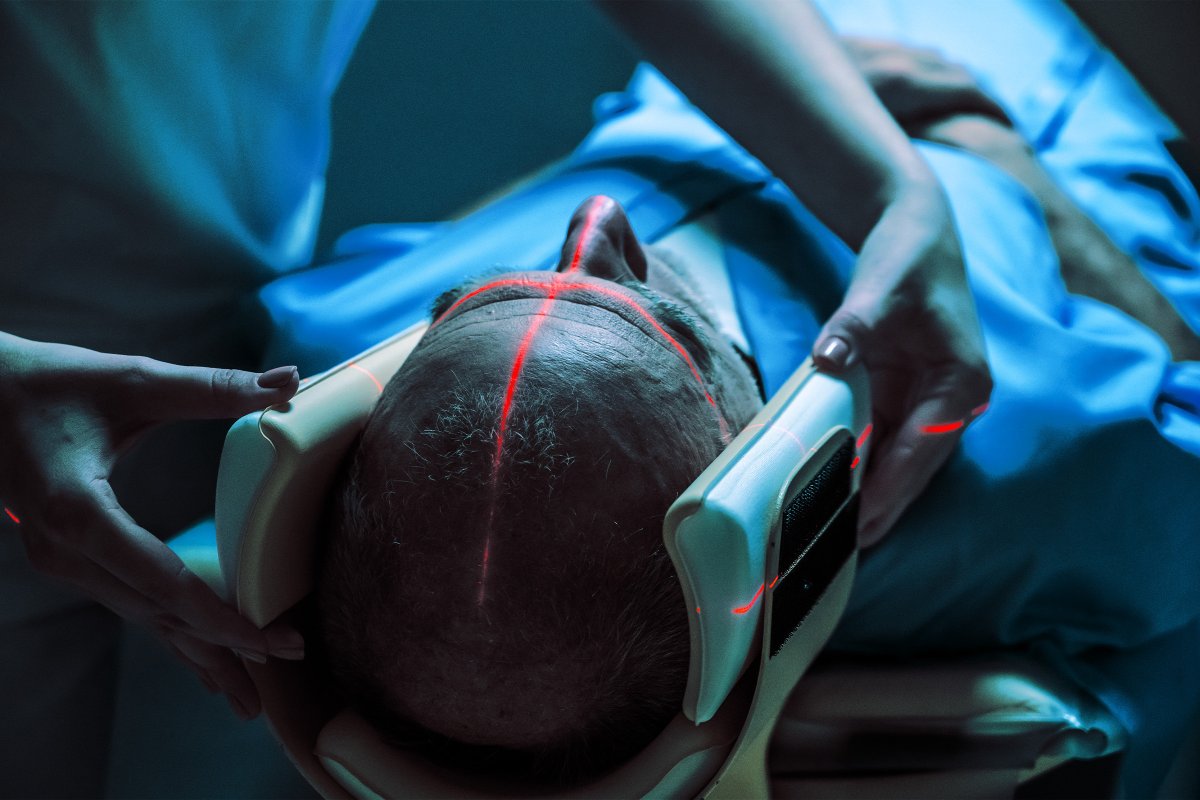
2 months agoStanford's noninvasive brain treatment for depression proves helpful
Summer passed Valerie Zeko by when she was 27, as she vegged out on the couch watching TV instead of seeing friends or exploring the overcast beach near her house. She later learned that period was her first episode of depression. I felt like the fog was in my head as well as outside, said Zeko, now 57, describing the mood disorder that would squelch her happiness, motivation and self-esteem for 28 years until she finally found effective treatment.
Mental health


fromSan Jose Spotlight
1 month agoSan Jose Islamic center a hub for free medical and dental care - San Jose Spotlight
A big part of our faith is charity. The center donates annually to numerous causes such as natural disaster aid, libraries, teacher organizations and Second Harvest of Silicon Valley food bank, demonstrating commitment to broader community support beyond immediate congregational needs.
Healthcare
fromMission Local
1 month agoS.F. healthcare workers say safety issues continue at city's clinics
But as the city's Department of Public Health follows Mayor Daniel Lurie's directions to make cuts, they wanted to make one thing clear: safety in the city's medical facilities requires more than just the presence of security personnel. It requires widespread training in de-escalation, working with patients with complex needs, and crisis response, they said. These programs are on the chopping block.
Public health
fromNews Center
1 month agoAdvancing Preventive Care and Cardiovascular Risk Prediction Through Online Tools - News Center
As the Magerstadt Professor of Cardiovascular Epidemiology, Khan studies the epidemiology of risk for heart failure. Using population-based cohorts and large electronic health record data analyses, she performs mechanistic studies that may enhance risk prediction and identify novel therapeutic agents for the prevention and treatment of cardiovascular disease. Khan and her team have developed a tool to predict risk and prevent cardiovascular disease such as heart failure, stroke, arrhythmia, coronary artery disease and many other conditions.
Public health
fromHarvard Gazette
2 months agoReal-world answers for patients running out of time - Harvard Gazette
But these studies typically require large numbers of patients, huge amounts of data, and thorough follow-ups, none of which comes easy or free. The upshot is fewer investigations into scenarios that are clinically important but unlikely to yield a profit for the firms funding them. Accordingly, researchers have been developing an option that uses real-world data from insurers to save patients from falling through the cracks.
Medicine
fromwww.mercurynews.com
2 months agoCan AI help make homeless Bay Area residents healthier?
Akido Labs, a Los Angeles-based health care technology company that runs clinics and street medicine teams in California, plans to start using its AI model on homeless and housing insecure patients in the Bay Area next month. The program generates questions for outreach workers to ask patients and then suggests diagnoses, medical tests and even medication, which a human doctor then signs off on remotely.
Public health
fromScienceDaily
2 months agoStanford scientists found a way to regrow cartilage and stop arthritis
A study led by Stanford Medicine researchers has found that an injection blocking a protein linked to aging can reverse the natural loss of knee cartilage in older mice. The same treatment also stopped arthritis from developing after knee injuries that resemble ACL tears, which are common among athletes and recreational exercisers. Researchers note that an oral version of the treatment is already being tested in clinical trials aimed at treating age-related muscle weakness.
Medicine
fromwww.theguardian.com
2 months agoGoogle AI Overviews cite YouTube more than any medical site for health queries, study suggests
Google's search feature AI Overviews cites YouTube more than any medical website when answering queries about health conditions, according to research that raises fresh questions about a tool seen by 2 billion people each month. The company has said its AI summaries, which appear at the top of search results and use generative AI to answer questions from users, are reliable and cite reputable medical sources such as the Centers for Disease Control and Prevention and the Mayo Clinic.
Public health
from48 hills
2 months agoThe US fails again to fix the real causes underlying poor health - 48 hills
If you're smoking three packs of cigarettes a day, should you expect society to pay when you get sick?" He added that while Americans would always have the right to "eat donuts all day," nevertheless, "should you then expect society to care for you when you predictably get very sick at the same level as somebody who was born with a congenital illness?
Public health
Public health
fromSan Jose Spotlight
1 month agoIton: Santa Clara County voters wanted Measure A to fund health care - San Jose Spotlight
Measure A was adopted to offset federal budget cuts that would slash Santa Clara County health services, preventing hospital closures and protecting vulnerable residents.


Healthcare
fromwww.sandiegouniontribune.com
2 months agoDoes AI belong in the exam room? Lawsuit alleges California health care group violated patient privacy.
Sharp HealthCare is alleged to have recorded doctor-patient conversations without written consent and used an AI transcription program to document visits.
fromPsychology Today
2 months agoMy Dad Got Sick-Doctors Dodged, AI Didn't
My dad was in the emergency room, short of breath, chest tight, upper back aching. He looked pale and confused. An ultrasound showed excess fluid between his lung and chest wall. "We'll drain it," a resident said, as if he were unclogging a sink. For the next five days, thick, red-tinged fluid filled a plastic container beside my dad's hospital bed. Doctors sent his cells for "staining," a way to identify cancer. But no one used that word.
Medicine
[ Load more ]