Fashion & style
fromApartment Therapy
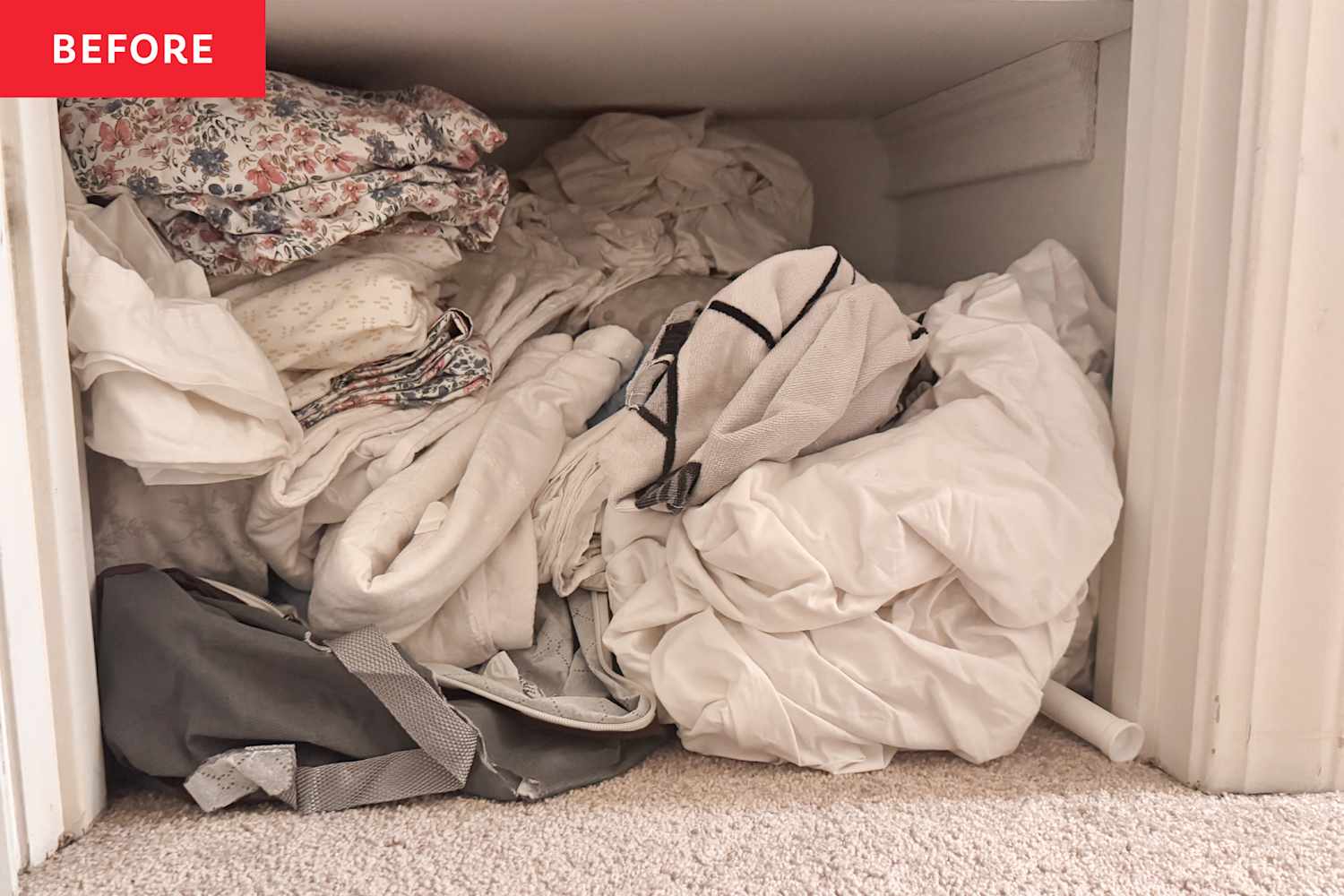
4 days agoI Used the "Reverse Hanger" Hack on My Closet, and It Wasn't What I Expected
The reverse hanger hack helps identify unworn clothing but may not be as effective as expected.
If you grew up in an era where important documents meant physical papers, where proof of payment was a carbon copy receipt, and where your identity was verified by cards you could hold, wouldn't you be skeptical of being told all that could just float somewhere in 'the cloud'? For boomers, physical objects are anchors to reality.
Nine in ten retailers globally are planning to raise their spending on artificial intelligence (AI) to optimise their e-commerce operations over the next 12 to 24 months, with online delivery execution a key area of focus. A total of 38% of European retailers identify speed, tracking and proactive communication around the delivery process as areas where AI can deliver the greatest impact.
Whole Foods shelves sit empty after a data breach shut down its wholesale distributor. Meat packers working for JBS Foods are paralyzed as an $11 million ransomware attack takes out their processing facilities. Some 2.2 million workers at Stop & Shop and Hannaford have their personal data exposed as the result of a cyberattack on parent company Ahold Delhaize USA. These scenarios, straight from a William Gibson novel, are becoming increasingly common in supply chains across the world.
Designed specifically for loads with length or irregular shape, cantilever systems are widely used across manufacturing, builders' merchants, and industrial storage environments. What is cantilever racking? Cantilever racking consists of vertical columns with horizontal arms extending outwards to support loads. Unlike pallet racking, there are no front uprights or obstructions, which makes loading and unloading long items safer and more efficient. This open design allows materials to be handled by forklift, side loader, or manually, depending on the application.
From a meteorological perspective, the winter storm sweeping across the country this weekend is a supply chain disruption in its own right: A high-pressure system from the north is smashing into a low-pressure system from the south, belting large swaths of the US with heavy snow, sleet, and freezing rain. While the snarl in the upper atmosphere could trickle down to the real supply chain on the ground, some retailers are taking steps to anticipate the impact of the storm and position their products accordingly.
I measured the wall space I wanted to hang the shelves on and selected the parts that fit the dimensions I needed-though the options are vast. The system was super easy to install and can hold my entire book collection over the top of my bed. (There are probably more than 200 pounds hanging in the white space over my head, which is scary, but the system is strong!)
Retail point-of-sale systems today offer a wide range of options for peripherals and hardware. Their technical specifications play a major role in selection, and big retailers often choose multiple vendors to reduce a single point of failure. This gives them an advantage to negotiate price or support as well. Technically, these peripherals also require updating with new models and may have new feature sets. This necessitates the redevelopment of point-of-sale applications, increasing development costs.
Perusing the grocery aisle in the Westside Market on 23rd Street in Manhattan, you might not even notice the screens. They look just like paper price labels and, alongside a bar code, use a handwriting-style font we've come to associate with a certain merchant folksiness. They're not particularly bright or showy. The only clues that they're not ordinary sticky shelf labels are a barely distinguishable light bulb and, on some, a small QR code.
The new version combines lower costs with improved cybersecurity and offers up to 2 petabytes of storage in a 2U rack space. Companies are struggling with explosive data growth, increasing cyber threats, and limited budgets. Dell Technologies is responding to this with PowerStore 4.3, a platform that addresses storage challenges without compromising performance or security. The latest version brings innovations that double storage density and reduce energy costs.
The technology underpinning retail operations is under scrutiny in 2026 as fashion executives look to streamline systems with the aim to unlock efficiency, cut costs and meet consumer expectations for speed and personalisation in the shopping journey. At the retail event Lightspeed Edge on 12 January, Lightspeed - the unified point-of-sale (POS) and payments platform for SMEs such as Apricot Lane Boutique and Neal's Yard Remedies - convened industry leaders to explore the strategic imperative for integrated technology ecosystems over siloed systems.
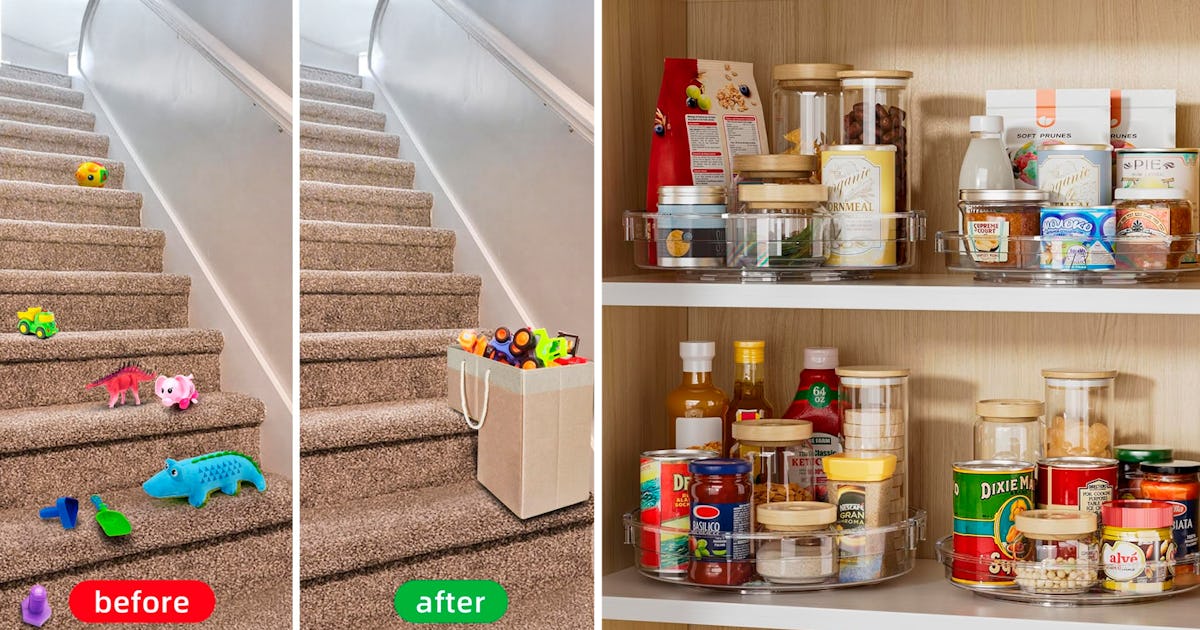
Plastic food containers are both cheap and convenient these days, offering cheap and simple storage solutions for leftovers in your fridge or dry items in the pantry. But they're not without their problems. Apart from figuring out how to organize those pesky plastic lids, the containers themselves may end up holding onto old food odors that make them unappealing to keep using.
You may not realize it since you use it every day, but the kitchen is one of the most unique parts of your home. Think about it: What other room in your house comes with appliances, counters, and cabinets already in it? That definitely saves you a lot of time and money compared with creating an entire kitchen from scratch, but it does also mean that sometimes you'll find yourself with oddly shaped cabinets or cupboards that angle around a corner,
Markup is how much you add to your cost to get your selling price. If something costs $10 and you sell it for $15 , you added $5. That's a 50 percent markup on your cost. Where people get confused is that markup isn't the same as margin, even though the terms get used interchangeably all the time. Margin measures profit as a percentage of the selling price, and markup measures it based on your costs. Same dollar, different percentages.