#student-category
#student-category
[ follow ]
Psychology
fromSilicon Canals
3 days agoPsychology says people who grew up poor and became successful often can't fully enjoy it - not because they're ungrateful, but because some part of them never stopped waiting for it to disappear - Silicon Canals
Successful individuals often struggle with feelings of scarcity and anxiety about their financial stability, despite their achievements.
Parenting
fromSilicon Canals
3 days agoChildren raised in the 1960s and 70s developed their resilience the same way muscle develops under resistance - not by being protected from the load but by being required to carry it, repeatedly, without assistance, until the carrying became the unremarkable default rather than the exceptional achievement - Silicon Canals
Independence and resilience were fostered in children of the '60s and '70s through unstructured play and learning from failure.
fromwww.businessinsider.com
2 hours agoHow much have you spent as a teacher to buy supplies and decorate your classroom? We want to hear from you.
Michelle Medintz spent at least $5,000 in 2022 alone, largely on books. She created a 'cozy corner' in her classroom with shelves filled with books, cushions on the floor, and stuffed animals. 'That doesn't make me a better teacher than my colleagues,' Medintz said.
Education
Higher education
fromInside Higher Ed | Higher Education News, Events and Jobs
2 hours agoEducation Dept. Scraps Some Civil Rights Agreements
The Trump administration rescinded agreements protecting transgender students' rights in schools, claiming previous interpretations of Title IX were ideologically driven.
#homelessness

NYC parents
fromwww.amny.com
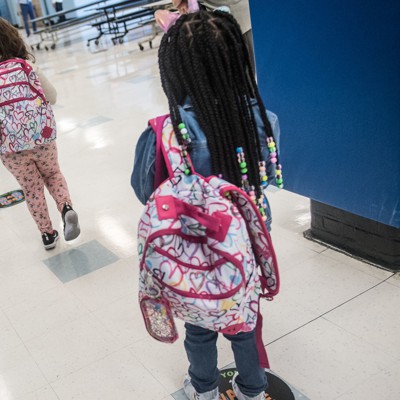
14 hours agoMore absences, lower grades: NYC leaving the educational needs of homeless students behind, report finds | amNewYork
Homeless students in NYC face significant educational challenges, including chronic absenteeism and frequent school transfers, impacting their academic performance.
fromBrooklyn Paper
2 weeks agoAt Uncommon Collegiate Charter High School, student talent program helps Brooklyn teens find passion and purpose * Brooklyn Paper
Growing up, I struggled to figure out what made sense for me, what made me me. When I joined the drum line and felt that community, everything clicked. It made me a better person. It gave me something to fight for.
Brooklyn
Psychology
fromSilicon Canals
6 days agoPeople who grew up calculating whether they could afford both the drink and the entree before anyone else sat down don't stop doing that math when they earn six figures. The arithmetic isn't financial anymore. It's a loyalty ritual to a younger version of themselves who promised never to be caught without an exit. - Silicon Canals
Child poverty in the U.S. leads to adult poverty more than in Denmark, Germany, the UK, or Australia, with lasting effects beyond financial circumstances.
Social justice
fromInside Higher Ed | Higher Education News, Events and Jobs
2 weeks agoThe Fight for Parents' Access to Higher Ed
Student parents face systemic barriers including childcare costs, food insecurity, and transportation challenges that limit college access and completion, requiring institutional and policy reforms.
fromwww.theguardian.com
8 hours agoI see it as trafficking': the brutal reality of life as a foreign student in the UK
Sam, a 24-year-old from Odisha, sought to study abroad for better job prospects. After filling out forms, he received calls from education agents offering free services to help with university applications.
Higher education


#higher-education

Higher education
fromPsychology Today
5 days agoShould You Serve on the Board of Your Alma Mater?
Higher education is essential for the U.S. economy and requires significant institutional change to adapt to current challenges.
Higher education
fromInside Higher Ed | Higher Education News, Events and Jobs
6 days agoHigher Ed Denounces GSA's Proposed Federal Funding Strings
The Trump administration's proposed pledge for colleges on diversity and inclusion is seen as vague and burdensome, risking federal funding for non-compliance.
Higher education
fromInside Higher Ed | Higher Education News, Events and Jobs
6 days agoHigher Ed Denounces GSA's Proposed Federal Funding Strings
The Trump administration's proposed pledge for colleges on diversity and inclusion is seen as vague and burdensome, risking federal funding for non-compliance.
Higher education
fromInside Higher Ed | Higher Education News, Events and Jobs
5 days agoCommunity College 4-Year Degrees Let Prior Learning Count
Community colleges provide adult learners with affordable pathways to education, but transferability of credits for prior learning remains a significant challenge.
Education
fromInside Higher Ed | Higher Education News, Events and Jobs
3 weeks agoStudents Build Belonging Through Service
Neumann University mobilized nearly 1,000 students, alumni, and faculty to complete 60,000 volunteer hours during its 60th anniversary, addressing community needs while strengthening institutional belonging.
fromInside Higher Ed | Higher Education News, Events and Jobs
2 months agoLet's Level the Playing Field for Singles in Higher Ed
"Singlism" is a term coined by psychologist Dr. Bella DePaulo; this is defined as the discrimination and stereotyping of those who are non-married (I prefer this to the term "unmarried"). I'm not a psychologist, but a lot of the assumptions Dr. Tanglen's colleagues made about her "freedom" are an example of singlism. Much of the loneliness the writer felt may have been a result of internalized singlism, which emanates from societal messages from our public discourse (media, business practices, even laws)
Social justice
Parenting
fromSlate Magazine
1 month agoWe're Giving Our Son Something Most of His Friends Could Never Dream of Having. Uh, Now He Wants to Know Why.
Explain financial advantage as privilege, name other forms (race, ability, gender), and have simple, age-appropriate conversations to foster understanding and empathy.
#three-year-degrees

Higher education
fromSlate Magazine
3 weeks agoEmployers, Parents, and Politicians Have Requested a Drastic Change to American Colleges. They're Getting It.
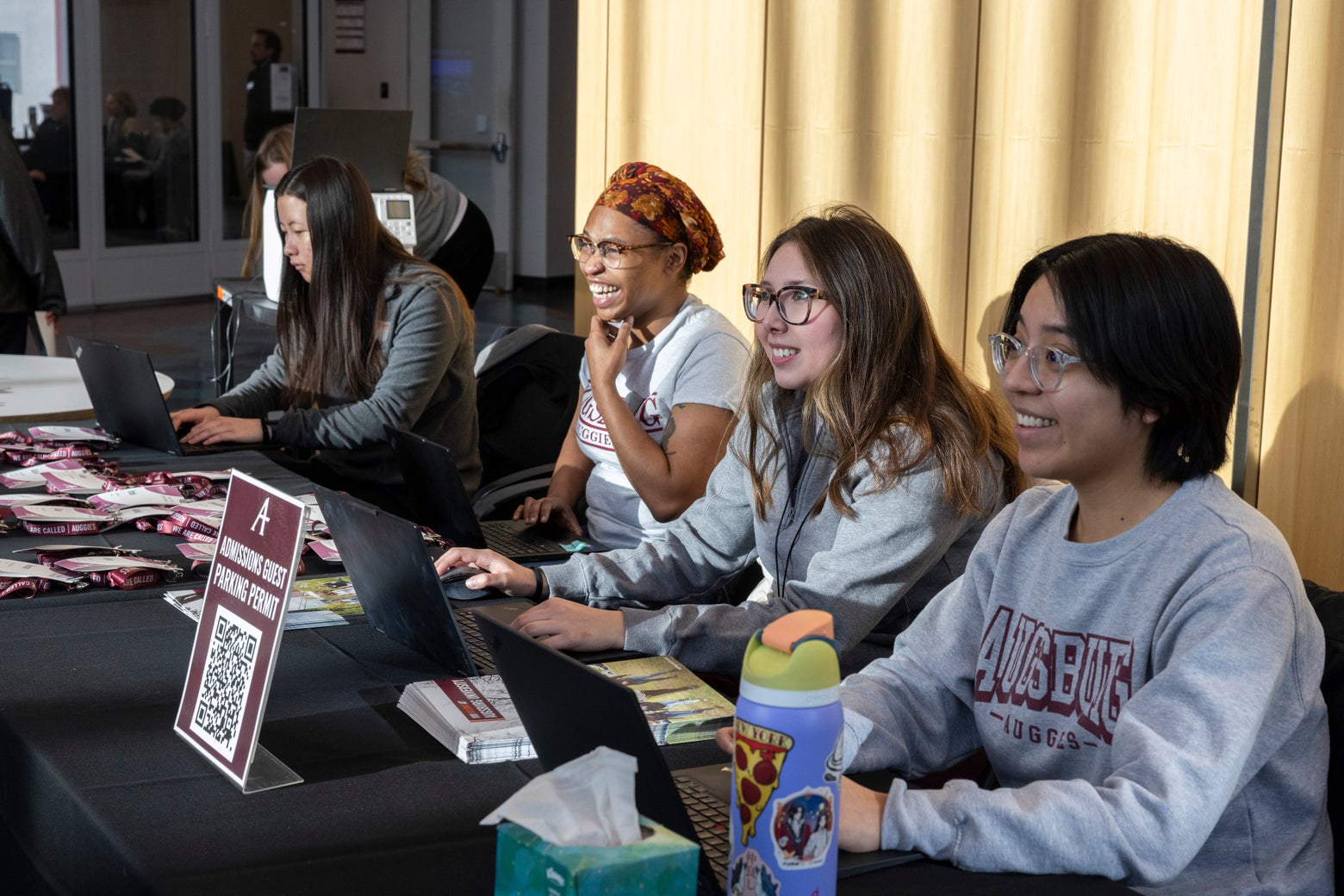
Colleges nationwide are rapidly introducing three-year bachelor's degrees requiring 90 credits instead of the traditional 120, allowing students to save time and tuition costs while entering the workforce sooner.
Higher education
fromInside Higher Ed | Higher Education News, Events and Jobs
3 weeks agoI Needed That
Community colleges Westmoreland and CCAC operate robust undergraduate research programs that prepare students for academic conferences through comprehensive coaching on both presentation skills and professional conference navigation.
Higher education
fromInside Higher Ed | Higher Education News, Events and Jobs
3 weeks agoHolistic Support Boosts Community College Outcomes
One Million Degrees' holistic support model significantly increases degree completion and earnings for community college students, with participants earning over $14,000 more annually seven years after enrollment.
Higher education
fromInside Higher Ed | Higher Education News, Events and Jobs
3 weeks agoNew Book Points Way Forward for Higher Education
Place-based learning rooted in community and shared purpose offers an alternative to transactional higher education models that have failed multiple generations of students.
Higher education
fromPsychology Today
1 month agoTeachers Are the Architects of Human Potential
Schools in 50 years will likely shift from knowledge transmission to developing human potential, with teachers as facilitators fostering creativity, resilience, and adaptive thinking rather than standardized achievement.
fromInside Higher Ed | Higher Education News, Events and Jobs
1 month agoAn Article I'd Love to Read
Cuts that hurt are obvious: layoffs, program closures, college closures, furloughs, deferred maintenance, pay freezes, travel freezes, etc. It's a well-worn playbook at this point. Most of the moves in this category involve either attacking employee compensation, which causes obvious pain, or putting off necessary investments and living with gradual declines in quality.
Higher education


fromInside Higher Ed | Higher Education News, Events and Jobs
1 month agoCoaching Works-if Colleges Invest in Quality
Whether it's executive coaching or life coaching, people understand the concept and know that there is value to it in higher ed. However, what's been missing is this foundational research that really explains why coaching works in this context and how you can then leverage it to have the most impact on student success. What does a coach need to know, and at what skill level do they need to operate in order to have the impact on students that we want to see?
Higher education
fromInside Higher Ed | Higher Education News, Events and Jobs
1 month agoHow Dual Enrollment/Early College Has Changed (opinion)
This idea was based on the parallel between the pluck and elan that are characteristic of both the early-college students I worked with and that of America's hardest-working founding father. Five years after I wrote the book, I had the opportunity to revisit the field for a revised edition, making it appropriate to ask, after Thomas Jefferson's song in the second act of Hamilton, "What'd I Miss": How has early college/dual enrollment changed over the past half decade?
Higher education
fromInside Higher Ed | Higher Education News, Events and Jobs
1 month agoRethinking First-Generation Labels
Although higher parental education is associated with stronger student outcomes over all, the report found significant variation in completion rates within each parental education category. Among applicants classified as first generation-defined as students whose parents did not complete a bachelor's degree-six-year completion rates range from 58 percent for students whose parents have no college experience to 78 percent for those whose parents both hold an associate degree, a 20-percentage-point gap.
Higher education
Higher education
fromInside Higher Ed | Higher Education News, Events and Jobs
2 months agoData Offers Nuanced Portrait of Self-Supported Transfer Students
Financially independent transfer applicants are more often first-generation, have greater financial need, and present more complex academic backgrounds than younger, dependent peers.
Higher education
fromInside Higher Ed | Higher Education News, Events and Jobs
2 months agoOne-Third, One-Third, One-Third
Community college funding routinely fails to meet statutory one-third state, one-third county, one-third tuition splits, shifting the shortfall onto students and normalizing illegal underfunding.
Higher education
fromInside Higher Ed | Higher Education News, Events and Jobs
2 months agoTime to Eliminate Prereq Developmental Ed for All Students
Scaling developmental education reform—eliminating prerequisite remediation, adopting corequisite math and English, and aligning gateway courses—is essential to improve student success and reduce college costs.
[ Load more ]