#succession--ownership
#succession--ownership
[ follow ]
#inheritance #estate-planning #family-dynamics #retirement-planning #entrepreneurship #inheritance-tax




fromIndependent
1 week agoWe transferred the farm to our son but his new relationship has us terrified for its future
The decision to transfer the family farm was based on the son's long-standing interest and commitment to the land, which made the parents believe they were making the right choice.
Parenting
fromIndependent
5 days ago'Mam has dementia and we need power of attorney to sell the house. But we've been quoted 10,000 in legal fees. What can we do?'
The family is faced with the challenge of appointing a decision-making representative for their mother, who has dementia, without a prior power of attorney in place.
Law






#inheritance-and-estate-planning

SF real estate
from24/7 Wall St.
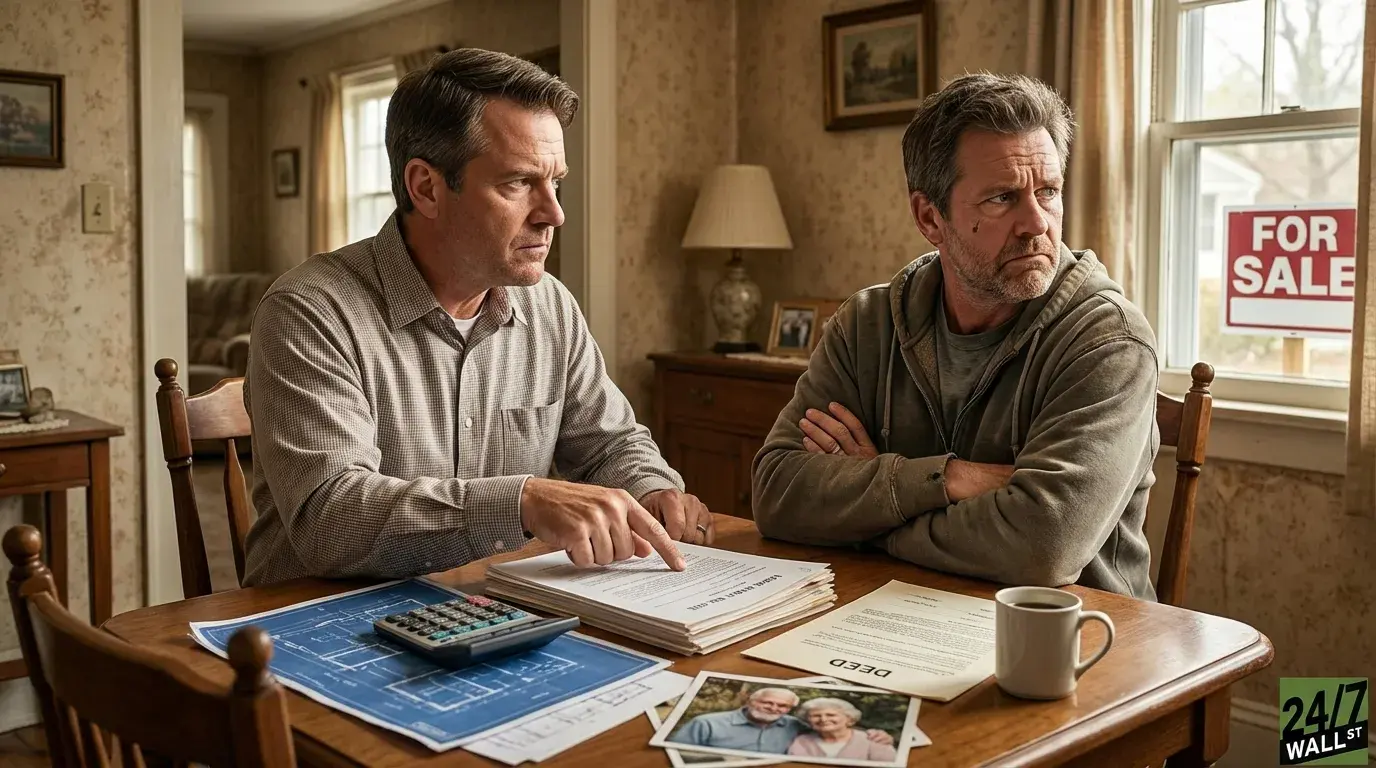
2 weeks agoClark Howard's Verdict on a $300,000 Inherited Home With Two Brothers (One Broke): 'Just Sell It'
Federal law protects heirs from due-on-sale clauses when inheriting property, allowing them to assume existing mortgages, but this doesn't resolve co-ownership disputes or equity division between heirs.
from24/7 Wall St.
4 days agoThe 401(k) Move Executives Make Every December to Shield Their Bonus From Taxes
Most employer 401(k) plans allow mid-year changes to the deferral election percentage. Before the bonus pay period, raise the deferral rate high enough to funnel as much of the bonus as possible into the 401(k), up to the annual limit.
Retirement
Fundraising
fromTechCrunch
2 weeks agoThe billionaires made a promise -- now some want out | TechCrunch
The Giving Pledge, launched by Buffett and Gates in 2010 to encourage billionaire philanthropy, has dramatically declined in participation and effectiveness despite massive wealth concentration globally.

fromTechCrunch
3 weeks agoWhen startups become a family business | TechCrunch
It's great because honestly it fits perfectly into this relationship. It's obviously a three-co-founder relationship. He's also the one that brings sanity to the conversation and can draw the line sometimes. As Rivio has grown, they have two main takeaways: First, co-founders should have clearly defined lanes. Second, it's a good idea to bring in a third co-founder as a tie-breaker.
Startup companies
Remote teams
fromLondon Business News | Londonlovesbusiness.com
3 weeks agoFamily office talent retention and operating model resilience - London Business News | Londonlovesbusiness.com
Family offices face significant talent retention and succession planning challenges, with over 90% reporting recruitment difficulties and nearly 50% struggling with retention, threatening operational continuity.
Careers
fromFortune
2 weeks agoThe equity compensation gap: why even your most senior leaders are leaving money on the table | Fortune
Equity compensation drives long-term performance and retention, but 44% of executives lack formal financial plans, creating a planning gap that HR leaders can address through embedded guidance and financial advisor access.
Fundraising
fromSilicon Canals
3 weeks agoI've been putting money into my daughter's savings account every month for 22 years without telling her - and the plan was always to give it to her when she needed it most, but the thing nobody warns you about secret generosity is that you start to need the secret more than she needs the money - Silicon Canals
A father's twenty-two-year secret savings account for his daughter evolved from genuine protection into a source of personal identity and validation, revealing how hidden acts of care can become about the giver rather than the recipient.
Real estate
fromFortune
4 weeks agoI've been advising wealthy family offices on real estate for decades. This market requires another look at your 100-year plan | Fortune
Family offices must reassess their long-term investment strategies as the Great Wealth Transfer coincides with real estate market challenges and opportunities requiring portfolio adjustments.
Bootstrapping
fromEntrepreneur
4 weeks agoFollow the Wealth Management Advice of High Net Worth People
Founders excel at building wealth but often neglect legacy planning, requiring different skills including patience, governance, education and communication to sustain and transfer wealth effectively across generations.
Careers
fromSlate Magazine
1 month agoI Saw Firsthand What Having a Small Business Does to a Family. From That Moment On, I Made a Vow. Now I'm Rethinking Everything.
A person reconsidering entrepreneurship after witnessing family sacrifices must distinguish between genuine interest and nostalgia, then explore whether alternative business models could provide autonomy without excessive demands.
Bootstrapping
fromBusiness Matters
1 month agoThe Great Handover: How the Baby Boomer Exit Is Reshaping Business Ownership
Millions of baby boomer business owners are simultaneously approaching retirement, triggering the largest intergenerational transfer of private business assets in modern economic history, fundamentally reshaping private ownership structures.
Law
fromSlate Magazine
1 month agoMy Grandmother Left Her Entire $20 Million Fortune to the Least Deserving Person Imaginable
A grandmother's legal right to distribute her $20 million estate as she chooses cannot be challenged unless undue influence or mental incapacity is proven, which are difficult to establish.

fromLondon Business News | Londonlovesbusiness.com
1 month agoNew IHT rules risk 'dry' tax bills and future disputes for family businesses, warns Irwin Mitchell - London Business News | Londonlovesbusiness.com
Many farming and business families still assume the enterprise will pass tax‑free but under the new cap, that won't always be true. Where shareholder or partnership agreements transfer the business to a co‑owner on death, the estate may carry the IHT bill even though the family doesn't inherit the asset. That's the classic 'dry' tax scenario - risks are avoidable with the right planning.
Law
fromIndependent
2 months ago'Do I have any grounds to contest my elderly cousin's new will?'
'The cousin is slipping mentally and I think they were put under pressure by other relatives who stand to benefit' Query: Dear Mary Frances, I'm in a very difficult situation with my wider family and don't know what to do. An elderly cousin of mine, a farmer, has been in a nursing home for quite some time. Their farm is rented out and I was put in charge of their finances, managing the rent of the farm to a neighbour, who has taken good care of it.
Mental health
fromIndependent
2 months ago'My sibling got the family home for free - now they expect us to split the bill for Mum and Dad 's nursing home care'
'Is it possible to have the family home taken into account under the Fair Deal scheme so it contributes toward nursing home costs?' Query: Dear Mary Frances, I'm writing to you because I'm really struggling with a family situation and don't know where to turn. My parents are getting older, and it looks like one of them may soon need to move into a nursing home.
Public health
fromSilicon Canals
1 month ago8 things your adult kids will fight over when you're gone that have nothing to do with money - Silicon Canals
When my grandmother passed away three years ago, I watched my family transform into people I barely recognized. The woman who'd been my biggest supporter left behind more than just her handwritten letters that I still keep. She left a family suddenly wrestling over who got her wedding china, her favorite armchair, and even who deserved to keep the voicemail messages she'd left on their phones. The money part? That was straightforward.
Relationships
Real estate
fromSlate Magazine
2 months agoI Want to Teach My Kids One Final Lesson From Beyond the Grave. Trust Me, They Deserve It.
Disciplined saving, debt elimination, and rental-property strategy produced significant retirement assets while adult children’s poor financial choices create stress and demands for help.
fromThe Art Newspaper - International art news and events
2 months agoAs the 'great wealth transfer' gets underway, what are the current inheritance tax rules?
"We are still in the early days of the so-called great wealth transfer," says the lawyer Pierre Valentin, the joint head of art law at Fieldfisher. "The wave started in the US with the sale of collections such as those of Sydell Miller, Mica Ertegun and more recently, Leonard Lauder. The wave is coming to Europe, for example with the auction of the collection of Pauline Karpidas [last] September. I expect that there will be many more of those 'white glove' sales in the next 10 to 15 years because younger collectors collect differently from their parents and grandparents."
Law
Relationships
fromBusiness Insider
2 months agoI'm wealthy thanks to an inheritance and good investments. My friends aren't, and it's straining our friendship - what do I do?
Remain empathetic, set firm boundaries, decline loan requests, and offer nonfinancial support while protecting personal finances and preserving relationships.
Law
fromIndependent
2 months ago'I am my aunt's main carer and she said she would provide for me in her will. But now she says she's leaving everything to a nephew. What can I do?'
Verbal promises of inheritance are generally not legally binding; formal, written estate documents and clear legal agreements are required to secure an inheritance.
fromSlate Magazine
2 months agoMy Wealthy Uncle Made Me a Big Promise Before He Died. I Wish I Could Prove It.
My wealthy uncle, whose two sons produced no grandchildren, "adopted" my children as his own grandchildren. As such, he promised to pay for their college educations-completely. He put some of the money into their bank accounts and assured me that he had instructed his younger son to dole out the rest of the promised money when the time came. As far as I know, the only written record of this promise was an email I had sent to him, expressing my gratitude.
Business
fromSlate Magazine
2 months agoI Don't Expect Money When My Dad Dies. I'm Terrified of What He Might Leave Me With Instead.
I'm sorry you're dealing with this. Having a financially irresponsible parent creates real anxiety, and you deserve clarity so you can plan your own future. Here's the good news: You are not responsible for your father's debts when he dies. Period. Debts die with the debtor unless you've co-signed loans, have joint credit cards, or are a joint account holder. Don't do any of those things.
Law
fromLondon Business News | Londonlovesbusiness.com
1 month agoOwner dependence is one of the biggest hidden risks undermining business value - London Business News | Londonlovesbusiness.com
New analysis published today (6 February 2026) reveals a structural issue that is eroding valuations, limiting exits, and trapping founders in their businesses, with around 80% of UK private companies failing to sell. The White Paper, The Owner Dependence Problem in UK SME Businesses, published by Exit Factor, highlights how excessive reliance on founders is undermining business value across the UK SME sector. The White Paper analyses businesses with annual revenues between £3m and £30m and demonstrates how owner dependence materially restricts strategic options for owners.
Business
fromHarvard Business Review
2 months agoThe Management Practices That Make Employee Ownership Pay Off
U.S. worker engagement has stagnated for decades, with more than two-thirds of workers feeling detached or disengaged. To reverse the trend, many executives have strived to build an "ownership culture," hoping personal responsibility will drive productivity. Yet most omit the most vital ingredient, actual ownership. We spent the past four years studying companies that committed to this missing piece, extending equity to all employees.
Business
[ Load more ]