Healthcare
fromFast Company
2 days agoDignity as a competitive business model
Healthcare affordability is forcing families to delay care, highlighting the need for dignity-centered care models that prioritize patient respect and community health.
Most for-profit companies still confine nonprofit relationships to corporate philanthropy. Donations flow through foundations, annual reports highlight community contributions, and nonprofit engagement is framed as evidence of corporate responsibility.
"The specific barrier is capital," says Lisa George, global head of the Macquarie Group Foundation. "Without access to capital, it's very hard to get social mobility and educational mobility in life."
Multinational firms are under rising pressure-from investors, regulators, and employees-to demonstrate positive societal impact in the places where they do business. With ESG-focused institutional investments projected to reach nearly $34 trillion this year and roughly 90% of large U.S. companies now disclosing ESG reports, these pressures are now a central part of corporate strategy.
"Singapore is in a very unique position because they face a lot of land constraints, so there are few ways for them to generate their own renewable energy. Singapore is pushing for integrated energy systems throughout ASEAN, so that renewable energy produced in other countries can be brought back to Singapore. There's a very distinct, coordinated effort for countries to come together to work on climate change and energy security in a way that I haven't really seen."
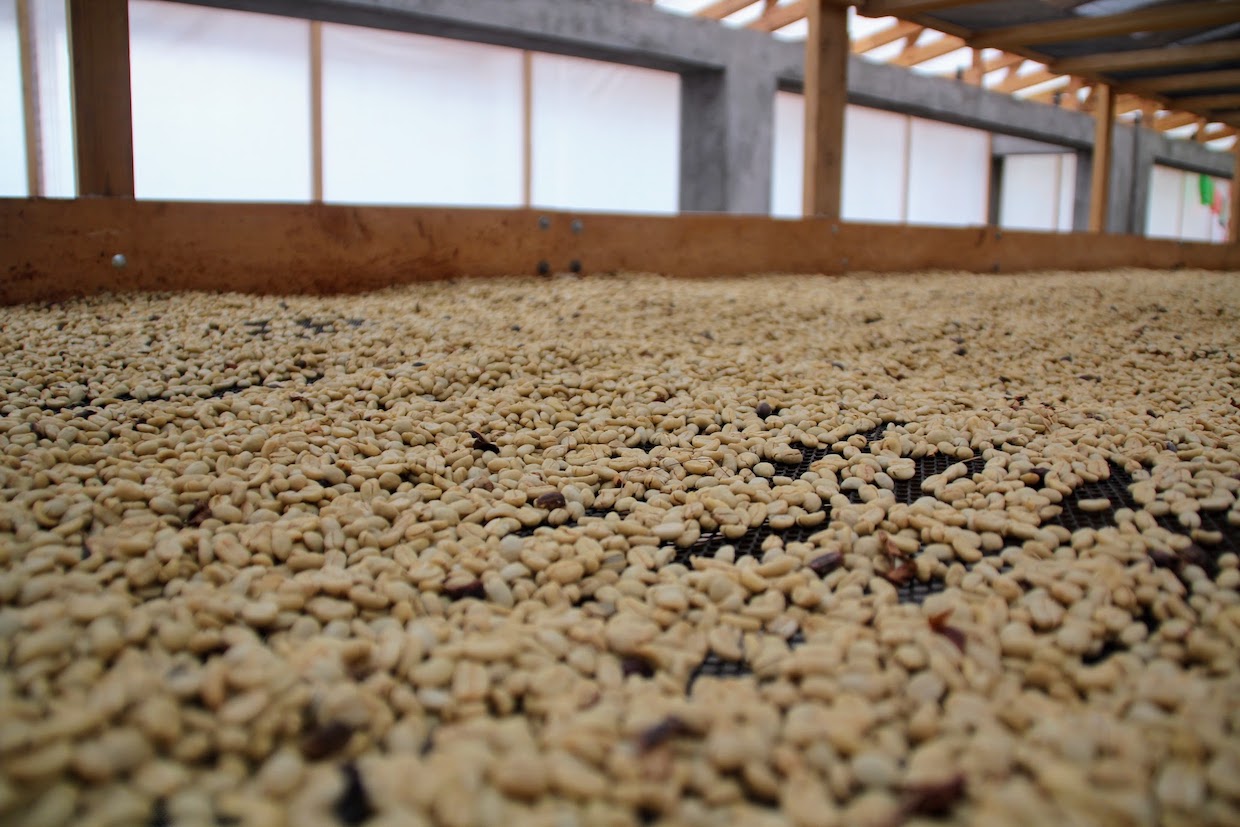
"Ironically, many if not most of these 'sustainability' projects remain disassociated from companies' core procurement strategies, meaning the coffee produced from these projects is not necessarily bought by the companies involved, or only in minimal quantities," the paper states. "And for the coffee that is purchased, prices do not factor into the project design, despite the fact that price is the single variable impacting farmer income that is in the direct control of companies."
Americans are likely to have spent a record $1 trillion-plus this holiday shopping season alone, and about $5.5 trillion in retail sales in all of 2025, according to estimates by the National Retail Federation. That includes many unhappy returns for retailers: And when it comes back to them, a lot of the $850 billion in returned merchandise is often cheaper to discard than to inspect, sort, and resell-adding millions of tons to landfills every year.
Business growth is valuable, but too often entrepreneurs treat it as a final destination. In reality, expansion is just one part of a long-term success plan, unfolding through many smaller milestones along the journey of building a business. Here are three ways you can expertly use expansion to build on success, along with examples of companies that have handled expansion as a positive part of the success process.
Then she read an article in this newspaper, just over eight years ago, and discovered that fossil fuel companies had ploughed more than $180bn (130bn) into plastic plants in the US since 2010. It was a kick in the teeth, says Gardiner. You're telling me that while I am beating myself up because I forgot to bring my water bottle, all these huge oil companies are pouring billions She looks appalled. It was just such a shock.
We can make changes to reduce our waste by precycling when we shop, reducing what we purchase, reusing items to get the most use out of them, and recycling when possible. But when we have items to throw away, please dispose of trash responsibly and don't litter. Let's reduce our waste and clean up our planet. It's our only home.
Earth911 turns 35 in 2026. We invited Trey Granger, who worked at Earth911 from 2007 to 2014 as the site's first content editor, and whoe also oversaw expansion of the recycling directory, to share some of the highlights of the continuing journey to an easy to understand recycling system.Earth911 turns 35 years old in 2026 (but we don't look a day over 30). To celebrate, here are 35 fun facts about your favorite low-waste resource.
Just like that coffee cup, eyewear is a complex fusion of materials. Metal hinges are screwed into polymer frames, which hold chemically-coated lenses. This mix of metals, plastics, and coatings means standard sorting machines cannot process them. As a result, they are rejected as contamination and sent directly to landfills, where they contribute to non-biodegradable waste. Unlike a disposable paper cup, however, a pair of sunglasses is built for durability. Its high-quality components make it a perfect candidate for repair, reuse, or reinvention.