#sustainable-fashion-contradiction
#sustainable-fashion-contradiction
[ follow ]
#sustainability #sustainable-fashion #upcycling #consumer-behavior #environmental-impact #ai #climate-change

Fashion & style
fromdesignboom | architecture & design magazine
2 days agocollagen from dinosaur shapes the designer handbag made with lab-grown leather
Enfin Levé introduces a handbag made from lab-grown T-Rex leather, utilizing collagen from fossilized dinosaur bones, showcased at Art Zoo Museum in Amsterdam.
fromThe Atlantic
1 day agoHow Some People Became So Averse to Hype
Anna Holmes defines 'hype aversion' as a reflex against being told what to like, suggesting that popularity can create pressure rather than signal quality. This feeling can lead to a deliberate choice to resist mainstream culture.
Media industry
fromArchitectural Digest
3 days agoI'm Done Sourcing So Much Online. Here's Why
The convenience of sourcing online is fraught with more pitfalls than most of us want to admit. Try finding adequate photos of a vintage piece's condition-close-ups of the fabric, video of damaged areas, any images of a piece's rear or underside!
UX design

Alternative transportation
fromSustainable Bus
4 days agoNew certified Ultrafabrics collections target durability and compliance in passenger transport interiors - Sustainable Bus
Ultrafabrics launches new certified collections for passenger transport, combining durability, aesthetics, and sustainability in high-performance upholstery fabrics.
Design
fromdesignboom | architecture & design magazine
5 days agoartwork uses floating fabric corridor and bodily movement to visualize climate change
Ryo Yamada's Perception Corridor is an immersive installation in Edinburgh that explores perception and environmental awareness through a 40-meter fabric corridor.
#sustainable-fashion



Fashion & style
fromEarth911
2 weeks ago11 Sustainable Men's Clothing Brands for Spring & Summer Style
Clothing production consumes massive water resources and generates significant carbon emissions, but sustainable brands using organic, recycled fibers and repair services offer viable alternatives to fast fashion's environmental damage.
Fashion & style
fromBusiness Matters
3 weeks agoWhy Sustainable Fashion is More Than Just a Trend: Clothing, Bags, and Accessories for a Better Future
Sustainable fashion has moved from niche to mainstream as consumers increasingly demand transparency about production, labor practices, and environmental impact of clothing and accessories.

fromMindful
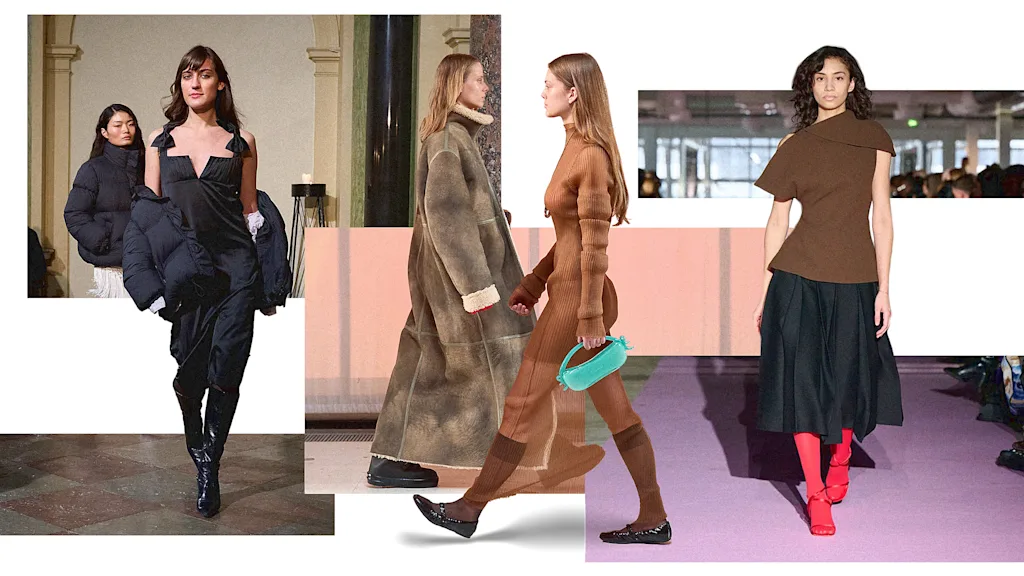
3 weeks agoClothing Designer Eileen Fisher Models Mindfulness
Despite having to haul a dozen dumpster-loads of damaged goods out of the offices and the nearby Lab Store, to the tune of $1.5 million, Eileen said at the time, 'It was just stuff.' You can only imagine the emotions that might arise in a chief executive if they saw their sewage-soaked products floating by. Eileen and her staff did not linger there. They mobilized quickly-organizing carpools, impromptu meeting spaces, and arranging interest-free loans for staff needing cash during the crisis.
Women
Remodel
fromWIRED
3 weeks agoSpring Cleaning? Here's How to Declutter Responsibly-and Maybe Earn Some Cash
Spring cleaning becomes manageable by separating decluttering from deep cleaning, dividing your home into smaller specific spaces, and choosing one area to start with using proven decluttering strategies.
Social media marketing
fromUSA TODAY
4 weeks agoOne person's trash is social media's treasure as thrift shopping becomes trendy online
Thrifting content on social media has become a major trend, driving increased foot traffic to secondhand stores and shifting consumer culture toward sustainable shopping and unique finds.
Environment
fromLondon Business News | Londonlovesbusiness.com
2 weeks agoClothing industry warned of higher costs as Labour targets fast fashion - London Business News | Londonlovesbusiness.com
UK fashion brands face rising waste-disposal costs as Europe implements stringent textile regulations requiring producers to pay fees based on material recyclability, with similar UK measures likely forthcoming.
Relationships
fromwww.theguardian.com
1 month agoThe greenest flags: virtue signals that help you find love from patchwork clothes to car sharing
Environmental consciousness has become a significant dating criterion, with 80% of Gen Z considering shared eco-values as important as physical compatibility in potential partners.
Fashion & style
fromEntrepreneur
2 weeks agoYour 'Organic' TShirt Still Hurts the Planet More Than You Think
Organic and sustainable fashion brands undermine their environmental messaging by packaging products in excessive single-use plastic, contradicting their eco-friendly positioning and contributing significantly to global plastic waste.
fromThe Walrus
1 month agoThrifting Was about Frugality. How Did It Become All about Profit? | The Walrus
"I 'm the most hated man in town," Ray McKelvie told me. The town in question was Clinton, British Columbia, approximately 350 kilometres northeast of Vancouver, on Highway 97. Later, I asked another Clinton resident whether McKelvie's claim was true. She thought for a moment. "Well, there's Joe, who lives in the trailer park," she said. "We don't like him much either. But it's about even."
Miscellaneous
fromwww.npr.org
2 months agoPolyester clothing has been causing a stir online. But how valid are the concerns?
Your eyes don't deceive you. The use of polyester has ballooned with time, according to Henry Navarro Delgado, an associate professor at Toronto Metropolitan University's school of fashion. It's partly because polyester can be quite useful, he said. It is a type of plastic made from petroleum compounds that are cooled and stretched into yarn, according to Michael Palladino, a fashion industry veteran and lecturer at Kingsborough Community College's business of fashion program in New York.
US news
fromDaily Coffee News by Roast Magazine
1 month agoReport: Sustainability Must Be Embedded Into Core Buying Practices to Drive Change
"Ironically, many if not most of these 'sustainability' projects remain disassociated from companies' core procurement strategies, meaning the coffee produced from these projects is not necessarily bought by the companies involved, or only in minimal quantities," the paper states. "And for the coffee that is purchased, prices do not factor into the project design, despite the fact that price is the single variable impacting farmer income that is in the direct control of companies."
Coffee
Miscellaneous
fromwww.dw.com
1 month agoShein faces EU investigation over products, design features
The European Commission opened formal Digital Services Act proceedings against Shein over addictive design, opaque recommender systems, and sales of illegal products including child sexual abuse material.
Design
fromdesignboom | architecture & design magazine
2 months agowearable collection repurposes leftover leather powder as translucent composite material
OBRO converts leather manufacturing offcuts into semi-transparent PVC composite by embedding finely ground leather powder to create visually layered, tactile, durable sheets.
fromdesignboom | architecture & design magazine
1 month agorecontextualizing human hair waste as potential raw material for design
This research-based design project by Laura Oliveira investigates discarded as a potential raw material for sustainable design applications. Human hair is produced continuously and in large quantities through everyday grooming practices, yet it is almost always treated as waste once separated from the body and typically disposed of in landfills. Despite its material properties, strength, flexibility, and durability as a keratin-based protein fiber, its remains uncommon within design and research contexts.
Design


fromEarth911
2 months agoGuest Idea: 7 Solutions to Give Your Old Sunglasses a Second Life
Just like that coffee cup, eyewear is a complex fusion of materials. Metal hinges are screwed into polymer frames, which hold chemically-coated lenses. This mix of metals, plastics, and coatings means standard sorting machines cannot process them. As a result, they are rejected as contamination and sent directly to landfills, where they contribute to non-biodegradable waste. Unlike a disposable paper cup, however, a pair of sunglasses is built for durability. Its high-quality components make it a perfect candidate for repair, reuse, or reinvention.
Environment
Environment
fromGlobal IP & Technology Law Blog
1 month agoGreenhushing: The Indirect Consequence of the Crackdown on Greenwashing?
Regulators increasingly enforce against vague or unsubstantiated environmental claims; advertisers must provide clear, high-level substantiation for "green" or "sustainable" statements.
fromEarth911
2 months agoSustainability In Your Ear: Turning Waste Into New Products And Packaging With Overlay Capital's Elizabeth Blankenship-Singh
According to research by the World Economic Forum and United Nations Development Programme, the circular economy could unlock $4.5 trillion in new global value by 2030, and investors are racing to capture part of that opportunity. Meet Elizabeth Blankenship-Singh, Director of Innovation at Overlay Capital, an Atlanta-based alternative investment firm whose Waste and Materials Fund is backing both early-stage materials innovators and later-stage recycling operations with established infrastructure.
Environment
fromDocumentjournal
1 month agoOnce upon a time, fashion got dirty
In the show, "dirty" extends to anything that breaks fashion's pact with propriety. Here are clothes caked in grime, blotted with makeup, stiffened by salt, pieced from trash, frayed, and faded. The garments span decades, from the 1980s through the mid-2000s, when the likes of Vivienne Westwood and Jean Paul Gaultier built their fame on defying convention, to today, when corporatization has made such daring increasingly rare. But forgoing practicality frees certain designers from the demands that the body be polite-and thereby policed.
Fashion & style
Fashion & style
fromdesignboom | architecture & design magazine
1 month agofour typologies explores decentralized upcycling fashion factories in digital space
Digital spatial systems enable decentralized Garden Factory typologies and nonlinear upcycling workflows that support iterative, small-batch fashion production across multiple scales.
Fashion & style
fromwww.theguardian.com
2 months agoHow to have a guilt-free wardrobe clearout without sending anything to landfill
Excess donated clothing is often unsellable, causing landfill or export to low-income countries; reselling, selective recycling, and considered clearouts reduce waste and pollution.
fromBustle
1 month ago60 Cheap, Highly Rated Clothes That Look Expensive
You can achieve a pricey-looking wardrobe without spending a ton - and this list makes it easy. Featuring silhouettes that look like they came straight from the runways, these luxe pieces will elevate any wardrobe - and each one is backed by high ratings from discerning Amazon shoppers. You'll find elevated takes on everyday essentials, chic loungewear, statement evening looks, and accessories. And even though they brim with high-end appeal, they're all shockingly easy on the wallet.
Fashion & style
Fashion & style
fromwww.theguardian.com
2 months agoHunt, scroll, strike gold: the best clothes and accessories to buy secondhand and where to find them
Secondhand shopping delivers unique, affordable, and eco-friendly fashion finds—especially leather jackets, designer pieces, and high-street bargains—when buyers know where and how to shop.
fromBustle
2 months ago55 Super Cute Outfits That Look & Feel Expensive - But They're So Cheap On Amazon
Here's the thing - looking expensive is way less about your bank account and way more about picking the right pieces. All of the cute-as-hell outfits below feature polished, on-trend details that will make you look like you spent way more than you did. From easy everyday staples to statement pieces you'll actually want to wear, these finds are proof you can serve luxury vibes even on a budget.
Fashion & style
fromwww.theguardian.com
1 month agoFilled with good intention: could the new It bag be an antidote to the tote?
It's not a multi-thousand pound handbag from Hermes that best captures the new era of It bags, but a 149 tote from John Lewis. Launched this season, it's deeper (45cm) and taller (33cm) than your average handbag, and comes loaded with good intentions. It's able to hold your packed lunch, flask and book, as well at a push as your gym kit.
Fashion & style
[ Load more ]