#t-cell-immunity
#t-cell-immunity
[ follow ]
#car-t-cell-therapy #immunotherapy #solid-tumors #cancer-immunotherapy #mitochondria #hiv-cure-research
Medicine
fromNational Institute of Mental Health (NIMH)
4 weeks agoImmunotherapies for HIV Eradication in the CNS Compartment
Immunotherapeutic strategies using broadly neutralizing antibodies must overcome blood-brain barrier limitations to effectively target persistent HIV in the central nervous system while preventing neuroinflammatory damage.
fromNature
2 weeks agoThymic health consequences in adults - Nature
The thymus is a specialized immune organ responsible for maturing T cells, thereby producing a diverse T cell repertoire crucial for mounting an adaptive immune response. The thymus itself decays with age and eventually transforms entirely into adipose tissue through a process known as thymic involution.
Health
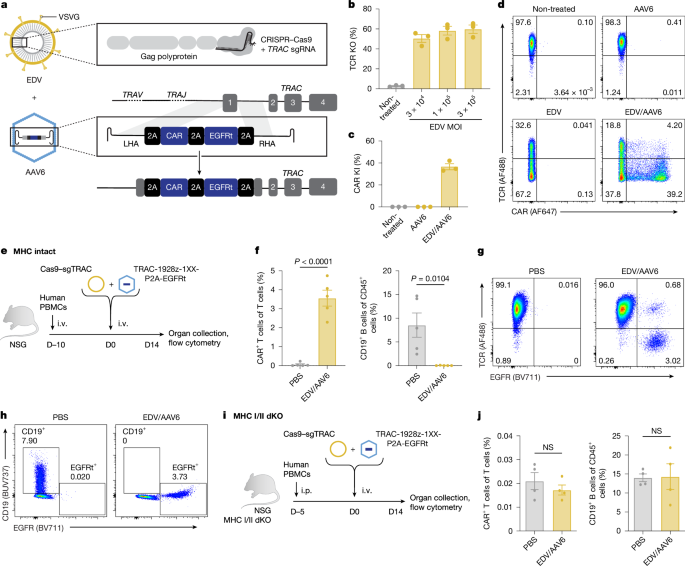

fromwww.nature.com
1 month agoLipid metabolism drives dietary effects on T cell ferroptosis and immunity
Ferroptosis, a major mechanism of non-apoptotic programmed cell death, critically regulates the homeostasis and functionality of peripheral CD4+ and CD8+ T cells. Here we demonstrate that in mouse, resistance of T cells to ferroptosis depends critically on the composition of standard rodent diets, and that dietary effects on ferroptosis have a crucial role in regulation of T cell homeostasis and immune responses.
Medicine
OMG science
fromHarvard Gazette
2 months agoWhy did that cancer cell become drug-resistant? - Harvard Gazette
TimeVault records and stores cellular gene-expression history inside living cells, enabling retrieval of past gene-activity information to study differentiation, stress responses, adaptation, and drug resistance.
Cancer
fromenglish.elpais.com
1 month agoDouglas Hanahan, biologist: We don't necessarily need a cure, what we really need is cancer without disease'
Cancer cells acquire hallmarks: uncontrolled proliferation, evasion of growth barriers, resistance to programmed death, and relative immortality, driving tumor diversity and treatment variability.
fromNews Center
1 month agoTargeting Cellular Mechanisms May Improve Immune Response in Chronic Infections - News Center
During viral infection and in the case of cancer, CD4+ helper T-cells release cytokines, or small signaling proteins, that activate and "give permission" to other immune cells to control and clear viral pathogens. In certain viral infections, such as lymphocytic choriomeningitis virus (LCMV), which is spread by infected rodents, CD4+ T-cells differentiate into different subpopulations, including one subset of progenitor CD4+ T-cells that replenish type 1 helper (Th1) and follicular helper (Tfh) T-cells.
Science
fromNature
2 months agoMicrobiota-induced T cell plasticity enables immune-mediated tumour control - Nature
Although specific bacterial taxa have been associated with favourable clinical responses to immune checkpoint blockade (ICB) in cancer patients12,13,18,19,20,21,22, the mechanisms by which the intestinal microbiota influences anti-tumour immune responses remain poorly defined. Products of the microbiota, including metabolites23,24,25 and innate receptor ligands26, may reprogramme myeloid cells27, lowering the activation threshold for antigen presentation and thereby facilitating priming and activation of tumour-reactive T cells.
Cancer
Medicine
fromNature
1 month agoAtlas-guided discovery of transcription factors for T cell programming - Nature
Transcription factors determine CD8+ T cell states; identifying TFs that promote tissue-resident memory versus terminal exhaustion enables engineering of more effective adoptive T cell therapies.
fromwww.scientificamerican.com
1 month agoLung cancer hijacks the brain to trick the immune system
For years, scientists have viewed cancer as a localized glitch in which cells refuse to stop dividing. But a new study suggests that, in certain organs, tumors actively communicate with the brain to trick it into protecting them. Scientists have long known that nerves grow into some tumors and that tumors containing lots of nerves usually lead to a worse prognosis.
Science
Medicine
fromLGBTQ Nation
2 months agoThese 4 promising breakthroughs are bringing HIV researchers closer to a cure - LGBTQ Nation
Significant scientific advances have produced promising combination therapies and experimental approaches that have eliminated HIV in rare cases but no widely scalable cure exists yet.
fromArs Technica
2 months agomRNA cancer vaccine shows protection at 5-year follow-up, Moderna and Merck say
As for side effects, the companies reported that little had changed from previous analyses; adverse events were similar between the two groups. The top side effects linked to the vaccine were fatigue, injection site pain, and chills. The results "highlight the potential of a prolonged benefit" of the vaccine combined with Keytruda in patients with high-risk melanoma," Kyle Holen, a senior vice president at Moderna, said. They also "illustrate mRNA's potential in cancer care," he said, noting that the company has eight more Phase 2 and Phase 3 trials going for mRNA vaccines against a variety of other cancers, including lung, bladder, and kidney cancers.
Medicine
fromLGBTQ Nation
1 month agoThe amazing cases of 9 people "cured" of HIV each contain clues about a possible cure - LGBTQ Nation
For more than a decade, doctors and researchers have announced that a handful of people around the world have been cured of HIV. Each of these patients has experienced long-term viral control - in some cases for over a decade - without antiretroviral therapy (ART), as AIDSMap notes, though some doctors describe them as being in "remission." While the patients have shown no signs of HIV since stopping ART, at least some uncertainty remains as to whether the virus could eventually rebound in them.
Medicine
fromNature
2 months agoWhy cancer can come back years later - and how to stop it
When Lisa Dutton was declared free of breast cancer in 2017, she took a moment to celebrate with family and friends, even though she knew her cancer journey might not be over. As many as one-third of people whose breast tumours are cleared see the disease come back, sometimes decades later. Many other cancers are known to recur in the years following an initial treatment, some at much higher rates.
Medicine
fromenglish.elpais.com
2 months agoA vaccine to prevent colon cancer shows promising results
Eduardo Vilar-Sanchez has spent more than 10 years pursuing a goal that seemed very distant, but which he now sees as a little closer: to develop a preventive vaccine against cancer. The physician and researcher is leading a study that presented the first promising results of a colon cancer vaccine in a small group of patients suffering from a rare disease that makes them 17 times more likely to develop colon cancer than the general population.
Medicine
[ Load more ]