#textile-and-craft-techniques
#textile-and-craft-techniques
[ follow ]
#sustainable-fashion #sustainable-design #upcycling #craftsmanship #textiles #sustainability #cultural-identity
#sustainable-fashion

fromBusiness Matters
3 weeks agoFashion & style
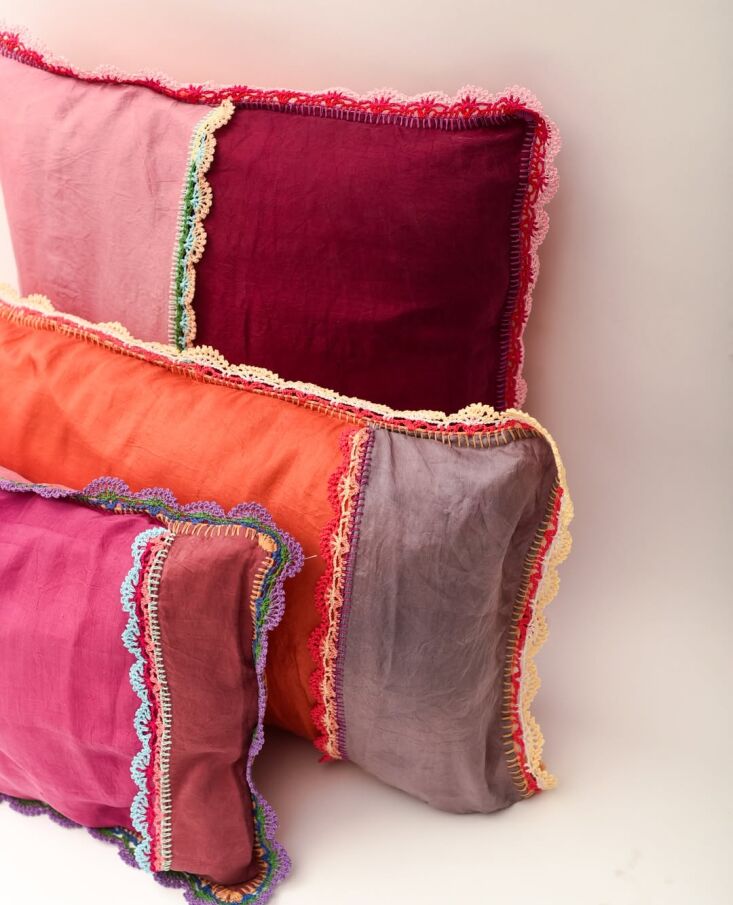
Why Sustainable Fashion is More Than Just a Trend: Clothing, Bags, and Accessories for a Better Future
Sustainable fashion has moved from niche to mainstream as consumers increasingly demand transparency about production, labor practices, and environmental impact of clothing and accessories.
Fashion & style
fromBusiness Matters
3 weeks agoWhy Sustainable Fashion is More Than Just a Trend: Clothing, Bags, and Accessories for a Better Future
Sustainable fashion has moved from niche to mainstream as consumers increasingly demand transparency about production, labor practices, and environmental impact of clothing and accessories.


Portland
fromMetro Silicon Valley | Silicon Valley's Leading Weekly
1 week agoJeremy Frey: Woven at Stanford | Metro Silicon Valley | Silicon Valley's Leading Weekly
Wabanaki baskets, crafted by Jeremy Frey, showcase a 13,000-year tradition and innovative techniques, now featured in a significant exhibition at the Cantor Arts Center.
fromThe Art Newspaper - International art news and events
2 weeks agoTextiles weave tales of Palestine's rich but troubled history
Textiles are a window into the communities that created them, with every motif and line signalling a different memory, tradition or identity. Often seen as folk art, these pieces of embroidery and weaving bring together dozens of narrative threads, from Japan to South America. But nowhere is it more fraught with meaning than in Palestine.
Arts
fromArchDaily
3 weeks agoBuilding with Earth: Traditional Knowledge in Contemporary Architecture
Rather than representing a simple return to the past, this renewed interest reflects a broader reconsideration of how architecture engages with materials, local resources, and environmental conditions.
Renovation
Design
fromdesignboom | architecture & design magazine
2 weeks agowoven futures: heritage shapes the next chapter of furnishing textiles at proposte 2026
Proposte 2026 emphasizes the evolution of high-end furnishing textiles, merging heritage with innovation in performance and design for residential spaces.
fromMindful
4 weeks agoClothing Designer Eileen Fisher Models Mindfulness
Despite having to haul a dozen dumpster-loads of damaged goods out of the offices and the nearby Lab Store, to the tune of $1.5 million, Eileen said at the time, 'It was just stuff.' You can only imagine the emotions that might arise in a chief executive if they saw their sewage-soaked products floating by. Eileen and her staff did not linger there. They mobilized quickly-organizing carpools, impromptu meeting spaces, and arranging interest-free loans for staff needing cash during the crisis.
Women
fromAnOther
4 weeks agoOlivier Saillard Presents a Poetic History of Everyday Fashion
The question of how fashion is archived - what enters the museum; what is deemed worthy of preservation; whose clothes are considered culturally significant enough to outlast the bodies that wore them - has long sat uneasily at the centre of fashion history itself. Institutions have tended to answer it, or ignore it, in much the same way: couture gowns under glass, luxury garments mounted on conservation-grade mannequins in blockbuster exhibitions - an implicit hierarchy of the designed over the worn, the authored over the anonymous.
Paris food
Fashion & style
fromEntrepreneur
3 weeks agoYoung Entrepreneurs Are Building Businesses Around 'Grandma Hobbies' and Demand Is Surging
Millennials and Gen Z entrepreneurs are building thriving businesses around analog hobbies like needlepoint, mahjong, and blacksmithing as an antidote to screen fatigue and digital burnout.
Fashion & style
fromElite Traveler
3 weeks agoNot All Cashmere Is Equal - These Four Brands Get It Right
Emerging luxury cashmere brands like Cutler and Extreme Cashmere distinguish themselves through superior materials, innovative production techniques, and distinctive design approaches that justify premium pricing.
History
fromOpen Culture
1 month agoThe Ingenious Engineering of Silk: How the 2,000-Year-Old Pattern Loom Powered the Silk Road and the Wealth of Ancient China
The Silk Road was a vast trade network spanning from the second century BC to the fifteenth century AD, named over 400 years after its decline, with silk being the most glamorous and visible commodity despite not being the highest-volume item traded.
Arts
fromHyperallergic
3 weeks agoMerging Craft Practices and New Media at the Museum of Craft and Design
Video Craft exhibition explores how video, film, and early moving image technologies share formal and technical properties with traditional craft media like ceramics, textiles, and glass through encoding, looping, and sampling.
fromCN Traveller
2 months agoThis underrated Mexican city's artisans have transformed their home into a shopaholic's paradise
Traveller check into hotels for easy access to historical Mayan sites and the cenotes beyond, with ambles through colourful squares and late, balmy nights digesting feasts over tequila tipples. Between cultural excursions and natural wonders, however, there's much to be said for the artisans in these parts. From crafted perfumes to handmade chocolates, these are the gifts and trinkets to make space for in your luggage.
Food & drink
fromVogue
1 month agoHow a New Generation of Designers Are Promoting, and Protecting, Their Names
What if I took my design lens and built out my essentials capsule for the Everlane customer? I felt like that would be a really amazing opportunity for me to introduce myself as a designer to an audience outside of EB Denim.
Fashion & style
fromColossal
1 month agoInside the Sacred Valley Ceramics Studio Referencing Ancient Peruvian Practices
It is not about reproducing the past but about engaging in dialogue with it. We apply the same level of care and rigor to all pieces. Many of our utilitarian pieces have a strong sculptural quality, and several of the more artistic works originate from everyday forms and functions. We do not establish rigid boundaries between these categories; all are part of the same vision.
Arts
Fashion & style
fromKALTBLUT Magazine
1 month agoPOET-LAB Fall/Winter 2026 - Inside the Lab - KALTBLUT Magazine
Poet-Lab's FW26 collection presents genderless luxury streetwear emphasizing poetic minimalism, architectural restraint, and sustainability through repurposed deadstock fabrics, rejecting binary identities and prescribed gender roles.

fromEsquire
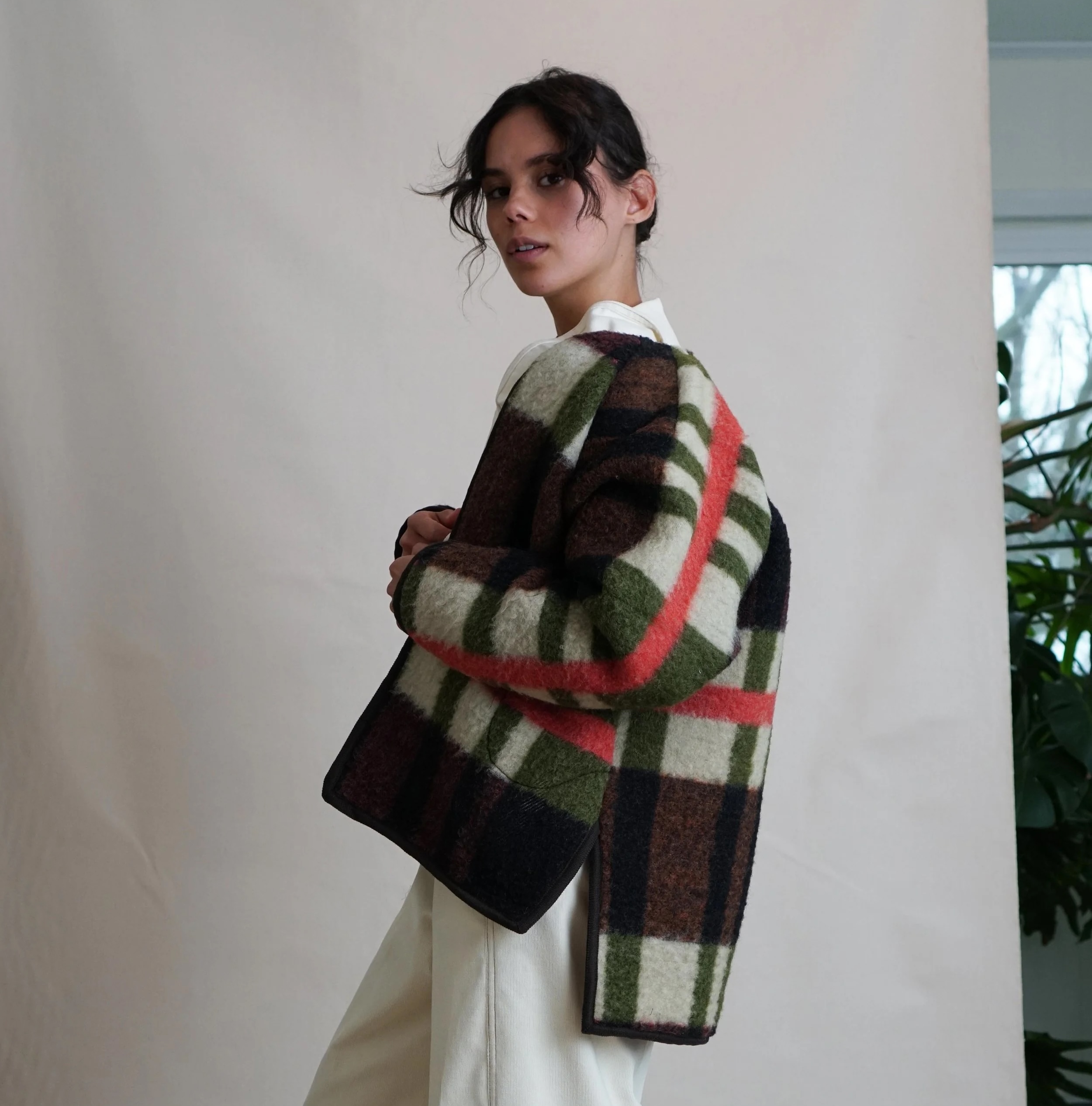
1 month ago5 Sweater Trends You Should Buy Into This Spring
Spring weather is fickle: One minute it's freezing, the next, you're sweating. Cardigans are one of the best layers for that exact reason. You can wear one over a T-shirt when it's chilly out, and easy remove it when the temperatures heat up. Just try to avoid thick, insulating options like cashmere. Instead, opt for cotton or loose-weave knits that let some air pass through.
Fashion & style
Environment
fromwww.mercurynews.com
2 months agoInside the toxic legacy of America's multibillion-dollar carpet empire
Carpet industry repeatedly replaced PFAS stain treatments, causing widespread environmental contamination and avoiding oversight through weak regulations and private utility-company coordination.
fromDesign Milk
2 months agoDesigntex + nanimarquina Introduce New Textiles as Acts of Care
The collaboration brings together Designtex's deep expertise in high-performance contract textiles and nanimarquina's poetic command of craft, tactility, and the beauty of the imperfect. For both teams, the partnership emerged from an immediate sense of kinship - a shared language of material integrity, color sensitivity, and a respect for heritage techniques reinterpreted for contemporary spaces. "We did that by using performance yarns and intentionally embedding imperfections into the weaving process."
Design
fromwww.kaltblut-magazine.com
2 months agoThe Rural Cut
The Rural Cut places vintage fashion in Lebanon's Bekaa Valley, among vineyards, open fields, and the animals that inhabit the land. As a Beirut-based stylist, I worked with a fully Lebanese team to create a shoot that feels authentic, where each garment and every frame reflects the textures, history, and rhythm of the rural landscape. Photography by Angele Basile / Instagram: @angelebasile Styling by Rinad Saad / Instagram: @rinaaaaddd
Fashion & style
fromwww.theguardian.com
1 month agoFabric of memory: the artists turning secondhand clothes into monumental art
These clothes are not secondhand, says Yin Xiuzhen, the Beijing-born artist known for creating large-scale installations out of found garments and keepsakes. I prefer to call them used' or worn', she explains. Clothes that have been worn' carry a lot of information like a second skin, imprinted with social meaning. In some of Yin's works the clothes are her own, telling a personal story. In others, the clothes are collected, stained and stretched across towering steel frames resembling planes, trains or organic forms.
Arts
fromDocumentjournal
1 month agoOnce upon a time, fashion got dirty
In the show, "dirty" extends to anything that breaks fashion's pact with propriety. Here are clothes caked in grime, blotted with makeup, stiffened by salt, pieced from trash, frayed, and faded. The garments span decades, from the 1980s through the mid-2000s, when the likes of Vivienne Westwood and Jean Paul Gaultier built their fame on defying convention, to today, when corporatization has made such daring increasingly rare. But forgoing practicality frees certain designers from the demands that the body be polite-and thereby policed.
Fashion & style
Design
fromdesignboom | architecture & design magazine
2 months agowearable collection repurposes leftover leather powder as translucent composite material
OBRO converts leather manufacturing offcuts into semi-transparent PVC composite by embedding finely ground leather powder to create visually layered, tactile, durable sheets.
fromDefector
1 month agoMake It Nice: Curtains, Linens, And How To Figure Out What You Like | Defector
My husband and I just upgraded our apartment here in Germany to one with much more space. The downsides of this is we have hard marble floors and a tall-ceilinged living room (oh woe is us!). It's very echo-y and looks directly into our neighbors across the street. The windows have external shutters, so light-blocking isn't needed, but we'd love to get
Design
Fashion & style
fromdesignboom | architecture & design magazine
1 month agofour typologies explores decentralized upcycling fashion factories in digital space
Digital spatial systems enable decentralized Garden Factory typologies and nonlinear upcycling workflows that support iterative, small-batch fashion production across multiple scales.
fromdesignboom | architecture & design magazine
2 months agorecontextualizing human hair waste as potential raw material for design
This research-based design project by Laura Oliveira investigates discarded as a potential raw material for sustainable design applications. Human hair is produced continuously and in large quantities through everyday grooming practices, yet it is almost always treated as waste once separated from the body and typically disposed of in landfills. Despite its material properties, strength, flexibility, and durability as a keratin-based protein fiber, its remains uncommon within design and research contexts.
Design
fromHyperallergic
2 months agoPalestinian Embroidery Today
The ongoing repression of dissidents in Venezuela following the US attacks reminds us that President Trump never had the interest of the nation's people at heart. The painful reality of many immigrants is one of being caught between dehumanizing forces in their native countries and in exile, and reduced to abstractions in an increasingly unnuanced "discourse" that flattens lived experience.
Arts
Fashion & style
fromenglish.elpais.com
2 months agoFrom fishermen's garb to status symbol: the evolution of the sweater
Wool sweaters have regained prominence as dignified, practical garments while fleeting trends like ugly Christmas sweaters and tracksuits reflect shifting cultural and market influences.
fromColossal
1 month agoIn Collaboration with Indigenous Artisans Around the World, PET Lamp Emphasizes Sustainability
Tons upon tons of these single-use plastics end up in landfills or even floating in the ocean. Spanish design firm PET Lamp set out give another purpose to these otherwise short-lived materials. Partnering with artisans in communities from Chile to Ethiopia to Australia, the company celebrates both Indigeneity and sustainability, drawing upon time-honored global craft traditions while supporting local economies and recycling discarded materials.
Arts
Arts
fromdesignboom | architecture & design magazine
1 month agolight sculptures preserve ancestral designs through antique doilies and lace textile
Kinship transforms heirloom doilies and stockings into LED-lit stainless steel sculptures that preserve textiles and project lace-like shadows and layered histories.
fromwww.kaltblut-magazine.com
1 month agoAphrodie
It captures seven different femininities during an all-day pool party, enjoying themselves while revealing their distinctive styles. Creative Direction, Production & Styling by Maria Gkin. Photography by Eliza Poultidou. The models are Vanessa Otilia, Cyka, Alvina Chamberland and Angelica Komninak. The concept examines the thin line between what is seen as acceptable and what has been labelled ugly or immoral, explored through each woman's personal story. Textures, colours, makeup and styling come together, breaking down stereotypes and highlighting fashion as a means of freedom
Fashion & style
fromBusiness Insider
2 months agoIt took me a second solo trip to Bali to finally launch my slow fashion business
The 26-year-old real estate project manager from Munich came to the surf camp to improve her skills on the water. I came to talk with adventurous travelers about their big ideas, from new businesses to life after layoffs.
Fashion & style
fromThe Local France
2 months agoMen's fashion turns to embroidery as guys want 'something different'
Embroidery is a historic mainstay of traditional clothing in Asia or the Middle East, as well as Western Haute Couture, but it is increasingly present in Paris, Milan or New York on modern men's shirts, bomber jackets or blazers. Designers at Dior, Dolce Gabbana, Kenzo or Gucci have adopted it in recent runway shows, while Louis Vuitton's celebrity rapper-designer Pharell Williams dedicated his entire June collection to India after visiting the country.
Fashion & style
Fashion & style
fromwww.theguardian.com
2 months agoHunt, scroll, strike gold: the best clothes and accessories to buy secondhand and where to find them
Secondhand shopping delivers unique, affordable, and eco-friendly fashion finds—especially leather jackets, designer pieces, and high-street bargains—when buyers know where and how to shop.
fromCraftBeer.com
2 months agoInk & Drink: Uncovering the Historical Bonds of Tattoos and Fermentation Across Cultures
Tattoos and fermentation rarely appear in the same conversation, yet across the world, they share a quiet kinship. Both are practices of transformation, crafts that reshape raw material over time through care and relationships to the land, the spiritual, and the community. Tattooing inscribes identity and ancestry onto skin, while fermentation preserves, nourishes, and binds communities through shared taste and ritual. Both create change, brewing something more than themselves through embodied knowledge passed between generations.
Arts
[ Load more ]