Science
fromFuturism
2 days agoThere's a Blinking Warning Sign for the Data Centers in Space Industry
Elon Musk's plan for space-based data centers faces significant challenges similar to those encountered in previous failed projects.
The new work was less notable for showing that we had found these bases in Ryugu than for solving a previous mystery: earlier studies had failed to detect them there, despite their presence in many other asteroid samples.
Stellar activity such as solar storms and plasma turbulence from a star near a transmitting planet can broaden otherwise ultra-narrow signals. That spreads the power of any such transmission across more frequencies, the institute's scientists say, which makes it more difficult to detect using traditional narrowband searches.
My prediction is based on only two assumptions. First, our visitors from space can die; they are not immortal. Second, they care about each other. When one of their own dies, they mourn them, just as humans do. These assumptions, I think, will have led these aliens to invent gods and a belief in the afterlife. Belief in the afterlife, where we defeat death and are reunited with loved ones who have died, is the basis of all past and current religions.
We found that life is more likely to survive an asteroid impact, so it's definitely still a real possibility that life on Earth could have come from Mars. Maybe we're Martians! The idea that life could have spread through the solar system or even the universe on rocks is known as the lithopanspermia hypothesis.
Chances to see 4 bright planets with your own eyes occur every few years on average, so it's not once in a lifetime. Even so, the planets are best observable just after sunset, so this is one of the most convenient opportunities for several years.
A dead star 730 light years away appears to be forming a powerful structure around itself - and despite their best efforts, astronomers aren't sure how. The cosmic corpse, designated RXJ0528+2838, is an incredibly dense stellar remnant known as a white dwarf, with a Sun-like star orbiting around it. This binary arrangement isn't uncommon throughout the universe, but what is strange is the structure surrounding the former body: a highly energetic and luminescent cloud known as a nebula,
I think the first thing to remember is: We are right at the beginning of this adventure. There's so much excitement that every little signal - every "wiggle" in a spectrum - gets people saying, "Oh! That might be life!" And then, on the other side, other people respond with, "I don't see enough wiggles, so there's probably not even an atmosphere. Dead planet. Move on." Both reactions are too fast.
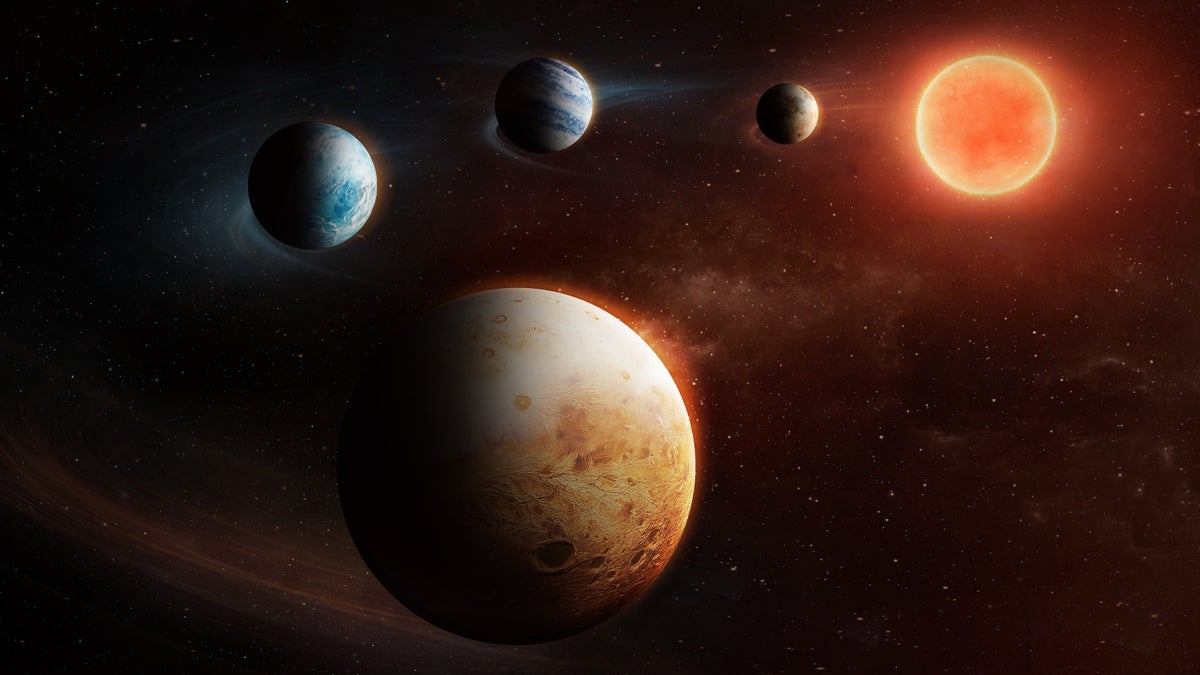
The population of super-Earths and sub-Neptunes, and the origin of the radius valley that separates these two classes of planets, is best explained by cores that are made of an Earth-like composition without a substantial amount of accreted ice8,9,10,11. For sub-Neptunes, the hydrogen-rich envelope overlies the rocky core for billions of years, whereas for super-Earths, the envelope may be retained for about 100 Myr (refs. ).
Looking skyward fills us with wonder. Off-world, the Sun, planets, stars, and galaxies all await. Our Solar System encompasses our own cosmic backyard. Farther away, stars and star clusters abound within the Milky Way. Hundreds of billions of stars exist just within our home galaxy. Inside our Local Group, only Andromeda surpasses us in mass, size, and stars. More than 5 million light-years away, galaxies abound in groups and clusters.
V1298 Tau is a young (10-30 Myr), approximately solar-mass star (1.10 ± 0.05 M⊙ ) in the Taurus star-forming region2,4,5,6,7,8. Observations by NASA's Kepler space telescope in its extended K2 mission9 revealed transits of the star by four different planets, each larger than Neptune2,3. The V1298 Tau planets occupy a sparsely populated region of the observed exoplanet period versus radius plane. As a young system of large planets, it provides a crucial snapshot of planetary architecture
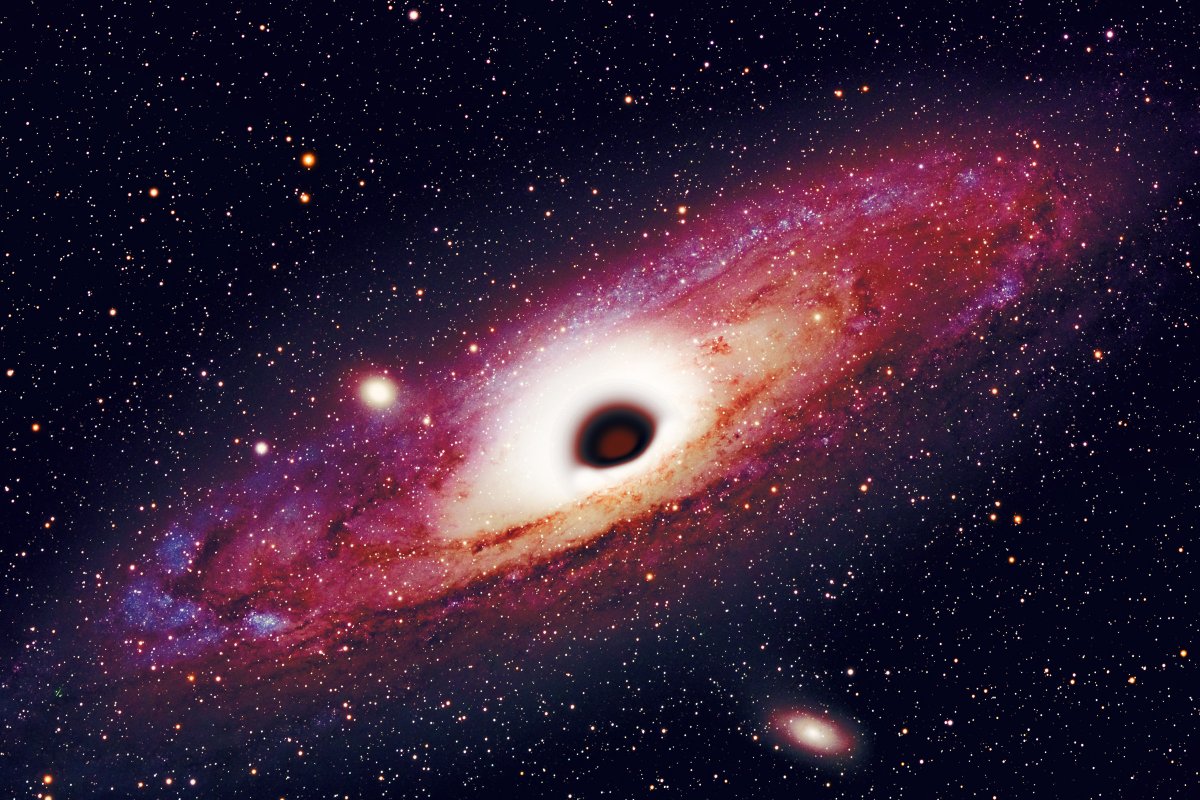
A bright star in a nearby galaxy has essentially vanished. Astronomers believe that it died and collapsed in on itself, transforming into the eerie cosmic phenomenon known as a black hole. "It used to be one of the brightest stars in the Andromeda galaxy," says Kishalay De, an astronomer with Columbia University and the Flatiron Institute. "Today, it is nowhere to be seen, even with the most sensitive telescopes."