#toll-records
#toll-records
[ follow ]
from24/7 Wall St.
3 days agoThe US Government Could End The Federal Gas Tax
The tax provides more than $23 billion per year in revenue for federal highway and public transit programs. The federal gas tax has been in place, in one way or another, since 1919 and was last raised in 1993.
Alternative transportation
fromwww.cbc.ca
4 days agoSeen a tow truck zone expansion sign? Here's what it means | CBC News
The province is expanding its tow truck zones starting April 1 to restrict more sections of Ontario's highways to contracted companies approved by the Ministry of Transportation. This change aims to improve safety and streamline the towing process.
Toronto startup
#congestion-pricing


New York City
fromwww.amny.com
2 weeks agoCongestion pricing: NYC subways saw millions more riders during Manhattan toll program's first year, transit group finds | amNewYork
New York's congestion pricing program drove a 7.7% increase in subway ridership to 1.3 billion rides in its first year, with over 90 million additional trips compared to the previous year.
NYC politics
fromNewsday
1 month agoCongestion pricing to stay after judge rules against Trump administration
A federal judge blocked the Trump administration's attempt to end New York's congestion pricing program, ruling the decision was arbitrary and capricious, and restored federal approval for the tolling system.
Washington DC
fromStreetsblog
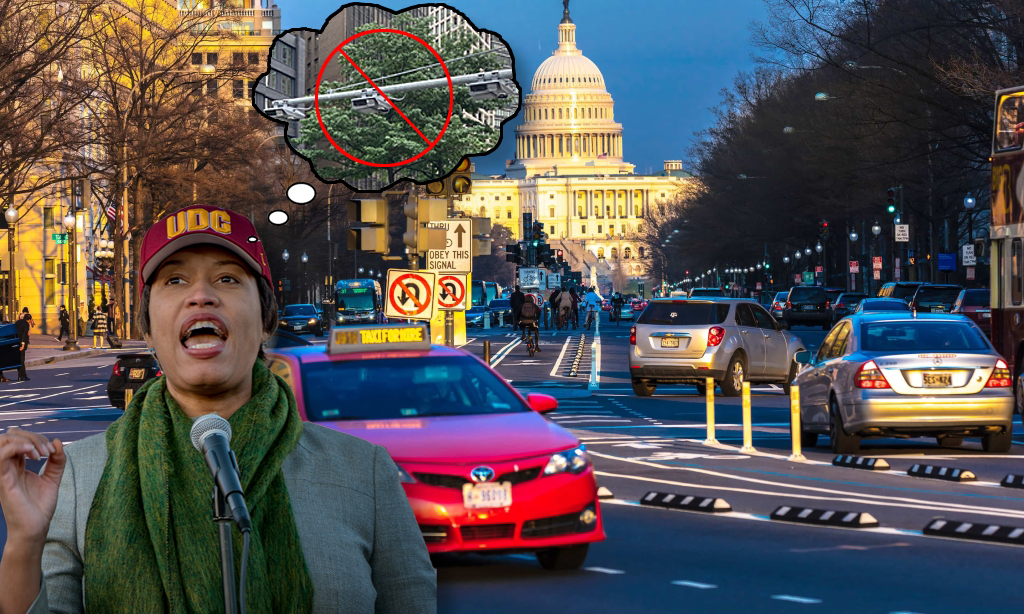
2 weeks agoAdvocates Get D.C. Mayor To Release Buried Report On The Potential Benefits Of Congestion Pricing - Streetsblog USA
Washington D.C.'s delayed congestion pricing report projects 11% traffic reduction, 30% transit increase, and $667 million in revenue, yet Mayor Bowser refuses implementation despite legal mandate to release findings.
New York City
fromwww.amny.com
2 weeks agoCongestion pricing: NYC subways saw millions more riders during Manhattan toll program's first year, transit group finds | amNewYork
New York's congestion pricing program drove a 7.7% increase in subway ridership to 1.3 billion rides in its first year, with over 90 million additional trips compared to the previous year.
NYC politics
fromNewsday
1 month agoCongestion pricing to stay after judge rules against Trump administration
A federal judge blocked the Trump administration's attempt to end New York's congestion pricing program, ruling the decision was arbitrary and capricious, and restored federal approval for the tolling system.
UK news
fromLondon Business News | Londonlovesbusiness.com
3 weeks agoLess than 10% of pothole compensation claims are successfully paid to drivers - London Business News | Londonlovesbusiness.com
English motorists filed over £10 million in pothole damage claims during 2024/25, but fewer than 10% were approved, with only £666,712 paid out from nearly 10,000 claims.
fromwww.cbc.ca
2 weeks agoNot carpooling? You may soon be able to use HOV lanes anyway in off-peak hours | CBC News
Gridlock is costing our economy billions of dollars every year and robbing Ontario drivers of valuable time and quality of life. He added the changes would help keep drivers moving across the province.
Canada news
UK politics
fromLondon Business News | Londonlovesbusiness.com
2 weeks agoCost of fixing Britain's pothole crisis hits record 18.6bn - London Business News | Londonlovesbusiness.com
England and Wales road repair costs reach record £18.6 billion with only 51% of local roads in good condition, despite increased government funding failing to prevent continued deterioration.
fromwww.independent.co.uk
3 weeks agoTfL considering extra charges for SUV drivers travelling in London
Oversized models, such as large SUVs, make it harder for drivers to see people walking and cycling nearby. SUVs are 14 per cent more likely to kill people walking and cycling than other passenger cars, and 77 per cent more likely to kill children up to the age of 18 in England.
London politics
East Bay (California)
fromThe Oaklandside
3 weeks agoHow could Oakland raise billions in revenue? New report suggests removing freeways
Urban highways occupy valuable land that generates minimal tax revenue compared to potential development, with Oakland potentially gaining $23.9 billion by removing freeways within three miles of downtown.
US news
fromCbsnews
1 month agoNew Jersey wants to replace E-ZPass tags with battery-free stickers. Here's what they look like.
New Jersey is testing battery-free barcode stickers to replace windshield-mounted E-ZPass tags, reducing costs from $4.6 million to under $700,000 annually while improving security and durability.
Alternative transportation
fromFast Company
3 weeks agoTraffic safety improvements frequently die by popular vote. It's time to stop that
Vision Zero, a Swedish road safety philosophy, proves traffic deaths are preventable through proper street design, enforcement, and awareness, yet Americans resist safety improvements due to normalized traffic violence.
New York City
fromwww.amny.com
3 weeks agoOp-Ed | It's time to crack down on New York City's toll-dodgers | amNewYork
Toll evasion costs the MTA $50 million annually; proposed legislation would strengthen enforcement against license plate obscuring and persistent violators through confiscation, driving record penalties, and reclassified charges.
#traffic-safety

Washington DC
fromWashingtonian - The website that Washington lives by.
1 month agoWhy Republicans Are Jumping Into DC's Speed-Camera Debate
Speed cameras in Washington DC have significantly reduced traffic deaths, with fatalities dropping to the lowest level since 2012 after camera installations increased from 100 to 546 devices.
fromBoston.com
3 weeks agoN.H. Senate approves toll hike for out-of-state drivers
The proposal was aimed at getting 'the best of both worlds': protecting New Hampshire drivers from rising costs while funding safety improvements to highways. It would 'free up' between $560 million and $580 million for regional projects that may not be covered by the state's recently-completed 10-year plan.
Alternative transportation
Boston
fromBoston.com
1 month agoBye-bye transponders: E-ZPass switching to stickers
Massachusetts is transitioning E-ZPass from hard-plastic transponders to free windshield sticker tags using RFID technology, reducing production costs from $6.70 to 55 cents per unit and saving approximately $7.38 million annually.
fromwww.cbc.ca
1 month agoIt could take 13 years, $52M to put in traffic calming measures in Toronto after speed cameras removed: report | CBC News
A preliminary estimate of the total cost to install traffic calming measures on local and collector roadways within school zones is approximately $52 million. Assuming a moderate increase in the annual delivery capacity, it would take approximately 13 years to install traffic calming measures on all eligible roadways within school zones in Toronto.
Toronto
fromFOX 5 New York
1 month agoE-Z Pass transponders may be replaced with stickers in New Jersey
E-Z Pass' plastic transponders could soon be replaced by stickers equipped with digital chips and barcodes. The change would mean no need to mount your transponder in the perfect spot, or hold it up while passing through toll plazas. First, officials say 3,000 turnpike vehicles will test out the stickers during an 8-week pilot program.
Alternative transportation
New York City
fromBond Buyer
3 weeks agoMTA capital cost savings may be example for other agencies
The MTA's Construction & Development Department achieved $1.2 billion in cost savings during 2025, bringing total savings to $3 billion from 2020-2024, demonstrating cost management strategies applicable to other transit agencies nationwide.
fromBusiness Matters
1 month agoThe impact of road signs on economic development
When routes are well organized, there are clear directional signs, and speed limits become reasonable. The early installation of warning signs allows transport companies to plan deliveries more accurately and avoid delays. For businesses, time is money. When a truck carrying goods does not spend hours detouring due to an unclear traffic scheme or stuck in traffic where it could have been avoided thanks to competent traffic management, fuel costs, driver wages, and vehicle maintenance costs are reduced.
Alternative transportation

New York City
fromStreetsblog
1 month agoDOT Re-Ups With Speed Camera Operator But Temp Tags Are Still Unticketable - Streetsblog New York City
New York City's speed cameras cannot issue fines to drivers with temporary tags because states don't provide registration information, costing the city tens of millions in lost revenue and compromising public safety.
fromBrooklyn Eagle
1 month agoGateway tunnel commission sues DOT as shutdown deadline nears
MANHATTAN - THE GATEWAY COMMISSION SUED the U.S. Department of Transportation, alleging the agency is withholding $205,275,358 in contractually required payments for the $16 billion Hudson River rail tunnel project and forcing a potential work stoppage Feb. 6 that could cost about 1,000 jobs, reports The case, filed in the U.S. Court of Federal Claims, comes as the Gateway Development Commission warns its credit line is exhausted and contractors may be unable to keep building sites active on both sides of the river.
Brooklyn
Alternative transportation
fromFast Company
1 month agoThe 'time is money' mantra is a terrible starting point for planning and designing infrastructure
Using productivity and time-as-money frameworks to justify transportation planning decisions is economically flawed and oversimplifies the complex nature of traffic congestion and urban mobility.
fromGothamist
1 month agoGateway Hudson River tunnel funds are flowing, but no shovels are in the ground
Construction remains paused for now and we continue to work with our contractors to plan how to deploy these funds in the most effective way and get workers back on the job to resume some construction as soon as possible,
US politics
fromwww.cbc.ca
2 months agoNo single magic bullet' will fix Toronto's gridlock, new congestion officer says | CBC News
There's no one solution to fix the city's gridlock, Toronto's new chief congestion officer says as he finishes up his first week on the job. Andrew Posluns sat down with CBC Toronto on Friday to discuss the freshly created role, noting there's no magic bullet that will address the city's congestion. There are a lot of factors that feed into congestion, he said. We need to do everything we can in order to be able to mitigate and address the congestion challenges that arise.
Canada news
fromwww.theguardian.com
1 month agoMost of Britain's smart motorways are poor value for money, official reports find
Official evaluations from National Highways, some of which had been held back by the Department for Transport (DfT) since completion in 2023, showed that a slew of big projects to convert the hard shoulder on the M1, M4, M6 and M25 were rated as poor or very poor value. The AA said the long-awaited reports revealed smart motorways had been a catastrophic waste of time, money and effort, although the government said they showed the project could allow more vehicles to travel safely.
UK politics
fromwww.cbc.ca
2 months agoSome Toronto infrastructure work could be deferred in 2026, while backlog grows beyond previous projections | CBC News
The City of Toronto's 2026 budget offers relief many homeowners were looking for in its property tax increase, but it also lays bare the massive amount of infrastructure work hanging over the city in the coming years which, in some cases, may be deferred. With budget season now in full swing at city hall, several city departments will sit in front of the budget committee this week to give presentations on their financial needs this year. Among them will be the parks and recreation department, which is caught up in a nearly $2 billion deferral of work in the 10-year capital plan, which is the city's plan to maintain, renew and grow infrastructure. That work was supposed to be funded by development charges that builders pay to the city, but recent provincial legislation made it so developers could pay those fees once their buildings are occupied, as opposed to when they get their building permits. The change means the city will receive that revenue years later than under the previous rules, so the work it would fund has to be put off, according to city budget documents.
Canada news
California
fromStreetsblog
1 month agoHighway Projects Still Grab Biggest Share as California OK's Nearly $1B in State Transportation Funding - Streetsblog California
California approved $988.7 million in transportation investments prioritizing highways and road safety while including some transit, walking, and bicycling funding.
[ Load more ]