#transit-staffing-requirements
#transit-staffing-requirements
[ follow ]
#toronto-transit-commission


Canada news
fromwww.cbc.ca
4 days agoTTC has higher costs and less riders than in 2019. Winning them back won't fix financial woes, staff warn | CBC News
The Toronto Transit Commission faces declining ridership, increased costs, and reduced revenue, leading to a projected budget shortfall of half a billion dollars by 2027.
#mta
NYC politics
fromwww.amny.com
3 days agoTWU's 2-person subway train crew bill would derail progress, good government and business groups tell state pols | amNewYork
State legislative leaders should oppose the TWU's push for two-person crews on subway lines to allow MTA to implement one-person train operation.

NYC politics
fromwww.amny.com
3 days agoTWU's 2-person subway train crew bill would derail progress, good government and business groups tell state pols | amNewYork
State legislative leaders should oppose the TWU's push for two-person crews on subway lines to allow MTA to implement one-person train operation.


fromIrish Independent
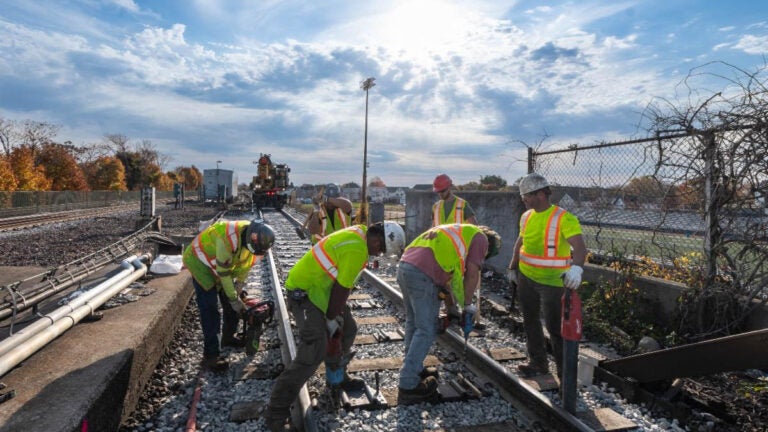
3 days agoRed Luas line and Dart services partially suspended over Easter weekend
Red line services will be partially suspended between the Red Cow and Tallaght/Saggart on Saturday, Easter Sunday, and Easter Monday due to engineering works. Trams will operate between The Point/Connolly and the Red Cow, with replacement bus services running every 15 minutes in affected areas.
London food
fromPadailypost
1 day agoCaltrain to close stations if transit tax doesn't pass
"Caltrain and BART would very likely be looking at shutting down passenger service," Deputy Director of Policy Development Melissa Jones said. "In that case, the agencies would be focused on maintenance, trying to secure our assets, keep everything safe while we regroup for the future."
San Francisco


New York City
fromwww.amny.com
5 days agoNew York Transit Museum workers unionize in unanimous vote as they seek better wages, job security | amNewYork
New York Transit Museum workers formed the Transit Museum Collective union for better wages and job security, achieving unanimous support in their vote.
Brooklyn
fromHoodline
2 weeks agoTransit Museum Staff File to Unionize in Downtown Brooklyn
Approximately 40 New York Transit Museum front-line staff filed for a union election with the NLRB, seeking to join AFSCME Cultural Workers United after publicly announcing their organizing campaign in February.
SF politics
fromFast Company
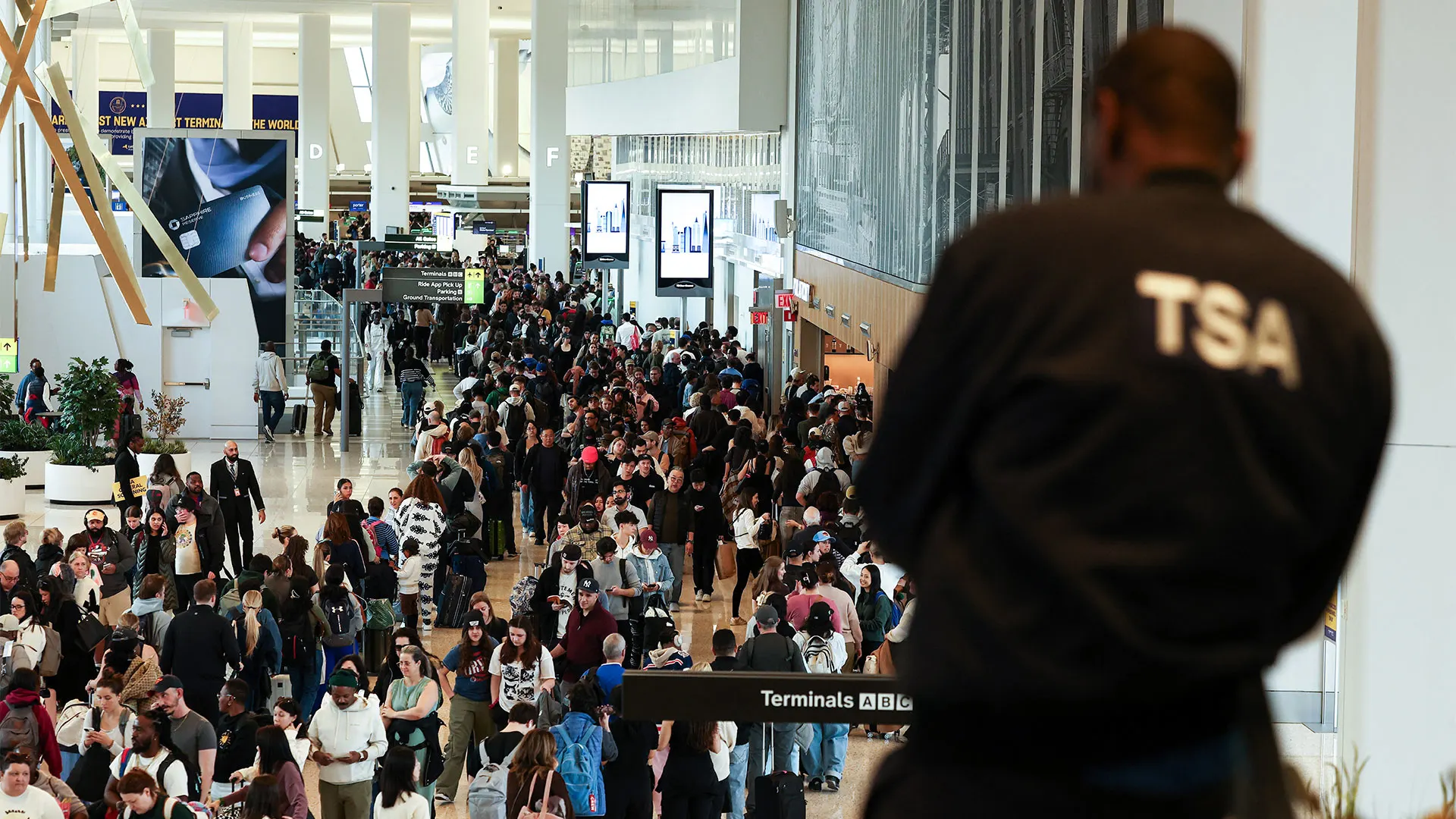
3 weeks agoThe TSA staff shortage is dragging on at U.S. airports. Some experts say privatization is the solution
Private security contractors at some U.S. airports maintain continuous operations during government shutdowns because their federal contracts ensure uninterrupted funding, unlike TSA-staffed airports that face disruptions.
NYC real estate
fromGothamist
1 month agoTrump could transform transit in NYC with Penn Station and Sunnyside Yard plans
Trump administration's infrastructure initiatives create unprecedented opportunity for NYC's largest commuter rail expansion in a century, including through-running connections and a major new hub in Sunnyside, Queens.
fromStreetsblog
2 weeks agoUCLA Study Shows How Ambiguous Definition of 'Major Transit Stop' Creates Wiggle Room for Municipalities - Streetsblog California
UCLA's research indicates that if the area surrounding a transit stop is included in the definition, it could add more than 1.3 million acres of land statewide where housing bonuses would apply, nearly tripling the amount of land currently eligible.
Alternative transportation
fromStreetsblog
2 weeks agoOpinion: The Federal Railroad Administration's Proposed Amtrak Restructuring is Worth Considering - Streetsblog USA
While dozens of other countries have delivered fast, modern train networks, we are stuck with a skeletal system built largely on slow, 19th-century alignments. Even developing nations are passing us by. There is growing recognition at the federal level that things need to change, but substantial and comprehensive reform would require an act of Congress.
Alternative transportation
New York City
fromwww.amny.com
2 weeks agoCongestion pricing: NYC subways saw millions more riders during Manhattan toll program's first year, transit group finds | amNewYork
New York's congestion pricing program drove a 7.7% increase in subway ridership to 1.3 billion rides in its first year, with over 90 million additional trips compared to the previous year.
New York City
fromStreetsblog
2 weeks agoMTA's Lieber Asks City to Put More Cops on Bus Lane Enforcement - Streetsblog New York City
The MTA Chairman requests increased NYPD traffic enforcement agents to clear bus lanes at chronic bottleneck locations, as bus-mounted cameras alone cannot physically remove illegally parked vehicles or enforce against exempt emergency and municipal vehicles.
New York City
fromGothamist
2 weeks agoTransit workers union sues MTA over rule eliminating requirement for staffed token booths
The Transport Workers Union sued the MTA over a January policy allowing unstaffed subway token booths when agents are absent, arguing it endangers public safety and harms disabled riders.
fromForbes
1 month agoTransit-Oriented Housing On Track For Continued Growth
Once a nice-to-have niche urban design concept, TOD has become an essential part of many urban neighborhoods. It has helped address the shortage of housing by enabling the development of higher-density residential communities near transit stations. It has helped revitalize countless once-deteriorating or static urban enclaves near transit hubs by activating sidewalks near the developments. And it has spurred walking and transit use, enabling residents of TODs to reduce or eliminate automobile dependency.
Real estate

New York City
fromGothamist
3 weeks agoNY lawmakers, transit union makes fresh push to enshrine 2-person subway crews
Transport Workers Union Local 100 is pushing state legislation to require two-person crews on NYC subway trains, citing safety and passenger assistance benefits, despite cost-saving pressure and prior gubernatorial veto.
New York City
fromBond Buyer
3 weeks agoMTA capital cost savings may be example for other agencies
The MTA's Construction & Development Department achieved $1.2 billion in cost savings during 2025, bringing total savings to $3 billion from 2020-2024, demonstrating cost management strategies applicable to other transit agencies nationwide.
fromStreetsblog
1 month agoTalking Headways Podcast: The Future of Transit - Streetsblog USA
This huge law that we've passed in 2021 - which Joe Biden said was the biggest law for public transit ever and was this enormous investment in inner city rail - ultimately panned out to have very minimal effects. There has been some increase in highway construction. But when it comes to transit investment, unfortunately the country is going in the wrong direction.
Alternative transportation
fromSustainable Bus
1 month agoEvolution: the practical path to autonomous buses - Sustainable Bus
It's tempting to frame autonomous driving as a single leap. In public transport, adoption tends to be incremental - because the system is built for reliability, and new capabilities have to fit into daily operations without disrupting service. That is why a practical strategy is evolution, not revolution: introduce autonomy in a defined domain, learn safely in real operations, and expand capability step-by-step.
Artificial intelligence
fromABC7 Los Angeles
1 month agoAll truckers and bus drivers will be required to take commercial driver's license tests in English
All truckers and pass drivers will have to take their commercial driver's license tests in English as the Trump administration expands its aggressive campaign to improve safety in the industry and get unqualified drivers off the road. Transportation Secretary Sean Duffy announced the latest effort Friday to ensure that drivers understand English well enough to read road signs and communicate with law enforcement officers. Florida already started administering its tests in English.
US politics
fromABC7 San Francisco
1 month agoBART considers layoffs, station closures, reduced services, to balance budget deficit
The agency is facing an annual deficit of nearly $400 million, with ridership levels decreasing since the COVID-19 pandemic and remote work trends. The agency presented the worst-case scenarios. Phase 1 in Jan of 2027 would include closing the 10 stations with the lowest ridership. During Phase 2 in July of 2027, up to 15 stations could shut down with a 50% fare increase. Train service would stop altogether under Phase 3.
US news
fromwww.bbc.com
2 months agoCalls to withdraw fresh floating bus stop guidance
The design, which has a cycle lane between the stop and the kerb, is intended to allow bus passengers to get on and off safely while cyclists continue moving. Sarah Gayton, street access campaign co-ordinator at the National Federation of the Blind of the UK, said: "It does not address the concerns that blind and visually impaired people have and it's totally insulting to think that we'll accept this."
UK politics
fromStreetsblog
1 month agoWhen The Suburbs Want To Opt Out of Funding Regional Transit - Streetsblog USA
A vote six years in the making that would decimate the Dallas Area Rapid Transit system might soon be called off, potentially averting a major funding crisis for the agency - though advocates say there's more work to be done to make sure every DFW resident has the mass mobility options they deserve. Since the beginning of the decade, a handful of wealthy, sprawling suburban cities in the greater Dallas metro have been fighting
US politics
fromwww.cbc.ca
2 months agoNo single magic bullet' will fix Toronto's gridlock, new congestion officer says | CBC News
There's no one solution to fix the city's gridlock, Toronto's new chief congestion officer says as he finishes up his first week on the job. Andrew Posluns sat down with CBC Toronto on Friday to discuss the freshly created role, noting there's no magic bullet that will address the city's congestion. There are a lot of factors that feed into congestion, he said. We need to do everything we can in order to be able to mitigate and address the congestion challenges that arise.
Canada news
fromStreetsblog
2 months agoPassenger Rail Is Headed for a Reckoning - and the First 90 Days of 2026 Will Decide It - Streetsblog USA
Let's start with the biggest issue on the horizon: the proposed merger of Union Pacific and Norfolk Southern. Yes, the ultimate decision is about a year away. But sides are lining up for and against, and right now, the Surface Transportation Board, which is colloquially known as STB -- the railroads' economic regulator -- is considering the details of how the rules governing that decision will be applied.
US politics
fromwww.amny.com
1 month agoOp-Ed | It's time to bring updated transit to Harlem | amNewYork
Residents of East Harlem's El Barrio have waited 80+ years for the Second Avenue Subway. The Trump administration could force them to wait even longer as it withholds federal funding for regional infrastructure projects over an alleged naming issue, no less. It's outrageous, it's unfair, and the MTA backed by Governor Hochul won't stand for it. We're at a pivotal moment for the project sixth months after awarding our largest-ever tunneling contract back in August.
US politics
[ Load more ]