OMG science
fromFuturism
1 day agoScientists Say They've Found "Dark Points" That Move Faster Than the Speed of Light
Faster-than-light 'dark points' in light waves have been observed, moving without mass and not violating relativity.
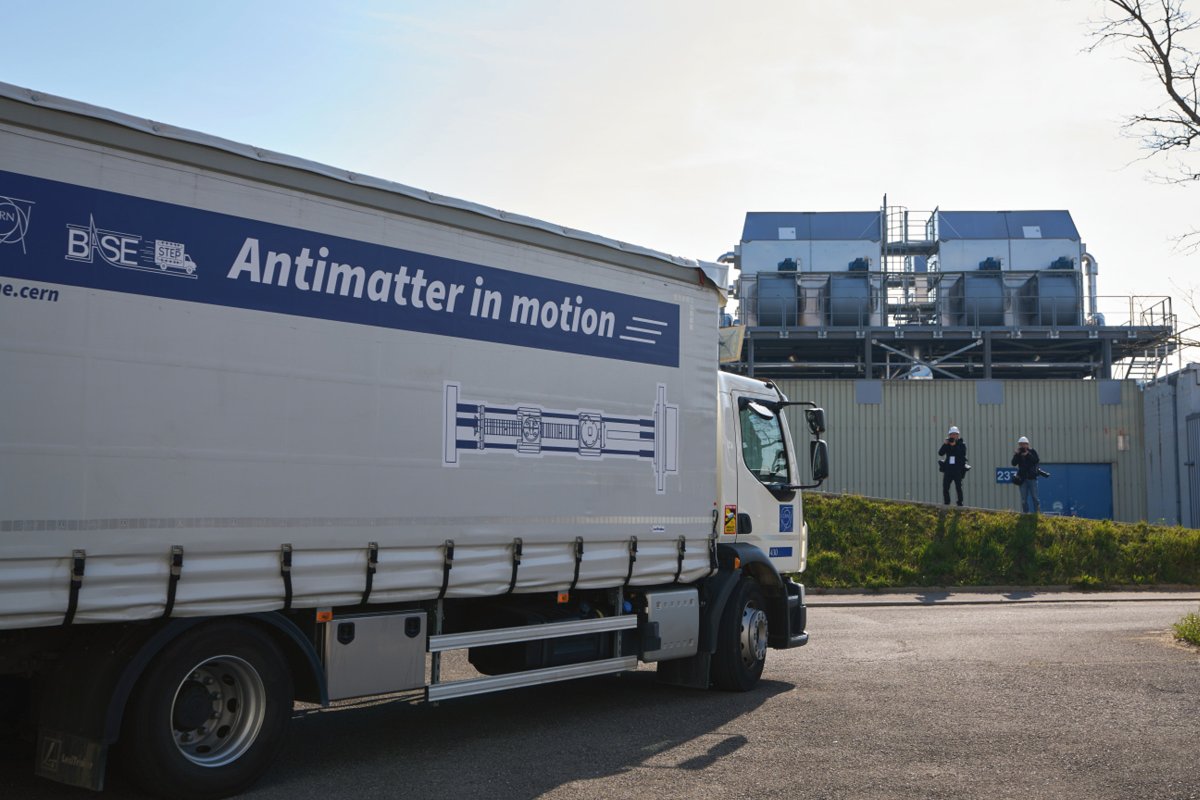
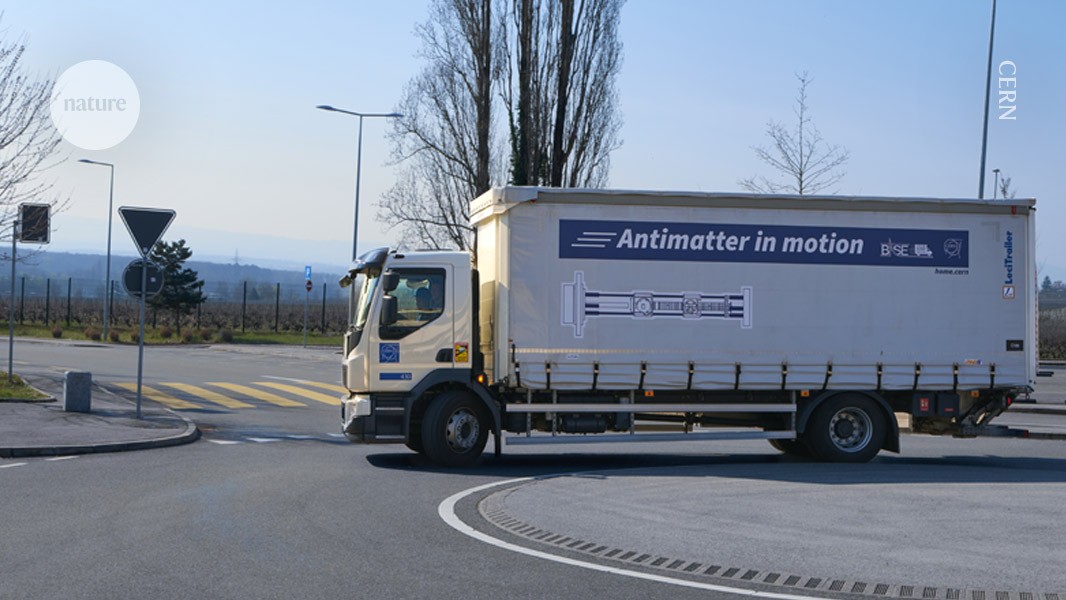
A core question we want to understand is where did matter come from. And then, if you know about antimatter, it's natural to ask, why is that not here? The process is not understood and we are hunting for clues as to why it happened, says Dr Christian Smorra, a physicist on the Baryon Antibaryon Symmetry Experiment (Base) at Cern.
NIST has developed a chip that reliably emits a single photon on demand. This ability will improve the efficiency of QKD (quantum key distribution) as we prepare for the arrival of quantum computers. Quantum computers will upend current cryptology by using Shor's algorithm to rapidly negate the current public/private key secure encryption methods. This has largely been solved by NIST's post quantum cryptology (PQC) algorithms.
We demonstrate how the apparent magnetic field induced lattice and CDW intensity change can be explained as a consequence of two independent experimental artifacts: a reconfiguration of atoms at the STM tip apex that alters the amplitudes of CDW modulations, and piezo creep, hysteresis and thermal drift, which artificially distort STM topographs.
A grand aspiration of cavity quantum materials research is to uncover fundamentally new routes for controlling properties of matter by judiciously tailoring the quantum electromagnetic environment. Experiments with dark cavities revealed modified transport properties in the integer and fractional quantum Hall states of a 2D electron gas, as well as cavity-assisted thermal control of the metal-to-insulator transition in charge-density-wave systems.
Qunnect and Cisco have unveiled what they say is the first entanglement-swapping demonstration of its kind over deployed metro-scale fibre using a commercial quantum networking system. The demonstration combined Qunnect's room-temperature quantum hardware with Cisco's quantum networking software stack. The net result of the project is regarded by the partners as being able to bring practical quantum networks closer to scalable deployment, validating a spoke-and-hub model for scaling quantum networks through commercial datacentres.
Hefei National Research Center for Physical Sciences at the Microscale and School of Physical Sciences, University of Science and Technology of China, Hefei, Anhui, China Wen-Zhao Liu, Ya-Bin Zhou, Jiu-Peng Chen, Ao Teng, Xiao-Wen Han, Guang-Cheng Liu, Zhi-Jiong Zhang, Yi Yang, Feng-Guang Liu, Chao-Hui Xue, Bo-Wen Yang, Jin Yang, Chao Zeng, Yi-Zheng Zhen, Feihu Xu, Ye Wang, Yong Wan, Qiang Zhang & Jian-Wei Pan
Analogue quantum simulations are a useful tool for investigating these systems, particularly in regimes in which the applicability of numerical techniques is limited. For different simulator platforms, figures of merit include the electron bandwidth and interaction strength, temperature and the number of simulated lattice sites. Their use is further underscored by the ability to realize distinct lattice geometries, on-site degrees of freedom and by the physical observables that are accessible to experimental measurement.
Tube trains of the future may soon know exactly where they are underground - even in places where GPS is blind - by tapping into the strange rules of the quantum world. Most modern tracking systems rely on satellites to pinpoint location, backed up by accelerometers that measure tiny movements between GPS updates. It works well enough above ground, but those accelerometers gradually drift, which is why they constantly need satellite corrections.
Y.W. designed the experimental protocols, performed experiments, analysed the data and wrote the manuscript. Y.H., X.K., D.C., J.X.X. and W.Z. performed experiments and edited the manuscript. Y.C. and S.P. edited the manuscript. M.J., X.P. and J.D. proposed the experimental concept, designed experimental protocols and proofread and edited the manuscript. All authors contributed with discussions and checking the manuscript. Corresponding authors Correspondence to Min Jiang or Xinhua Peng.
Can quantum physics enable better, cheaper, faster satellite photos? In a month or two, a startup will test a "quantum camera" for space-based imaging. If it works, it could slash the cost of missile defenses and give smaller NATO allies and partners spy-satellite capabilities that were once exclusive to major powers.