#triggers-and-scheduling
#triggers-and-scheduling
[ follow ]
#software-development #devops #ai #ai-integration #automation #slack #productivity #kubernetes #observability

fromInfoWorld
2 weeks agoWe mistook event handling for architecture
Events are essential inputs to modern front-end systems. But when we mistake reactions for architecture, complexity quietly multiplies. Over time, many front-end architectures have come to resemble chains of reactions rather than models of structure. The result is systems that are expressive, but increasingly difficult to reason about.
React
Web frameworks
fromSitePoint Forums | Web Development & Design Community
1 week agoOptimizing Laravel API performance with large datasets and cron-based data processing
Improving data processing and normalization in a Laravel system with multiple tools requires a scalable architecture to handle performance issues.




Information security
fromDevOps.com
2 weeks agoHarness Extends AI Security Reach Across Entire DevOps Workflow - DevOps.com
Harness launched AI security capabilities including automatic code securing during AI-assisted development and a module discovering, testing, and protecting AI components within applications.
Mobile UX
fromAzure DevOps Blog
1 month agoUpdates to Team Calendar extension - Azure DevOps Blog
Team Calendar extension receives visual refinements including improved design consistency, better contrast, updated color palette, smoother transitions, and enhanced usability across all interface components.
fromTechzine Global
1 month agoGo developer questions effectiveness of Dependabot
Dependabot sounded the alarm on a large scale. Thousands of repositories automatically received pull requests and warnings, including a high vulnerability score and signals about possible compatibility issues. According to Valsorda, this shows that the tool mainly checks whether a dependency is present, without analyzing whether the vulnerable code is actually accessible within a project.
Information security
fromAzure DevOps Blog
1 month agoCondensed views on Kanban and Sprint boards - Azure DevOps Blog
One of the challenges teams face when working with large boards or displaying multiple fields on work item cards is limited screen space. This became even more noticeable with the rollout of the New Boards hub, which introduced additional spacing and padding for improved readability. While this enhances clarity, it can also reduce the number of cards visible at once.
UX design

fromInfoWorld
1 month agoAn ode to craftsmanship in software development
Your coding apprentice can build, at your direction, pretty much anything now. The task becomes more like conducting an orchestra than playing in it. Not all members of the orchestra want to conduct, but given that is where things are headed, I think we all need to consider it at least.
Software development
DevOps
fromDevOps.com
4 weeks agoOn-Call Rotation Best Practices: Reducing Burnout and Improving Response - DevOps.com
On-call duty is critical for system protection but often mismanaged, causing engineer burnout and attrition when rotations are poorly designed, alerts are excessive, and automation is lacking.
Information security
fromThe Hacker News
2 months agoDevOps & SaaS Downtime: The High (and Hidden) Costs for Cloud-First Businesses
Relying solely on public cloud and DevOps SaaS platforms increases operational risk as outages, attacks, and Shared Responsibility gaps drive rising downtime and service degradation.




fromDevOps.com
1 month agoWhat to do About AI's Forced Rethink of Reliability in Modern DevOps - DevOps.com
For years, reliability discussions have focused on uptime and whether a service met its internal SLO. However, as systems become more distributed, reliant on complex internet stacks, and integrated with AI, this binary perspective is no longer sufficient. Reliability now encompasses digital experience, speed, and business impact. For the second year in a row, The SRE Report highlights this shift.
Software development
Artificial intelligence
fromLogRocket Blog
2 months agoWhy your AI agent needs a task queue (and how to build one) - LogRocket Blog
Task queues convert frequent, low-rate LLM failures into recoverable work while providing ordering, observability, and adaptive throttling to prevent duplication and race conditions.


fromDbmaestro
4 years agoWhat is Database Delivery Automation and Why Do You Need It?
Manual database deployment means longer release times. Database specialists have to spend several working days prior to release writing and testing scripts which in itself leads to prolonged deployment cycles and less time for testing. As a result, applications are not released on time and customers are not receiving the latest updates and bug fixes. Manual work inevitably results in errors, which cause problems and bottlenecks.
Software development
fromDevOps.com
1 month agoBot-Driven Development: Redefining DevOps Workflow - DevOps.com
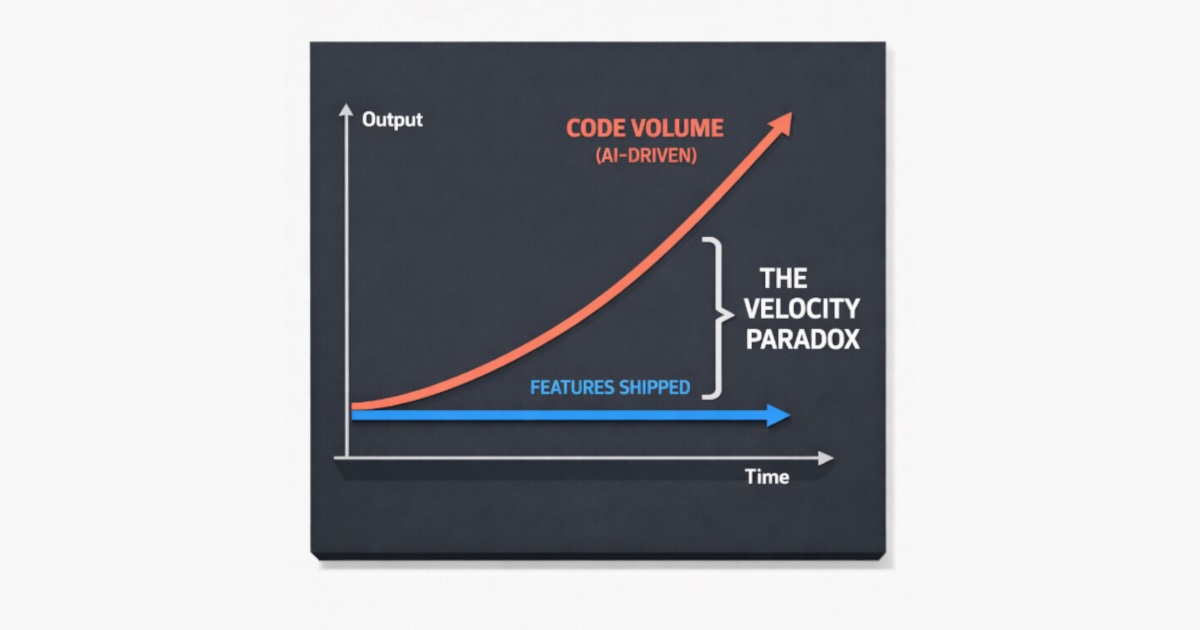
Industry professionals are realizing what's coming next, and it's well captured in a recent LinkedIn thread that says AI is moving on from being just a helper to a full-fledged co-developer - generating code, automating testing, managing whole workflows and even taking charge of every part of the CI/CD pipeline. Put simply, AI is transforming DevOps into a living ecosystem, one driven by close collaboration between human judgment and machine intelligence.
Software development
fromDbmaestro
5 years agoDatabase Delivery Automation in the Multi-Cloud World
The main advantage of going the Multi-Cloud way is that organizations can "put their eggs in different baskets" and be more versatile in their approach to how they do things. For example, they can mix it up and opt for a cloud-based Platform-as-a-Service (PaaS) solution when it comes to the database, while going the Software-as-a-Service (SaaS) route for their application endeavors.
DevOps
Software development
fromDbmaestro
4 years agoIf You Don't Have Database Delivery Automation, Brace Yourself for These 10 Problems |
Manual database processes break DevOps pipelines; only 12% deploy database changes daily, causing configuration drift, frequent errors, slower time-to-market, and reduced productivity.
DevOps
fromSitePoint Forums | Web Development & Design Community
2 months agoWhat is the best way to differentiate between performance testing and a true reliability test system?
Prioritize fault tolerance before resource optimization; automate long-term reliability tests with staged, parallel, and targeted strategies to preserve CI/CD velocity.
fromInfoWorld
1 month agoSix reasons to use coding agents
One thing I always do when I prompt a coding agent is to tell it to ask me any questions that it might have about what I've asked it to do. (I need to add this to my default system prompt...) And, holy mackerel, if it doesn't ask good questions. It almost always asks me things that I should have thought of myself.
Software development
fromInfoWorld
2 months agoWhich development platforms and tools should you learn now?
Software development used to be simpler, with fewer choices about which platforms and languages to learn. You were either a Java, .NET, or LAMP developer. You focused on AWS, Azure, or Google Cloud. Full-stack developers learned the intricacies of selected JavaScript frameworks, relational databases, and CI/CD tools. In the best of times, developers advanced their technology skills with their employer's funding and time to experiment. They attended conferences, took courses, and learned the low-code development platforms their employers invested in.
Software development
fromGitHub
2 months agoGitHub - Techthos/clockwork: Clockwork-MCP is a local executable MCP-Server that gives Agents the ability to simple track project worklogs.
Clockwork is a Model Context Protocol (MCP) server that automatically tracks your work time based on git commits. It aggregates commits into worklog entries, calculates durations, and manages projects - all through a simple CLI interface. Automatic Commit Aggregation: Automatically collects commits since your last worklog entry Smart Duration Calculation: Estimates work time based on commit timestamps Project Management: Track multiple projects with associated git repositories
Software development
[ Load more ]