#unc2814
#unc2814
[ follow ]
#alzheimers-disease #gene-therapy #cancer-research #crispr #clinical-trials #cancer #immunotherapy #mitochondria


fromThe Washington Post
1 week agoJ. Michael Bishop, who illuminated genetic roots of cancer, dies at 90
Dr. Bishop and Varmus showed that oncogenes - genes that cause cancer - are not foreign genes introduced into the body by viruses, as was widely believed at the time. Instead, normal versions of oncogenes are present in healthy cells, where they help regulate normal growth.
Cancer
fromNature
2 weeks agoMasked mitochondria slip into cells to treat disease in mice
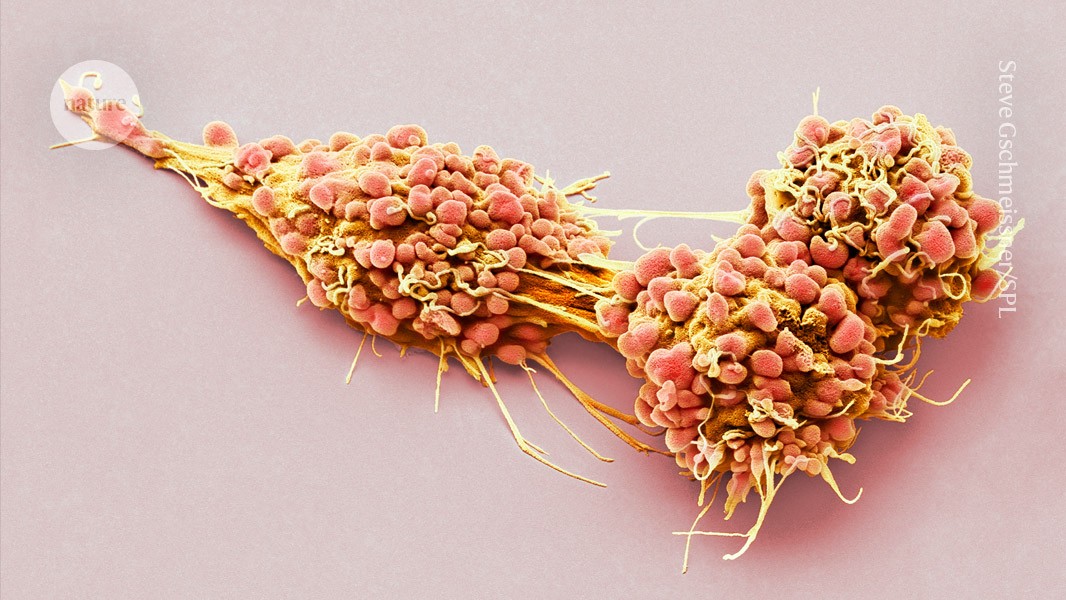
When mitochondria are exposed to tissue or blood, they lose the electrical gradient across their outer membrane. Mitochondria that lack such a gradient are recognized by a cell's internal machinery as damaged and quickly destroyed. The vast majority of previous studies involved injecting 'naked' mitochondria directly into the bloodstream or tissue sites, but the approach isn't very efficient, so researchers often have to use 'ridiculous' doses of mitochondria.
Medicine
fromNews Center
3 weeks agoCalcium Signaling Channels Regulate Neuroinflammation and Motivation - News Center
This could open up some interesting possibilities for therapeutic interventions for depression-like behaviors or maladaptive changes in motivational behaviors down the road where microglia are known to play a really important role.
Science
fromHarvard Gazette
1 month agoTracking mysteries of loss of Y chromosome, cancer - Harvard Gazette
The Y chromosome primarily carries genes that provide instructions for male sex differentiation and fertility. But it also carries some known to suppress tumor growth - a protective ability that is lost if those genes are damaged or destroyed.
Health
#gene-therapy
Medicine
fromNews Center
3 weeks agoFirst Gene Regulation Clinical Trials for Epilepsy Show Promising Results - News Center
Zorevunersen, a gene-regulation therapy, demonstrates safety and effectiveness in reducing seizures and improving developmental outcomes in Dravet syndrome patients by targeting the underlying genetic cause.


Cancer
fromenglish.elpais.com
1 month agoDouglas Hanahan, biologist: We don't necessarily need a cure, what we really need is cancer without disease'
Cancer cells acquire hallmarks: uncontrolled proliferation, evasion of growth barriers, resistance to programmed death, and relative immortality, driving tumor diversity and treatment variability.
OMG science
fromHarvard Gazette
2 months agoWhy did that cancer cell become drug-resistant? - Harvard Gazette
TimeVault records and stores cellular gene-expression history inside living cells, enabling retrieval of past gene-activity information to study differentiation, stress responses, adaptation, and drug resistance.
fromSilicon Canals
1 month agoA brain-based AI test could point to the best antidepressant for you - Silicon Canals
Before treatment began, participants underwent neuroimaging. Instead of relying on a single modality, the researchers fused structural connectivity (how regions are physically wired) with functional connectivity (how regions co-activate at rest). The goal was not to throw every possible feature at a black box, but to learn a constrained pattern-what the authors call structure-function "covariation"-that carries the most predictive signal for outcome. In other words, the model tries to find the smallest set of connections that meaningfully forecasts symptom change.
Mental health
fromwww.nature.com
1 month agoAuthor Correction: The genomic landscape of response to EGFR blockade in colorectal cancer
In Extended Data Fig. 8 of this article, a micrograph shown in the left column (panel AZD) was inadvertently duplicated during figure preparation. The intended image was meant to show phospho-ERK (P-ERK) levels in a MAP2K1-mutant patient-derived xenograft (PDX) exposed to the MEK inhibitor AZD6244 (AZD). However, this image was accidentally overlaid with a micrograph from Extended Data Fig. 10 (left column, panel PAN), which displays P-ERK levels in an EGFR-mutant PDX exposed to panitumumab (PAN).
fromNews Center
1 month agoAI Model May Improve RNA Sequencing Research - News Center
Scientists in the laboratory of Rendong Yang, PhD, associate professor of Urology, have developed a new large language model that can interpret transcriptomic data in cancer cell lines more accurately than conventional approaches, as detailed in a recent study published in Nature Communications. Long-read RNA sequencing technologies have transformed transcriptomics research by detecting complex RNA splicing and gene fusion events that have often been missed by conventional short-read RNA-sequencing methods.
Cancer
Science
fromNews Center
2 months agoNew Underlying Mechanisms May Support Proper Transcriptional Regulation and Improve Targeted Therapies - News Center
BET proteins, particularly BRD4, regulate transcription initiation and elongation independently of bromodomains, with implications for targeted therapeutic development.
Science
fromNews Center
2 months agoTargeting Key Proteins in Fight Against ALS - News Center
RAD23 controls both degradation and stabilization of misfolded proteins; reducing RAD23 enhances clearance of disease-linked aggregates, offering a therapeutic target for neurodegenerative proteostasis dysfunction.
fromwww.scientificamerican.com
1 month agoLung cancer hijacks the brain to trick the immune system
For years, scientists have viewed cancer as a localized glitch in which cells refuse to stop dividing. But a new study suggests that, in certain organs, tumors actively communicate with the brain to trick it into protecting them. Scientists have long known that nerves grow into some tumors and that tumors containing lots of nerves usually lead to a worse prognosis.
Science
fromNews Center
2 months agoExperimental Drug Shows Promise for Rare Genetic Disorder - News Center
Mucopolysaccharidosis type II (MPS II), or Hunter syndrome, is a rare genetic disorder primarily affecting boys, caused by a deficiency in the enzyme needed to break down sugar molecules. This harmful buildup in cells and tissues impacts multiple body systems, causing frequent infections, organ enlargement and developmental disabilities. Management involves supportive care and enzyme replacement therapy, as there is currently no cure,
Medicine
Science
fromwww.nature.com
2 months agoEditorial Expression of Concern: En passant neurotrophic action of an intermediate axonal target in the developing mammalian CNS
Figures 5a and 5b exhibit unexpected background similarities; illustrative panels show the same explant at 24h and 52h; original data are unavailable, so interpret results cautiously.
fromNature
1 month agoDaily briefing: Tumours use neurons as hotline to the brain
Tumours lure and then hijack nearby sensory neurons to boost their own growth. The cancer cells use these neurons to send a signal to the brain that subdues the activity of immune cells around the tumour, which allows it to grow unchecked. When researchers deactivated these neurons in mice with lung cancer, they saw "a huge, dramatic reduction" in tumour growth - more than 50% - says cancer immunologist and study co-author Chengcheng Jin.
Science
fromNews Center
2 months agoTargeting Aberrant Learning May Improve Parkinson's Treatment - News Center
Northwestern Medicine scientists have discovered that targeting neuronal signaling controlling aberrant learning in the striatum may improve the efficacy of a first-line therapy for Parkinson's disease and has the potential to reduce therapy-related side effects, according to a recent study published in Science Advances. The study, led by D. James Surmeier, PhD, the Nathan Smith Davis Professor and chair of Neuroscience, suggests the approach may alleviate increased involuntary movement triggered by long-term usage of the drug levodopa in patients with late-stage Parkinson's disease.
Medicine
fromNature
1 month agoCSN5i-3 is an orthosteric molecular glue inhibitor of COP9 signalosome - Nature
Enzymatic inhibitors are indispensable tools for dissecting biological pathways and developing therapeutic interventions1. They are broadly categorized by their binding sites and mechanisms of action. Among these, orthosteric inhibitors, which bind to the catalytic site and directly compete with substrates, have been extensively explored due to their predictable structure-activity relationships. However, such inhibitors are typically substrate-agnostic, as their mechanism relies solely on blocking the active site.
Science
fromNature
2 months agoWhy cancer can come back years later - and how to stop it
When Lisa Dutton was declared free of breast cancer in 2017, she took a moment to celebrate with family and friends, even though she knew her cancer journey might not be over. As many as one-third of people whose breast tumours are cleared see the disease come back, sometimes decades later. Many other cancers are known to recur in the years following an initial treatment, some at much higher rates.
Medicine
[ Load more ]