#upgradable-gpu
#upgradable-gpu
[ follow ]
#nvidia #ai #ai-infrastructure #amd #ai-technology #marvell-technology #gaming #technology #ai-chips #intel #dlss-5


fromZDNET
21 hours agoIs increasing VRAM finally worth it? I ran the numbers on my Windows 11 PC
Rising RAM prices have made upgrading your PC more expensive. Virtual RAM is a less expensive way of boosting an older computer's performance, but it has limited use cases because it can't match the speed of physical RAM.
Gadgets






Graphic design
fromKotaku
2 weeks agoNvidia Says DLSS 5 Haters Just Don't Get How The Gen AI Works
Nvidia CEO Jensen Huang defends DLSS 5 generative AI upscaling technology against backlash, asserting developers retain full artistic control through fine-tuning capabilities at the geometry level rather than post-processing.
Artificial intelligence
fromTechCrunch
2 weeks agoNiv-AI exits stealth to wring more power performance out of GPUs | TechCrunch
AI data centers waste significant power due to GPU demand surges, forcing operators to throttle performance by up to 30%, prompting startups like Niv-AI to develop precision power management solutions.
#ai-infrastructure
Artificial intelligence
fromTechzine Global
2 weeks agoDell gives AI Factory an Nvidia Vera Rubin upgrade
Dell's AI Factory has 4,000 customers achieving 2.6x ROI, addressing three critical requirements: data readiness, distributed AI infrastructure, and faster deployment through orchestration and automation.

fromArs Technica
3 weeks agoMicrosoft is working to eliminate PC gaming's "compiling shaders" wait times
Microsoft first rolled out Advanced Shader Delivery in its SDK last September and added support to the ROG Xbox Ally as a proof of concept by October. Microsoft said that the addition reduced launch times in games like Avowed by "as much as 85 percent," which is a big deal on battery-limited handhelds.
Gadgets
Tech industry
fromTheregister
2 weeks agoA closer look at Nvidia's Groq-powered LPX rack systems
Nvidia acquired Groq for $20 billion primarily to accelerate time-to-market for SRAM-heavy inference chips rather than develop the technology independently, enabling faster token generation for AI reasoning workloads.
Gadgets
fromThe Verge
3 weeks agoNvidia's DLSS 4.5 with 6x Frame Generation is rolling out at the end of March
Nvidia launches DLSS 4.5 with 6x Multi Frame Generation on March 31st for RTX 50-series GPUs, enabling generation of five additional frames per natively rendered frame, alongside Dynamic Frame Generation for automatic multiplier adjustment.
#ryzen-ai-400-series
Gadgets
fromArs Technica
1 month agoAMD will bring its "Ryzen AI" processors to standard desktop PCs for the first time
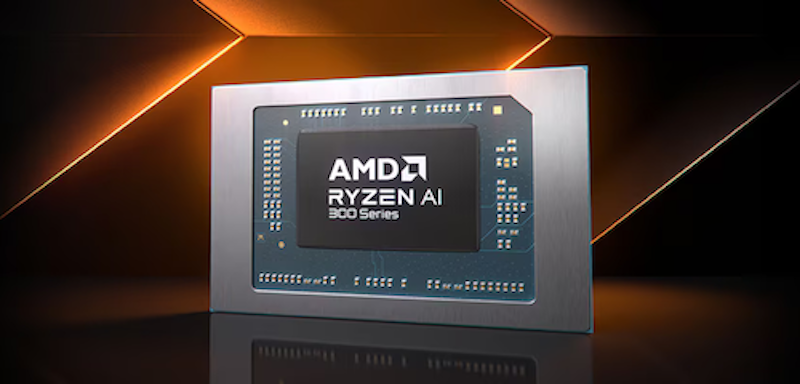
AMD's Ryzen AI 400-series desktop processors are repackaged laptop chips with up to 8 CPU cores and Radeon 860M GPUs, targeting business desktops rather than gaming due to high DDR5 memory costs.

Gadgets
fromArs Technica
1 month agoAMD will bring its "Ryzen AI" processors to standard desktop PCs for the first time
AMD's Ryzen AI 400-series desktop processors are repackaged laptop chips with up to 8 CPU cores and Radeon 860M GPUs, targeting business desktops rather than gaming due to high DDR5 memory costs.
fromTheregister
2 months agoUnpacking AMD's latest datacenter CPU and GPU announcements
AMD clarified those estimates are based on a comparison between an eight-GPU MI300X node and an MI500 rack system with an unspecified number of GPUs. The math works out to eight MI300Xs that are 1000x less powerful than X-number of MI500Xs. And since we know essentially nothing about the chip besides that it'll ship in 2027, pair TSMC's 2nm process tech with AMD's CDNA 6 compute architecture, and use HBM4e memory, we can't even begin to estimate what that 1000x claim actually means.
Artificial intelligence
fromGSMArena.com
2 months agoAMD announces the new Ryzen 7 9850X3D gaming CPU
The Ryzen 7 9850X3D features the same 8-core, 16-threads design as the 9800X3D, as well as the same 96MB L3 cache that makes these chips especially suited for gaming workloads. Thanks to the higher level of binning, the 9850X3D can now hit 5.6GHz clock speeds, up from the 9800X3D's 5.2GHz, at the same 120W TDP. This is an almost 8% increase in clock speed, and should make the 9850X3D the fastest gaming CPU in AMD's lineup, and consequently, on the market.
Gadgets
[ Load more ]