#us-china-tariffs
#us-china-tariffs
[ follow ]
#tariffs #trade-policy #supreme-court #china #iran #trump-administration #us-tariffs #ieepa #china-trade-surplus




Intellectual property law
fromIPWatchdog.com | Patents & Intellectual Property Law
18 hours agoOther Barks & Bites for Friday, April 3: Trump EO Sets 100% Tariffs on Patent Pharmaceutical Imports; Squires Vacates TikTok IPRs Under Tianma Microelectronics; and Kallay Voices DOJ's Preference for FRAND Obligations
President Trump signed an executive order imposing 100% tariffs on imported patented pharmaceuticals and ingredients from 17 drugmakers.



fromwww.businessinsider.com
2 hours agoYour produce bill is about to get pricey as the Iran war jacks up US food costs
"Fresh food and perishables are almost like the canary in the coal mine," when energy prices go up, according to Vidya Mani, an associate professor at the University of Virginia's Darden School of Business.
Agriculture
#iran
World news
fromLondon Business News | Londonlovesbusiness.com
2 days agoTrump pledges to blast Iran 'back to the Stone Ages' until Hormuz reopens - London Business News | Londonlovesbusiness.com
The U.S. President vows to act against Iran until the Strait of Hormuz is reopened, despite Iran's willingness to negotiate a ceasefire.
Washington Nationals
fromRadioFreeEurope/RadioLiberty
3 days agoUS Lifts Sanctions On Three Russian Vessels; Treasury Says No Broader Policy Shift
The U.S. has lifted sanctions on three Russian vessels, raising questions about potential shifts in U.S.-Russia policy amidst ongoing sanctions related to the Ukraine conflict.
Cars
fromSilicon Canals
5 days agoToyota faces aluminum supply risks as Strait of Hormuz tensions threaten the material EVs depend on - Silicon Canals
Electric vehicles are increasingly dependent on specialized aluminum from the Persian Gulf, highlighting vulnerabilities in supply chains amid regional instability.
fromwww.npr.org
6 days agoHe wants children's bikes made in the U.S.A. and tariffs against his rivals
Brian Riley's journey into the bike business began with a traumatic family experience when his grandfather had a serious accident while riding. This incident inspired him to create a safer braking system for bicycles, leading to the development of SureStop brakes, which allow for simultaneous braking of both tires with a single lever.
US news
#us-china-trade-relations

World news
fromwww.dw.com
2 weeks agoUS-China trade talks 'stable' despite mutual accusations
US and Chinese trade officials concluded a two-day Paris summit with stable discussions, agreeing on agricultural purchases and proposing new trade boards while disputes over forced labor investigations and Middle East tensions persist.
World news
fromwww.dw.com
2 weeks agoUS-China trade talks 'stable' despite mutual accusations
US and Chinese trade officials concluded a two-day Paris summit with stable discussions, agreeing on agricultural purchases and proposing new trade boards while disputes over forced labor investigations and Middle East tensions persist.
fromLondon Business News | Londonlovesbusiness.com
3 days agoMarkets remain nervous as Iran threatens to attack US blue-chip companies - London Business News | Londonlovesbusiness.com
Warning to the invading American ruling establishment and its affiliated spy companies. You ignored our repeated warnings about the necessity of halting terrorist operations, and today, in terrorist attacks carried out by you and your Israeli allies, a number of Iranian citizens were martyred.
World news


#trade-investigations
World politics
fromFortune
2 weeks agoAsia scrambles to respond to Trump's sweeping Section 301 trade probes, which could pave the way for new tariffs | Fortune
The U.S. launched two broad Section 301 trade investigations covering 60 countries, including major trading partners, citing excess manufacturing capacity and inadequate forced labor enforcement.
European startups
fromwww.dw.com
3 weeks agoUS trade probes could lead to new tariffs for EU, China
The US launched two trade investigations targeting excess industrial capacity and forced labor imports, potentially leading to new tariffs on major trading partners after the Supreme Court limited Trump's tariff authority.
Intellectual property law
fromArs Technica
4 weeks agoTech industry is in tariff hell, even if refunds are automated
Trade groups urge courts to establish a clear tariff refund process as 300,000 US businesses await $175 billion in unlawful tariff collections, with interest accruing at $23 million daily.
US Elections
fromFortune
2 weeks agoTrump Administration races to rebuild tariff revenue after Supreme Court setback | Fortune
The Trump administration is pursuing new tariff investigations under Section 301 of the Trade Act to replace $1.6 trillion in revenue lost after the Supreme Court struck down previous import taxes.
fromwww.dw.com
1 month agoChina overtakes US to become Germany's top trading partner
The sum of exports and imports between the two countries last year totalled 251.8 billion (roughly $296.6 billion), a 2.1% increase, according to Destatis. China was Germany's most important trading partner from 2016 all the way through to 2023. In 2024, the US briefly held the title. German Chancellor Friedrich Merz is also set to visit China next week, where he is set to discuss trade and other topics.
Miscellaneous
US Elections
fromwww.cbc.ca
3 weeks agoTrump administration launches process to replace tariffs struck down by U.S. Supreme Court | CBC News
Trump's administration launched a Section 301 trade investigation into excess industrial capacity among 16 trading partners to impose new tariffs after the Supreme Court invalidated previous tariff authority.
Canada news
fromwww.mercurynews.com
2 months agoCanada, breaking with US, agrees to cut tariff on Chinese EVs in return for lower tariffs on Canadian farm products
Canada agreed to remove its 100% tariff on Chinese electric vehicles in exchange for lower Chinese tariffs on Canadian farm exports, including canola seeds.



fromFortune
1 month agoTrump team's justification for tariffs was rebalancing the trade deficit-it's not going the way they wanted | Fortune
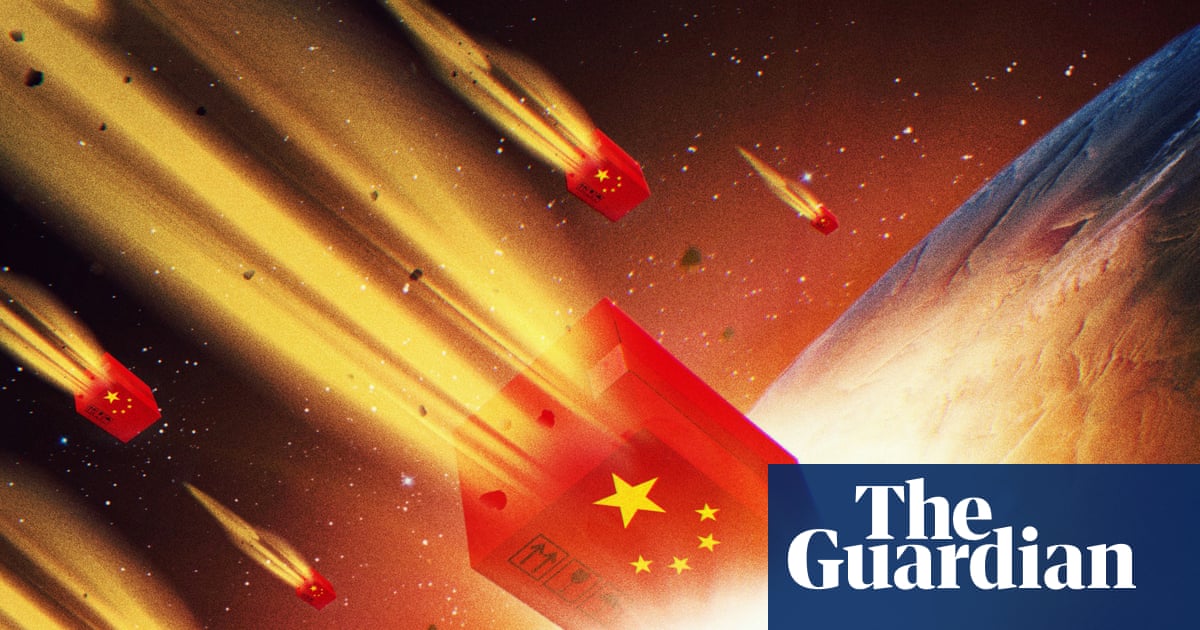
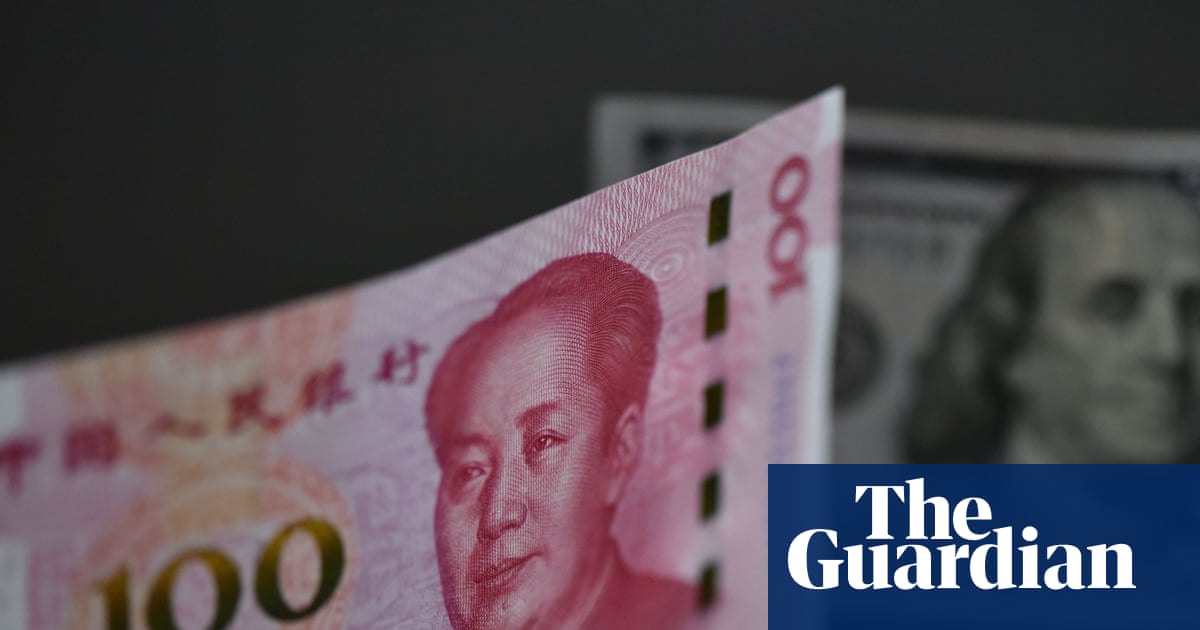
President Trump hates the United States' trade deficit. Indeed, he is so concerned about the "economic and national security risks" the deficit creates that he imposed a tariff regime that raised geopolitical tensions across the globe.The only problem is that his tariffs don't appear to be rebalancing the huge volume of goods and services the U.S. imports, versus its declining exports.
US politics


fromwww.dw.com
2 months agoChina logs record trade surplus in 2025 amid Trump tariffs
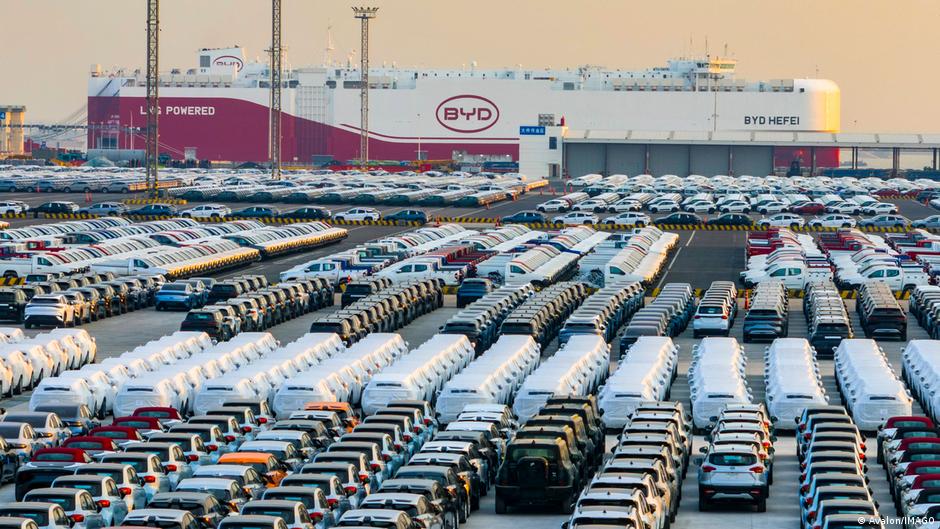
China recorded strong exports in 2025 with a record $1.2 trillion trade surplus, as producers shifted their focus to markets other than the US amid Trump's tariffs. Customs data showed that Beijing's global surplus rose 20% from the previous year, which saw a $992 billion surplus. Exports in 2025 stood at $3.7 trillion and imports at $2.58 trillion, government data showed on Wednesday. The record surplus was aided by a 6.6% bump in exports in the month of December when compared to December 2024,
World news
fromwww.dw.com
2 months agoUS, Taiwan reach trade deal with lower tariffs
The agreement will "drive a massive reshoring of America's semiconductor sector," the US Commerce Department said. In an interview to news channel CNBC, US Commerce Secretary Howard Lutnick said the objective was to bring 40% of Taiwan's entire chip supply chain and production to the United States. Had Taipei not agreed to manufacture in the US, the tariffs would likely be 100%, Lutnick added.
World news
fromwww.dw.com
2 months agoChina stays resilient in first year of Trump 2.0
[The Trump administration] may have entered the office thinking that they could use their economic leverage to push China in certain policy directions," said Amanda Hsiao, a China studies director at the Eurasia Group consultancy.
World news


[ Load more ]