#usaid-funding
#usaid-funding
[ follow ]
#africa #uk-aid-cuts #global-health #journalism #humanitarian-crisis #international-development #usaid
#uk-aid-cuts

fromwww.independent.co.uk
1 month agoUS news
I'm a Kenyan health volunteer the impacts of the UK decision to cut aid are growing
UK aid budget cuts to Kenya's health sector have reduced community health outreach services, forcing pregnant mothers and vulnerable populations to travel farther for care and postpone critical medical appointments.

fromwww.aljazeera.com
2 days agoMinerals for aid: Are new US health deals exploiting' African countries?
In late 2025, the United States shocked the world by suspending global health aid, leading experts to predict 700,000 additional deaths annually, primarily among children. This prompted the US to propose unusual bilateral health agreements with developing countries, which have drawn criticism for being exploitative.
Public health
fromFortune
2 days agoMacquarie bets impact investing can fill an Asian financial access gap left by microfinance and commercial banks | Fortune
"The specific barrier is capital," says Lisa George, global head of the Macquarie Group Foundation. "Without access to capital, it's very hard to get social mobility and educational mobility in life."
Fundraising
Left-wing politics
fromNonprofit Quarterly | Civic News. Empowering Nonprofits. Advancing Justice.
4 days agoHow to Undermine Authoritarian Control: On Empowering Parallel Institutions | Nonprofit Quarterly | Civic News. Empowering Nonprofits. Advancing Justice.
Civil society must demonstrate the necessity of democratic institutions and social services to protect them from dismantling efforts by ultra-elites.
fromwww.theguardian.com
1 week agoIt helped me feed my six children': how Africa's first water fund supports farmers to protect Kenya's biggest river
The avocado seedlings enabled him to grow his farm income to close to 2m Kenyan shillings, with each mature avocado tree yielding 70kg annually. Improving farming methods and conserving the watershed has helped me to feed and educate my six children.
Agriculture
fromwww.theguardian.com
2 weeks agoWomen and girls bearing brunt of water shortages globally, UN warns
Women are responsible for collecting water in more than 70% of rural households that do not have access to mains water across the developing world. Women and girls collectively spend 250m hours a day collecting water globally. The climate crisis is exacerbating the problem, according to a new report from the UN.
Women
fromHarvard Business Review
2 weeks agoHow To Deliver on ESG Initiatives in Emerging Market
Multinational firms are under rising pressure-from investors, regulators, and employees-to demonstrate positive societal impact in the places where they do business. With ESG-focused institutional investments projected to reach nearly $34 trillion this year and roughly 90% of large U.S. companies now disclosing ESG reports, these pressures are now a central part of corporate strategy.
Business
Non-profit organizations
fromwww.theguardian.com
2 weeks agoWe cannot replace USAID, but we can do big things': conservation plots a future without American money
Liberia's eco-guard program, funded by USAID, faces collapse after the Trump administration dismantled the agency, threatening forest conservation and wildlife protection in one of Africa's most biodiverse regions.
fromwww.aljazeera.com
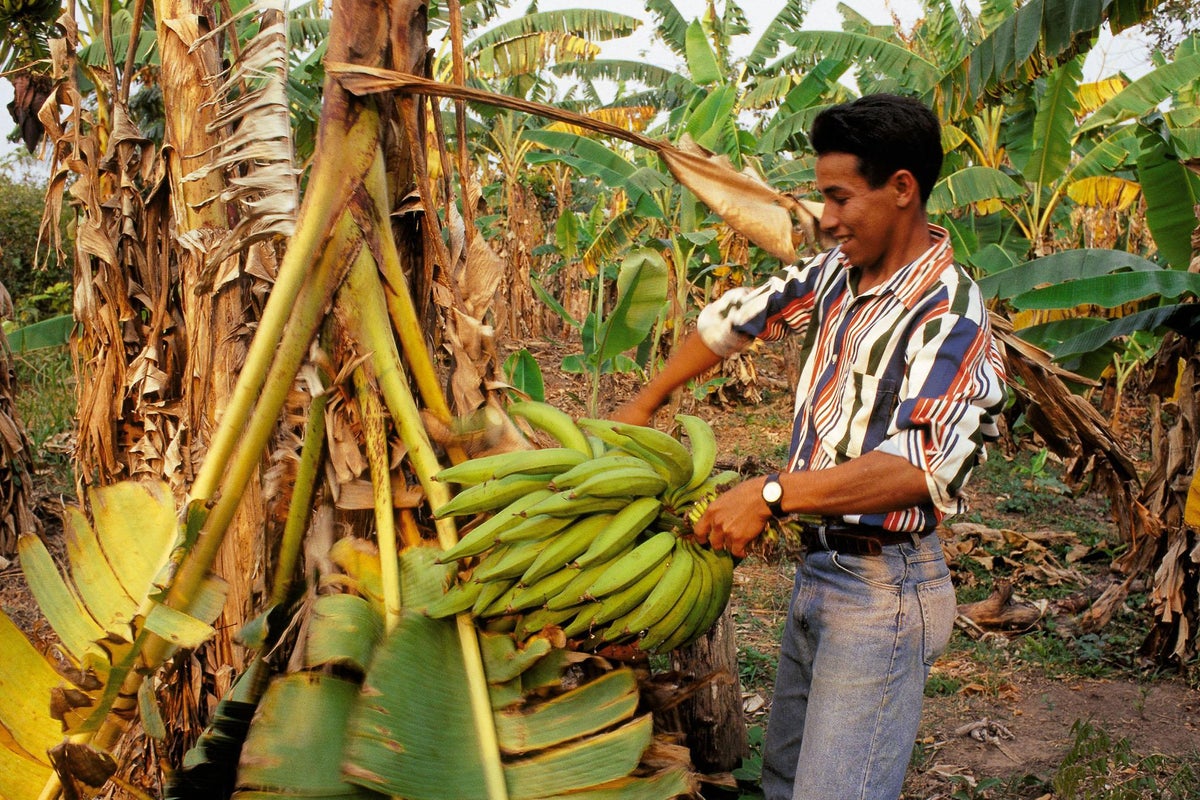
3 weeks agoPoor in an oil-rich country: Republic of Congo's youth hope for change
We are told that the country is rich in oil. But I don't see that wealth in my daily life. Look at Pointe-Noire, formerly nicknamed as Ponton la Belle [Beautiful Pointe-Noire]. Today, the city is unrecognisable. Around the Grand Marche, the main roads are potholed, and when it rains, the streets get flooded, making it almost impossible to drive.
France politics
#usaid-cuts
Non-profit organizations
fromJezebel
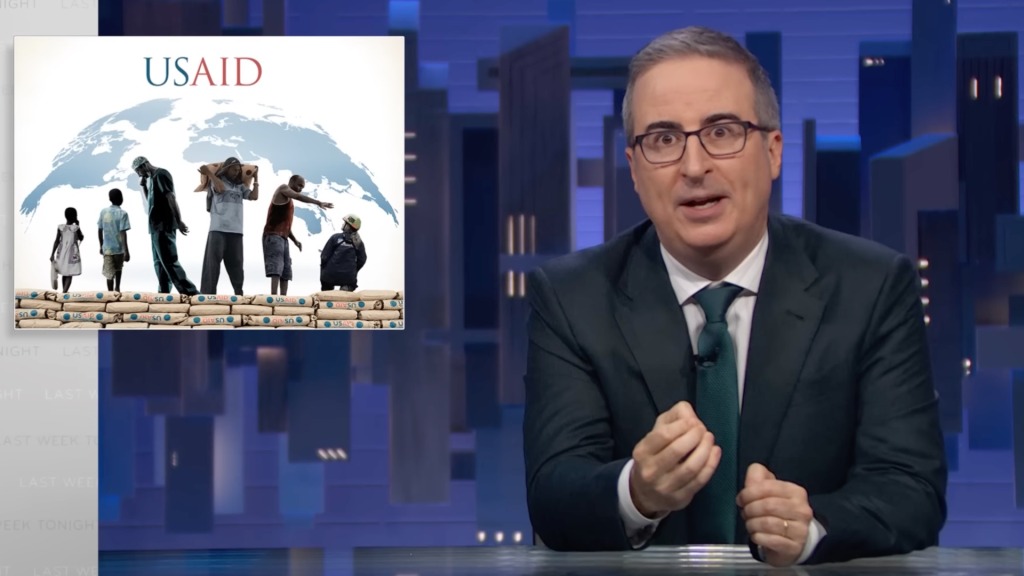
3 weeks agoJohn Oliver unpacks how cuts to USAID put everyone at risk
USAID cuts by the Trump administration and DOGE have caused immediate deaths globally, including HIV medication access loss, while destroying decades of expertise and institutional capacity needed for future aid delivery.
World politics
fromNature
3 weeks agoNational statistics are in crisis around the world - and the impacts will be severe
Official statistics face a credibility crisis due to falling survey response rates and political undermining, threatening the data infrastructure that governments, businesses, and organizations rely on for decision-making.
Fundraising
fromFortune
3 weeks agoAsia's family offices and corporations must step up to replace a cash-strapped UN and fill the SDG funding gap | Fortune
Asia's wealthy families and corporations must replace declining UN funding through coordinated philanthropic efforts and strategic partnerships to address regional development challenges.
US politics
fromwww.theguardian.com
1 month agoRising anger over lop-sided' and immoral' US health funding pacts with African countries
African countries are rejecting US bilateral health agreements as exploitative, with demands for biological resources, data sharing, and mineral access violating national sovereignty.
UK politics
fromwww.independent.co.uk
2 weeks agoPeople deserve the change to decide how UK aid is spent in a changing world
International aid cuts by multiple governments are causing severe hardship in vulnerable communities, prompting NGOs to reshape development approaches toward equal partnership models rather than top-down conditions.
Education
fromArchDaily
1 month agoWhen the School Becomes the City: Community-Centered Projects in the Global South
School architecture functions as a catalyst for social transformation by creating multifunctional civic spaces that integrate education, culture, sports, and community engagement within urban territories.
US politics
fromThe Verge
1 month agoThe Peace Corps is recruiting volunteers to sell AI to developing nations
Trump's 'Tech Corps' initiative repurposes the Peace Corps to recruit unpaid volunteers as salespeople promoting American AI companies, diverging from the agency's original mission of community development in underserved regions.
US politics
fromwww.theguardian.com
1 month agoUS accused of shameless exploitation' over proposed Zambian health aid deal
The US health financing agreement with Zambia contains exploitative terms including 10-year data access and mineral industry concessions, worse than deals with 16 other African countries.
fromwww.theguardian.com
1 month agoReaders reply: what would be the most socially useful way to spend a billion dollars?
I've always thought it would be good to acquire an old warehouse in every town throughout the land and convert it into low-rent community workspaces for artists, local charities and small businesses getting off the ground. A kind of people's WeWork. What would others do with a humungous, but not unlimited, pile of dosh to benefit society? Roland Freeman, West Yorkshire Send new questions to nq@theguardian.com.
Left-wing politics
Fundraising
fromwww.theguardian.com
2 months agoActionAid to rethink child sponsorship as part of plan to decolonise' its work
Child sponsorship models can be racialised and paternalistic; ActionAid UK will transform funding toward community-shaped, decolonised partnerships emphasizing solidarity and women's rights funding.
fromNature
1 month agoHow to rescue the aid industry: focus on conflict prevention, not just relief
In 2025, the administration of US President Donald Trump ordered the US Agency for International Development to be closed; this year, it withdrew the country from 66 international organizations. Other Western nations that are plagued with high levels of debt and pressure to prioritize domestic challenges have slashed their foreign aid, too. According to projections, official development assistance dropped by 9-17% in 2025, amounting to some US$55 billion.
World news
fromwww.aljazeera.com
1 month agoAs Sudanese city returns to life after two-year siege, drone threat lingers
Life is cautiously returning to the streets of Dilling, the second largest city in South Kordofan state, after the Sudanese army broke a suffocating siege that had isolated the area for more than two years. For months, the city had been encircled by the paramilitary Rapid Support Forces (RSF) and the Sudan People's Liberation Movement-North (SPLM-N), cutting off vital supply lines and trapping civilians in a severe humanitarian crisis.
World news

fromThe Atlantic
1 month agoThe Logical End Point of 'America First' Foreign Aid
Last summer, the Dalai Lama was having a party in Dharamshala for his 90th birthday, and Bethany Morrison, a newly appointed State Department official, was eager to meet with him there. Inconveniently, the United States had recently canceled about $12 million worth of annual foreign aid benefiting Tibetan-exile communities as part of the implosion of USAID. This, Morrison and other State officials thought, would not make a particularly good impression on His Holiness, according to a former State and a former USAID official.
US politics
fromFortune
2 months agoState Department suspends all U.S. aid to Somalia, citing 'zero-tolerance policy for waste, theft, and diversion of life-saving assistance' | Fortune
"The Trump Administration has a zero-tolerance policy for waste, theft, and diversion of life-saving assistance," the department said.
World news
fromwww.theguardian.com
1 month agoAid cuts could cause 22m avoidable deaths by 2030, study finds
Aid cuts could lead to more than 22 million avoidable deaths by 2030, including 5.4 million children under five, according to the most comprehensive modelling to date. In the past two decades there have been dramatic falls in the number of young children dying from infectious diseases, driven by aid directed to the developing world, researchers wrote in the Lancet Global Health. But that progress was at risk of reversal because of abrupt budget cuts by donor countries, including the US and the UK.
Public health
fromFortune
2 months agoHow to fight child hunger in a time of foreign aid cuts | Fortune
Already, 2026 is proving to be a challenging year for global hunger. Last year, the global development sector faced enormous upheavals, with the United States and other donor countries slashing aid budgets even as low-income countries struggled with debt burdens. Steep aid cuts have exacerbated existing food security crises-whether from Russia's war with Ukraine disrupting international food supplies or farmers losing tens of billions of dollars due to climate change.
World news
fromTruthout
1 month agoState Department Bars Citations of Human Rights Reports From NGOs Promoting DEI
Do not use any information from a non-government source (e.g., an NGO, even if it is or has been funded by the U.S. government, or media) that advances policies inconsistent with presidential executive orders, including promotion of 'racial justice,' 'diversity, equity, and inclusion,' and gender ideology, the cable says, per . The department deems such sources not to be credible, the cable goes on. The extraordinary instruction could be applied widely, as Politico points out. Many major human rights groups like Amnesty International tout their investment in initiatives like DEI, as do many large news outlets like The New York Times.
US politics
fromNature
1 month agoAfrican countries must take control of health policy
There is little doubt that this is what African countries need if they are serious about universal health coverage - ensuring that every member of their populations has access to this fundamental human right. But such an approach has never been implemented in Africa. Some of the reasons for this are outlined in a report on health financing by the Africa Centres for Disease Control and Prevention (Africa CDC), the continent's public-health agency based in Addis Ababa, published last week (see go.nature.com/3o9wxfc).
Public health
fromwww.aljazeera.com
2 months agoWill the Board of Peace live up to its name?
United States President Donald Trump launched the Board of Peace on Thursday, saying it's one of the most consequential bodies ever created in the history of the world. This is all part of the agreement to reach a ceasefire in Gaza after more than two years of Israel's genocidal war on Palestinians in the territory. Trump said the board will work in partnership with the United Nations to address crises far beyond Gaza.
US politics
[ Load more ]