Artificial intelligence
fromSecuritymagazine
9 hours agoPhysical Security in Global Arenas: How AI Improves Security at Scale
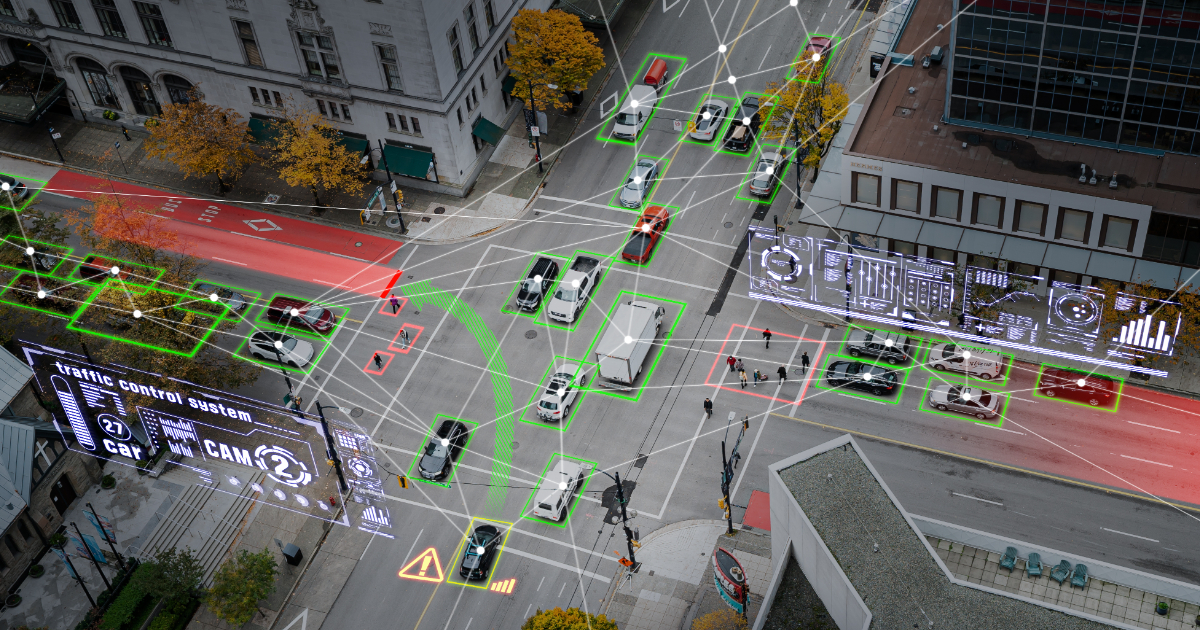
Agentic physical security uses AI to transform surveillance into proactive threat prevention at large events.
The new tracker features a simplified progress bar that shows just four stages of pizza creation. The new design was rolled out to all platforms, and there's also new Lock Screen widgets for iOS that bring the pizza chain's most famous tech feature to the Liquid Glass age.
The integration of cameras to enable various video-based services in commercial vehicle environments has become one of the strongest trends over recent years, in a fleet video telematics sector that is set to grow by 16% globally to 2020.
Kinetic's CEO Nikhil Naikal states, 'We have eyes, and when we need to correct vision, we go to an optometrist... In the same way, this is a digital prescription to correct the errors of the car's understanding of the world around it.'
On February 28, ships navigating the Strait of Hormuz started appearing on tracking screens in places they couldn't possibly be. They appeared to be sitting on airport runways, parked on Iranian land, and clustered at nuclear power plants. More than 1,100 commercial vessels had their navigation systems scrambled in a single day following US-Israeli airstrikes on Iran, bringing a waterway that handles a fifth of the world's oil exports to a halt.
Google is rolling out an Android update that includes the ability to share the location of your missing luggage with an airline. It's similar to the luggage-tracking feature Apple brought to the iPhone, allowing you to view the location of your Find Hub tag or accessory on a map, and provide your airline with a link to the information they need to track it down.
Signals from Global Navigation Satellite Systems are quite vulnerable. They are exceptionally weak, meaning that any radio noise near their frequency, accidental or malicious, can interfere with reception. I am confident that there are people in every government who understand the problem. The challenge is getting leadership to both understand and act to reduce the risk.
Compact, low-rise villages and cities made sense based on how far people could reasonably travel on foot or by horse. This was true all the way up until the late 1800s. Then came an invention that let people travel incredible distances in seconds, entirely reshaping cities with dense population clusters.
Long-range radio waves can pass through obstacles more easily, which makes them perfect for monitoring expansive factories or outdoor infrastructure. A recent report by Fabrity highlighted that these systems use very little power. This allows sensors to operate for 5 to 10 years on a single battery. Using such tech means you do not have to install expensive wiring across your entire site.
It has been almost three years since the Port of San Francisco awarded TMG Partners the redevelopment rights for San Francisco's Pier 38, with TMG winning over the Port with a pitch that emphasized the speed with which they planned to act and an "immediate revitalization" of the pier with a mix of public, office and maritime uses. But Pier 38, which has been shuttered since 2011, remains red tagged and inactive.
Urban logistics is entering a new era where practical technology drives meaningful results. Today, more than 55% of people live in cities, and urbanization is expected to rise to 68% by 2050, placing intense pressure on delivery networks to keep up with growing demand. U.S. e-commerce is projected to reach $1.1 trillion in sales by 2026, heightening expectations for faster and more reliable last-mile service.
"There's interest across the board," Michael Kemper, MTA chief security officer, told THE CITY. "It's not only coming from the MTA, but from the business world, the AI business world, in working with us."