Graphic design
fromApartment Therapy
1 hour agoThis Item Designers Always Buy First at the Flea Market Will Make Your Home Look More Expensive
Designers prioritize art when shopping at flea markets for unique and affordable pieces.
In 1971, Manolo Blahnik created shoes for the designer Ossie Clark's catwalk show in London. Relatively new to shoemaking, the Spanish designer forgot to put steel pins in the heels of the shoes, which meant that models wobbled, unbalanced, down the catwalk.
Clare Vivier and Heather Taylor have perfected the art of hosting by dividing responsibilities, with Vivier focusing on wine and Taylor on flowers and dessert. Their friendship of 20 years has led to a seamless collaboration that enhances the dinner party experience.
ROOM FOR DREAMS becomes a living manifesto for utopian optimism, creative courage, and the power of imagination through a multilayered approach where large scale installations, cinematic storytelling, live conversations, and ritual-driven encounters converge.
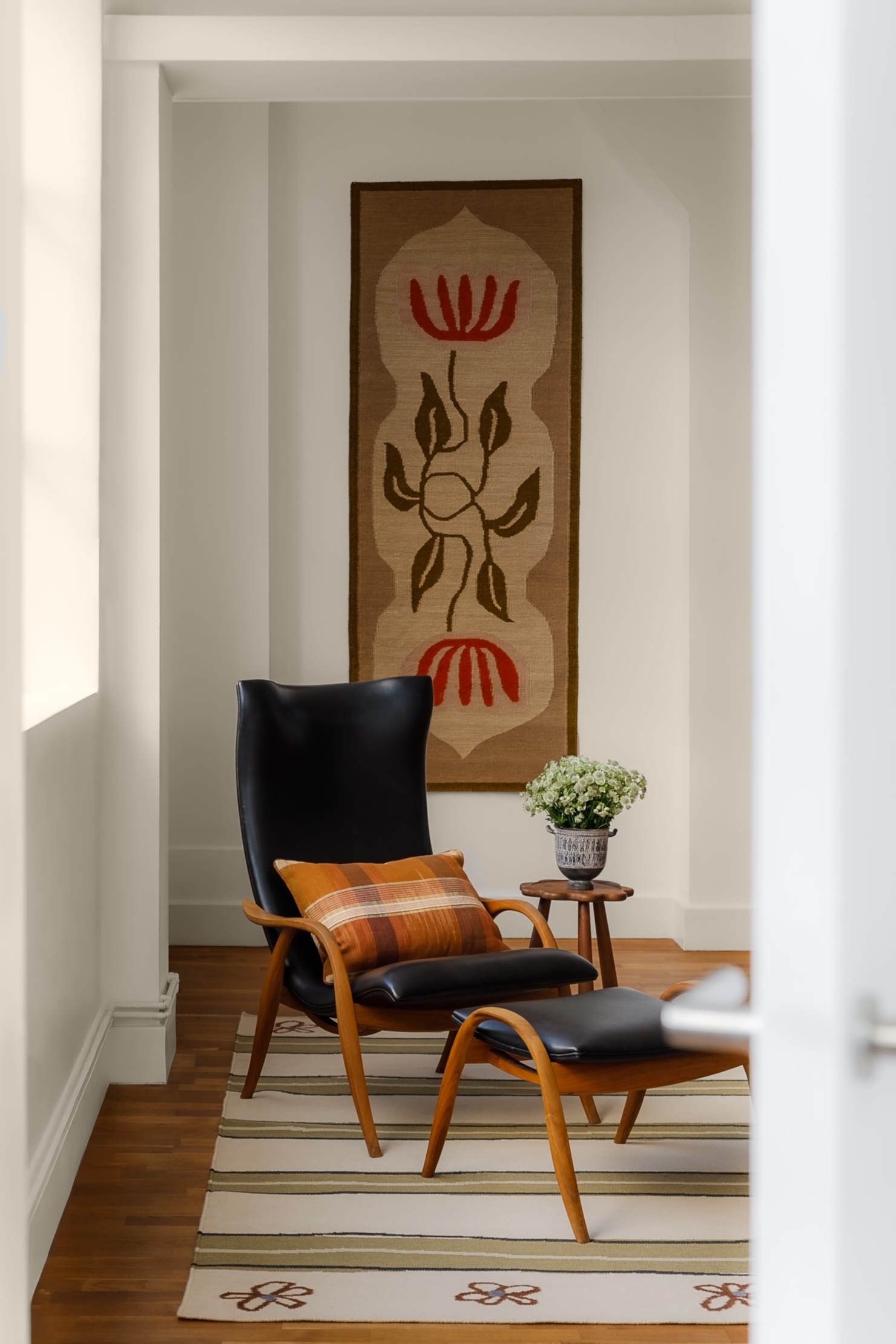
The collection spans several categories in the home, featuring smart storage pieces like the electric lime Lacquer Entryway Storage Pillar and a crescent moon-shaped chair and ottoman set.
Despite having to haul a dozen dumpster-loads of damaged goods out of the offices and the nearby Lab Store, to the tune of $1.5 million, Eileen said at the time, 'It was just stuff.' You can only imagine the emotions that might arise in a chief executive if they saw their sewage-soaked products floating by. Eileen and her staff did not linger there. They mobilized quickly-organizing carpools, impromptu meeting spaces, and arranging interest-free loans for staff needing cash during the crisis.
Our role is, first and foremost, to transmit our fascination with a craft and to ignite that same excitement in the designer. This is the foundation of our curatorial approach: creating the right encounter between a designer's universe and that of a workshop.
Each piece begins with used coffee pods collected from my community, materials that were never meant to last beyond a single use. Before any design work begins, the pods must be cleaned, sanitized, flattened, cut, folded, and shaped entirely by hand. They arrive dented, stained, and inconsistent, carrying the marks of their previous life. Learning how to work with those imperfections, rather than erasing them, was one of my first challenges.
She was an incredible actress, very powerful. She wasn't frightened. She always went for the risky things in life. This fearless pursuit of risk was manifested in the collection's striking pieces, where dresses featured rough, open seams that twisted and draped unpredictably, creating an intimate yet anarchic fall wardrobe.
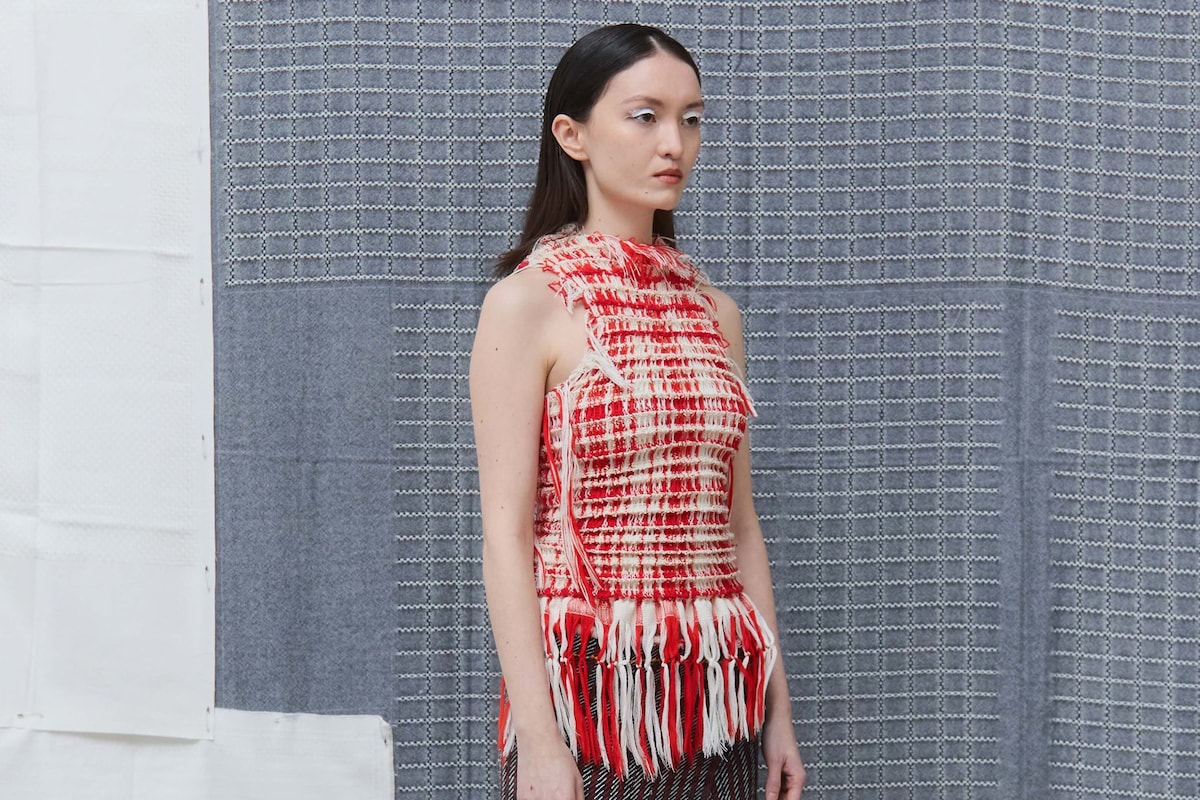
The collaboration brings together Designtex's deep expertise in high-performance contract textiles and nanimarquina's poetic command of craft, tactility, and the beauty of the imperfect. For both teams, the partnership emerged from an immediate sense of kinship - a shared language of material integrity, color sensitivity, and a respect for heritage techniques reinterpreted for contemporary spaces. "We did that by using performance yarns and intentionally embedding imperfections into the weaving process."
What if I took my design lens and built out my essentials capsule for the Everlane customer? I felt like that would be a really amazing opportunity for me to introduce myself as a designer to an audience outside of EB Denim.
This research-based design project by Laura Oliveira investigates discarded as a potential raw material for sustainable design applications. Human hair is produced continuously and in large quantities through everyday grooming practices, yet it is almost always treated as waste once separated from the body and typically disposed of in landfills. Despite its material properties, strength, flexibility, and durability as a keratin-based protein fiber, its remains uncommon within design and research contexts.
That past is his - it is the 20th anniversary of his label, and accordingly he decided to embrace, engage, even embed himself in his own history. Which, in and of itself, is a history of histories - Moralıoğlu's office is peppered with random 1930s portraits (the ones his husband, the architect Philip Joseph, won't let him keep in their Bloomsbury home) and old, time-warped issues of Vogue, as well as overflows of books on everything from Merce Cunningham to Alfred Hitchcock.
In the show, "dirty" extends to anything that breaks fashion's pact with propriety. Here are clothes caked in grime, blotted with makeup, stiffened by salt, pieced from trash, frayed, and faded. The garments span decades, from the 1980s through the mid-2000s, when the likes of Vivienne Westwood and Jean Paul Gaultier built their fame on defying convention, to today, when corporatization has made such daring increasingly rare. But forgoing practicality frees certain designers from the demands that the body be polite-and thereby policed.
The Rural Cut places vintage fashion in Lebanon's Bekaa Valley, among vineyards, open fields, and the animals that inhabit the land. As a Beirut-based stylist, I worked with a fully Lebanese team to create a shoot that feels authentic, where each garment and every frame reflects the textures, history, and rhythm of the rural landscape. Photography by Angele Basile / Instagram: @angelebasile Styling by Rinad Saad / Instagram: @rinaaaaddd
It's not a multi-thousand pound handbag from Hermes that best captures the new era of It bags, but a 149 tote from John Lewis. Launched this season, it's deeper (45cm) and taller (33cm) than your average handbag, and comes loaded with good intentions. It's able to hold your packed lunch, flask and book, as well at a push as your gym kit.
It captures seven different femininities during an all-day pool party, enjoying themselves while revealing their distinctive styles. Creative Direction, Production & Styling by Maria Gkin. Photography by Eliza Poultidou. The models are Vanessa Otilia, Cyka, Alvina Chamberland and Angelica Komninak. The concept examines the thin line between what is seen as acceptable and what has been labelled ugly or immoral, explored through each woman's personal story. Textures, colours, makeup and styling come together, breaking down stereotypes and highlighting fashion as a means of freedom