#victorian-family
#victorian-family
[ follow ]
#bridgerton #charles-dickens #film-adaptation #eloise-bridgerton #industrial-revolution #character-development
Books
fromenglish.elpais.com
4 days agoFrankenstein, Jane Eyre and Snow White with a gender-based perspective: The Madwoman in the Attic' and the beginning of feminist literary criticism
The new edition of 'La loca del desvan' revives feminist literary criticism, highlighting the relevance of women's voices in literature today.
Books
fromwww.theguardian.com
1 week agoA new Austen drama made me wonder: is the fate of bookish young women really so different today? | Rhiannon Lucy Cosslett
The Other Bennet Sister portrays the struggles of an intelligent, bookish girl finding her identity and self-acceptance beyond societal expectations.
fromHyperallergic
2 weeks agoGainsborough's Pride and Prejudice
Lorena Bradford started monthly tours in American Sign Language, established a program for individuals with memory loss, and brought in medical students to learn soft skills to apply in their caregiving. 'I was a sub-department of one,' she joked to writer Emma Cieslik, who spoke with Bradford over Zoom and at the NGA about her own circuitous path into the profession, and the future of the field of museum accessibility.
Arts
London food
fromwww.theguardian.com
3 weeks agoDining across the divide: If I were queen, I'd abolish the monarchy'
Two women with different political views—one conservative and patriotic about the monarchy, one green-leaning and republican—discover common ground and mutual respect despite their fundamental disagreements on tradition and governance.


Berlin
fromLondon Unattached
3 weeks agoBertrand's Townhouse - boutique hotel in Bloomsbury - review
Bertrand's Townhouse, a new 43-room 4-star boutique hotel in Bloomsbury, opened in December 2025 near the British Museum, preserving Grade II listed Georgian features while honoring the area's intellectual heritage.
Film
fromInsideHook
3 weeks agoThe Sensational 19th-Century Adaptation That's Not "Wuthering Heights"
The Count of Monte Cristo PBS adaptation is an exceptional book-to-screen adaptation featuring an Oscar-winning director and acclaimed actors bringing Alexandre Dumas's 1840s classic to thrilling life.
Books
fromwww.theguardian.com
2 weeks agoBetter than Wuthering Heights? The Brontes' novels ranked!
Charlotte Brontë's debut novel The Professor was rejected nine times before publication, while her second novel Jane Eyre achieved immediate success, and Anne Brontë's Agnes Grey drew authentically from her governess experience.
fromLos Angeles Times
10 years ago'Downton Abbey' dowager's house and acreage sells in Surrey, England
Twelve weeks after coming on the market, the Surrey house used to portray the home of actress Maggie Smith's character, Lady Violet Crawley, found a buyer and recently closed along with several adjacent properties for nearly $9 million. Known as Dower House on the TV series, it was built around 1686.
Boston real estate
Careers
fromBusiness Insider
1 month agoRat catchers, powder monkeys, and resurrectionists: 20 jobs that no longer exist
Historical labor markets have repeatedly undergone massive transformations, with entire occupations becoming obsolete due to technological advancement, just as AI threatens modern jobs today.
Arts
fromArtnet News
1 month agoThe Captivating Saga Behind the Only Known Portrait of the Bronte Sisters
The Brontë sisters' literary legacy continues captivating audiences nearly two centuries after their deaths, experiencing renewed popularity through contemporary adaptations and international exhibitions.
Books
fromwww.theguardian.com
4 weeks agoSaba Sams: I've no interest in reading Wuthering Heights again'
Jacqueline Wilson's unflinching approach to children's literature, alongside works by authors like Gwendoline Riley and Clarice Lispector, demonstrates that literary courage and emotional complexity resonate more powerfully than conventional safety or virtuousness.
fromBustle
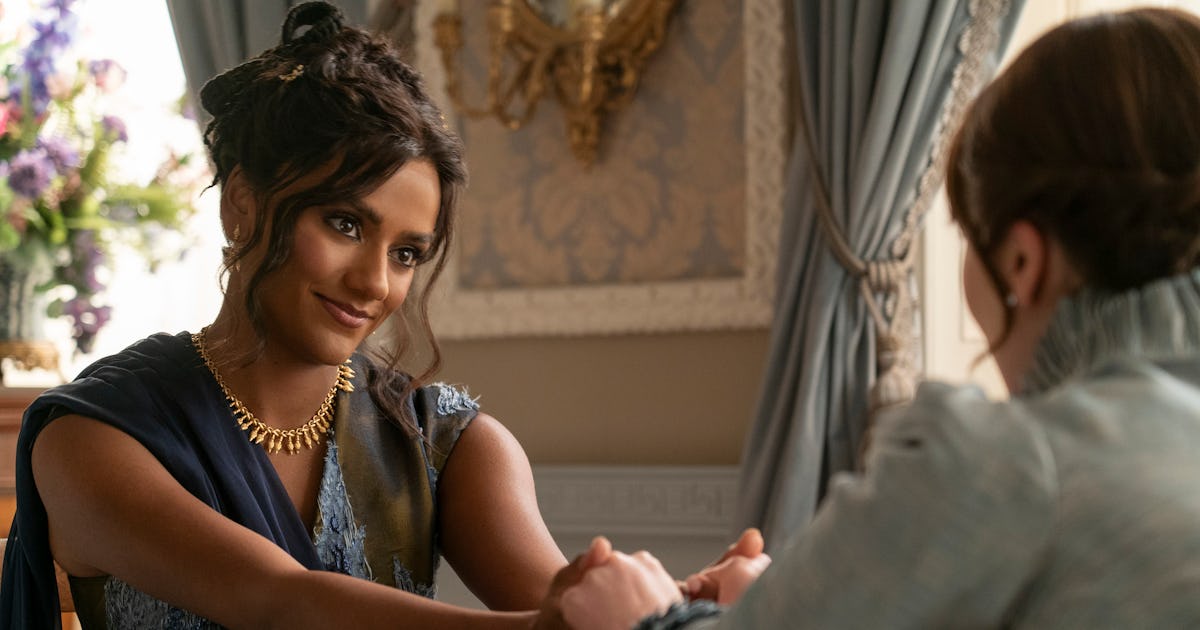
1 month agoExclusive: Eloise's 'Bridgerton' Season Will Be "Very Different" In A Major Way
Some things are out of our control. But what is in our control, is our ability to support one another. And ensure that we do not allow fear to keep us from experiencing something that could be truly special.
Television
fromVulture
1 month agoJack Lowden, Why Are You Darcy?
Mr. Darcy is its stern romantic lead. He has a massive income from his estate - 10,000 pounds a year - and, according to the novel's witty protagonist, Elizabeth Bennet, just as large of a stick up his ass. Jane Austen was not one to go for lengthy physical descriptions of things, but we do know that when he enters a room, he draws people's attention with a "fine, tall person, handsome features," and a "noble mien."
Film
Humor
fromwww.theguardian.com
1 month agoHarriet Kemsley looks back: My parents say I was a very well-behaved child. Sadly this has been in steady decline over the years'
Harriet Kemsley, born 1987 in Canterbury, is a comedian and podcaster who began standup in 2011, appears on television, hosts a podcast, and tours.
fromThe New Yorker
1 month agoThe Timeless Provocations of "Wuthering Heights" (the Novel)
A few days after Emerald Fennell's film adaptation of "Wuthering Heights" came out, a friend sent me an Onion headline about a bookseller frantically pulling classics off the shelf before Fennell enters the store. No beloved novel could be safe from the dangers of the director introducing anachronistic costumes, original songs by Charli XCX, selectively color-blind casting, and explicit B.D.S.M. scenes for its Byronic hero.
Film
Books
fromwww.theguardian.com
1 month agoBecoming George by Fiona Sampson review the remarkable story of a cross-dressing 19th century novelist
George Sand's life exemplifies self-invention through her transgressive choices, including wearing trousers and pursuing unconventional relationships while establishing herself as a major 19th-century writer.
LGBT
fromPinkNews | Latest lesbian, gay, bi and trans news | LGBTQ+ news
2 months agoBlackmail, murder, love letters and 'queens': Secret queer history of UK palaces
Queer royal histories, including James I's intimate relationships and court masquerades at Hampton Court, deserve equal remembrance alongside famed monarchs like Henry VIII.
fromWorld History Encyclopedia
2 months agoVictorian style secrets: the silhouettes that shaped a whole society
Striking silhouettes, sumptuous fabrics, bright colours, frills galore, and all manner of ornate accessories define the clothing of the Victorian period, that is, during the reign of Queen Victoria, which spanned seven decades of the 19th century. This was a time of dynamic change as the Industrial Revolution resulted in an expansion of the middle classes. Victorians were persuaded to part with their growing disposable income by mass advertising that ranged from gorgeous colour supplements in popular magazines to striking posters in railway stations.
History
Parenting
fromSilicon Canals
1 month ago8 things boomer mothers did that seemed ordinary then but would be considered remarkable parenting today - Silicon Canals
Boomer mothers practiced instinctive, low-tech parenting—letting kids be bored, play outdoors, and share family meals—that modern parents now often praise.

fromwww.bbc.com
2 months agoHow did mass teetotalism change Victorian London?
With alcohol abuse being blamed for widespread poverty and social issues at the start of the 1800s, reformers began turning against booze. Temperance societies appeared in the 1830s, formed by people who committed themselves to a life of abstinence, while also helping those affected by drink and advocating for restrictions on alcohol. Over the century millions would sign the same pledge as part of attempts at self-improvement, turning the Temperance movement into one of England's largest social campaigns of the time.
History


fromwww.thehistoryblog.com
1 month agoVictorian school slates, marbles found in London
An excavation in central London has uncovered the remains of a boys school complete with artifacts from the students' schoolwork and their playtime. The objects include a slate tablet used as an erasable notebook to practice handwriting, a slate pencil and several ceramic alleys marbles made of decorated white ceramic from the Victorian era. Artifacts related to children's lives are less frequently found than ones relating to adults, so these objects give us a special glimpse into the lives of schoolboys.
History


fromwww.bbc.com
1 month agoThe Victorian aristocrat who became first British Muslim lord
It's nearly 200 years since the birth of a British aristocrat who became the first Muslim member of the House of Lords. But few have heard of Lord Henry Stanley, who "defied convention and his family's wishes" when he converted to Islam in 1859, according to historian Jamie Gilham. Little remains of Stanley's letters and diaries "which is really frustrating but adds to the idea that he was a private man," he said.
History


[ Load more ]