#vinyl-windows
#vinyl-windows
[ follow ]


Boston real estate
fromRedfin | Real Estate Tips for Home Buying, Selling & More
1 week agoHow Much Does it Cost to Build a House in 2026?
Building a house involves various costs beyond construction, including land, site preparation, utilities, and permits, which can significantly increase total expenses.
OMG science
fromYanko Design - Modern Industrial Design News
1 week agoResearchers turned Sawdust Waste and Watermelon Seeds into Recyclable Fire-resistant Panels - Yanko Design
Sawdust can be transformed into a strong, fire-retardant composite material using struvite and an enzyme from watermelon seeds.
fromLondon Business News | Londonlovesbusiness.com
1 month agoHow to maintain efficient heat recovery ventilation in modern commercial spaces - London Business News | Londonlovesbusiness.com
Checking your equipment once a month helps catch small issues before they turn into expensive repairs. A routine keeps everything running smoothly and extends the life of the hardware. Managers should create a simple checklist for their maintenance staff to follow.
Business



fromArchDaily
3 weeks agoHow Architecture Is Learning to Generate Its Own Energy
Photovoltaic (PV) solar energy represents a modular technology that can be manufactured in large-scale facilities, generating economies of scale, while also being adaptable to small-scale applications. From residential rooftop systems to large-scale power generation installations, photovoltaic solar energy has established itself as a cost-effective option for electricity production in many countries around the world.
Environment
LA real estate
fromtherealdeal.com
1 month agoArdie Tavangarian eyes disaster-prone markets for his fire-resistant homes
Arya Group founder builds fire-resistant luxury home in Pacific Palisades using steel framing, specialized materials, and AI-powered fire detection systems as proof of concept for post-wildfire reconstruction.
fromArchDaily
1 week agoDesigning for Obsolescence in an Age of Perpetual Upgrades
In the nineteenth century, entire railway networks became obsolete almost overnight, not due to physical deterioration, but because of changes in the technical standards that supported them. The expansion of railroads across Europe and North America adopted different track gauges, and as a dominant standard gradually emerged, these infrastructures became incompatible with one another.
Renovation
fromArchDaily
1 month agoThermal Memory: How Climate Shapes Architectural Heritage
Heritage is usually catalogued by what can be drawn, not by what changed temperature. In heat, buildings are learned first through skin, only later through sight. Generations learn, through their bodies, what works. Shade reduces glare and radiant heat. Air movement shifts perception by several degrees. Thick walls slow temperature swings.
Miscellaneous
fromLos Angeles Times
35 years agoStress-Skin Paneling Makes Airtight House
Stress-skin panel construction is probably the most energy-efficient and cost-effective building method available today. With super-high insulation levels and airtightness, a stress-skin panel house should have extremely low heating and cooling costs. A reduction of 50% on utility bills as compared to a typically constructed house is reasonable.
Remodel
#building-integrated-photovoltaics


Renovation
fromYanko Design - Modern Industrial Design News
4 weeks ago5 Solar Panel Designs So Beautiful You'd Never Know They're Generating Power - Yanko Design
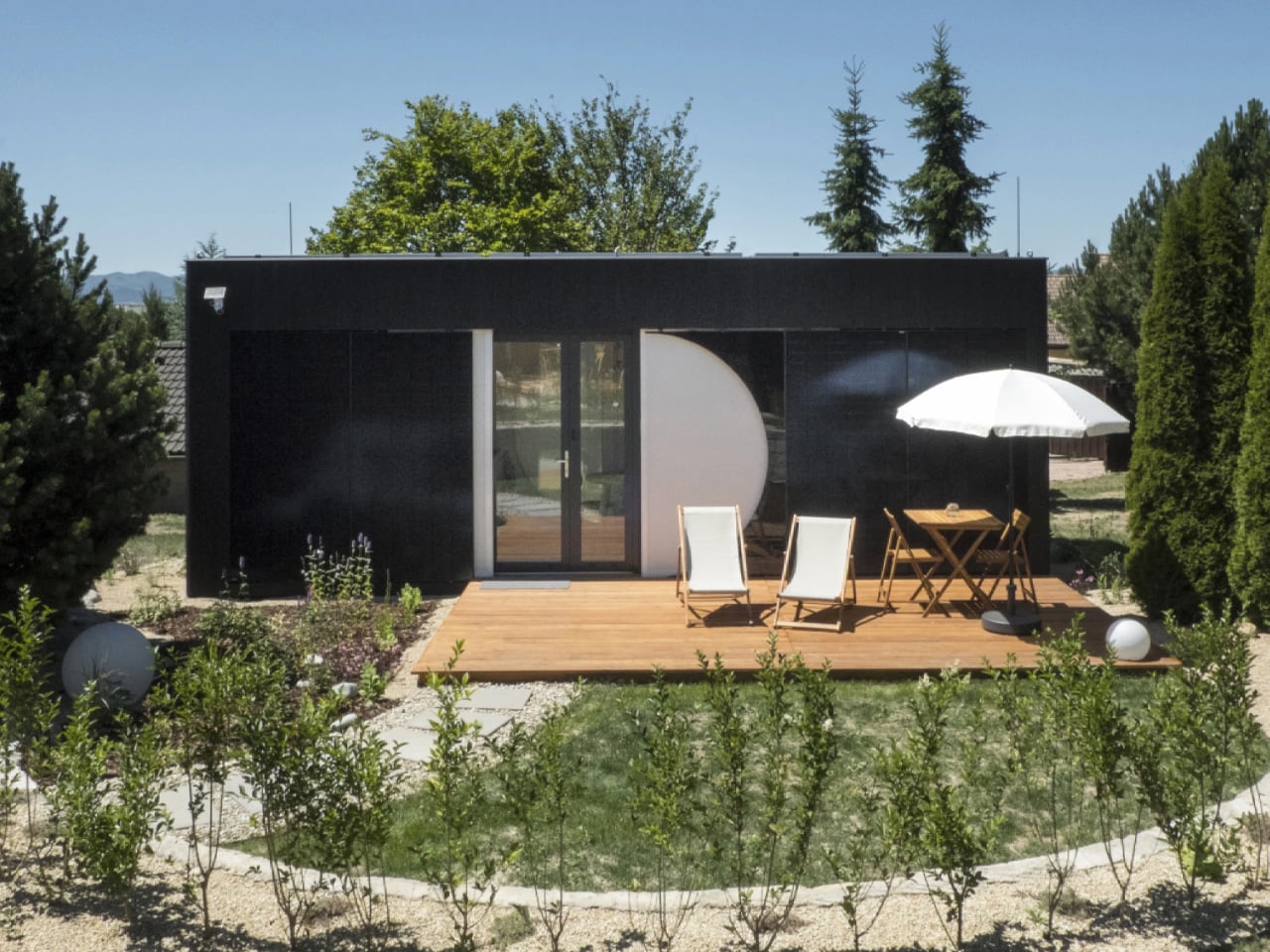
Buildings are evolving from energy-efficient structures into active power generators through integrated photovoltaic technology and aesthetic solar solutions.
fromRemodelista
4 weeks agoCurrent Obsessions: Fresh Air - Remodelista
Ooh, a modernist landmark house and studio for sale in Mexico City, mosaic sun included. Added to our must-visit wish list: Two Story: A Danish-Designed Cafe, Shop, and Gallery in an Amsterdam Canal House. Spring cleaning: Yamazaki is offering 15 percent off pieces to get the house in order, now through March 31.
Remodel
fromABC7 Los Angeles
1 month ago11 must-haves to turn spring 2026 into your best season ever
Add a cheerful touch to your home with this Faux Peony Bundle from Pottery Barn. You don't need gardening skills, just set it out and enjoy. Each bundle has five blooms in bright spring colors, perfect for indoor spaces. Farmers' Market Herb Live Wreath & Garland Add a pop of color and flair to your front door a fresh look with this decorative wreath from Williams Sonoma.
E-Commerce
fromArchDaily
3 weeks agoBuilding with Earth: Traditional Knowledge in Contemporary Architecture
Rather than representing a simple return to the past, this renewed interest reflects a broader reconsideration of how architecture engages with materials, local resources, and environmental conditions.
Renovation
Remodel
fromLos Angeles Times
40 years agoHome's Outside Wall Material Has Little Effect on Moisture
Exterior wall covering choice should prioritize aesthetics over moisture concerns; proper vapor barriers and ventilation are essential for preventing moisture problems regardless of siding or stucco selection.
Environment
fromArchDaily
1 month agoCan Shading Become Energy? From Passive Facades to Productive Envelopes
Facades can generate significant renewable energy by integrating colored photovoltaic shutters that combine shading, daylight control, and electricity production without adding envelope complexity.
fromwww.archdaily.com
3 weeks agoWood House / JAK Architecture
What began as a modest brief for a young and growing family soon evolved into a considered renovation that reimagines an existing Barwon Heads home. The original house had endured several unsympathetic alterations over the years, leaving it disjointed and built to a poor standard.
Renovation
fromArchDaily
4 weeks agoProject E Apartment / longwave studio
By utilizing this dual-entry condition, the design reorganizes the vertical circulation, placing the primary entrance on the upper level and redefining the ritual of returning home while transforming storage into an architectural façade.
Renovation
fromFast Company
1 month agoThis paint acts like a dehumidifier for your walls
It looks like ordinary paint, but a new coating called Lilypad Paint has a hidden ability to pull moisture out of the air. It works like a dehumidifier, without the energy use. If it's on the wall in your bathroom, it can suck water vapor out of the air after you've taken a shower. The paint holds the humidity in nano-size pores, and then slowly releases it as humidity levels fall in the room.
Science
Startup companies
fromTechCrunch
2 months agoHow Quilt solved the heat pump's biggest challenge | TechCrunch
Quilt's three-zone heat pump uses sensor-rich, data-driven control to maintain efficiency under demanding conditions while simplifying multi-zone installations and enabling over-the-air performance upgrades.


Renovation
fromArchDaily
1 month agoUnderstanding U-Value: The Foundation of Energy-Efficient Envelopes
Building envelope thermal transmittance (U-value) is the fundamental metric determining energy efficiency, calculated by dividing heat flow by surface area and temperature difference to assess insulation performance.
fromwww.housingwire.com
1 month agoThis paint may alter how builders fight mold and moisture damage
This is the one and only paint that's on the market that's designed to actually absorb moisture. If you take Lilypad paint and apply it to the wall, the film will actually absorb excess humidity as it starts filling the room, and then, when it dries, it resets itself by slowly letting it back into the space. So it's regulating humidity, Dr. Stein said.
Remodel
fromArchDaily
2 months agoSelf-Sufficient Facades: Where Solar Protection Meets Renewable Energy
Spaces of light and darkness are conceived to enhance circulation and spatial directionality, as well as to highlight the colors, textures, and forms of specific architectural elements. That said, the impact of natural light on building facades reveals the need to develop strategies that support energy savings, improve the thermal and visual comfort of interior spaces, and promote the reduction of carbon emissions.
Design
fromLos Angeles Times
7 years agoDon't toss those soulful old windows. Fix them.
As the weights touch, they get a bit musical and there's a kind of harmonic ring in your wall. It's like the house is alive. But with soulful age come other sounds: rattles, wind whistling through gaps and a homeowner's curses because the blasted contraptions won't open and close properly.
Renovation
fromArchDaily
1 month agoWhen Light Meets Energy in Glass Ceilings
From the large industrial roofs and galleries of the 19th century to the contemporary atriums of museums and public buildings, glass has been a recurring material in shaping large and monumental interior spaces. More than a technological or engineering solution, these horizontal glazed planes introduce a distinct luminous quality: light that comes from above. Unlike lateral daylight entering through façades, zenithal light is more evenly distributed, reduces harsh shadows, and lends spaces a sense of continuity and openness that is difficult to achieve otherwise.
Design
Renovation
fromLos Angeles Times
1 month agoCan fire-resistant homes be sexy? 'You be the judge,' says this Palisades architect
A Pacific Palisades architect designed a fire-resistant home with steel framing, foot-thick exterior walls, automated shutters, and advanced water and foam suppression systems after losing his previous home to wildfire.
fromBoston.com
1 month agoShould you be worried about your roof this winter?
In fact, it acts as an insulator that protects the shingles. And, even when it's deep, the snow's weight is less than what the roof is designed to bear; the average roof is built to carry loads of 65 pounds per square foot. Even flat roofs, which seem more vulnerable to snow loads than pitched ones, are pretty tough. In fact, residential flat roofing is stronger than commercial roofs.
Real estate
Real estate
fromRedfin | Real Estate Tips for Home Buying, Selling & More
2 months agoPlanning Solar for New Home Construction: How to Optimize Benefits
Adding solar panels to a new home provides environmental benefits, long-term cost savings, and increased resale value, making careful planning essential.
Environment
fromSocial Media Explorer
2 months agoCommercial Window Tinting Becomes a Practical Upgrade for New York City Commercial Properties - Social Media Explorer
Commercial window tinting improves interior comfort, reduces solar heat gain and glare, and supports energy efficiency in New York City commercial buildings without altering exteriors.
Remodel
fromdesignboom | architecture & design magazine
1 month agotranslucent glass shingles wrap timber-framed museum intervention by wulf architekten
A contemporary timber museum completes a medieval Reutlingen street with a glowing cast-glass shingle facade, revealing historic timber frames as exhibited artifacts.
fromInsideHook
1 month agoCould Recycled Plastic Lead to More Housing?
When you think about building a house, what materials come to mind? Brick, wood and metal all come to mind; there are also some very distinctive glass houses out there. (Even if their occupants should refrain from throwing stones - though honestly, that's a good tip for indoor living in general.) A group of MIT researchers have come up with a very different way of making buildings, and it's one that also addresses an ongoing waste issue."We've estimated that the world needs about 1 billion new homes by 2050. If we try to make that many homes using wood, we would need to clear-cut the equivalent of the Amazon rainforest three times over," explained AJ Perez, who conducts his research in the MIT Office of Innovation. The title of a paper written by Perez and his colleagues - "Design, Manufacture and Testing of Structural Trusses Using Additively Manufactured Polymer Composites" - gives a sense of the solution that they have in mind.
Environment
fromArchitectural Digest
1 month agoAD PRO LIVE: The Longevity Home | Register Now
The home isn't just where we live anymore. It's a mechanism for living longer. In this AD PRO LIVE report, we'll examine how residential design has become the next frontier to a healthier, longer life. Delve into the industry's expanding catalog of non-toxic materials, the architectural elements shaping conscientious builds, and the luxury amenities promoting physical and mental well-being in every room of the house.
Design
Remodel
fromRedfin | Real Estate Tips for Home Buying, Selling & More
1 month ago5 Easy Home Updates That Instantly Improve How Your Home Looks and Feels
Small, affordable updates—window treatments, improved lighting, fresh paint, modern hardware, and textiles—can transform a home's look and feel without major renovations.
Design
fromdesignboom | architecture & design magazine
2 months agobest pivot door contest 2026 highlights projects that push architectural thresholds
Pivot doors combine structural performance and spatial expression, transforming access points into defining architectural elements across residential, cultural, and specialized environments.
fromArchDaily
2 months agoCircular Composites: Designing for a Sustainable Future
One of the earliest large-scale examples of composite materials can be found in the Great Wall of China, where stone, clay bricks, and organic fibers such as reeds and willow branches were blended to create a resilient and lasting structure. These early techniques reveal a timeless intuition: distinct materials, when combined thoughtfully, produce properties unattainable by any single element.
Environment
Design
fromwww.archdaily.com
2 months agoFrom Material Intelligence to Circularity: Lessons from Architecture in 2025
Architects prioritize material innovation in 2025—agricultural waste, recycled plastics, and living materials—balancing tradition, circularity, and material intelligence for resilient, low-carbon construction.
fromTasting Table
2 months agoThe Eco-Friendly Countertop Material That's Surprisingly Durable - Tasting Table
It's likely that you've encountered recycled glass countertops without realizing it. They're far from the hippie-style broken-glass mosaic art of yesteryear, instead presenting as sleek, highly polished, professional slabs with intriguing bits of confetti-style color trapped inside. That's the recovered glass bits set into a binding material such as resin, cement, or concrete, and then smoothly polished so that the composite surface feels like stone.
Remodel
fromSocial Media Explorer
2 months agoMetal VS Shingle Roofing - Social Media Explorer
When it comes to protecting your home, the roof is your first line of defense against the elements. For decades, asphalt shingles have been the go-to choice for homeowners due to their low upfront cost and ease of installation. However, as building technology has advanced and extreme weather events become more frequent, many are starting to look at their roof as a long-term investment rather than a recurring expense.
Remodel
fromDesign Milk
2 months agoResidence Designed to Weather Along British Columbia Coastline
Seven years of development allowed Openspace Architecture and landscape designer Paul Sangha Creative to thread a 10,000-square-foot single-story home through mature forest without sacrificing the canopy that defines the site's character - a constraint that ultimately generated the building's gently curving plan and its sequence of connected spaces opening to Saanich Inlet views. The design draws from mid-century West Coast Modernism's timber traditions while incorporating Japanese structural principles that extend beyond aesthetic reference.
Design
fromBusiness Matters
2 months agoWhy Thermally Modified Timber Has Moved Into the Construction Mainstream
Thermal modification is not a new invention, but its relevance has increased as expectations around performance, sustainability, and predictability have tightened. Developers, architects, and contractors are no longer just asking whether timber looks good or performs well initially. They want to know how it behaves after ten, twenty, or thirty years, and how much risk it introduces into a project once the scaffolding is gone.
Remodel
fromArchDaily
2 months agoFragile by Design: How Can Buildings Be Designed to Outlast Their First Purpose?
Having explored adaptability at the city scale, we are now zooming in on the building itself-and, crucially, on practice. How can architects, developers, and consultants embed adaptability as a measurable, mainstream outcome? This question will be on the agenda at the Adaptable Building Conference (ABC) on January 22 at the Nieuwe Instituut in Rotterdam, where architects, engineers, policymakers, and industry leaders will explore the potential of adaptable buildings-and how to deliver them at scale.
Remodel
[ Load more ]