#vulnerable-nations
#vulnerable-nations
[ follow ]
#humanitarian-crisis #humanitarian-aid #displacement #uk-aid-cuts #sudan #renewable-energy #africa #climate-change
#uk-aid-cuts

fromwww.independent.co.uk
1 month agoUS news
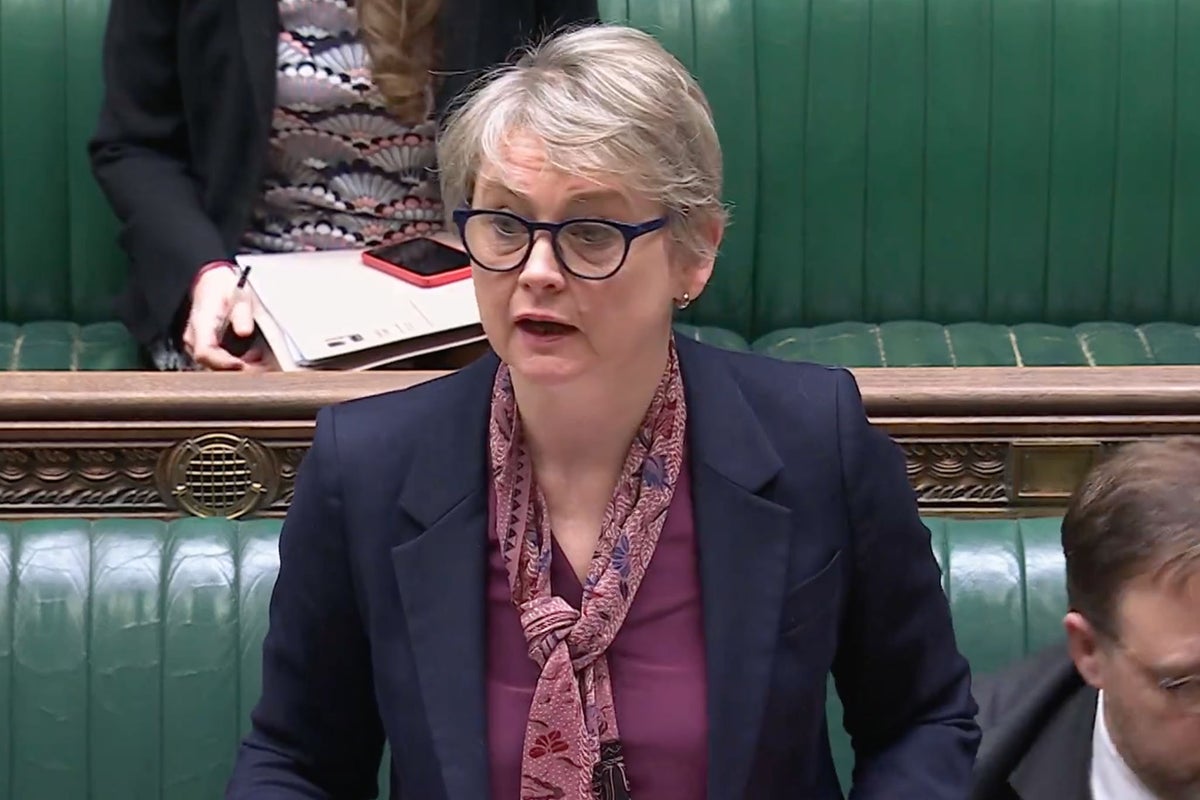
I'm a Kenyan health volunteer the impacts of the UK decision to cut aid are growing
UK aid budget cuts to Kenya's health sector have reduced community health outreach services, forcing pregnant mothers and vulnerable populations to travel farther for care and postpone critical medical appointments.

fromwww.aljazeera.com
3 days agoMinerals for aid: Are new US health deals exploiting' African countries?
In late 2025, the United States shocked the world by suspending global health aid, leading experts to predict 700,000 additional deaths annually, primarily among children. This prompted the US to propose unusual bilateral health agreements with developing countries, which have drawn criticism for being exploitative.
Public health
fromThe Cipher Brief
2 days agoTaking a Stand on Adversaries' Influence in the Western Hemisphere
The January 3rd Operation Absolute Resolve ousted Venezuelan Dictator Nicholas Maduro, marking a significant shift in US policy towards countering adversarial influence in the western hemisphere.
World politics





fromwww.theguardian.com
2 weeks agoWomen and girls bearing brunt of water shortages globally, UN warns
Women are responsible for collecting water in more than 70% of rural households that do not have access to mains water across the developing world. Women and girls collectively spend 250m hours a day collecting water globally. The climate crisis is exacerbating the problem, according to a new report from the UN.
Women
Environment
fromState of the Planet
2 weeks agoClimate Finance Has Failed Africa Twice Over. Here's How To Fix It.
Africa faces immediate climate crisis requiring both massive adaptation investment and urgent global emissions cuts, yet receives inadequate financing while adaptation focus overshadows critical decarbonization efforts.
fromwww.aljazeera.com
2 weeks agoHow do I survive?' Drought plagues Kenya's Turkana amid surplus elsewhere
In Turkana, the land is rugged, roads disappear into dust, and villages are scattered across vast distances in a county of just more than a million people. Despite it being the rainy season, weather experts warn that Turkana and other arid regions may receive little relief. Authorities say drought is once again taking place, with 23 of Kenya's 47 counties affected.
Agriculture
fromHarvard Business Review
2 weeks agoHow To Deliver on ESG Initiatives in Emerging Market
Multinational firms are under rising pressure-from investors, regulators, and employees-to demonstrate positive societal impact in the places where they do business. With ESG-focused institutional investments projected to reach nearly $34 trillion this year and roughly 90% of large U.S. companies now disclosing ESG reports, these pressures are now a central part of corporate strategy.
Business
Non-profit organizations
fromJezebel
3 weeks agoJohn Oliver unpacks how cuts to USAID put everyone at risk
USAID cuts by the Trump administration and DOGE have caused immediate deaths globally, including HIV medication access loss, while destroying decades of expertise and institutional capacity needed for future aid delivery.
fromThe Nation
3 weeks agoA World on Fire Needs More Climate Reporting-Not Less
Covering Climate Now was formed in 2019 in response to the climate silence that then prevailed in much of the press, especially in the United States. Over the years that followed, hundreds of newsrooms joined our effort, and press coverage of the story began to reflect the scale of the crisis. Newsrooms beefed up their climate reporting teams; they confronted misinformation that sought to play down the problem; they thought creatively about how to find the climate connection on every beat.
Environment
fromwww.aljazeera.com
3 weeks agoPoor in an oil-rich country: Republic of Congo's youth hope for change
We are told that the country is rich in oil. But I don't see that wealth in my daily life. Look at Pointe-Noire, formerly nicknamed as Ponton la Belle [Beautiful Pointe-Noire]. Today, the city is unrecognisable. Around the Grand Marche, the main roads are potholed, and when it rains, the streets get flooded, making it almost impossible to drive.
France politics
World politics
fromNature
3 weeks agoNational statistics are in crisis around the world - and the impacts will be severe
Official statistics face a credibility crisis due to falling survey response rates and political undermining, threatening the data infrastructure that governments, businesses, and organizations rely on for decision-making.
US politics
fromwww.theguardian.com
1 month agoRising anger over lop-sided' and immoral' US health funding pacts with African countries
African countries are rejecting US bilateral health agreements as exploitative, with demands for biological resources, data sharing, and mineral access violating national sovereignty.
World news
fromwww.aljazeera.com
3 weeks agoHunger is looming over Yemen, urgent action is needed
Yemen faces its worst food security crisis since 2022, with 18 million people projected to face worsening food insecurity in early 2026, and famine conditions expected to emerge in four districts within two months.
Environment
fromNature
1 month agoClimate change and geopolitics threaten water supplies - but disaster is not inevitable
Global water systems face crisis from overuse, pollution, and climate change, requiring urgent strengthening of international water-sharing treaties with dynamic monitoring systems.


Fundraising
fromwww.theguardian.com
2 months agoActionAid to rethink child sponsorship as part of plan to decolonise' its work
Child sponsorship models can be racialised and paternalistic; ActionAid UK will transform funding toward community-shaped, decolonised partnerships emphasizing solidarity and women's rights funding.
fromFortune
2 months agoAsia is one of the world's least insured places, even as it's battered by climate change and natural disasters | Fortune
A lack of insurance coverage in Southeast Asia threatens an increasingly important hub for supply chains, as the region is battered by tropical storms, major flooding, and other natural disasters. Total losses from natural disasters across Asia-Pacific last year totaled $73 billion, yet just $9 billion was insured, according to Germany reinsurance company Munich Re. That makes Asia one of the world's least insured regions against natural disasters.
Business
fromState of the Planet
2 months agoClimate Action Costs More in the Global South. Here's Why.
Clean energy technologies have become more affordable around the world. Yet for many countries in the Global South, the cost of transitioning to a low-carbon economy remains disproportionately high. But not because the equipment is more expensive: in fact, solar and wind components are often imported at comparable prices around the world, as global manufacturing scale and trade have helped standardize hardware costs. Instead, the disparities in financing costs reflect the way the global financial system fails to adequately capture, differentiate and price risk.
Environment
fromwww.aljazeera.com
1 month agoThree aid workers killed, 4 wounded in RSF drone attack in Sudan's Kordofan
At least three aid workers have been killed and four others wounded in a drone attack by the paramilitary Rapid Support Forces (RSF) on an aid convoy in Sudan's South Kordofan state, according to the Sudan Doctors Network, in the latest carnage against civilians caught up in the nation's brutal civil war. The convoy of trucks carrying food and humanitarian supplies was targeted by the RSF, and its ally, the Sudan People's
World news
Environment
fromFortune
2 months agoClimate change mans Southern Africa got a year's worth of rain in just 10 days, killing over 100 people | Fortune
Human-caused climate change intensified recent torrential rains in southern Africa, worsening floods that caused deaths, mass displacement, and extensive damage to housing and infrastructure.
fromwww.independent.co.uk
2 months agoNearly 23 million extra deaths worldwide by 2030 as aid cuts bite, study says
From reproductive rights to climate change to Big Tech, The Independent is on the ground when the story is developing. Whether it's investigating the financials of Elon Musk's pro-Trump PAC or producing our latest documentary, 'The A Word', which shines a light on the American women fighting for reproductive rights, we know how important it is to parse out the facts from the messaging. At such a critical moment in US history, we need reporters on the ground.
US politics
fromNature
1 month agoAfrican countries must take control of health policy
There is little doubt that this is what African countries need if they are serious about universal health coverage - ensuring that every member of their populations has access to this fundamental human right. But such an approach has never been implemented in Africa. Some of the reasons for this are outlined in a report on health financing by the Africa Centres for Disease Control and Prevention (Africa CDC), the continent's public-health agency based in Addis Ababa, published last week (see go.nature.com/3o9wxfc).
Public health
Environment
fromwww.aljazeera.com
1 month agoAre African water wars' on the horizon as AU puts the issue on its agenda?
Water scarcity and climate-driven shocks are fueling conflicts, health crises, and civic unrest across Africa, while corporatisation and upstream-downstream disputes intensify competition for water.
fromNature
1 month agoHow to rescue the aid industry: focus on conflict prevention, not just relief
In 2025, the administration of US President Donald Trump ordered the US Agency for International Development to be closed; this year, it withdrew the country from 66 international organizations. Other Western nations that are plagued with high levels of debt and pressure to prioritize domestic challenges have slashed their foreign aid, too. According to projections, official development assistance dropped by 9-17% in 2025, amounting to some US$55 billion.
World news
fromwww.theguardian.com
2 months agoAid cuts could cause 22m avoidable deaths by 2030, study finds
Aid cuts could lead to more than 22 million avoidable deaths by 2030, including 5.4 million children under five, according to the most comprehensive modelling to date. In the past two decades there have been dramatic falls in the number of young children dying from infectious diseases, driven by aid directed to the developing world, researchers wrote in the Lancet Global Health. But that progress was at risk of reversal because of abrupt budget cuts by donor countries, including the US and the UK.
Public health
fromwww.aljazeera.com
1 month agoAs Sudanese city returns to life after two-year siege, drone threat lingers
Life is cautiously returning to the streets of Dilling, the second largest city in South Kordofan state, after the Sudanese army broke a suffocating siege that had isolated the area for more than two years. For months, the city had been encircled by the paramilitary Rapid Support Forces (RSF) and the Sudan People's Liberation Movement-North (SPLM-N), cutting off vital supply lines and trapping civilians in a severe humanitarian crisis.
World news
Environment
fromwww.theguardian.com
1 month agoNational security plans must adapt to avoid new world disorder', says UN climate chief
National security strategies that ignore the climate crisis leave countries vulnerable to famine, displacement, conflict, and energy instability; renewables are essential for security.

fromwww.dw.com
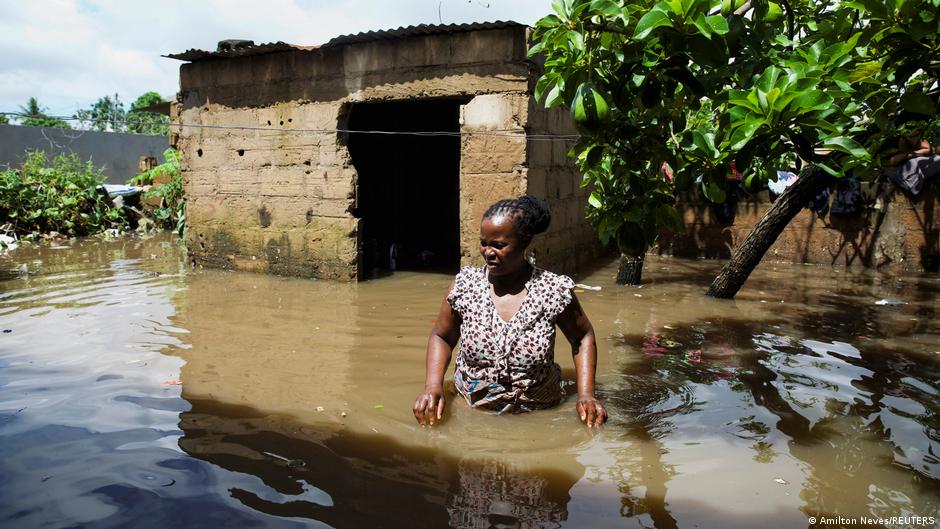
2 months agoFlooding hammers Mozambique, SADC countries
Flooding across southern Africa has severed critical transport routes, displaced hundreds of thousands of people and left governments and aid agencies struggling to respond. Southern Mozambique has suffered the heaviest toll so far. Authorities say more than 645,000 people have been affected nationwide, with at least 112 deaths recorded so far. Over 91,000 people are sheltering in 68 temporary accommodation centers, while 99 others have been injured. Thousands of homes, classrooms and health facilities have been damaged or destroyed,
World news
fromwww.bbc.com
1 month agoLondon crews to the rescue in Mozambique floods
During the deployment, the teams rescued more than 80 people from floodwaters and damaged structures. London Fire Brigade's UK ISAR coordinator, Ian Simpson, said an elderly blind woman and a small child were among the people they saved, which "brought home how important our work out there was". LFB He added: "I could not be prouder of the team's dedication, resilience, and professionalism, which directly contributed to saving lives and supporting the wider humanitarian response."
World news
fromwww.aljazeera.com
1 month agoThe cold, hungry reality of displacement in war-torn Sudan's Tawila
Montaha Omer Mustafa, 18, was among many people who managed to get out of el-Fasher before the city's seizure by the Rapid Support Forces (RSF) paramilitary group, but only after paying for passage and going days on foot with little water, moving through villages and scrubland. As fighting closed in on the last big city held by the government-aligned Sudanese Armed Forces (SAF) in North Darfur state, tens of thousands of residents fled westwards, abandoning homes, possessions, and even family members.
World news
fromwww.aljazeera.com
1 month agoWe have to rebuild': Mozambique flood victims persevere in face of loss
When Emilia Machel, 30, and her three children rushed to the Chiaquelane site for displaced people on the afternoon of January 17, much of her hometown of Chokwe in Mozambique's Gaza Province was already flooded. The Limpopo River, which begins in neighbouring South Africa and flows into Mozambique, had reached dangerously high levels after heavy rain fell on the Southern Africa region from late December to mid-January.
World news
fromTruthout
2 months agoIn Gaza, We're Struggling to Reintroduce Foods to Bodies Adjusted to Starvation
Since October's ceasefire, which meant Israel would allow some - but not nearly enough - aid trucks to enter our besieged Strip, people in Gaza have desperately been eating, whenever possible, what they had been deprived of previously. Yet, as a result, many have developed " refeeding syndrome," which is a serious medical condition. Refeeding syndrome occurs when food is suddenly reintroduced after a prolonged period of starvation - and Israel has subjected those of us in Gaza to such periods on multiple occasions.
World news
fromwww.theguardian.com
2 months agoQuarter of developing countries poorer than in 2019, World Bank finds
A quarter of countries in the developing world are poorer than they were in 2019 before the Covid pandemic, the World Bank has found. The Washington-based organisation said a large group of low-income countries, many in sub-Saharan Africa, had suffered a negative shock in the six years to the end of last year. The bank said global growth had downshifted since the pandemic, and the pace was now insufficient to reduce extreme poverty and create jobs where they're needed most.
World news
fromwww.aljazeera.com
1 month agoGlobal conflicts pushing humanitarian law to breaking point, report warns
In the full glare of the world's media spotlight, Israel has been conducting its genocidal war against Palestinians in Gaza while the mass killing of civilians in Sudan has not stopped since the outbreak of that country's war in 2023. Violence is ongoing elsewhere from Myanmar's civil war to conflict in Nigeria. Drone attacks targeting noncombatants have become commonplace in Ukraine while massacres of civilians across multiple conflicts continue, including in Ethiopia, Haiti, Myanmar, Yemen all with apparent impunity.
World news
[ Load more ]