#waiting-list-management
#waiting-list-management
[ follow ]
#healthcare #ai-in-healthcare #mental-health #nhs #patient-experience #patient-safety #patient-care #data-breach


fromwww.bbc.com
3 days agoDoctors lose new jobs package as strike to go ahead
The government has withdrawn an offer of creating 1,000 more doctor training posts in England after the British Medical Association (BMA) refused to call off a six-day strike next week. The extra posts were part of a wider package of measures put forward by ministers earlier this year to resolve the long-running dispute with resident doctors.
UK politics











Health
fromSilicon Canals
3 weeks agoI'm 66 and a doctor I'd never met before looked at my chart and said "do you have someone at home" and the way she asked it - clinical, not warm - made me realize the question wasn't about companionship, it was about whether anyone would notice if something happened to me between appointments, and I've been sitting with that distinction ever since - Silicon Canals
Social isolation in retirement creates invisibility where daily routines no longer intersect with others, risking being unnoticed for extended periods.
Public health
fromwww.theguardian.com
3 weeks agoPatients face long journeys for medicines as pharmacies cut weekend hours
One in six English pharmacies have reduced weekend hours since 2022, causing over 20% loss of weekend opening hours and forcing patients to travel long distances or seek emergency care.
fromwww.cbc.ca
3 days agoOffice space for emergency care: East-end Toronto hospital says patient demand is more than double capacity | CBC News
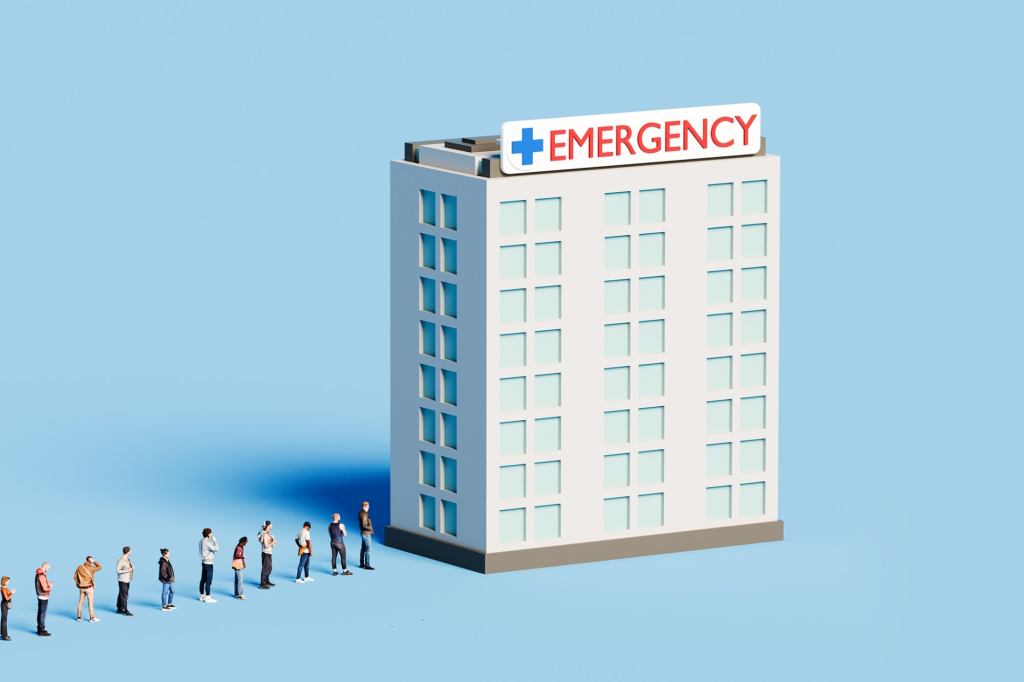
The emergency department at Michael Garron Hospital was built to care for about 150 patients a day, but now sees more than 300 patients daily, amounting to about 107,000 patients last year in a space designed for 50,000 annually.
Healthcare
Medicine
fromwww.theguardian.com
2 weeks agoWhy did my GP just use Google? What I've learned about the health system, as a doctor and a patient
Bedside manner and clinical knowledge are equally essential in medicine; kindness and clear communication directly improve patient engagement and health outcomes.
Information security
fromThe Hacker News
1 month agoTop 5 Ways Broken Triage Increases Business Risk Instead of Reducing It
Triage failures occur when decisions are made without execution evidence, causing false positives, missed threats, and higher costs; interactive sandboxes enable evidence-backed verdicts within seconds.
#mental-health

Healthcare
fromwww.theguardian.com
2 weeks agoThank God they're still alive': Kaiser therapists claim its new screening system puts patients at higher risk by delaying their care
Changes in patient screening at Kaiser Permanente have led to concerns about delayed care for high-risk mental health patients.
Marketing
fromSocial Media Explorer
2 months agoSeeing is Believing: Crafting a Healthcare Marketing Strategy That Actually Connects - Social Media Explorer
Eye-care marketing must prioritize trust, segment 'want' versus 'need' patients, and create patient-centered digital pathways guiding anxious patients from symptom to solution.
fromwww.kaltblut-magazine.com
2 months agoWaiting Room
Melbourne-based photographer and artist Kayla creates images that live between beauty and absurdity, confidence and uncertainty. In her work, the pretty becomes peculiar and the awkward quietly alluring, as she transforms fragments of her personal history into something playful, expressive, and reconciling. Identity, expression, and fashion merge in unexpected ways, guided by both her technical precision and conceptual vision. In Waiting Room, models are caught mid-leap, off-guard, or suspended between poses, moments that feel accidental but somehow composed.
Fashion & style
fromEntrepreneur
1 month agoHow to Keep Your Health Plan Costs Manageable - Without Shortchanging Your Team
If you run a business, there's a familiar email you probably opened this fall: the one from your benefits broker with your 2026 health insurance renewal. You scroll. You see a double-digit increase, and your stomach drops. You want to do right by your team. You also have a P&L to protect. And the three standard options you're handed - pay the increase, raise deductibles or push more cost onto employees - all feel bad in different ways.
Business
#healthcare-ai
Healthcare
fromwww.mercurynews.com
1 month agoAmazon bets on health care AI with tools for patients, doctors
Amazon Web Services launches Amazon Connect Health, an AI tool that automates medical documentation, billing codes, patient verification, and appointment scheduling to reduce healthcare administrative burden.

fromBoston.com
2 weeks agoMassachusetts ER doctors say long wait times reflect a health system under strain
For Massachusetts emergency physicians, that dream captures a simple truth: long ER waits rarely steam from care inside the department. Instead, doctors say they're the result of bottlenecks across a system stretched thin by staffing shortages, aging patients, limited hospital beds, and gaps in primary care.
Healthcare
Healthcare
fromBusiness Matters
3 weeks agoBuilding Better Systems: A Conversation with Healthcare Leader Daniel Tuffy
Daniel Tuffy is a healthcare leader who progressed from clinical physical therapy to executive roles, focusing on operational excellence, workforce engagement, and reducing provider burnout through trust-based leadership.
Public health
fromwww.bbc.com
2 months agoThe 'vicious cycle' that means the NHS still wastes billions on patients who don't need to be in hospital
Thousands of hospital beds are occupied by patients who no longer need inpatient care, causing cancellations, longer emergency waits, staff strain, and large financial losses.
fromMedium
1 month agoReal-Time Data Validation in Healthcare Streaming: Building Custom Schema Registry Patterns with...
In a single streaming pipeline, you might be processing HL7 FHIR messages with frequent specification updates, claims data following various payer-specific formats, provider directory information with inconsistent taxonomies, and patient demographics with privacy redaction requirements. Our member eligibility stream processes roughly 50,000 records per minute during peak enrollment periods.
Healthcare
Healthcare
fromFortune
3 weeks agoHealthcare has been propping up a shaky labor market. For the first time in over four years, the sector shed thousands of jobs | Fortune
Healthcare lost 28,000 jobs in February, marking its first decline in four years and exposing the labor market's dangerous dependence on a single sector for growth.
fromPsychology Today
2 months agoMy Dad Got Sick-Doctors Dodged, AI Didn't
My dad was in the emergency room, short of breath, chest tight, upper back aching. He looked pale and confused. An ultrasound showed excess fluid between his lung and chest wall. "We'll drain it," a resident said, as if he were unclogging a sink. For the next five days, thick, red-tinged fluid filled a plastic container beside my dad's hospital bed. Doctors sent his cells for "staining," a way to identify cancer. But no one used that word.
Medicine


fromFast Company
2 months agoConnected data will rescue healthcare
AI plays an important role-but not by fixing fragmented data on its own. The work of organizing, connecting, and interpreting healthcare information still belongs to people and the systems they build. Where AI helps is after that foundation is in place: by bringing the right information forward at the right time, reducing the effort it takes to find what matters, and supporting better decisions in the moment of care.
Medicine
Healthcare
fromComputerWeekly.com
1 month agoElectronic health records are still creating issues for patients | Computer Weekly
All NHS trusts in England must implement electronic patient record systems by March 2026, though rollouts have faced integration challenges, staff training issues, and reports of patient harm.
Healthcare
fromAlleywatch
1 month agoAnterior Raises $40M to Eliminate Administrative Burden Draining Healthcare Resources
Anterior's AI platform automates healthcare administrative workflows, reducing prior authorization cycles by 75% and achieving 182-second approval times while maintaining 99.24% clinical accuracy across 50M covered lives.
fromTODAY.com
2 months agoLabor and Delivery Nurse Reveals the No. 1 Hospital Question That Could Save Your Life
"If you or someone you love is going to give birth in a hospital, there is a question you need to ask before you go that can determine whether you are likely to have safe care or not," said labor and delivery nurse Jen Hamilton. Her multi-part TikTok videos amassed a combined 300,000 views their first 24 hours. "You need to know whether the hospital you are going to give birth in follows AWHONN's safe staffing standards," she continued.
Public health
Healthcare
fromwww.bbc.com
1 month agoBBC investigation finds 50,000 people waited over 24 hours in A&E corridor care
Over 52,000 patients in north-west England waited longer than 24 hours for hospital admission in 2025, with corridor care becoming a widespread crisis affecting nearly one in five admitted patients.
fromIndependent
1 month agoCost of medical IT system to hit 61m - and it is still only rolled out in one hospital
The chair of the Oireachtas Health Committee has described a €10m increase in the cost of a national medical laboratory IT system as "an omnishambles". The health service signed a €33m contract for the system known as MedLis with Oracle Health in 2015 and agreed a €17.9m contract extension for it in 2022.
Healthcare
fromForbes
2 months agoWhy AI Chatbots Are Essential For Modern Medical Practices
The world of medical practice management is changing faster than ever, driven by two simultaneous forces: escalating patient expectations and crushing administrative complexity. In my years working with healthcare organizations, I've seen these challenges evolve from nuisances into crises. Research by Bain & Company found that 65% of healthcare consumers want more convenient experiences, and 70% want more responsiveness from providers. They want instant answers to routine questions, immediate scheduling access and minimal friction.
Healthcare
fromBoston.com
1 month agoMassachusetts emergency room wait times rank among the longest in the U.S.
If you find yourself in need of emergency care in Massachusetts, it could take a while. The Bay State ranks No. 3 in the U.S. for longest average time patients spend in the emergency department, according to World Population Review. Patients here spend an average of 189 minutes - more than three hours - in the ER before leaving the hospital. Only Maryland (228 minutes) and Delaware (195 minutes) report longer average delays.
Healthcare
fromBusiness Matters
2 months agoThe Rise of Telemedicine: How Digital Health is Reshaping Medical Equipment Demand
Between March 2020 and March 2022, over 100 million telemedicine services were delivered to approximately 17 million Australians. The Australian government invested $409 million to make telehealth permanent, whilst the UK announced £600 million for digital health infrastructure in April 2025. Patient adoption is equally impressive: 60% find telemedicine more convenient than in-person appointments, 55% report higher satisfaction with teleconsultations, and 74% of millennials prefer virtual appointments for routine care. These aren't temporary shifts; they represent a fundamental transformation in healthcare delivery.
Healthcare
fromSitePoint Forums | Web Development & Design Community
1 month agoIs there a significant cost difference between In-House vs Outsourced Billing Services for medical practices?
When analyzing the operational costs of a healthcare facility, the debate between In-House vs Outsourced Billing Services always comes up. Many business owners find that managing billing internally requires constant training and expensive software, whereas the best medical billing companies often provide a more streamlined, result-oriented approach for a percentage of the collections.
Healthcare
fromBusiness Insider
2 months agoWe want to hear your story about healthcare access
In 2026, the US healthcare system is changing. Enhanced Affordable Care Act subsidies have expired, causing premiums for marketplace plans to spike - and pricing some families out of health insurance entirely. President Donald Trump's One Big Beautiful Bill Act will reduce coverage for some patients with Medicaid and funding for hospitals, especially those in rural areas. Costs for Medicare and private insurance are also rising: Employer-based healthcare premiums have increased by 9%, the largest rise in more than a decade.
Healthcare
[ Load more ]