#water-discharge-permit
#water-discharge-permit
[ follow ]

fromHigh Country News
6 days agoForest Service overhaul sows confusion, concern - High Country News
"Nobody is asking for this. None of the farm groups want this. No one in conservation wants this. Nobody." Robert Bonnie, former Forest Service undersecretary, highlights widespread opposition to the reorganization.
Washington DC
fromDefector
2 weeks agoDam It All To Hell | Defector
Hoppers, like Pixar's pre-Disney films, is a delight. The beavers' world is immersive and richly realized, grounded in science but never dry. The plot zigs and zags between moments of absurdity and emotional heft to stirring effect; I cried multiple times, and not just because of the low-hanging fruit of grandma death.
Independent films
fromWashingtonian - The website that Washington lives by.
3 weeks agoThe Broken Sewer Line That Filled The Potomac River With Poop Has Been Repaired. What Happens Next? - Washingtonian
After 55 days of construction, which involved enough gravel to cover four football fields and enough fuel to power a dozen homes for a whole year, the pipe is once again funneling sewage from Fairfax and Loudoun Counties to the Blue Plains Advanced Water Treatment Plant in Southwest DC.
Washington DC
SF politics
fromABC7 San Francisco
3 weeks agoEnvironmental groups sue to stop Trump's water diversions in California
Trump's executive order diverts more federal water to Central Valley farmers, bypassing state officials and environmental protections, prompting lawsuits from environmental groups claiming violations of the Endangered Species Act.
London politics
fromMail Online
3 weeks agoEnvironment officers given police-style powers to fight waste crime
The government is implementing a zero-tolerance approach to waste crime, granting environment officers police-like powers including warrant-less searches, asset seizure, and arrest authority to combat illegal dumping gangs.
fromwww.cbc.ca
3 weeks agoOntario to consolidate 36 conservation authorities into 9 | CBC News
Ontario will consolidate its 36 conservation authorities into nine across the province. Environment Minister Todd McCarthy says there will be no job losses as a result. He says the province listened to feedback after several town halls and 14,000 comments on its plan, which initially proposed having seven conservation authorities.
Canada news
Washington DC
fromThe Atlantic
2 weeks agoWhat Caused the D.C. Sewer Disaster
A major sewer pipe collapse in Washington, D.C. caused one of the worst raw-sewage spills in U.S. history, potentially linked to a design flaw from the 1960s involving boulder fill that may affect other sections of the pipeline.
fromSocial Media Explorer
1 month agoHow to Lower Your Water Bill During a Texas Summer - Social Media Explorer
In many Texas households, outdoor watering accounts for more than half of the total summer water use. The biggest mistake people make is watering in the middle of the afternoon. When the sun is at its peak, a significant percentage of that water evaporates before it ever hits the roots of your St. Augustine or Bermuda grass.
Austin
UK news
fromwww.independent.co.uk
4 weeks agoWater firms prevented from increasing bills as much as they wanted
UK's competition watchdog significantly reduced water company revenue increases, limiting five major firms to £463 million instead of £2.7 billion sought, resulting in 2.2% bill increases for customers.

California
fromLos Angeles Times
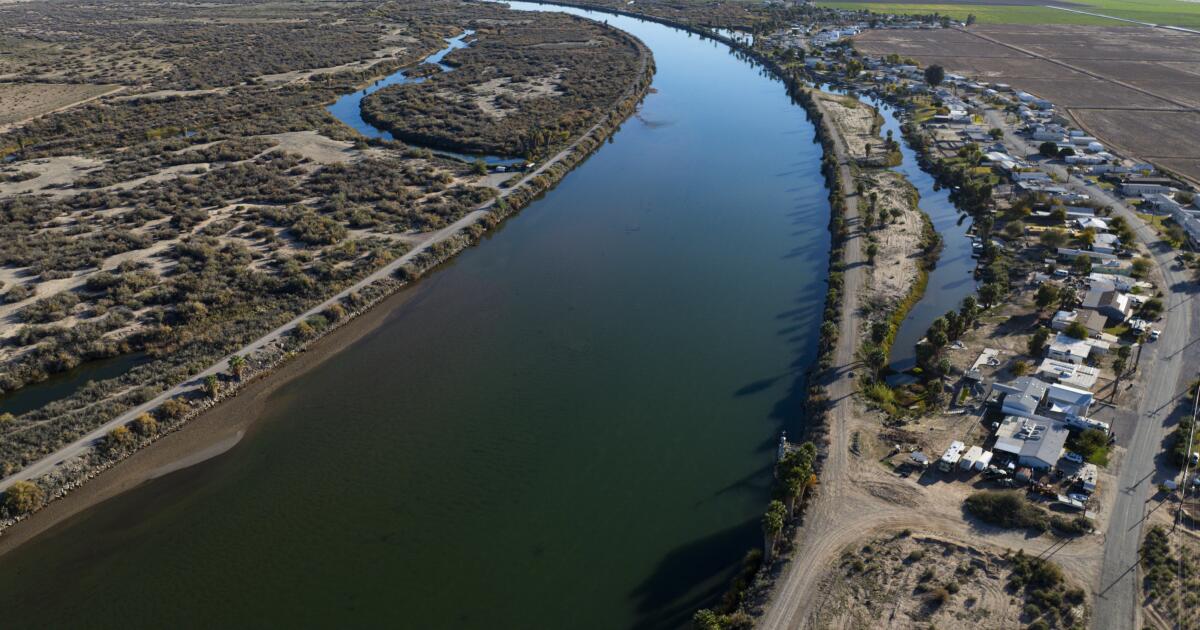
1 month agoCalifornia, Arizona and Nevada urge Trump administration to rethink Colorado River plans
California, Arizona, and Nevada oppose Trump administration's Colorado River water cutback proposals, arguing they violate the 1922 Colorado River Compact foundational agreement.
US politics
fromGothamist
1 month agoICE could face legal battle over state water rules in plan to build NJ detention center
New Jersey's Highlands Water Protection Act may block ICE's plan to convert a Roxbury warehouse into a detention center by requiring environmental scrutiny in water-sensitive areas.
fromLos Angeles Times
2 weeks agoCalifornia will get $540 million for water projects, Trump administration announces
The largest share, $235 million, will be used to rehabilitate the Delta-Mendota Canal, which carries water to farmlands. An additional $200 million will help continue repairs on the Friant-Kern Canal, another key conduit for water in the valley. Sinking ground, an effect of heavy groundwater pumping, has damaged segments of the Friant-Kern Canal and reduced its capacity.
Environment
fromLos Angeles Times
1 month agoFear that herbicides are poisoning Orange County creeks blows up on social media
We want an end to the use of herbicides in our creeks. This idea that we're just going to spray, hose down these creeks and leave them dead is unacceptable. Linas and other residents have filed requests for records detailing the chemicals the county uses to control vegetation in the waterways, such as glyphosate, triclopyr and imazapyr.
California
Environment
fromwww.npr.org
3 weeks agoMaking wastewater drinkable is a growing trend as water resources become more strained
Treated wastewater recycling for drinking water is becoming a viable solution in water-scarce regions, with Florida, Arizona, California, and Colorado now allowing direct potable reuse through regulated pilot programs.
Environment
fromTruthout
4 weeks agoHouse Bill Could Weaken EPA Oversight of Hazardous Chemicals
House conservatives propose rolling back 2016 reforms to the Toxic Substances Control Act, weakening EPA authority to regulate hazardous chemicals despite ongoing groundwater contamination cases like Jones Road.
fromwww.bbc.com
4 weeks agoCampaigners push to better protect chalk streams
They're special on a world stage, 85% of chalk streams are in England. They're wonderful habitats, they're great for people as well, people really enjoy them, whether it's areas like this where you can find kingfishers and grey wagtails and it's just a unique resource that we really should steward properly.
Environment
fromwww.archdaily.com
1 month agoWaterfrom Design's Office / Waterfront Design
Studio Millspace Text description provided by the architects. Throughout eight months of design and on-site work, we realized that what truly matters is not the completeness of drawings, but the intuition shaped by being present. Around 70% of the layout was defined early on, while the remaining 30% was deliberately left without a set functionallowing light, behaviors, and moods to participate in forming the space.
Design
fromTheregister
2 months agoS Twatter: When text-to-speech goes down the drain
A Reg reader received an automated call warning of potential water discoloration during planned works from January 19-25. The message advised running taps for twenty minutes if the water appeared discolored - standard stuff, if a bit robotic. In the recording forwarded to us, a female voice told our reader what to expect. All good, if a little robotic. However, things went off the rails a bit when the robot attempted to read out the URL for Severn Trent: http://www.stwater.co.uk/discolouration.
Artificial intelligence


Environment
fromwww.amny.com
1 month agoOp-Ed | It's time to finally modernize the State Environmental Quality Review Act | amNewYork
Zoning policies and land use decisions concentrate climate risks in communities of color while protecting wealthy neighborhoods, making housing reform essential for both climate justice and racial equity.
fromwww.npr.org
1 month agoWhat we know about the massive sewage leak in the Potomac River
Approximately 243 million gallons of wastewater has overflowed from the pipe that collapsed on January 19 in Montgomery County, Md., according to a release from DC Water. That translates into 368 Olympic-sized swimming pools worth of sewage. The brunt of this surge happened in the first five days, before interim bypass pumping was activated a system that reroutes sewage around the damaged section.
US news
Environment
fromABC7 San Francisco
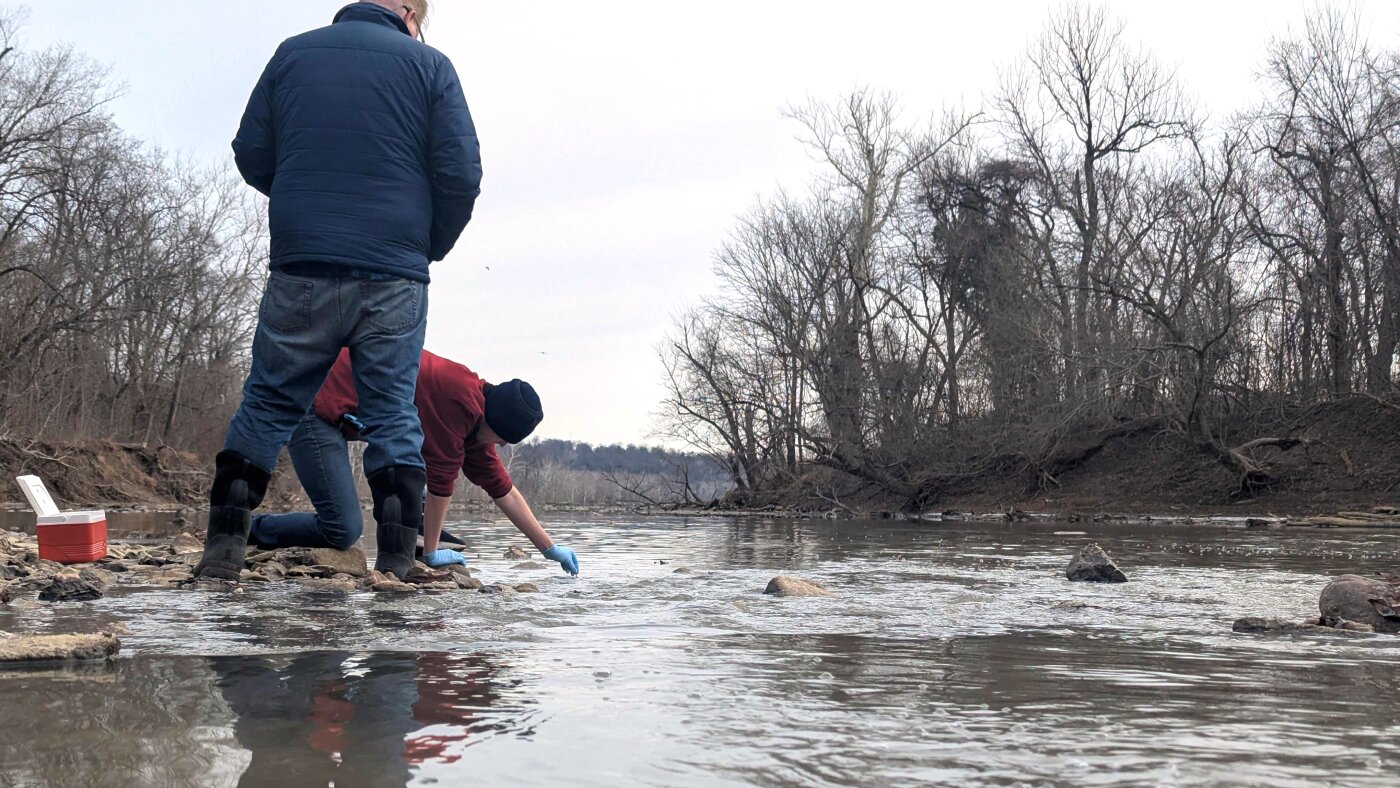
1 month agoSF scientists build robotic storm samplers to track pollutants before they reach the Bay
Environmental scientists deploy robotic water samplers throughout San Francisco Bay watersheds to monitor stormwater pollution and contaminants in real time before they reach the Bay.



California
fromThe Mercury News
2 months agoLetters: If polluters paid for damage, state's deficit would be less
Fossil fuel companies should be held financially responsible for climate-driven damages to reduce taxpayer burdens and accelerate the transition to renewable electricity and all-electric buildings and vehicles.
Public health
fromNonprofit Quarterly | Civic News. Empowering Nonprofits. Advancing Justice.
2 months agoThe Polluters Down the Street-EPA Changes Put Lives at Risk | Nonprofit Quarterly | Civic News. Empowering Nonprofits. Advancing Justice.
Air quality monitoring and Clean Air Act regulations have reduced PM2.5, prevented hundreds of thousands of early deaths, and improved average life expectancy.
fromSFGATE
2 months agoCalifornia's largest new reservoir in decades secures federal approval
The proposed 1.5 million acre-foot Sites Reservoir would store water from the Sacramento River and distribute it during droughts to several parts of California, including the Sacramento and San Joaquin valleys, Southern California and the Bay Area. Stretching about 4 miles across and 13 miles north to south, it's meant to provide water to approximately 24 million people, and it would mark California's first major reservoir project since 1979, when New Melones Lake was completed.
California
fromianVisits
2 months agoDredging the past: Hanwell's historic canal side ponds being repaired
Every time a boat passes through a canal lock, thousands of litres of water are released and must be replaced, usually from other sources. To reduce water loss, engineers sometimes build side ponds next to canals with several locks in succession. These side ponds allowed water to be "put aside" rather than lost. When a lock chamber was emptied to lower a boat to the next level, paddles were opened to divert the water into an adjacent side pond.
UK news
fromwww.theguardian.com
1 month agoJudge sides with salmon against Trump administration in hydropower ruling
At the center of the dispute are eight dams and reservoirs on the Columbia and Snake Rivers in the Pacific north-west that have created devastating obstacles for salmon and steelhead unable to breach their deadly turbines or navigate through the large, warm, artificial pools.
Environment
Environment
fromArchDaily
1 month agoHow to Design with the Rain: Architectural Strategies for Rainwater Collection across Climates
Architecture must shift from water disposal to active rainwater collection, storage, and reuse through climate-specific design strategies that address distinct precipitation patterns and regional environmental demands.
fromHigh Country News
1 month agoIt's time to rethink how we care for our public lands and waters - High Country News
Wildlife populations are in decline. Recreation sites are crowded and often underfunded. Wildfires are larger, more destructive and harder to control. Climate change is reshaping natural systems, from ocean fisheries to mountain snowpacks, faster than institutions can respond. At the same time, communities are being asked to host new energy projects, transmission lines and mineral development - often without clear processes, adequate resources or trust that decisions are being made in the public interest.
Environment

Environment
fromSan Jose Spotlight
2 months agoEstremera: The work behind the water we all rely on - San Jose Spotlight
Valley Water provides safe, reliable water, flood protection, and environmental stewardship for nearly two million people through infrastructure upgrades, purification, and local supply expansion.
fromwww.theguardian.com
1 month agoEnforcement of laws against polluters nearly non-existent in US, analysis finds
Enforcement of environmental laws against major polluters has virtually ground to a halt under the Trump administration, a new analysis of Environmental Protection Agency records from January 2025 to January 2026 shows. Major polluters typically include companies that are among the largest in the oil, gas, coal and chemical industries. Records show the EPA filed just one Clean Air Act consent decree compared with 26 in the first year of Trump's first term, and 22 during Biden's first year.
Environment
fromLos Angeles Times
2 months agoHeated debate over California water plan as environmentalists warn of 'ecosystem collapse'
The question of how to protect fish and the ecological health of rivers that feed California's largest estuary is generating heated debate in a series of hearings in Sacramento, as state officials try to gain support for a plan that has been years in the making. "I am passionate that this is the pathway to recover fish," said state Natural Resources Secretary Wade Crowfoot. "This is the paradigm we need: collaborative, adaptive management versus conflict and litigation."
Environment
from24/7 Wall St.
2 months agoClean Harbors (CLH): The Environmental Services Moat is Expanding
Clean Harbors just locked in a $110 million contract for PFAS water filtration at Joint Base Pearl Harbor-Hickam. This isn't just another project win. It's validation of the company's end-to-end PFAS solution: lab analytics, water filtration, site remediation, and most critically, high-temperature incineration disposal.
Environment
Environment
fromwww.independent.co.uk
2 months agoNew filtration technologies could absorb forever chemicals' at ultrafast' rate
A copper‑aluminium layered double hydroxide (LDH) can absorb long‑chain PFAS up to 100 times faster than current filters, offering pollution control improvements despite deployment challenges.
[ Load more ]