#wealth-and-status
#wealth-and-status
[ follow ]
#wealth-inequality #billionaires #political-influence #tax-policy #real-estate #wealth-tax #k-shaped-economy
#wealth-tax
Left-wing politics
fromFortune
2 days agoBernie Sanders calls out Bezos, Musk, Bloomberg and Buffett in billionaire tax push: 'The richest people in America have never ever had it so good' | Fortune
Wealth taxes are proposed to address economic inequality and provide financial relief to working Americans.
#billionaires
NYC real estate
fromFortune
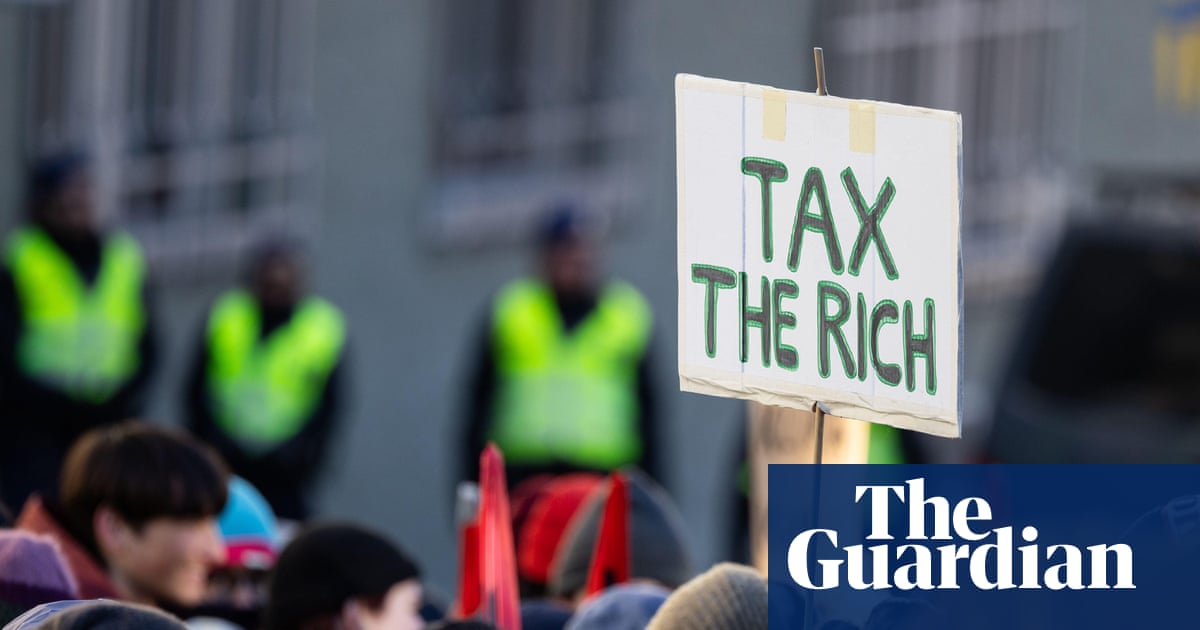
1 week agoNew York is home to 154 billionaires. Together they're worth $975.7 billion-and some of them are even making $2 million an hour | Fortune
New York's billionaires have a collective wealth of $975.7 billion, with significant growth contrasting stagnant wages for workers.

NYC real estate
fromFortune
1 week agoNew York is home to 154 billionaires. Together they're worth $975.7 billion-and some of them are even making $2 million an hour | Fortune
New York's billionaires have a collective wealth of $975.7 billion, with significant growth contrasting stagnant wages for workers.
Psychology
fromSilicon Canals
1 day agoPsychology says people who grew up poor and became successful often can't fully enjoy it - not because they're ungrateful, but because some part of them never stopped waiting for it to disappear - Silicon Canals
Successful individuals often struggle with feelings of scarcity and anxiety about their financial stability, despite their achievements.
fromFortune
3 days agoWhy American billionaires are abandoning Wall Street for English soccer clubs | Fortune
Eight of the ten clubs in the top half of the Premier League table are owned by Americans. In the Championship, four of the eight clubs battling for promotion are U.S.-owned, including the Ryan Reynolds-Rob McElhenney Wrexham project.
English Premier League
fromFortune
3 days agoElon Musk, world's first trillionaire: one implication of the massive SpaceX IPO | Fortune
A SpaceX IPO promises to be one of the biggest Wall Street events of the year, with several investment banks lining up to help raise tens of billions to fund Musk's ambitions to set up a base on the moon, put datacenters the size of several football fields in orbit and possibly one day send a man to Mars.
Venture
fromwww.dw.com
3 days agoWealth tax: Why are countries afraid to tax the ultrarich?
One way is to increase income taxes. There's also the option for an annual or one-off wealth tax on everything someone has above a certain mark. A few governments want to tax extreme wealth to lower taxes on a stagnating middle class or to make up for social inequality.
US Elections


Psychology
fromSilicon Canals
2 days ago9 subtle behaviors that reveal someone grew up in a household where money was discussed in whispers, and why those behaviors persist long after financial security has arrived - Silicon Canals
Financial behaviors are shaped by early experiences and trauma, not just knowledge or information gaps about money.
#wealth-inequality

Business
fromFortune
1 week agoBillionaire Larry Fink says you're wrong to think that AI stealing your job is the big problem-it's really about what it's doing for his class | Fortune
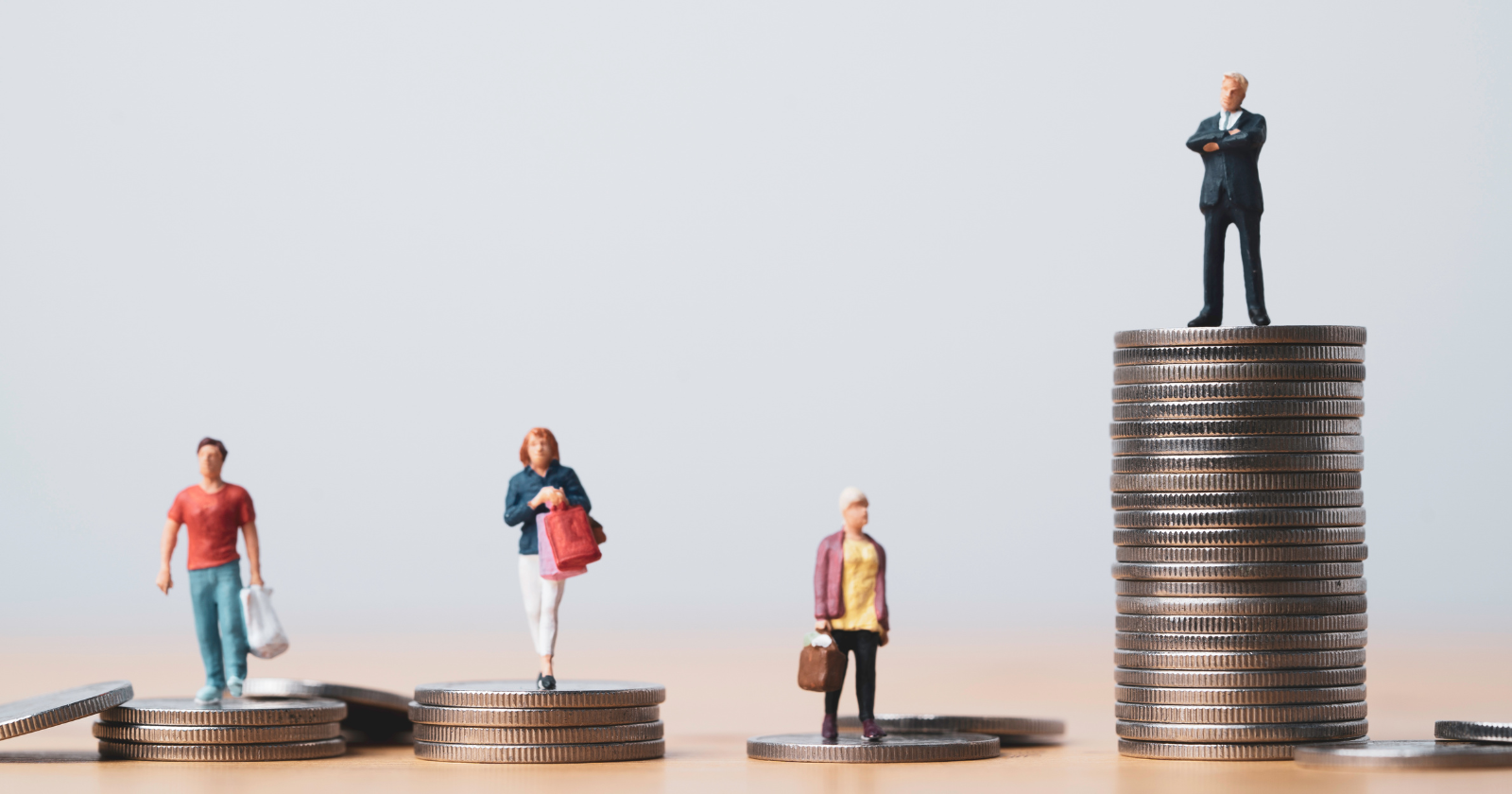
Wealth inequality, exacerbated by AI, poses a significant threat to the economy, concentrating wealth among asset owners and technology users.
Careers
fromSilicon Canals
5 days agoThe most profound disconnect between boomers and younger generations isn't about avocado toast or laziness - it's that boomers inherited an economy designed to reward time invested, while millennials and Gen Z are navigating one that rewards attention captured, and the skill sets don't translate - Silicon Canals
Generational tension arises from differing economic realities between baby boomers and younger generations, affecting perceptions of work and success.
Right-wing politics
fromFortune
2 weeks agoEconomists agree: You're not crazy for feeling like the rich get richer, and the poor are doing worse. Welcome to the 'K-shaped economy' | Fortune
The K recovery illustrates a growing economic divide where the wealthy prosper while the poor struggle, echoing historical patterns of inequality.
Education
fromSilicon Canals
2 weeks agoNobody teaches you that class isn't about income. It's about which mistakes are survivable. A rich kid's DUI becomes a learning experience. A poor kid's missed rent payment becomes a credit score that follows them for seven years. Same species, different physics. - Silicon Canals
Credit scores reflect structural inequalities, where similar mistakes lead to vastly different consequences based on financial safety nets.
Psychology
fromSilicon Canals
4 days agoPeople who grew up calculating whether they could afford both the drink and the entree before anyone else sat down don't stop doing that math when they earn six figures. The arithmetic isn't financial anymore. It's a loyalty ritual to a younger version of themselves who promised never to be caught without an exit. - Silicon Canals
Child poverty in the U.S. leads to adult poverty more than in Denmark, Germany, the UK, or Australia, with lasting effects beyond financial circumstances.
fromFortune
4 days agoMacquarie bets impact investing can fill an Asian financial access gap left by microfinance and commercial banks | Fortune
"The specific barrier is capital," says Lisa George, global head of the Macquarie Group Foundation. "Without access to capital, it's very hard to get social mobility and educational mobility in life."
Fundraising
#billionaire-wealth
Business
fromFortune
6 days agoEven billionaires aren't safe: This year's market slump has wiped $75 billion from the wealth of Jeff Bezos and Mark Zuckerberg | Fortune
The world's wealthiest have lost over $255 billion this year, with market declines affecting even the richest individuals significantly.
Business
fromFortune
6 days agoEven billionaires aren't safe: This year's market slump has wiped $75 billion from the wealth of Jeff Bezos and Mark Zuckerberg | Fortune
The world's wealthiest have lost over $255 billion this year, with market declines affecting even the richest individuals significantly.
Higher education
fromFortune
3 weeks agoFormer Goldman Sachs CEO got into Harvard at 16, growing up in Brooklyn public housing-he still says college is the best ticket to the middle class | Fortune
College education serves as a wealth equalizer and essential pathway to success, developing complete professionals equipped for career advancement despite AI disruption.
US politics
fromwww.theguardian.com
2 weeks agoJeffrey Epstein's elite relationships visualised: the banker, the economist and the director
The Guardian's analysis of over one million Epstein files identified connections between the convicted sex offender and prominent figures in business, politics, and arts, though appearing in files does not constitute evidence of wrongdoing.
Fundraising
fromTechCrunch
2 weeks agoThe billionaires made a promise -- now some want out | TechCrunch
The Giving Pledge, launched by Buffett and Gates in 2010 to encourage billionaire philanthropy, has dramatically declined in participation and effectiveness despite massive wealth concentration globally.
fromFortune
2 weeks agoThe K-shaped economy has left many six-figure earners 'on thin ice' as housing costs, lifestyle creep, and the job market put them at risk | Fortune
"The wealthy who are at financial risk are high earners whose lack of budgeting and profligate spending has them overleveraged and exposed. While they appear to be doing well from the outside, they are only a step away from real financial trouble."
Business
fromFortune
1 month agoAre you a 'hidden millionaire?' | Fortune
Like snow falling quietly overnight, wealth has a way of sneaking up: steadily increasing salaries, 401(k) contributions, stock options, rising home equity, inheritances. It accumulates while you're busy living. If your financial identity hasn't kept pace-understandably shaped more these days by inflating prices, competing tugs on your discretionary dollars, and that familiar feeling of " I'd be comfortable if I made more"-you're not alone.
Real estate
fromFortune
2 months agoChildren of parents with expensive mega mansions get offered the best jobs-and new research has revealed why | Fortune
Around the turn of the 21st century, the U.K. witnessed a dramatic surge in housing prices: the costs rose from four times peoples' annual earnings in 1995, to eight times by 2010. Homeowners subsequently enjoyed a wealth windfall, and it resulted in their kids receiving more housing wealth and higher-paying jobs, according to recent research from the Institute for Fiscal Studies. Lower-income renters, on the other hand, were faced with new affordability challenges.
UK news


fromSilicon Canals
1 month agoI grew up lower-middle-class and didn't realize these 9 habits were unusual until I made wealthy friends - Silicon Canals
Growing up outside Manchester, I thought everyone kept their tea bags to use twice. It wasn't until I was at university, sitting in a friend's kitchen in London, that I realized this wasn't normal. My friend watched in horror as I carefully squeezed out my used tea bag and placed it on a saucer for later. "What are you doing?" he asked, genuinely confused.
Social justice
Psychology
fromSilicon Canals
1 month agoThe art of stealth wealth: 9 habits of people who are rich but never let it show - Silicon Canals
Many genuinely wealthy people intentionally avoid visible status signals, prioritizing low-profile lifestyles and spending that reduces stress rather than impresses others.
Psychology
fromSilicon Canals
2 months ago8 things people think make them look rich that actually scream financial insecurity - Silicon Canals
Loud displays of wealth and constant brand signaling often indicate financial insecurity, while genuinely wealthy people typically live modestly and avoid ostentatious signaling.
Business
fromSilicon Canals
2 months agoI worked as a personal assistant to a billionaire for a year-here are 9 uncomfortable truths about wealth nobody says out loud - Silicon Canals
Extreme wealth breeds justified paranoia, routine anxieties, and complicated family and social dynamics that money often fails to resolve.
fromFortune
1 month agoWelcome to the 'E-shaped' economy: Wealth gap is no longer between just higher and lower earners, the middle class is also struggling out on its own | Fortune
income‑based divergence in spending and wage growth persists, and we are concerned that a 'K' shape is opening up between higher-income households and middle-income households, alongside the existing gap with lower-income households.
Business
Business
fromFortune
1 month agoThe economy isn't K-shaped. For 87 million, people, it's desperate and for another 46 million it's elite | Fortune
A split in consumer confidence across income groups threatens stability as millions facing affordability-driven strain begin abandoning long-term planning and exiting upward mobility.
[ Load more ]