#welfare-expansion
#welfare-expansion
[ follow ]
#homelessness #social-security #philanthropy #protests #disability-benefits #universal-credit #immigration



Psychology
fromSilicon Canals
1 day agoPsychology says people who grew up poor and became successful often can't fully enjoy it - not because they're ungrateful, but because some part of them never stopped waiting for it to disappear - Silicon Canals
Successful individuals often struggle with feelings of scarcity and anxiety about their financial stability, despite their achievements.


#homelessness

SF politics
fromLos Angeles Times
1 day ago'Abysmal': Trump's budget cites L.A. homelessness agency as he proposes housing cuts
Cuts to homeless services may increase street homelessness in Los Angeles.
fromTruthout
3 weeks agoSocial justice
Republicans and Democrats Are United in Their War on the Unhoused
Homelessness deaths in Los Angeles County doubled from three to six per day since 2019, driven by bipartisan policies that criminalize poverty and render unhoused people disposable through anti-camping ordinances and systemic inequality.
fromThe Oaklandside
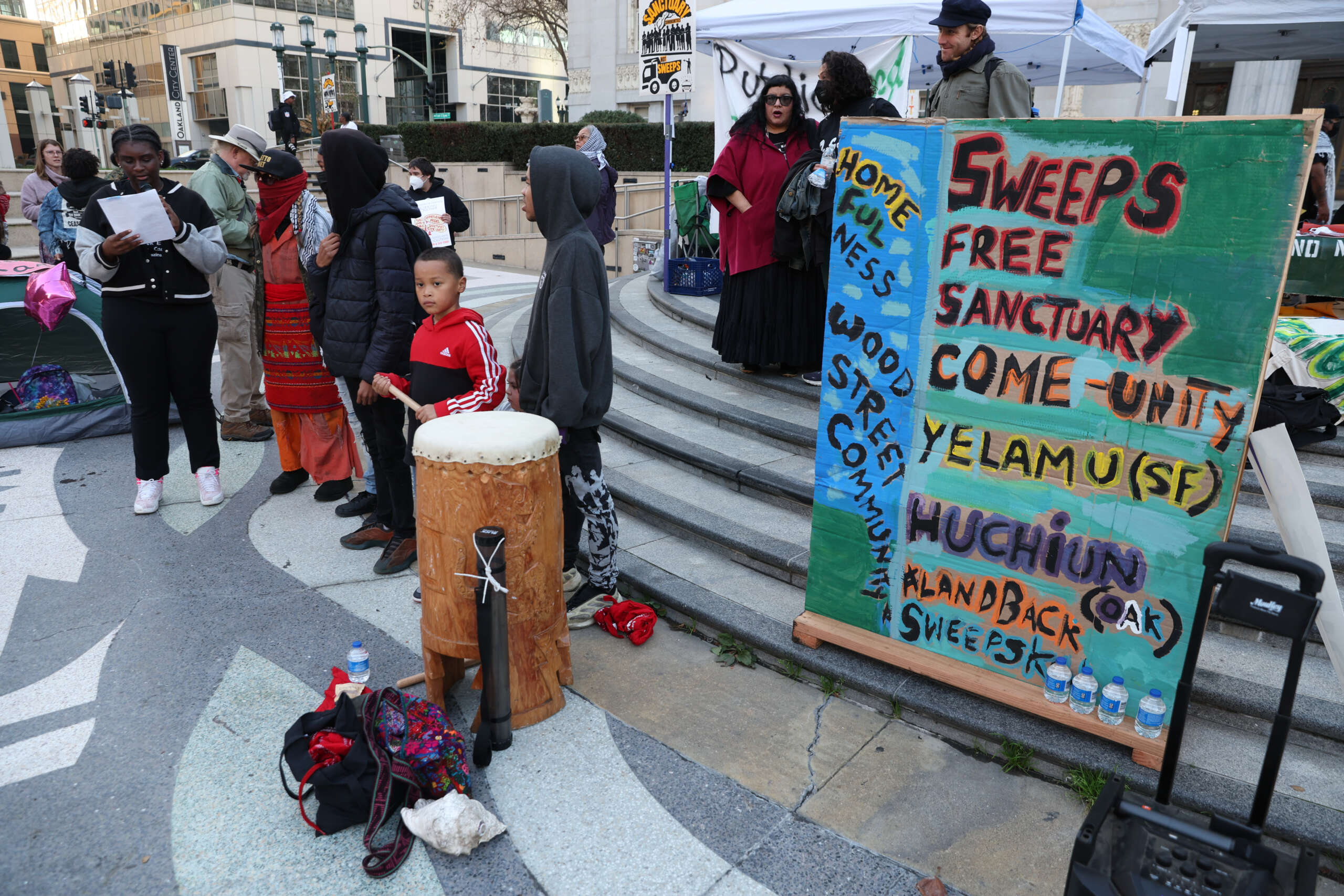
3 days agoThousands in Alameda County will lose CalFresh this week. Here's what to know
"There are people who have come here after escaping violence and persecution and torture. These are communities that we have historically said, 'You are welcome here. We have the support for you. We're going to help you get established in our country.' And now, the federal government is abandoning them."
East Bay (California)
Media industry
fromNonprofit Quarterly | Civic News. Empowering Nonprofits. Advancing Justice.
5 days agoPolitics in an Attention Economy | Nonprofit Quarterly | Civic News. Empowering Nonprofits. Advancing Justice.
Candidates must be cultural figures to succeed in today's American politics, navigating an attention economy shaped by algorithms.
fromTruthout
4 days agoLow-Income Moms Struggle to Keep Their Families Afloat Amid Gas Price Increases
Luna Rosado, a single mother, has seen her gas expenses rise by $40 weekly due to a 30 percent increase in prices after the war in Iran. This has resulted in $160 less for groceries and other necessities each month, forcing her to constantly adjust her budget.
Washington DC
fromwww.theguardian.com
1 week agoThe kindness of strangers: An online forum user shipped me a car radiator, saving me from financial ruin
After worrying that he was somehow trying to scam me, I reluctantly sent him my address. A week later, the radiator arrived on my doorstop. A mate was able to help me install it and bingo the car worked again.
Relationships
fromTruthout
5 days agoA Shady Nonprofit Pushes Back On Pennsylvania's Proposed Minimum Wage Hike
"Today's vote ignores the well-documented harmful consequences of wage hikes by economists. Not only would this proposal slash up to 86,000 jobs, it would also worsen inflation for Pennsylvania workers and residents."
Non-profit organizations

fromNonprofit Quarterly | Civic News. Empowering Nonprofits. Advancing Justice.
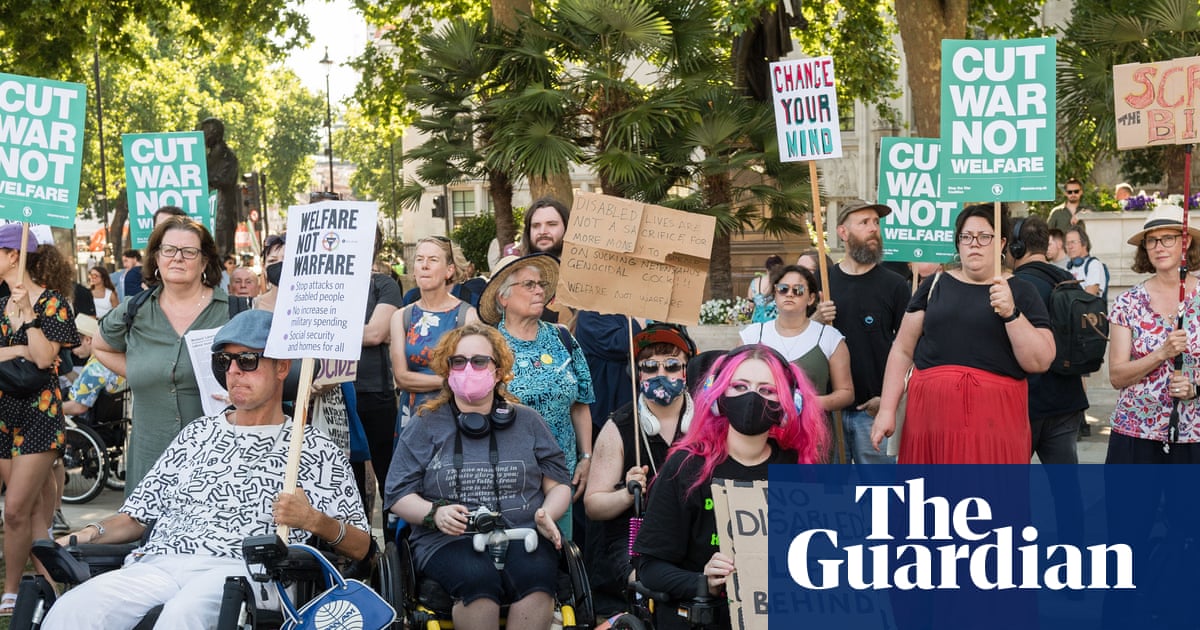
1 week agoYou Don't Have to Be Unionized to Be United | Nonprofit Quarterly | Civic News. Empowering Nonprofits. Advancing Justice.
The labor of this kind of organizing was invisible and deeply exhausting. In a precarious workplace, where a so-called 'performance review' could amount to job loss, organizing meant building a bridge while standing on it.
Social justice
fromApaonline
2 weeks agoGood Work and Economic Democracy
Within the workplace, the content and conditions of work are largely controlled by employers who often have an interest in degrading the quality of work, both to increase productivity and to increase their control over employees in the workplace. Outside the workplace, employers have both an incentive and the power to undermine measures that would improve the quality of work through the political process.
Philosophy
Non-profit organizations
fromNonprofit Quarterly | Civic News. Empowering Nonprofits. Advancing Justice.
2 weeks agoDisability Inclusion Isn't "Special Needs"-It's Smart Philanthropy | Nonprofit Quarterly | Civic News. Empowering Nonprofits. Advancing Justice.
Cuts to special education oversight threaten funding and services for millions of children with disabilities, risking progress in disability inclusion.

US politics
fromwww.amny.com
3 weeks agoOp-Ed | NY's human services workforce is done waiting for partial justice | amNewYork
New York's 800,000 human services workers remain chronically underpaid despite being essential to the state's social safety net, with government-set contracts failing to match inflation and rising living costs.
fromKqed
1 month agoHow Federal Homelessness Funding Changes Could Impact Those in Need | KQED
That 2025 NOFO that dropped in November was the precursor of what the future's gonna look like. I strongly believe that, for the majority of wild and crazy things in that NOFO, that is what's going to drop in July of 2026. If that happens, dozens of people in the region could fall back into homelessness.
Los Angeles
Online Community Development
fromStreetsblog
1 month agoHow the 'Little Free Pantry' Can Help Feed the Hungry Without Requiring Them to Drive - Streetsblog USA
Micro-pantries are small, community-maintained food compartments addressing food insecurity for people without reliable transportation to traditional food banks.
Public health
fromABC7 San Francisco
1 month agoTrump's new Medicaid work mandate could leave thousands of homeless Californians uninsured
Trump's new Medi-Cal work requirements and increased verification frequency will likely cause over 90% of unhoused Californians to lose health insurance coverage starting in 2027.
New York City
fromCity Limits
1 month agoOutgoing Social Services Commissioner Wants City To Stay 'Proactive'
Homelessness and social service crises require integrated approaches rather than siloed solutions, as demonstrated through interconnected challenges in shelter provision, migration response, and vulnerable population support.
fromTruthout
1 month agoFederal Funding for People in Poverty Is Going to Anti-Abortion Centers Instead
The bulk of the money Missouri gives to its crisis pregnancy centers comes from federal funds meant to assist families experiencing poverty with basic necessities and child care, Republican Rep. Jason Smith said on the U.S. House floor in January. As many as $3 of every $4 for pregnancy centers in Missouri was from the federal Temporary Assistance for Needy Families program in 2024, and in the 2026 fiscal year, it will be $2 out of $3.
Non-profit organizations
Food & drink
fromwww.theguardian.com
1 month agoWhy food justice isn't being served in America
Food justice advocates often misrepresent South Central Los Angeles as a resource-depleted food desert lacking grocery stores and knowledgeable residents, contradicting anthropological research documenting abundant food retail and community food practices.
fromThe Atlantic
1 month agoFour Conditions Make Cash Transfers Save Lives
Cash transforms health when four particular conditions are met. Most U.S. cash-transfer pilots have lacked them. But one major American policy does come close: the federal food-assistance program SNAP. Its success offers a road map for what effective cash assistance can look like in this country, if we choose to build on it.
Public health
fromwww.mercurynews.com
1 month agoAsking Eric: We gave a homeless man $200, and I didn't foresee how he'd spend it
We don't get to choose how other people make use of our gifts, especially strangers. Since you don't have a relationship with Ron beyond these very generous gifts, you're not in a position to safeguard him. He's not shared this part of his life with you, and you heard about the supposed scam from others, not from Ron himself.
Relationships
fromwww.theguardian.com
1 month agoReaders reply: what would be the most socially useful way to spend a billion dollars?
I've always thought it would be good to acquire an old warehouse in every town throughout the land and convert it into low-rent community workspaces for artists, local charities and small businesses getting off the ground. A kind of people's WeWork. What would others do with a humungous, but not unlimited, pile of dosh to benefit society? Roland Freeman, West Yorkshire Send new questions to nq@theguardian.com.
Left-wing politics
fromwww.theguardian.com
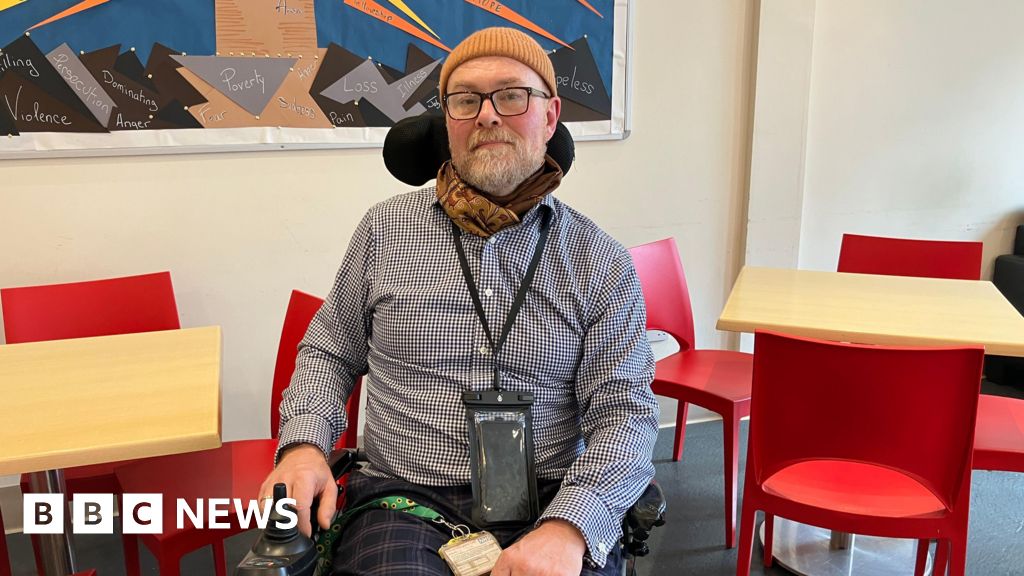
2 months agoThe Guardian view on long waits for disability benefits: the system should not push people closer to poverty | Editorial
Pip is designed to support disabled people with the additional costs of daily living and mobility, yet for many claimants it has instead become a source of prolonged uncertainty, financial hardship and distress. Waiting months and in some cases more than a year for a decision can push people into debt, rent arrears and poverty, especially as Pip unlocks other support such as carer's allowance.
UK news
fromCity Limits
2 months agoOpinon: When it Comes to Housing, Let's Put Families First
When families seek out apartments, they are searching for more than a place to lay their heads. They are searching for safety and community in neighborhoods with decent schools. When we fail to deliver affordable options that meet these needs, parents are forced to raise their children in overcrowded apartments, to shuttle between unstable living arrangements, or even to turn to temporary shelters.
New York City
Public health
fromSan Jose Spotlight
1 month agoFuture of Santa Clara County guaranteed income programs uncertain - San Jose Spotlight
Santa Clara County piloted four guaranteed basic income programs providing $1,200 monthly for two years to selected low-income residents; future funding remains uncertain.
Fundraising
fromNonprofit Quarterly | Civic News. Empowering Nonprofits. Advancing Justice.
1 month agoGiving Bigger, Organizing More Boldly: Centering Disability Justice | Nonprofit Quarterly | Civic News. Empowering Nonprofits. Advancing Justice.
Centering Disability Justice reveals marginalized edges hold deep lessons and requires investing wealth and inheritance into movement infrastructure for collective liberation.
Social justice
fromNonprofit Quarterly | Civic News. Empowering Nonprofits. Advancing Justice.
1 month agoGrowing a Solidarity Economy | Nonprofit Quarterly | Civic News. Empowering Nonprofits. Advancing Justice.
Solidarity economy centers people and planet and needs expanded capital, responsive infrastructure, international solidarity, and compelling stories to connect and scale cooperative practices.
US politics
fromNonprofit Quarterly | Civic News. Empowering Nonprofits. Advancing Justice.
2 months agoFunders Must Support Advocates Fighting Back Against Pronatalism | Nonprofit Quarterly | Civic News. Empowering Nonprofits. Advancing Justice.
The Trump administration prioritized pronatalist policies grounded in reproductive futurism, promoting heteronormative family ideals while eroding rights for transgender, queer, and marginalized people.
fromTruthout
2 months agoThe Affordability Crisis Is Real. Only Worker Organizing Can Offer Solutions.
A friend recently told me a story that made this reality impossible to ignore. Her elderly parents live near an elementary school not far from the nation's capital. For several years, they had been quietly raising money to provide groceries and basic supplies for families whose children were going hungry. When Republicans suspended SNAP benefits, the need surged overnight. What had been a steady act of care suddenly became an emergency response.
US politics
fromTruthout
2 months agoA Tech Bro Think Tank Is Trying to Roll Back Evidence-Based Homelessness Policy
The Cicero Institute, created by tech investor Joe Lonsdale, has spent the past few years promoting aggressive policies targeting encampments for the unhoused and pushing cities to move away from Housing First, the U.S.'s primary model for responding to chronic homelessness. Over the summer, HUD quietly adopted several of Cicero's key recommendations. And the result was widespread panic among the local agencies responsible for keeping people housed.
US politics
fromNonprofit Quarterly | Civic News. Empowering Nonprofits. Advancing Justice.
1 month agoPhilanthropy Must Defend the Right to Bear Witness | Nonprofit Quarterly | Civic News. Empowering Nonprofits. Advancing Justice.
"Are you okay?" These were Alex Pretti's last words, said to a woman after ICE agents had tackled and pepper-sprayed her. Videos from bystanders show Pretti holding up a phone, attempting to document what was happening before he himself was pepper-sprayed, wrestled to the ground, and killed by those officers. He lost his life not for committing violence, but for documenting it, and stepping in to protect someone facing it.
US politics
[ Load more ]