#whimpact
#whimpact
[ follow ]

#nonprofit-leadership
Non-profit organizations
fromNonprofit Quarterly | Civic News. Empowering Nonprofits. Advancing Justice.
2 days agoHow Dissolving Your Nonprofit Can Strengthen the Sector | Nonprofit Quarterly | Civic News. Empowering Nonprofits. Advancing Justice.
Nonprofit leaders must sometimes choose to dissolve organizations intentionally rather than forcing survival in a weakened state.

Non-profit organizations
fromNonprofit Quarterly | Civic News. Empowering Nonprofits. Advancing Justice.
2 days agoHow Dissolving Your Nonprofit Can Strengthen the Sector | Nonprofit Quarterly | Civic News. Empowering Nonprofits. Advancing Justice.
Nonprofit leaders must sometimes choose to dissolve organizations intentionally rather than forcing survival in a weakened state.



Media industry
fromNonprofit Quarterly | Civic News. Empowering Nonprofits. Advancing Justice.
4 days agoPolitics in an Attention Economy | Nonprofit Quarterly | Civic News. Empowering Nonprofits. Advancing Justice.
Candidates must be cultural figures to succeed in today's American politics, navigating an attention economy shaped by algorithms.
Non-profit organizations
fromNonprofit Quarterly | Civic News. Empowering Nonprofits. Advancing Justice.
3 days agoAI in the Nonprofit Sector Is a Question of Governance, Not Just Technology | Nonprofit Quarterly | Civic News. Empowering Nonprofits. Advancing Justice.
Nonprofits face a critical choice in shaping AI governance or risk external control over its implementation and impact.
fromTechCrunch
1 week agoMeta launches new initiative to support entrepreneurship, drive AI adoption | TechCrunch
In the AI era, it should be easier than ever for people to build new businesses. We want to build the services that enable this. This is important for ensuring that people broadly share in the prosperity created by superintelligence.
European startups
#sustainability
Artificial intelligence
fromFast Company
1 week agoSustainability is dead-long live purpose
Sustainability has been deprioritized, while purpose remains essential for long-term business success amidst the rise of AI.
fromFast Company
2 months agoEnvironment
After a rough year, what will will corporate impact and sustainability look like in 2026?
Impact and sustainability leaders will shift from visible commitments to grounded, performance-linked strategies and adaptive risk management amid political, economic, and technological pressures.
Online Community Development
fromDaily Coffee News by Roast Magazine
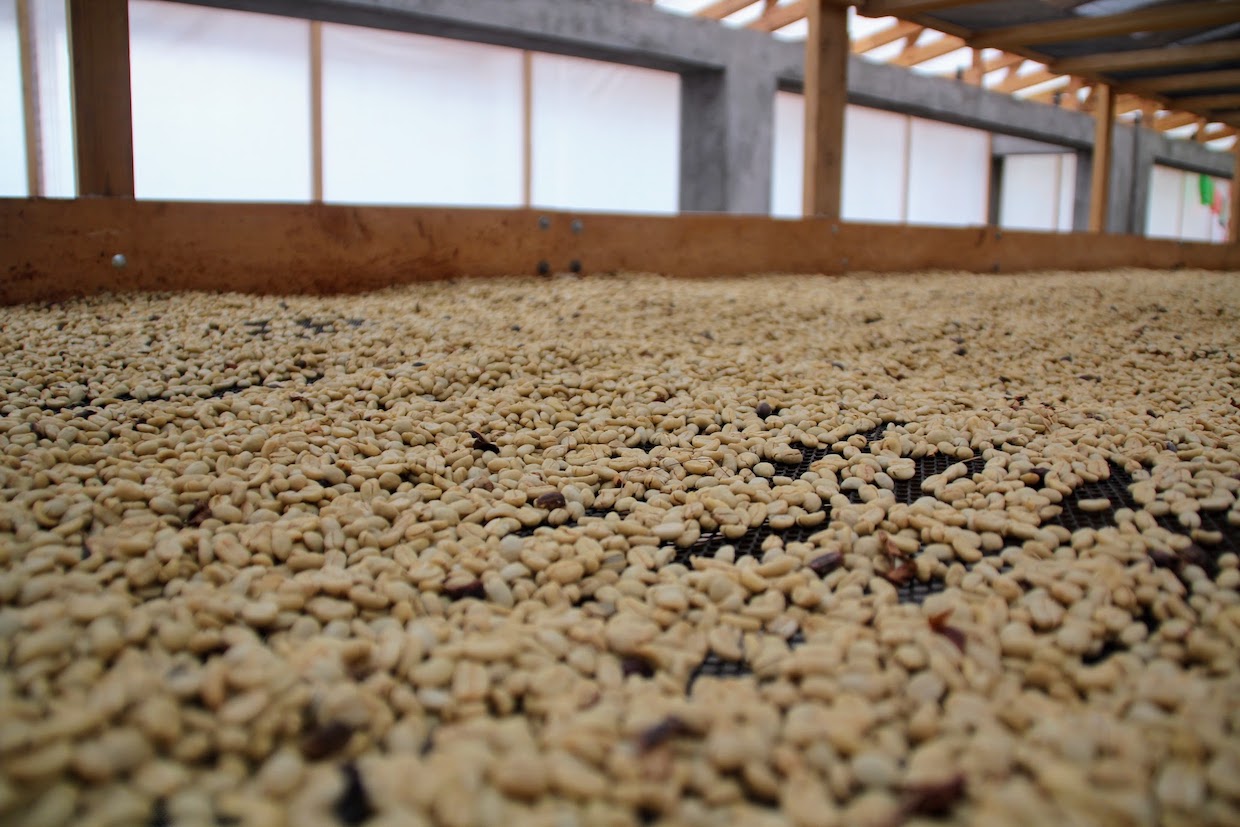
1 week agoStudy: Social Enterprises Beat Corporate Sustainability in Farmer Well-Being
Social enterprises significantly enhance farmer well-being compared to traditional corporate sustainability programs and cooperatives in the coffee and cocoa sectors.




fromFortune
3 days agoMacquarie bets impact investing can fill an Asian financial access gap left by microfinance and commercial banks | Fortune
"The specific barrier is capital," says Lisa George, global head of the Macquarie Group Foundation. "Without access to capital, it's very hard to get social mobility and educational mobility in life."
Fundraising
Books
fromNonprofit Quarterly | Civic News. Empowering Nonprofits. Advancing Justice.
2 weeks agoOf Tech Bros and Eco Collapse-Warnings from McGovern's 99th Day | Nonprofit Quarterly | Civic News. Empowering Nonprofits. Advancing Justice.
Gerry McGovern's '99th Day' argues that environmental collapse stems from technological excess, data waste, and toxic masculinity culture, positioning humans as the primary problem.
fromHarvard Business Review
1 week agoTreat Nonprofits as Strategic Partners, Not Just Philanthropic Recipients
Most for-profit companies still confine nonprofit relationships to corporate philanthropy. Donations flow through foundations, annual reports highlight community contributions, and nonprofit engagement is framed as evidence of corporate responsibility.
Non-profit organizations
fromHarvard Business Review
2 weeks agoHow To Deliver on ESG Initiatives in Emerging Market
Multinational firms are under rising pressure-from investors, regulators, and employees-to demonstrate positive societal impact in the places where they do business. With ESG-focused institutional investments projected to reach nearly $34 trillion this year and roughly 90% of large U.S. companies now disclosing ESG reports, these pressures are now a central part of corporate strategy.
Business
Fundraising
fromNonprofit Quarterly | Civic News. Empowering Nonprofits. Advancing Justice.
2 days agoUsing AI for Fundraising Still Requires Human Strategy | Nonprofit Quarterly | Civic News. Empowering Nonprofits. Advancing Justice.
AI should support strategy in nonprofit fundraising, not replace the essential human elements of trust and relationship building.
fromEntrepreneur
3 weeks agoShe Invited Homeless Men to Run. That Instinct Fueled Her $100M Business.
Why do I get to be the runner, and these guys get to be the homeless guys on the corner? Why can't we all be runners? She didn't have an answer. It would've been easy to let that question dissolve with her footsteps. Most people would have. But Mahlum saw something in those men that others had missed.
Running
Silicon Valley
fromNature
2 weeks agoHow wealthy tech entrepreneurs seek to shape politics, culture and the future - and why we must resist
Wealthy tech executives have transformed from conventional lobbyists into radical ideologues wielding platforms and networks to influence democratic elections and reshape political power structures.
Non-profit organizations
fromNonprofit Quarterly | Civic News. Empowering Nonprofits. Advancing Justice.
2 weeks agoDisability Inclusion Isn't "Special Needs"-It's Smart Philanthropy | Nonprofit Quarterly | Civic News. Empowering Nonprofits. Advancing Justice.
Cuts to special education oversight threaten funding and services for millions of children with disabilities, risking progress in disability inclusion.
Social media marketing
fromPR Daily
3 weeks ago6 steps for creating GEO friendly social posts - PR Daily
Social media managers must optimize content structure with frontloaded questions, lists, and clear formatting to improve discoverability in AI-driven search and recommendation systems across platforms.
Fundraising
fromwww.theguardian.com
2 weeks agoThe Guardian view on falling donations to charity: rising living costs are part of the problem, but not all of it | Editorial
UK charitable donations fell from 15.4 billion to 14 billion, marking the first overall drop since 2021, with fewer donors giving smaller amounts despite high-profile fundraising campaigns.
Online Community Development
fromNonprofit Quarterly | Civic News. Empowering Nonprofits. Advancing Justice.
1 month agoWellbeing Is Infrastructure | Nonprofit Quarterly | Civic News. Empowering Nonprofits. Advancing Justice.
NPQ launches a seven-part series examining how technology, systems, and processes shape workplace wellbeing and organizational sustainability in nonprofits.
Fundraising
fromTechCrunch
2 weeks agoThe billionaires made a promise -- now some want out | TechCrunch
The Giving Pledge, launched by Buffett and Gates in 2010 to encourage billionaire philanthropy, has dramatically declined in participation and effectiveness despite massive wealth concentration globally.
fromwww.theguardian.com
1 month agoReaders reply: what would be the most socially useful way to spend a billion dollars?
I've always thought it would be good to acquire an old warehouse in every town throughout the land and convert it into low-rent community workspaces for artists, local charities and small businesses getting off the ground. A kind of people's WeWork. What would others do with a humungous, but not unlimited, pile of dosh to benefit society? Roland Freeman, West Yorkshire Send new questions to nq@theguardian.com.
Left-wing politics
fromArchDaily
1 month agoDesigning With, Not For: CatalyticAction's Participatory Practice
Architecture is often evaluated through finished forms, yet some practices operate in a different register, one where design unfolds through relationships, time, and use rather than through a single outcome. For CatalyticAction, participation is not a parallel social activity, but the means through which spaces are conceived, constructed, and sustained over time. Based between Beirut and London, the practice has worked across the Middle East and Europe, developing public spaces, schools, playgrounds, and everyday urban infrastructures through long-term collaboration with local communities.
Design
#ai-infrastructure
Environment
fromNonprofit Quarterly | Civic News. Empowering Nonprofits. Advancing Justice.
1 month agoUnderstanding AI's Thirst for Water: An Explainer | Nonprofit Quarterly | Civic News. Empowering Nonprofits. Advancing Justice.
AI data centers require massive resource-intensive infrastructure that consumes nearly double the power of traditional centers, prompting calls for a national moratorium on new construction until environmental impacts are fully assessed.

Environment
fromNonprofit Quarterly | Civic News. Empowering Nonprofits. Advancing Justice.
1 month agoUnderstanding AI's Thirst for Water: An Explainer | Nonprofit Quarterly | Civic News. Empowering Nonprofits. Advancing Justice.
AI data centers require massive resource-intensive infrastructure that consumes nearly double the power of traditional centers, prompting calls for a national moratorium on new construction until environmental impacts are fully assessed.
Fundraising
fromFortune
3 weeks agoAsia's family offices and corporations must step up to replace a cash-strapped UN and fill the SDG funding gap | Fortune
Asia's wealthy families and corporations must replace declining UN funding through coordinated philanthropic efforts and strategic partnerships to address regional development challenges.
fromwww.pressdemocrat.com
1 month agoHow this Bay Area CEO is living up to his company's name and motto
Johnson said this is occurring, in part, because companies are needing to spend more money on information technology compliance and security. It comes down to larger companies being able to withstand the economic burdens of doing business. Ultimately he believes members benefit from mergers once they get accustomed to the changes in exchange for the tradeoffs such as more services, more hours that bank personnel are available and better technology.
Business
fromNonprofit Quarterly | Civic News. Empowering Nonprofits. Advancing Justice.
1 month agoThis Is Not a Retreat | Nonprofit Quarterly | Civic News. Empowering Nonprofits. Advancing Justice.
The change in the administration's tactics in Minneapolis is not a retreat. Instead, they are regrouping and planning another mode of attack, with the hopes that their repression might be met with resistance that is easier to control and contain. People who garner their relevancy and power through the dehumanization and oppression of others will do whatever it takes to cling to their soulless sense of self.
US politics
Miscellaneous
fromBusiness Matters
1 month agoHow Sheikh Ahmed Dalmook Al Maktoum Models the Institutional Turn in Impact Investing
Impact investing is shifting from informal family-office networks to institutionalized channels that demand auditable governance, standardized reporting, and third-party verification to enable larger co-investments.
fromFast Company
2 months agoDisruptive innovation is key to building world-changing companies, but it needs a moral compass in the age of AI
At the Consumer Electronics Show in early January, Razer made waves by unveiling a small jar containing a holographic anime bot designed to accompany gamers not just during gameplay, but in daily life. The lava-lamp-turned-girlfriend is undeniably bizarre-but Razer's vision of constant, sometimes sexualized companionship is hardly an outlier in the AI market.
Gadgets
fromTechCrunch
2 months agoObvious Ventures lands fund five with a 360-degree view of planetary, human, economic health | TechCrunch
"We invest in the frontiers of math and science and physics, and we like to celebrate math in our fund numbers as well," James Joaquin The firm's first fund was $123,456,789, and the second was $191,919,191 (a palindromic number that reads the same forward and backwards). The third was $271,828,182 (which mathematicians and engineers instantly recognize as e, or Euler's number), while the fourth fund, announced in mid-2022, continued the tradition as another palindrome at $355,111,553.
Venture
fromHyperallergic
2 months agoArt for Dignity
As if demolishing the East Wing, gutting arts agencies, and slapping his name and face on several federal buildings weren't enough, the US president now wants to do away with a DC building known as the "Sistine Chapel of New Deal art." This week, we reported on a burgeoning campaign to save the Wilbur J. Cohen Federal Building, which houses murals by Ben Shahn, Philip Guston, Seymour Fogel, and other major American artists. We will continue to follow this story.
Arts
fromPsychology Today
2 months agoWe Do Not Have the Luxury to Be Bystanders in a Hybrid World
Meanwhile, signs that the planet's health is worsening are unmistakable. Last year was among the warmest on record globally, with average temperatures far above long-term baselines and heat driving more extreme weather worldwide. In 2025, brutal heatwaves baked much of the Indian subcontinent with temperatures near 48 °C, stressing health systems and agriculture across India and Pakistan. Europe and the Mediterranean faced record wildfires and prolonged heat, forcing tens of thousands to evacuate and worsening drought conditions.
World news
fromPsychology Today
2 months agoHow Can We Change the World?
There's a myth in our society that real change requires force, strength, and domination. We celebrate athletes, CEOs, and politicians who crush their opponents. But history tells a different story. Lasting social change has often been triggered by humble people whose weapons were passion, principle, and an unwavering commitment to justice and the truth - not the truth we see on TV or read in print media, but rather the truth that we feel deep inside ourselves.
Social justice
Fundraising
fromNonprofit Quarterly | Civic News. Empowering Nonprofits. Advancing Justice.
1 month agoInformation as Civic Infrastructure-and How Philanthropy Can Support the Ecosystem | Nonprofit Quarterly | Civic News. Empowering Nonprofits. Advancing Justice.
Philanthropy should prioritize funding the information ecosystem as foundational infrastructure, since well-designed programs fail without reliable, trusted information enabling public understanding and collective decision-making.
fromNonprofit Quarterly | Civic News. Empowering Nonprofits. Advancing Justice.
1 month agoPhilanthropy Must Defend the Right to Bear Witness | Nonprofit Quarterly | Civic News. Empowering Nonprofits. Advancing Justice.
"Are you okay?" These were Alex Pretti's last words, said to a woman after ICE agents had tackled and pepper-sprayed her. Videos from bystanders show Pretti holding up a phone, attempting to document what was happening before he himself was pepper-sprayed, wrestled to the ground, and killed by those officers. He lost his life not for committing violence, but for documenting it, and stepping in to protect someone facing it.
US politics
fromFast Company
2 months agoWhy inclusion is the new standard for economic growth
In places where inclusion is part of the infrastructure of their economy-supply chains, procurement processes, capital access, or business ownership-people thrive. Inclusive economies create more resilience by expanding the base of potential business owners who can build, own, innovate, and hire. They allow more opportunities for homeownership and investing in the longevity of communities. As our economy becomes increasingly stratified and volatile, we need as much resiliency as we can get.
Social justice
Marketing
fromBuffer: All-you-need social media toolkit for small businesses
2 months agoWe Should All Be Building People-First Communities in the Age of AI
Human connection and community-driven trust outperform synthetic signals; prioritize building real relationships because people, not AI, scale lasting trust for brands and creators.
fromNonprofit Quarterly | Civic News. Empowering Nonprofits. Advancing Justice.
2 months agoNonprofits Devise Creative Solutions to Address Federal Funding Cuts | Nonprofit Quarterly | Civic News. Empowering Nonprofits. Advancing Justice.
Over the years, I've worked as a consultant on numerous federal grant projects from the US Department of Agriculture and elsewhere that focused on local economic development and were granted to nonprofits serving their communities. But since the 2024 elections, the focus of my work-and that of the small New Mexico-based consulting firm, Prospera Partners, that I lead-has shifted to help nonprofits develop strategies to sustain themselves despite federal cuts in funding and to programs that once supported their work.
Non-profit organizations
fromNonprofit Quarterly | Civic News. Empowering Nonprofits. Advancing Justice.
2 months agoDoes Personal Investment Hurt Fundraising? | Nonprofit Quarterly | Civic News. Empowering Nonprofits. Advancing Justice.
I've seen this before-many times, in fact. What you're describing is not unheard of in the nonprofit sector. Founder energy is one of the most powerful forces driving new missions into the world. It can also be one of the riskiest. Many organizations, especially those built from lived experience, passion, and necessity, begin with little more than a vision, a problem to solve.
Fundraising
fromThe Mercury News
2 months agoFeeding the need: How to keep giving in 2026
While there are still January holidays on the horizon for Sikhs, Hindus and Muslims, today is the 12th of Christmas - and then the holly-jolly season will be quickly wrapped and done. But looming end of the winter holidays doesn't mean that you have to give up the spirit of giving. In fact, why not make it a new year's resolution to keep donating all year long? Food insecurity, unfortunately, doesn't stop, and nonprofit organizations tend to see a drop in donations at the beginning of the year.
Fundraising
fromwww.theguardian.com
2 months agoIt restored my hope': the five charities at the heart of the Guardian's 2025 appeal
When they meet, share stories and learn together, they build empathy and understanding that lasts a lifetime, Linda Cowie and Meg Grant said of the children who participate in the schools linking network they help run. The project, which now operates in 26 local authorities, pairs schools so pupils from different faiths, cultures and socioeconomic backgrounds can meet, spend time together and discover what they have in common.
Fundraising
[ Load more ]