Education
fromFuturism
16 hours agoAI Forces College Professor to Get Typewriters for Entire Class
Typewriters in class encourage students to engage more with each other and the learning process, contrasting with modern digital distractions.
The assumption that difficulty with reading or writing signals lower intelligence or diminished leadership ability is not supported by evidence. Decades of research show little to no correlation between dyslexia and lower general intelligence.
'We absolutely should challenge stereotypes about ageing. Children do build their understanding of the world from these tiny repeated narratives. If old always equals useless or confused then that's going to shape their perception.'
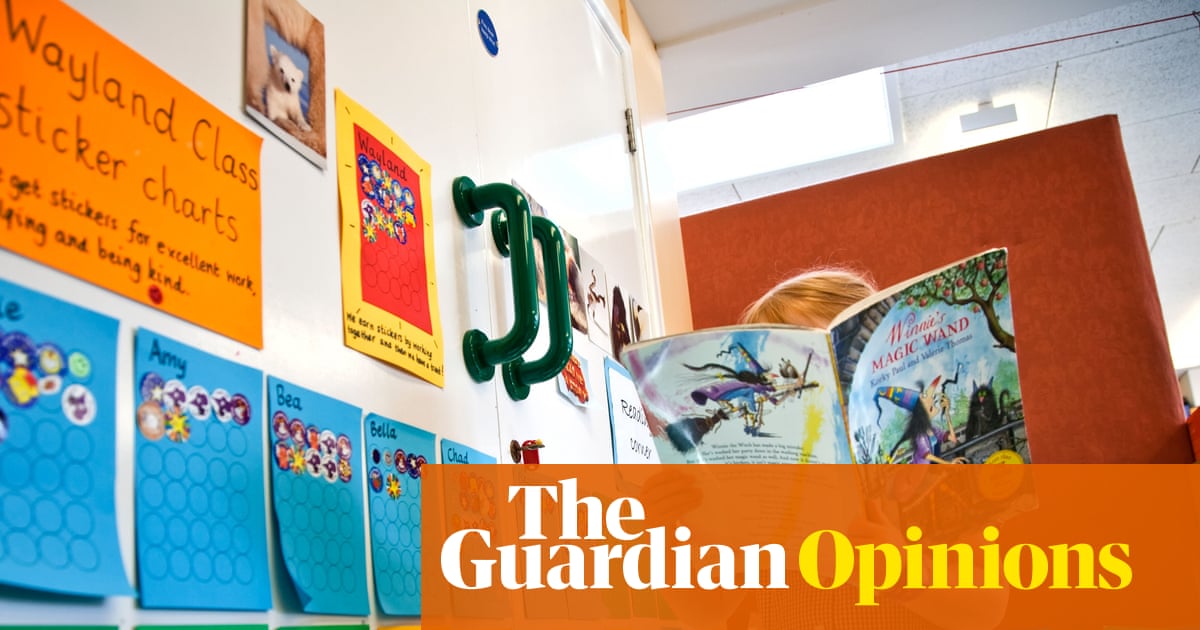
Research has shown there is a reading for pleasure crisis among children in the UK, where enjoyment of books has fallen to its lowest level in two decades. Not so here at Christ Church primary, a tiny Church of England school tucked behind the maze of HS2 construction works in Camden, north London, where children fizz with excitement about books.
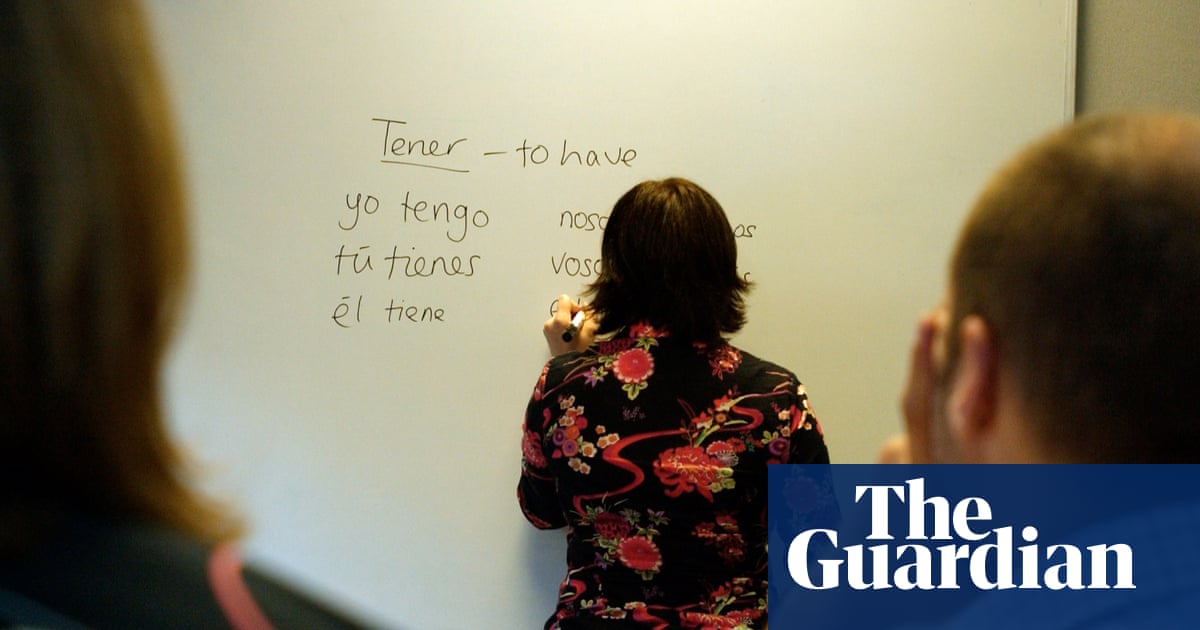
Parents often hear the warning: "If your child doesn't learn a second language early, they'll never be fluent." Adults, meanwhile, are told: "It's just too late for you to learn now." These claims are familiar and tidy, but misleading. Are they actually true? Is it better to learn a second language as a child or as an adult? The short answer is that it depends on what we mean by "better."
Being thrown into a group of new strangers each and every year, as is typical in so many American public school systems, is deeply evolutionarily unnatural. Under ancestral conditions, humans did not encounter strangers with nearly the same frequency that we experience now. And guess what? Humans have an entirely different way of interacting with strangers (including appropriate levels of hesitation and skepticism) than we have when interacting with others whom we know well.
Collective learning is how a group or system creates, improves, and keeps knowledge. This knowledge lasts beyond any one person or cohort. That is the most practical collective learning definition, because it shifts the focus away from individuals and toward the learning system itself.
The neural networks that process written and oral language are deeply intertwined and largely overlap when reading print books or listening to audiobooks. There isn't much of a difference between the brain network for reading and the brain network for language comprehension. The brain area we call the 'letter box,' which processes print, is not as engaged when you listen, but it has been shown that when some people listen to words, they visualize them, so the letter box gets activated as well.
The program introduces Cali, a "human-centered" AI tool designed to enhance-not replace-human support. Cali can converse in more than 140 languages and help students complete the Free Application for Federal Student Aid and the California Dream Act Application (CADAA). The tool is expected to reduce errors on the forms and help students stay on track toward enrollment and graduation.
Today's eLearning solutions use algorithms for many things, including recommendations for courses, tags for skills, scores for completions, heat maps, and metrics for engagement levels. Anyone interested in eLearning sees learning in new ways; all of those ways are measurable, sortable, and optimizable. We seem to have come a long way in terms of learning. Through data-driven learning, one can increase efficiency, personalize learning, and scale it up.
Rather than using the visual word form area in the reading brain, where images of correct spellings are stored in long-term memory for automatic proficient reading and composing, kids use technology tools, eliminating human thinking and making the machine do the work. These tools can circumvent cognitive processes, hindering elementary students from developing a large bank of correctly spelled words essential for automatic reading and literacy.
The most exciting moments for a teacher come when students stumble onto something unexpected-when they run to my office to tell me about a new twist in their thinking about birds in Sula or the discovery of yet another biblical reflection in Housekeeping. Those revelations come only when they survey the text as it is, not as they assume it to be.
What many reception teachers say they did not sign up for was spending large chunks of the school day managing toileting, feeding and basic self-care because growing numbers of children are arriving without those skills in place. New data points to a widening gap in England and Wales between what parents believe school ready means and what classrooms are actually experiencing
The effort to get a snapshot of kindergarten readiness is part of the National Survey of Children's Health, which collected information from thousands of parents and guardians about their child in five areas - early learning, motor skills, social-emotional development, self-regulation and health. The goal was to answer an overall question: Is your child ready for school? Readiness in California is on par with the nation's average, which also puts kindergarten readiness at two-thirds of 3- to 5-year-olds.