#william-mitchell
#william-mitchell
[ follow ]
#philosophy #political-polarization #morality #ethics #jurgen-habermas #public-sphere #democratic-theory


fromInside Higher Ed | Higher Education News, Events and Jobs
1 week ago"Viewpoint Diversity" and John Tomasi
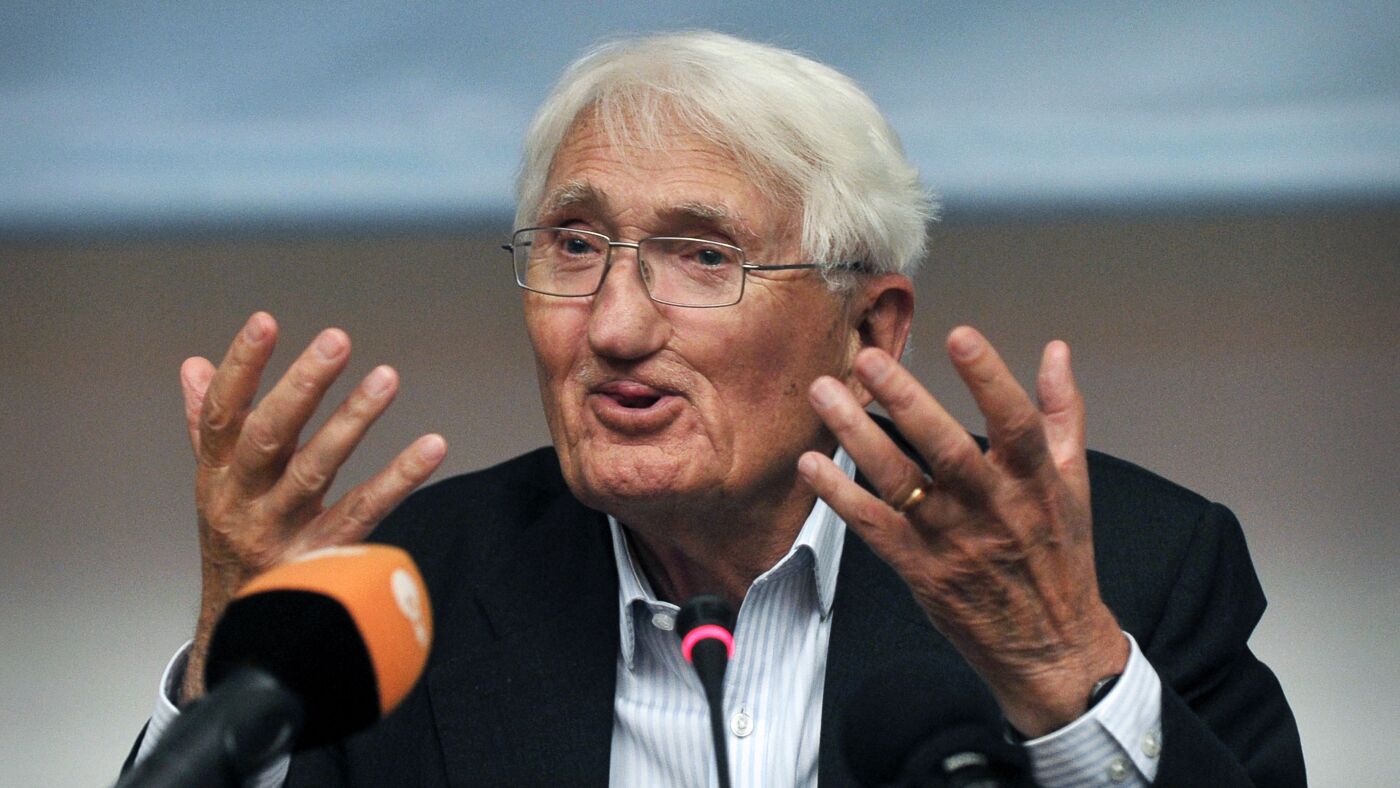
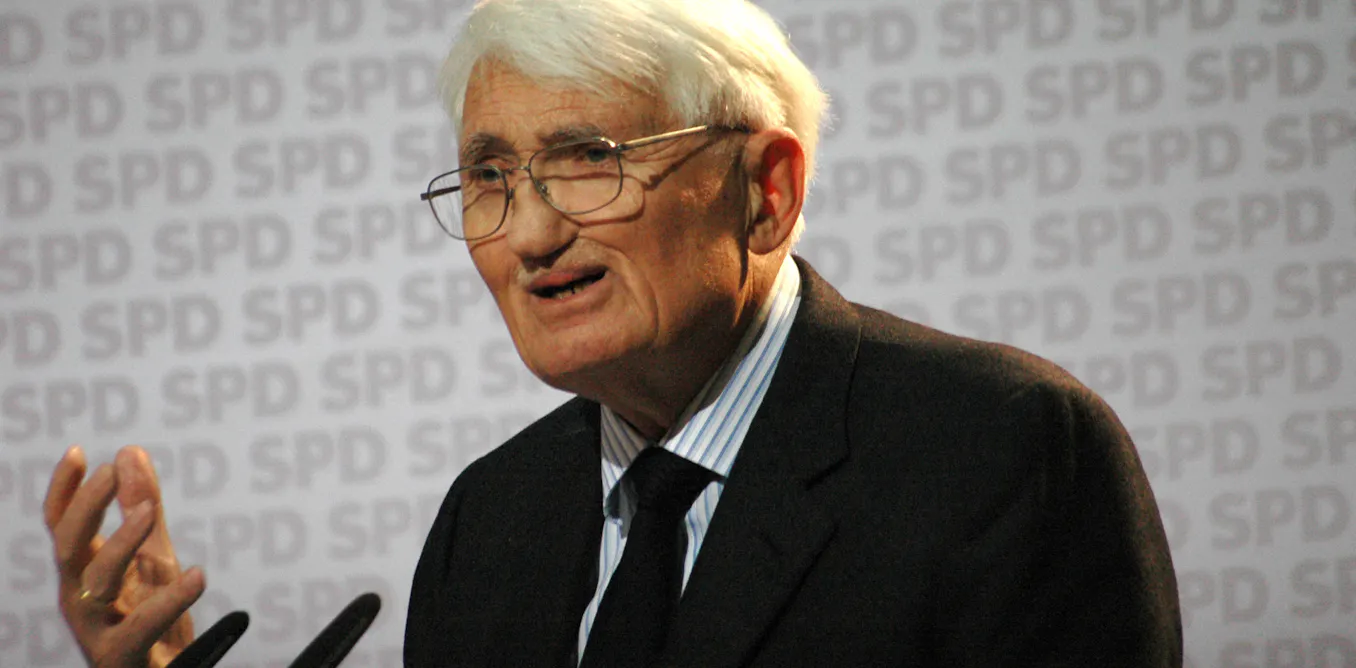
The concept of viewpoint diversity burst on the political scene in 2002 with the publication of David Horowitz's 'Academic Bill of Rights.' Horowitz argued that universities should seek greater pluralism and diversity.
Right-wing politics
US Elections
fromThe Nation
3 weeks agoGeorge Packer's Liberal Imagination
The Short American Century, spanning 1945-2016, progressed through four distinct eras of confidence, skepticism, exuberance, and hubris before ending with Trump's 2016 election, which shattered liberal consensus about permanent American dominance.
Psychology
fromPsychology Today
2 weeks agoHow Social, Cultural, and Political Structures Influence Our Feelings
Modern society's structural features—individualism, capitalism, democracy, and meritocracy—shape emotions that reflect both internalization of the outer world and externalization of inner experience.
fromwww.theguardian.com
2 weeks agoThe Guardian view on the legacy of Jurgen Habermas: philosophical sustenance for illiberal times | Editorial
The Theory of Communicative Action, his 1980s magnum opus, was not (to put it mildly) as accessible as some of his newspaper opinion pieces. But its central idea—that our nature as linguistic beings puts reason and the search for consensus at the core of who we are—remains an antidote both to intellectual relativism and Trumpian realism, which elevates national or individual self-interest above all other sources of human motivation.
Philosophy
fromInsideHook
1 month agoAre the Humanities Poised for an Academic Comeback?
Many colleges and universities have made cuts in these programs, often bolstering STEM programs at their expense. It's a situation that has sparked no small amount of impassioned editorials. The headline of a recent article at The Guardian by Alice Speri referenced an 'existential crisis at U.S. universities,' and Speri's reporting features numerous examples of undergraduate and graduate programs facing cuts or outright elimination.
Higher education
Law
fromAbove the Law
1 month agoNew Novel Skewers Law School Rankings, Faculty Politics, And When Legal Education Gets Kinky - Above the Law
Michael Orey's novel Dean's List satirizes the cutthroat world of law school rankings and administration, drawing from his two decades of experience navigating institutional politics and PR in legal academia.
Philosophy
fromwww.theguardian.com
2 weeks agoTalk is precious: in the age of communication collapse, Jurgen Habermas's message remains vital | Eva von Redecker
The Frankfurt School is a scholarly constellation pursuing critique as transformative description of reality, with Jürgen Habermas serving as a foundational figure who shaped generations of critical theorists despite controversies surrounding his positions on discourse ethics and power.
Philosophy
fromwww.theguardian.com
3 weeks agoJurgen Habermas obituary
Jürgen Habermas transformed from a Hitler Youth member into a leading defender of Enlightenment values and democratic theory after witnessing Nazi atrocities, dedicating his philosophy to ensuring collective democratic influence over society.
Higher education
fromInside Higher Ed | Higher Education News, Events and Jobs
1 month agoA Closer Look at Faculty Political Diversity
Liberal faculty members significantly outnumber conservative faculty members across academia, with ratios varying from 2:1 to 82:1 depending on discipline and study methodology.
fromHarvard Gazette
1 month agoExcerpt from 'The Cradle of Citizenship' by James Traub - Harvard Gazette
The same deep forces that afflict many Western nations have wrenched us apart: the transition to a postindustrial economy and the attendant erosion of working-class security, the demographic shift toward a "majority minority" nation, the cultural upheaval that has dethroned men, and especially white men, from their age-old dominance - and the rise of entrepreneurs of outrage eager to exploit all that free-floating anger.
Education
Philosophy
fromHarvard Gazette
3 weeks agoWhere have all the public intellectuals gone? - Harvard Gazette
Public intellectuals are essential in democratic cultures to articulate unformed ideas and help citizens understand their values, but conditions supporting intellectual life in America are eroding due to social and economic shifts.
fromPsychology Today
1 month agoThe Politics of Looking Away
Like us, you may feel paralyzed in the face of the relentless images of violence we see every day. Suffering children, military occupations, the devastated neighborhoods, the cries of parents mourning their dead-these scenes haunt us. Whether it is happening in Palestine or Minneapolis, we are witnesses to suffering, and that witnessing takes a heavy toll. Clearly, the devastating situations in the West Bank and Gaza and in Minneapolis differ
Social justice
Philosophy
fromwww.theguardian.com
3 weeks agoThe Guardian view on Adam Smith: he deserves rescuing from the free-market myth | Editorial
Adam Smith's economic philosophy has been oversimplified by free-market advocates who misrepresent his nuanced views on self-interest, morality, and the role of institutions in generating wealth.
fromwww.aljazeera.com
2 months agoCornel West: US is facing moral collapse and democratic decay
The academic and political activist discusses what he sees as a moral collapse in the US and a leadership crisis in the Democratic Party. In this episode of Talk to Al Jazeera, American philosopher and activist Cornel West delivers a searing critique of the United States, describing what he sees as moral collapse, democratic decay and spiritual bankruptcy. Drawing on the Black freedom struggle and his own run in the 2024 presidential election,
US politics
fromThe Nation
2 months agoFear of Nothing
February 2026 issue.When I was a child I was terrifiedof the space between One and Zero vast as the ages before my birthstrait as my death-late at night I heard my parents arguinglovingly in their locked room, the angora cat coming homewith a sparrow in her mouth, and the raindrops on the shinglescounting themselves-how to sleep, how to cross the empty placebetween the name "sparrow" and that limp thing crying,adamant, creating me with its cry
Writing
fromThe Conversation
1 month agoToday's obsession with authenticity isn't new - being true to yourself has troubled philosophers for centuries
All of us live in an age where we're bombarded by social media and artificial intelligence - when striving to be your authentic self becomes an increasingly difficult task. Yet, even if it has somehow become a common goal, it is unclear how many of us can truly define the "authenticity" that we say we are pursuing.
Philosophy

Education
fromBusiness Insider
2 months agoHigh schoolers are questioning capitalism. Here's how teachers are handling it.
High-school economics classes teach capitalism per state standards while striving for neutrality as social media politicizes economic topics and teachers adopt interactive methods to correct misconceptions.
fromPsychology Today
2 months agoThe Link Between Thinking and Being
Metaphors are linked to how we experience the world around us, according to seminal work by researchers George Lakoff and Mark Johnson. In English, we "move forward" with our lives and don't "retreat into" the past. We speak about people who are "cold as ice" and "heavy" matters we need to resolve. Some of these metaphorical expressions are more than just, well, expressions-they are actually based on our sensory experiences. This mind-body link is called "embodied cognition."
Science
fromemptywheel
2 months agoRegime Change By Patrick Deneen - emptywheel
The readings in my last series led me to see the genuine hatred conservatives have for what they call variously liberal hegemony, liberal ideology, left-wing ideology, and other names. David Brooks, newly ensconced at Yale and The Atlantic, is just sure it was liberals who caused Trump's wins, with their snotty "knowledge", and "refined tastes". I mocked this nonsense, but apparently Brooks was serious about the super bad feelings his people have about such things.
Right-wing politics
fromLGBTQ Nation
1 month agoPolitical pragmatism is not a moral failing. It may be the only thing that can save us. - LGBTQ Nation
He is not worthy of the presidency. He takes bribes blatantly. And now he's being a racist, blatantly. They were supposed to deport the dangerous criminals. They were not supposed to go after small children, storm schools, bring terror upon, you know, the little kids and the women and children, not just the immigrants in the school. All the children are scared.
US politics
Philosophy
fromApaonline
1 month agoThe Humanities Challenge: Expanding the Circle of Philosophy
Philosophy offers transformative insights and vision into human life, and public humanities must evolve beyond traditional academic formats to make philosophy accessible to broader audiences through innovative, engaging methods.

Philosophy
fromFast Company
1 month agoHow meekness was once considered a virtue-and how it could help us today
Meekness, docility, and condescension were historically understood as virtues but are now viewed negatively due to changed definitions and cultural values, though they retain practical value for living well.
fromThe Conversation
1 month agoMeekness isn't weakness - once considered positive, it's one of the 'undersung virtues' that deserve defense today
What do you envision when you think of meekness? You probably see a mousy doormat, someone sheepishly acquiescing to the will of the stronger. When Jesus says, "Blessed are the meek, for they shall inherit the earth," you might think that those wimps will hand it over without a whimper or word of objection to stronger, more ambitious people. The philosopher Friedrich Nietzsche called meekness "craven baseness."
Philosophy
fromApaonline
2 months agoWhy We Should Doubt that Academic Philosophy Benefits the Broader Public
A professional philosopher outside the academy walls can act as a popularizer (the goal here is to make philosophy more accessible to the general public), an applied ethicist (the major task is to offer an analysis of various specific moral issues that arise within a society), and a public intellectual (I limit this role to questions that have political connotation). Of course, there are overlaps between these roles and they certainly do not exhaust all possible forms of public engagement of a professional philosopher.
Philosophy


fromPsychology Today
1 month agoIf Justice Doesn't Exist, Then Numbers Don't Either
A drawn circle is at least something physical. You can see it, touch it, erase it. The skeptic can still say, "Circles are grounded in physical reality. Justice is different; it's just an idea in your head." So let's talk about the number two. Point to it. Not two apples, not two fingers, not a numeral on a page-that's just a symbol.
Philosophy
Philosophy
fromApaonline
2 months agoRecently Published Book Spotlight: The Rise of Polarization: Affects, Politics, and Philosophy
Prevailing accounts of affective polarization misdiagnose the phenomenon by focusing on survey patterns instead of the underlying narrative and affective practices that shape political life.
fromApaonline
1 month ago"Philosophical Projects: Bringing Everyday Life into Intro to Philosophy," Mateo Duque
I have been teaching Introduction to Philosophy at least once a year since 2012, beginning in my second year of graduate school at the CUNY Graduate Center. Teaching in New York City shaped me in countless ways, and each new iteration of "Intro" has pushed me to refine the course-even if only incrementally. The class I teach now at Binghamton University looks very different from the one I first taught as a graduate student using a borrowed syllabus.
Philosophy
fromApaonline
2 months agoTeaching Normative and Applied Ethics: How, and to What End? Stephen Scher
Two senior physicians who had read our first book, Rethinking Health Care Ethics (2018), noted that in their clinical work, they inescapably address many ethical problems, large and small, on the spot, in the course of providing patient care. They also observed, however, that the resident bioethicist cautioned, when presented with one of their typical problems, that it would take him days or even weeks to reach a proper solution.
Philosophy
Philosophy
fromApaonline
2 months agoIn the Midst of a Crisis: Relational Liberalism and the Contemporary Challenges to Democratic Legitimacy
Contemporary democracies face a legitimacy crisis driven by widespread erosion of trust, causing representation breakdowns, unchecked power, and extreme asymmetries in wealth, status, and influence.
fromPsychology Today
1 month agoA Better Grammar for Political Debates
I am using the word pragmatism in a specific sense. I am not speaking about being pragmatic as a political tactic; deciding what issues should be given priority and what battles to choose, or a willingness to compromise, or a recognition that there are limits to what can be accomplished at any time. I am writing now about pragmatism in a meaning closer to its philosophical origin in the writings of William James-that truth is not found in abstract principles or beliefs,
Philosophy
fromPsychology Today
2 months agoA Third Kind of Philosophy
Many philosophers strike me as like Polish apparatchiks in 1983-they turn up to work and do what they did yesterday just because they don't know what else to do, not because they seriously believe in the system they are maintaining. I think it's not been fully appreciated how much of a blow it is to the confidence of the field's youth that scientific ambitions are increasingly abandoned as untenable.
Philosophy
fromPsychology Today
2 months agoWhat's the Point of Philosophy?
Unlike me, Dan Dennett, or-I suspect-most scientists studying the brain, Richard maintains that science is: i) neutral between the view that consciousness is (to simplify) identical to parts of your brain and what goes on inside of it, and the view that consciousness is a fundamental property of reality, found in all particles of matter (or, for that matter, other theories such as dualism and idealism) and ii) to be sharply distinguished from philosophy.
Philosophy
Philosophy
fromApaonline
2 months agoWhy Reflections on Teaching Philosophy Matter: A Call for Contributions
Effective philosophy teaching cultivates student participation through course design, assessments, and informal pedagogies that encourage thinking aloud, testing partial ideas, and revising views publicly.
fromThe Nation
2 months agoHow Was Sociology Invented?
What I mean is that 'religion' was the way the classical sociologists like like Emil Durkheim, Georg Simmel, and Max Weber first managed to turn 'society' into something you could actually study. Durkheim's Elementary Forms defines religion as a system of beliefs and practices tied to sacred things, and what matters there is how those beliefs and rituals bind people together into a moral community-the church. For him, the believer isn't wrong to think he depends on a higher power.
Philosophy
fromPsychology Today
2 months agoWhy You Can't Rely on Your Own Morality Alone
What does it mean to say that you are restrained solely by your own morality, by your own mind? The conscience is often described as an inner voice telling us what to do when others may be opposed. A moral compass is that which distinguishes between right and wrong, good and bad. Our conscience, our moral compass, sets the groundwork for doing the right thing.
Philosophy
[ Load more ]