#world-war-i
#world-war-i
[ follow ]
#world-war-ii #history #trench-warfare #western-front #military-history #veterans-day #artillery-bombardment
fromwww.dw.com
1 month ago1916: The bloody battle of Verdun
It was still early in the morning when a rain of fire fell on the forts and trenches of Verdun. With 300 trainloads of ammunition, the Germans had been firing their artillery for hours on end. The thundering of cannons could be heard 150 kilometers (93 miles) away. The chief of the German General Staff, Erich von Falkenhayn, had given the order to attack the French.
History
fromWorld History Encyclopedia
1 month ago10 Maps of World War I
This collection of maps tells the story of World War I (1914-1918), a global conflict that originated in Europe and emerged from a combination of militarism, alliance systems, imperial rivalries, and nationalist tensions among the major powers. Triggered by the assassination of Archduke Franz Ferdinand in June 1914, the First World War rapidly escalated into a multifront struggle involving the Allied Powers (notably Britain, France, and Russia, later joined by the United States) and the Central Powers (primarily Germany, Austria-Hungary, and the Ottoman Empire).
History

fromWorld History Encyclopedia
1 month agoThe 1918 Battle of the Marne: WWI's Turning Point
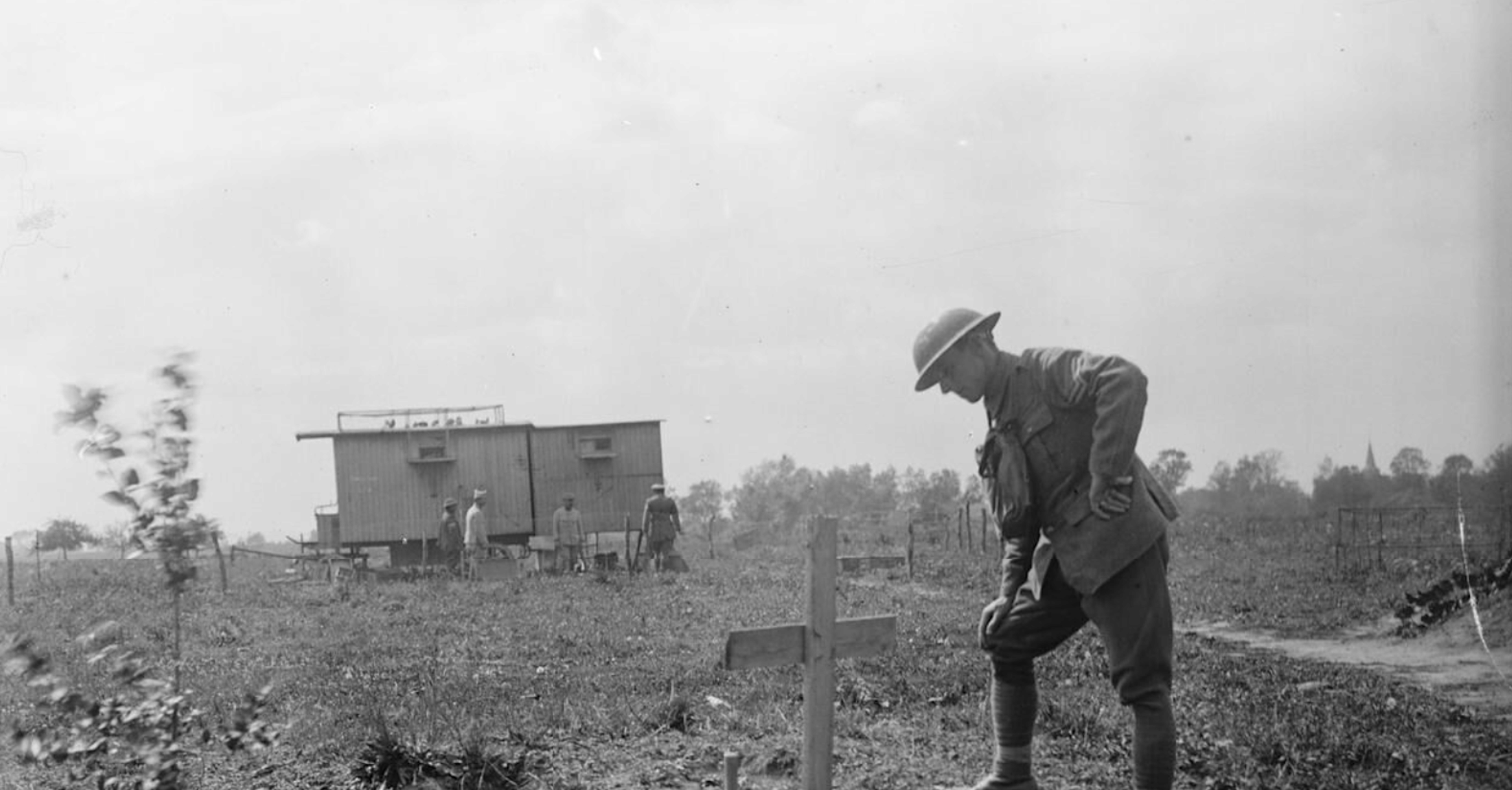
The Second Battle of the Marne took place in July and August 1918 and saw Germany's last advance of the Spring Offensive rebuffed by a strong Allied counterattack. With hundreds of thousands of US troops landing in Europe each month and with hundreds of new tanks at their disposal, the Allied divisions - including French, British, US, Italian, Canadian, and Australian troops - pushed the German Army into what became a permanent retreat.
History
fromWorld History Encyclopedia
1 month agoGerman Spring Offensive: Ludendorff's Last Chance to Win WWI
The German Spring Offensive, also called the Ludendorff Offensive after its commander, was the last major German advance of the First World War (1914-18). From March to July 1918, Ludendorff launched five major attacks on the Western Front to break the deadlock of trench warfare. The Allied resistance, use of tanks, and massive reserves, along with German logistical failures, meant that the offensives, despite each starting well, eventually petered out.
History
History
fromWorld History Encyclopedia
2 months agoHow did a single road save Verdun from falling in WWI?
The Battle of Verdun (Feb–Dec 1916) embodied German attrition strategy, inflicted massive casualties with little strategic gain; France held, leaving Germany too exhausted for major offensives until 1918.
fromwww.dw.com
3 months agoThe Christmas Truce of 1914: When the guns fell silent DW 12/24/2025
Between minefields and barbed-wire fences, millions of soldiers faced each other in trenches along the Western Front, sometimes only some 30 meters apart. The combat zone stretched from the English Channel through Belgium and France to the Swiss border. As the war dragged on, soldiers huddled in their dugouts, where rats, lice, the cold and poor food wore them down, and death hung over them.
History

fromWorld History Encyclopedia
4 months agoWhy did WWI soldiers fear gas more than bullets or bombs?
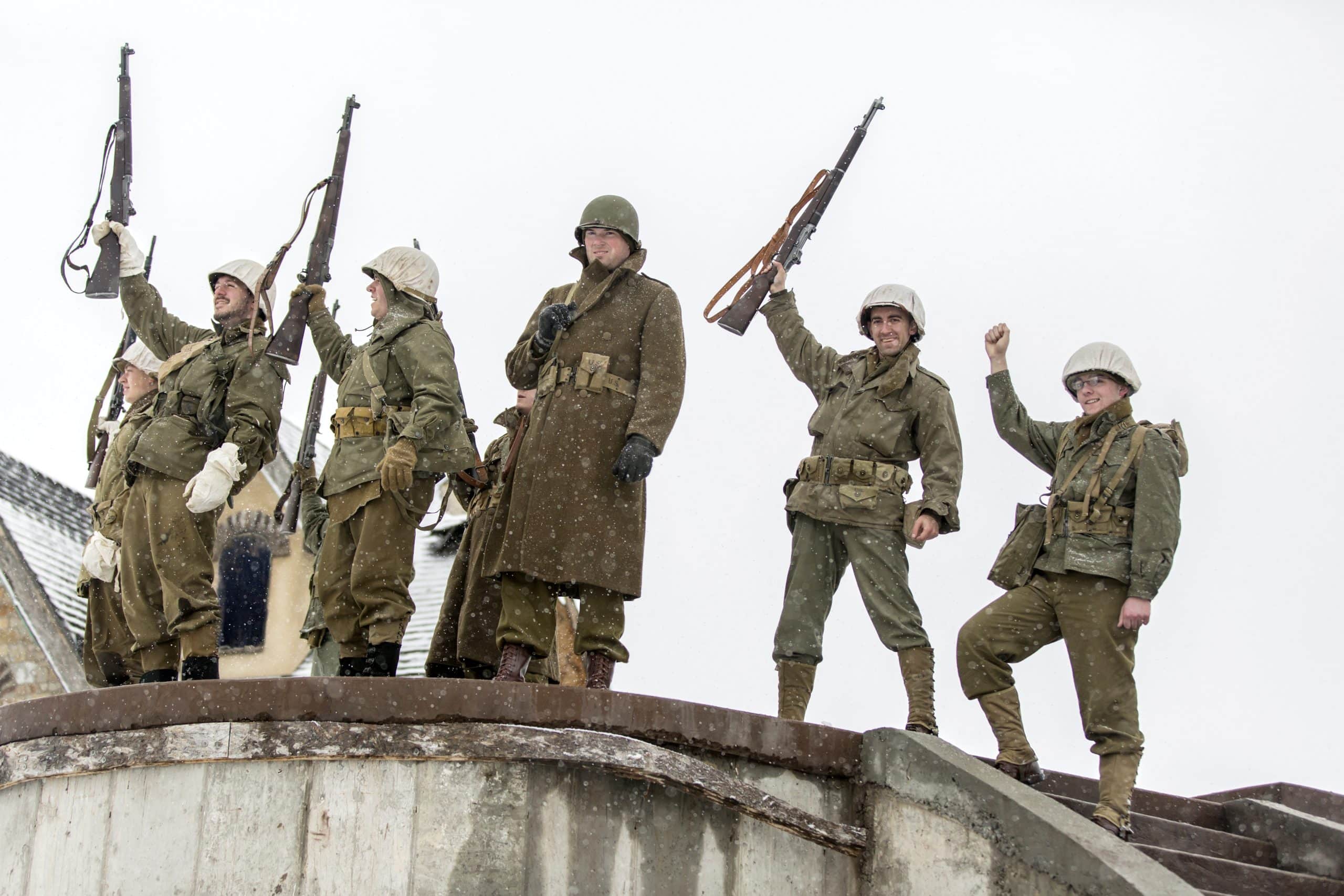
Then, from April 1915, a new nightmare began: gas warfare. Lethal poisonous gas was first used by the German Army in the war, but it was soon adopted by all sides. Although there were often terrible and lasting consequences for the individual soldiers who experienced a gas attack, the weapon did not prove strategically decisive since wind and countermeasures like gas masks frequently negated its effects.
History
fromwww.dw.com
4 months agoWorld War I Armistice Day remembered in Ypres and elsewhere DW 11/11/2025
Soldiers, veterans, politicians and onloookers gathered in Ypres in western Belgium on Tuesday to commemorate the 107th anniversary of the end of World War I in 1918. They laid wreaths, often commemorative poppies, at the newly renovated Menin Gate memorial to the fallen in Ypres, a Belgian town at the heart of the fighting more or less throughout the four-year war which became synonymous with the conflict on the Western Front.
Miscellaneous
Film
fromwww.theguardian.com
4 months agoThe Choral review Ralph Fiennes leads the choir in impressively unsentimental Alan Bennett fable
A restrained World War I drama shows music's power to redeem a Yorkshire community, blending wit, poignancy, and unsentimental examinations of sex, grief and mortality.


fromwww.theguardian.com
5 months agoMessage in a bottle from first world war soldier found on remote Australian beach
Having a real good time, the letter pulled from inside a glass Schweppes bottle said. Food is real good so far, with the exception of one meal, which we buried at sea. Neville, who was killed in action in France in April 1917, aged 28, had departed Adelaide aboard a troopship three days earlier. The dear old (HMAT) Ballarat is heaving and rolling, but we are as happy as Larry, he wrote of the ship, which was later torpedoed and sank in April 1917.
World news
fromOregon ArtsWatch * Arts & Culture News
6 months agoFilmWatch Weekly: 'The History of Sound' makes a powerful echo, plus a fall film festival frenzy takes hold * Oregon ArtsWatch
David's a musicologist, even if he might not apply that word, which had only been coined a couple of decades prior. More colloquially, he's a song collector, making regular treks into rural America to record, on wax cylinders, the traditional airs that European immigrants brought with them and made their own, and which would go on to form one of the major support beams in the American musical edifice.
Film
fromThe New Yorker
6 months agoThe Muted, Melancholy Synesthetics of "The History of Sound"
In "The History of Sound," a new romantic drama set during and after the First World War, passion is an intensely private thing, and in more ways than you might expect. Love and desire are not simply expressed in the sweaty vigor of bodies in bed; the two central characters are turned on, and brought together, by moments of quietly harmonious convergence, rooted in shared qualities of heightened perception, cultivated taste, and specialized knowledge.
Film
US politics
fromstupidDOPE | Est. 2008
6 months agoHarlem Hellfighters Recognized With Nation's Highest Honor | stupidDOPE | Est. 2008
The U.S. Congress awarded the 369th Infantry Regiment the Congressional Gold Medal on Sept. 3, recognizing their WWI service, French deployment, and the racial discrimination they endured.
fromwww.npr.org
6 months agoAmid debate about U.S. history, Harlem Hellfighters receive Congressional Gold Medal
The Harlem Hellfighters of the New York National Guard's 369th Infantry Regiment were posthumously honored this week with a Congressional Gold Medal. They received the highest civilian honor given by Congress, decades after their service during World War I was largely ignored by top military brass and amid broader efforts to revisit how American history is remembered. "It's never too late to do the right thing," said Rep. Tom Suozzi, D-N.Y., at the Wednesday ceremony celebrating the troops and their families.
US politics
from24/7 Wall St.
7 months agoThe 30 Countries With the Largest Air Forces in 2025
Shortly after the Wright brothers' first successful manned flight in 1903, the potential military applications of aviation technology became increasingly apparent. In 1907, the U.S. Army established the Army Signal Corps, a small division devoted to aeronautics. By 1912, the Signal Corps had nine aircraft and an annual budget of $125,000-about $4 million in current dollars. Investment in the Signal Corps ballooned during the First World War, a conflict defined in part by the deployment of military aircraft for reconnaissance, tactical support,
US news



fromIndependent
11 months agoThe wartime journalist who rose from the Dublin slums to hobnob with world leaders and win a bet with Lloyd George
Dr Emile J Dillon, War Writer, Dead" was the main headline on a New York Times article published on June 10, 1933. "Former Correspondent of the London Telegraph: Noted as Scholarly Journalist," a secondary headline recorded. An obituary in the Irish Independent described Dillon as 'a famous figure' who had once been 'the best-informed man in Europe.'
World news
[ Load more ]